
COP30: Funding Africa’s Path to a Just Fossil Fuel Phase Out

At COP30 in Belém, Nafi Quarshie, NRGI's Africa director joined a press briefing on how a global fossil fuel phase-out can be fair, financed, and achievable for Africa.
Her full remarks:
Africa comes to COP30 not to make excuses, but to make a case for fairness. Science is clear that fossil fuels must be phased out. Africa understands this, perhaps better than any other region in the world. But what COP30 and the global community must also understand is that Africa cannot phase out what it has not yet phased in.
Across our continent, over 600 million Africans still live without electricity, and another 900 million lack access to clean cooking. Yet our countries are being asked to abandon the fossil fuels that currently provide up to 40 percent of government revenues in some economies without credible, accessible, or predictable financial support to replace them.
That is not a transition; it is an economic cliff. So, when we speak of a “just transition,” Africa insists that justice must mean finance, fairness, and flexibility:
- Finance that is adequate and accessible.
- Fairness that recognizes different starting points.
- Flexibility that allows countries to sequence reforms while still growing and protecting their people.
Let us be honest, the COP process has not delivered on its financial promises to Africa. We have seen pledges made and broken. Africa needs about US$400 billion per year in climate finance and receives only US$47 billion. Meanwhile, the continent pays US$163 billion annually in interest to creditors.
Africa is not asking for charity. We expect climate finance obligations to be met. When we talk about “phasing out,” we must also talk about “financing in.”
So, what do we need COP30 to deliver? Three things: clarity, credibility, and commitment.
On clarity, we need a concrete, time-bound roadmap for phasing out fossil fuels that reflects different realities. Africa’s pathway cannot mirror Europe’s or North America’s. The transition in Africa must prioritize energy access, job creation, diversification, and development, not just emission reduction targets.
Second, credibility: We need real finance on the table, not recycled pledges, not loans that worsen the debt crisis. We need grant-based and concessional funding for clean energy, economic diversification, and social protection, complemented by debt relief and reform. That means scaling up existing financing facilities for both adaptation and mitigation, and reforming international financial institutions so they serve, not suffocate, developing economies.
Third, commitment: We need a global deal that treats Africa as a partner, not a casualty. Partnerships must unlock responsible private capital, technology, and skills transfer, and be built on transparency, accountability, and country ownership. Africa calls on COP30 to turn the Baku-to-Belém Roadmap into real action, delivering on past finance promises and aligning funding with our climate and development needs.
Africa is ready to move. But we cannot move with rhetoric; we move with resources.
Let me be clear: the question is not whether Africa will phase out fossil fuels. The question is whether COP30 and the world will invest in an African transition that is just and achievable. Without that investment, the phase-out agenda will fail not just for Africa, but for everyone.
For the avoidance of doubt, a world that can find US$6.6 trillion for defence, warfare, and ammunition can surely find US$1.3 trillion to secure humanity’s future.
If COP30 is to make history, it must not pretend that ambition can substitute for finance. We cannot transition on promises. What Africa demands and deserves is a funded, fair, and inclusive transition that leaves no one behind.
Thank you.
Authors
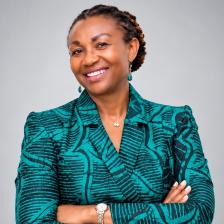
Nafi Quarshie
Africa Director