
NRGI in 2025: Driving Progress Through Partnership

Working to secure justice and equity in the oil, gas and mining sectors can feel Sisyphean, a colleague recently observed. The formidable scale of change. The enormity of the task. The almighty competing forces.
The image resonates. And the feeling is real. But (thankfully) the analogy falls short. Sisyphus’s struggle was destined to fail—if only because he faced it alone. 2025 again demonstrated that when we join forces—often through unexpected and courageous alliances across civil society, governments, industry and multilaterals—we can achieve the extraordinary.
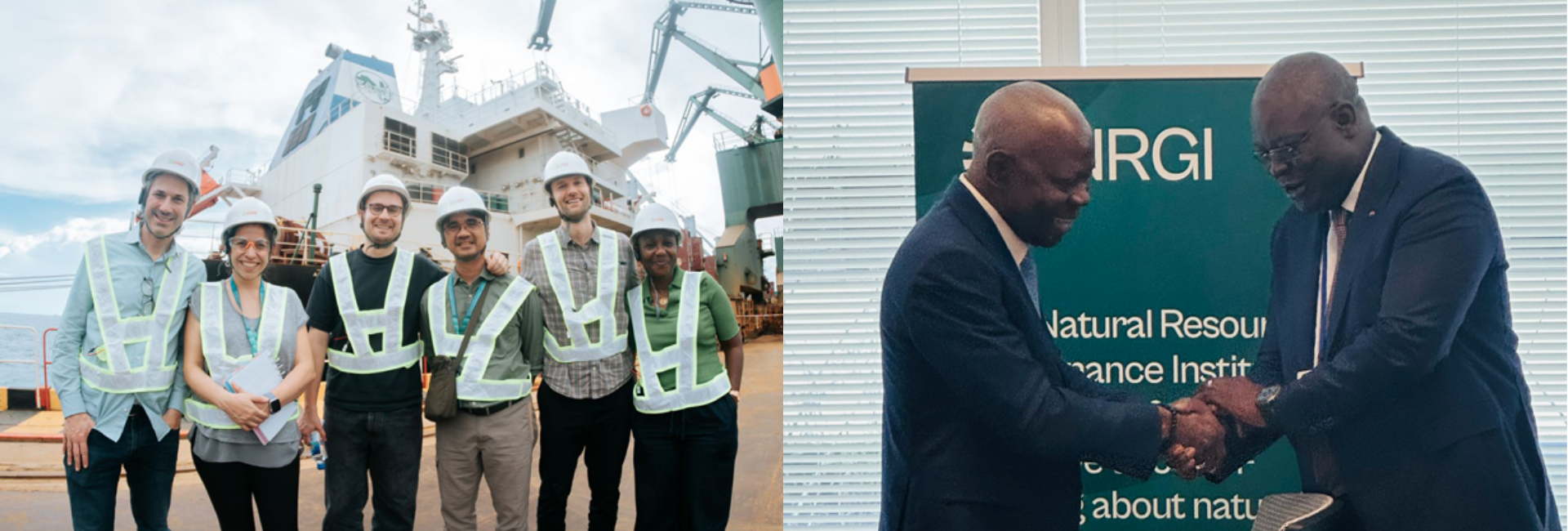
We elevated transition mineral governance
As the scramble for minerals dominates the headlines, NRGI convened global civil society leaders to align on shared priorities to improve economic equity, traceability and circularity in transition mineral governance. Together, we supported developing producer countries to advance equitable governance at major climate fora, including at UNEA-7, and establish a mechanism to put just transition principles into action. Our collective advocacy influenced the Global Investor Commission on Mining 2030’s 10-year $18-trillion-backed action plan and the launch of the UN Task Force on Critical Energy Transition Minerals.
We opened new diversification paths for oil producers
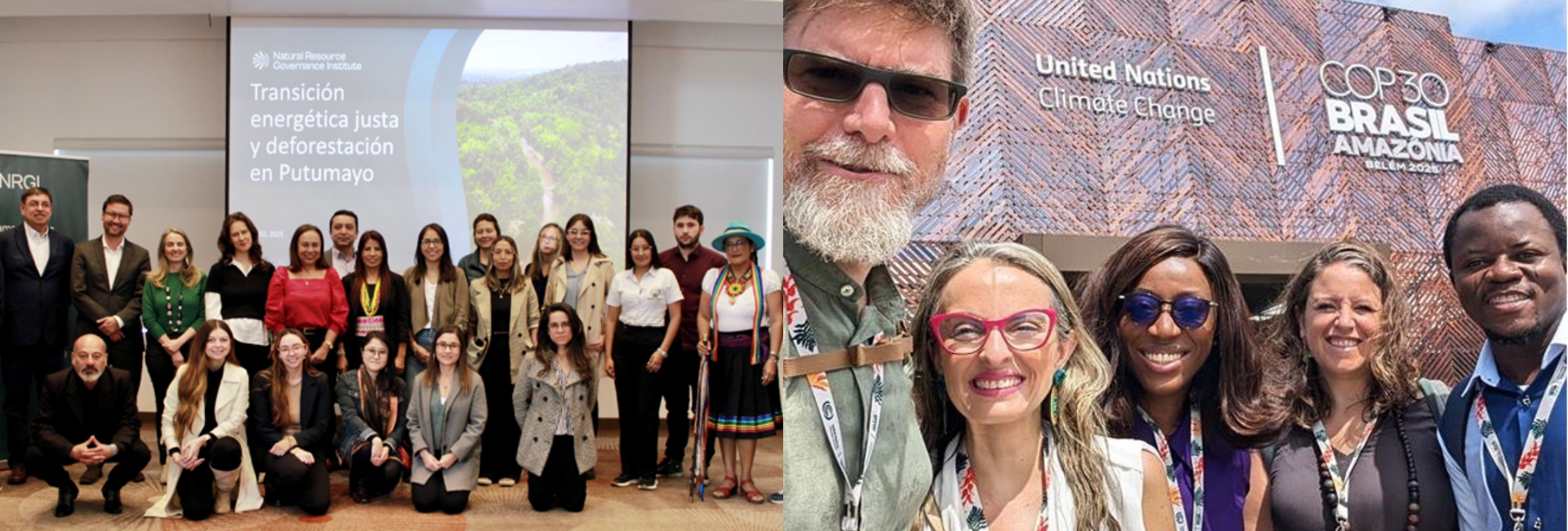
In Colombia and Mexico, where the future of National Oil Companies (NOCs) like Pemex and Ecopetrol dominate the national economy, our research and dialogues with government, civil society, youth and Indigenous groups informed planning for energy transition risks. Mexican decision-makers incorporated our recommendations into its NDC 3.0, and in Colombia we elevated the importance of preparing oil-dependent regions for responsible economic and fiscal transitions.
We increased the evidence base for mineral producers
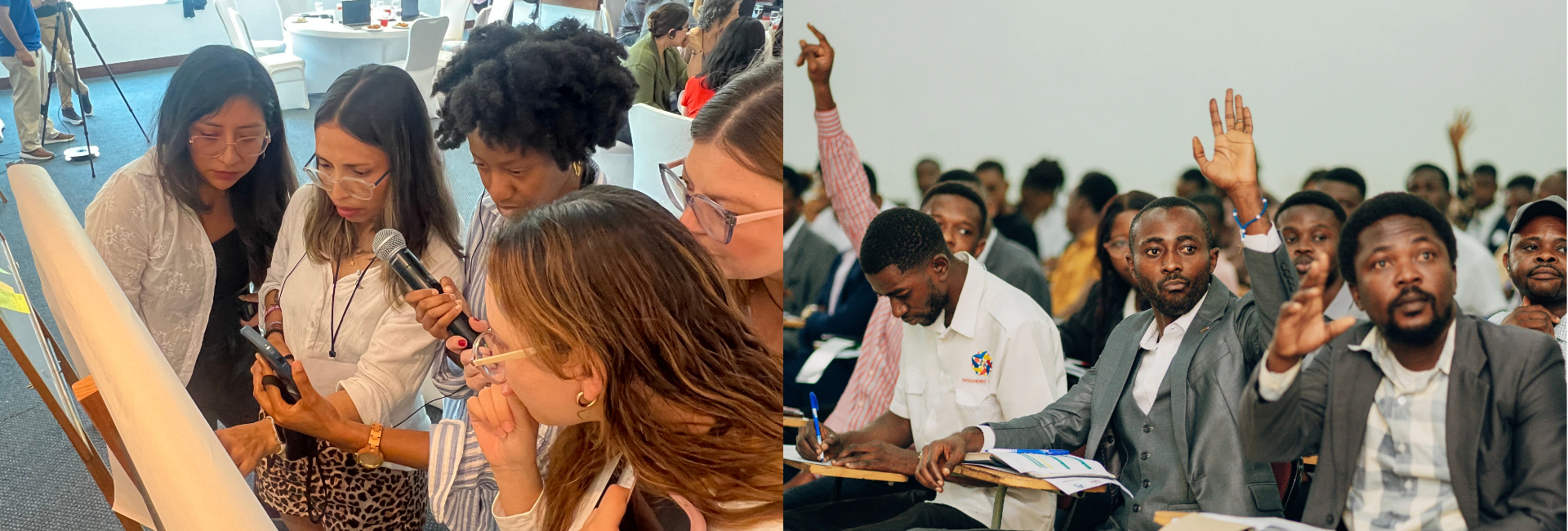
With countries under growing pressure to ensure that minerals deliver value for the people, NRGI’s convening power and rigorous trusted analysis shifted public understanding on issues such as regional cooperation and the role of national mining companies. In Ghana, our research and sustained engagement with government, industry and civil society steered decision-makers toward more economically sound and strategically beneficial choices. In Chile, we played a pivotal role in supporting its accession to the Extractive Industries Transparency Initiative—significant for one of the world’s leading copper and lithium producers. And in Mongolia, we dove deep into analysis of the prospects for copper expansion and value addition, developed concrete policy recommendations and sparked a strong set of public dialogues on opportunities and challenges.
We advanced methane accountability
After a methane leak in Senegal exposed regulatory gaps, our rapid analysis and partnership helped catalyze the country’s first methane regulation. In Uganda, we developed recommendations on how to minimize methane emissions when oil finally comes online after years of planning. In Nigeria, our work with civil society and the media contributed to a doubling of company methane disclosures, and across MENA, we helped countries assess NOC methane risks to economies and communities.
We strengthened South–South learning
The pace of geopolitical shifts is forcing countries across the Global South to make complex decisions, often without opportunities to learn from peers facing similar challenges. We deepened the engagement and learning generated by our MENA Energy Transition platform, including by working with civil society partners to strengthen collective research and knowledge on energy access and just transitions. We launched a new platform with partners from Indonesia, the Democratic Republic of the Congo (DRC), Chile and Zambia to support equitable mineral value addition—building on exchanges we facilitated with Indonesia’s National Economic Council.
In a year where survival alone was worth celebrating, we instead made meaningful progress. Trust, credibility and partnerships power the change we seek in an increasingly polarized and fragmented world.
Next year marks NRGI’s 20th anniversary—a moment to reflect on how far we’ve come and on the extraordinary people we stand beside: community and civil society leaders demanding accountability, journalists asking hard questions, public officials choosing long-term public interest over short-term politics, and my own colleagues whose brilliance and commitment inspire me daily.
The hill to climb felt steeper this year. But together, we—Governing Board members, Advisory Council, funders, partners and staff around the world—find the strength to push on.
Authors

Suneeta Kaimal
President and Chief Executive Officer, NRGI Governing Board ex officio