Women, Resources and Power: Three Pathways to Gender Equity
Governance shapes who holds power, who benefits, and who is left out. Explore these topics from three different perspectives.
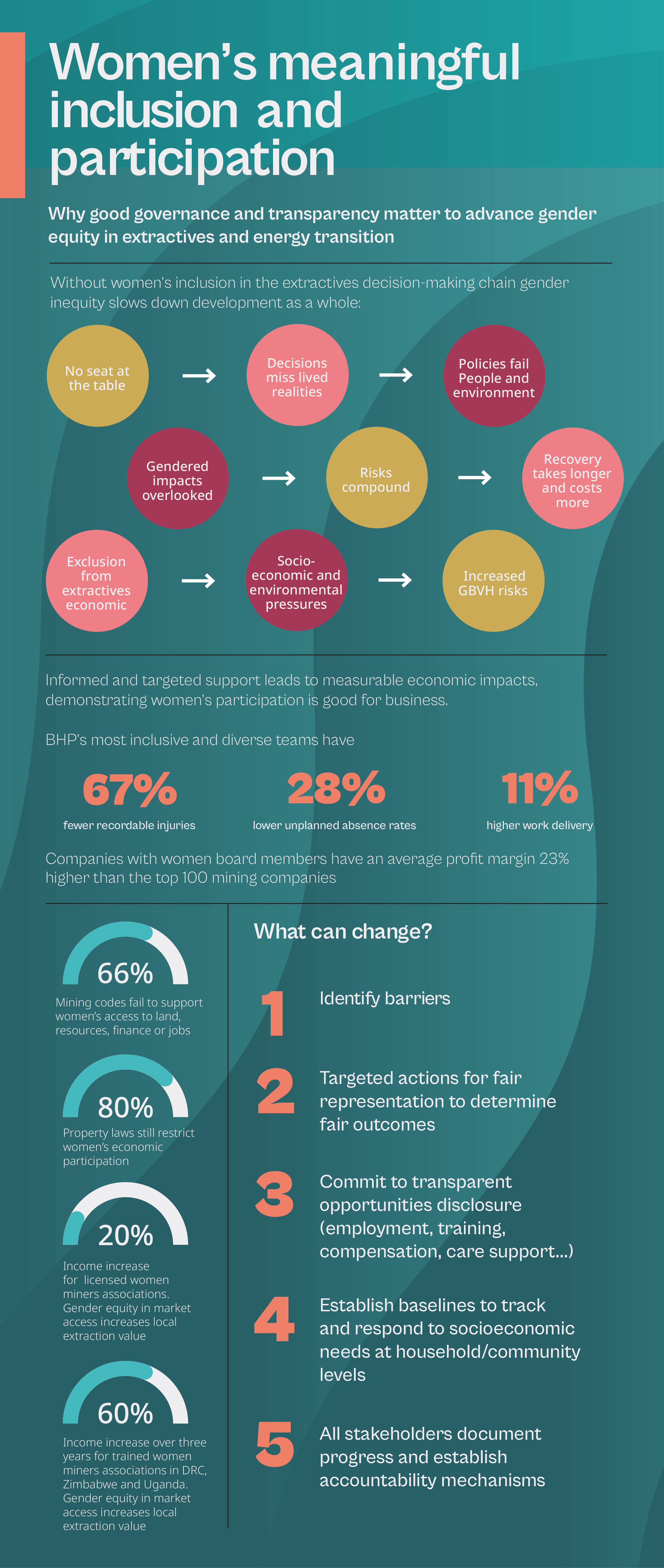
Who holds power, who benefits, and who bears the costs of extraction are governance choices. As extractive activity accelerates, women continue to shoulder the greatest social, economic, and environmental burdens, often with no seat at the tables shaping their communities' futures.
The 2023 EITI Standard is one of the few frameworks positioned to deliver local traction on participation, resources distribution and data collection if its gender provisions are actively used.
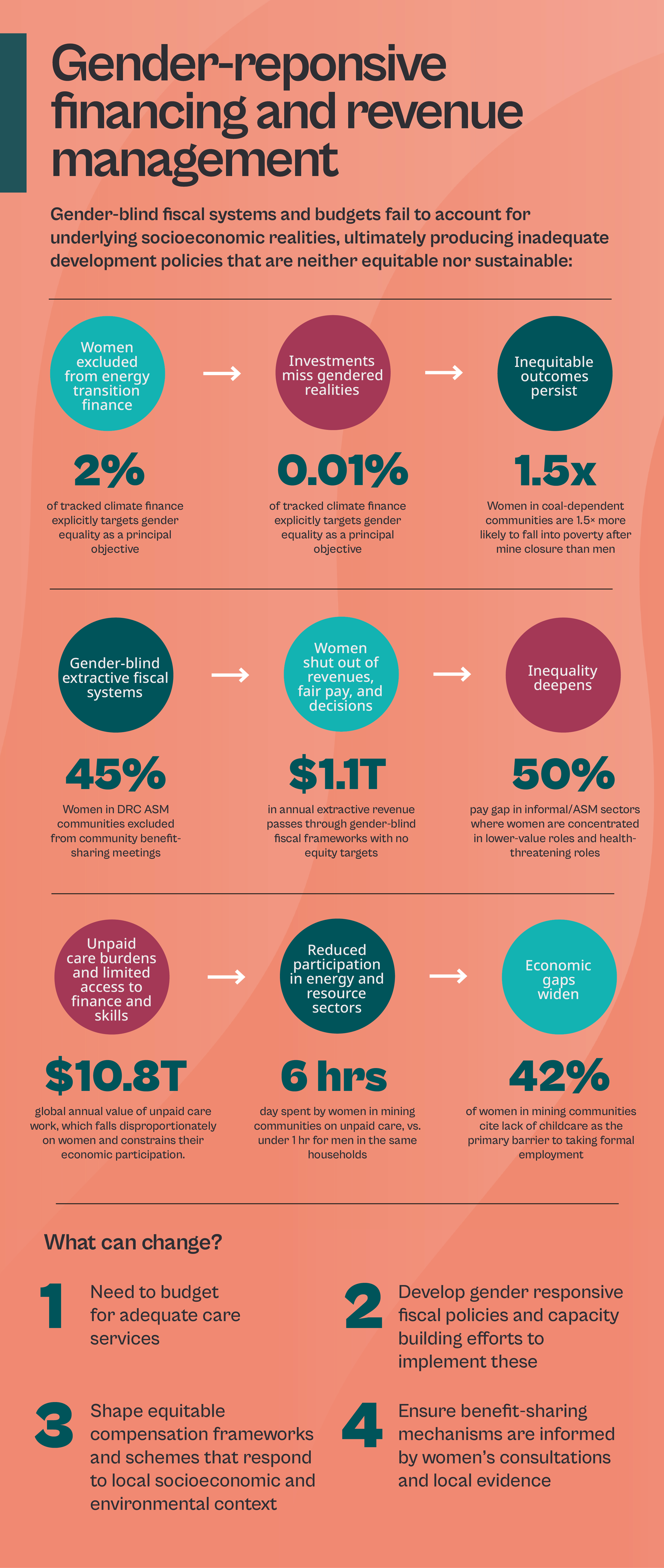
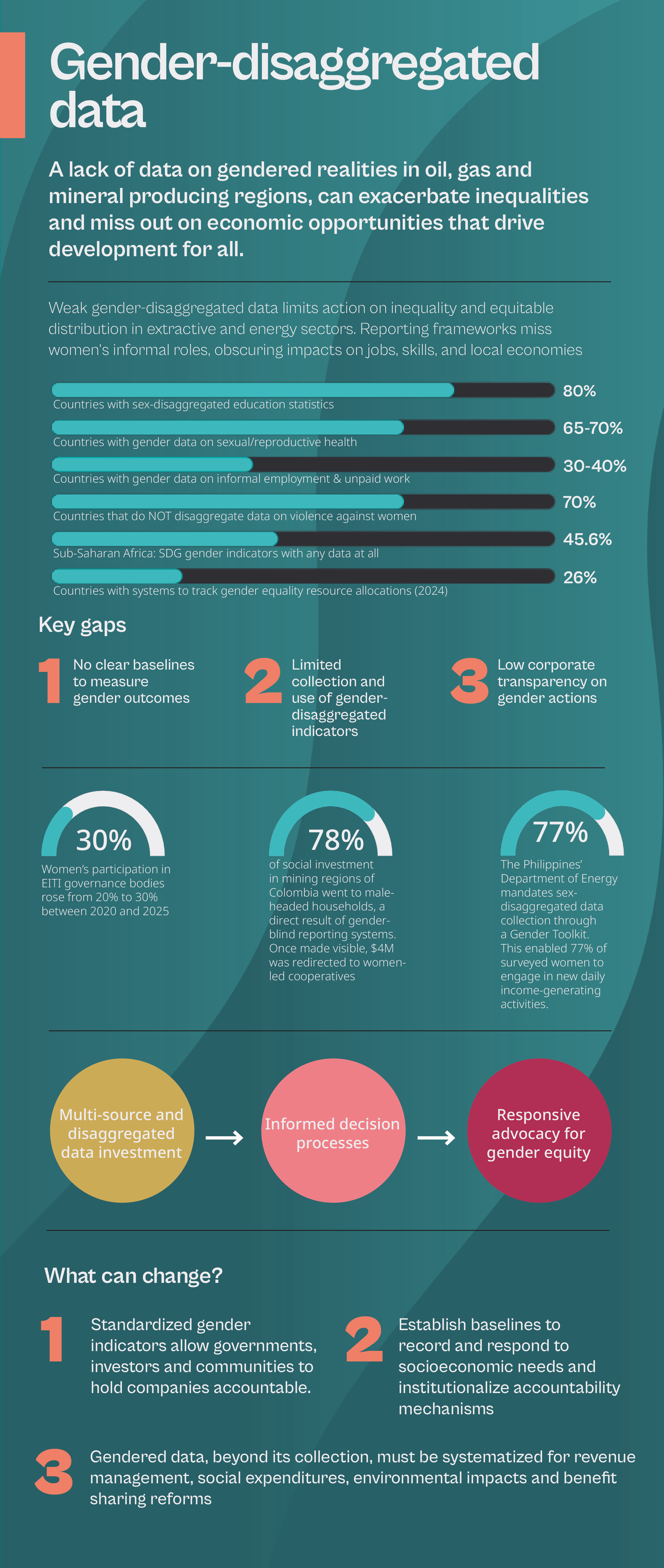
Doing so requires accessible, evidence-based narratives that reach the people and institutions who can act. Stakeholder engagement across three countries highlighted three pathways where reform is both needed and possible.


Explore the data


About this campaign
Advancing gender equity in the extractive sector requires aligning policy ambition, governance mechanisms and civic action. The World Bank’s Extractives Global Programmatic Support (WB-EGPS) sets the strategic direction by promoting gender equality as a core development and governance objective. It emphasizes ensuring that women’s voices are reflected in decision-making and that women have equitable access to the economic and social benefits generated by extractive industries.
The EITI gender goals operationalize this ambition through transparency. By addressing gender-specific barriers and promoting gender-disaggregated data and information disclosure, EITI helps make inequalities visible. This transparency strengthens accountability, improves industry performance and supports fairer resource governance and benefit sharing for all.
At the country level, EITI multi-stakeholder groups (MSGs) provide the institutional bridge between policy and practice. Bringing together government, industry and civil society, MSGs create inclusive decision-making spaces where gender issues can be debated, data can be challenged and reforms can be shaped collaboratively. In this way, MSGs foster trust, public debate and citizen engagement while embedding gender considerations into extractive governance processes.
For civil society and gender equity advocates, WB-EGPS and EITI frameworks are powerful enablers. International standards and reporting requirements give legitimacy and protection to gender advocacy, helping shift it from being dismissed as “cultural”, “political” or “ideological” to being recognized as a core governance, development and accountability issue. This alignment empowers civil society to demand change, influence policy and hold institutions accountable for delivering inclusive outcomes.