
Beyond Baku: Financing Remains Central to Just Energy Transitions

COP29 wrapped in a pre-dawn haze of anger, frustration and relief. The bare-minimum agreement in Baku did little to improve financing prospects for urgent just energy transition priorities in low- and middle-income countries.
For Global South countries dependent on the production of oil, gas and minerals, the outcome of the Baku UN climate conference (COP29) paints a challenging picture. These nations, most of them low- and middle-income countries, walk a tightrope while balancing two pressing goals: the energy transition beyond fossil fuels on the one hand, and their citizens’ development needs on the other. The question is whether international climate diplomacy will ever help bring these together in support of just energy transitions.
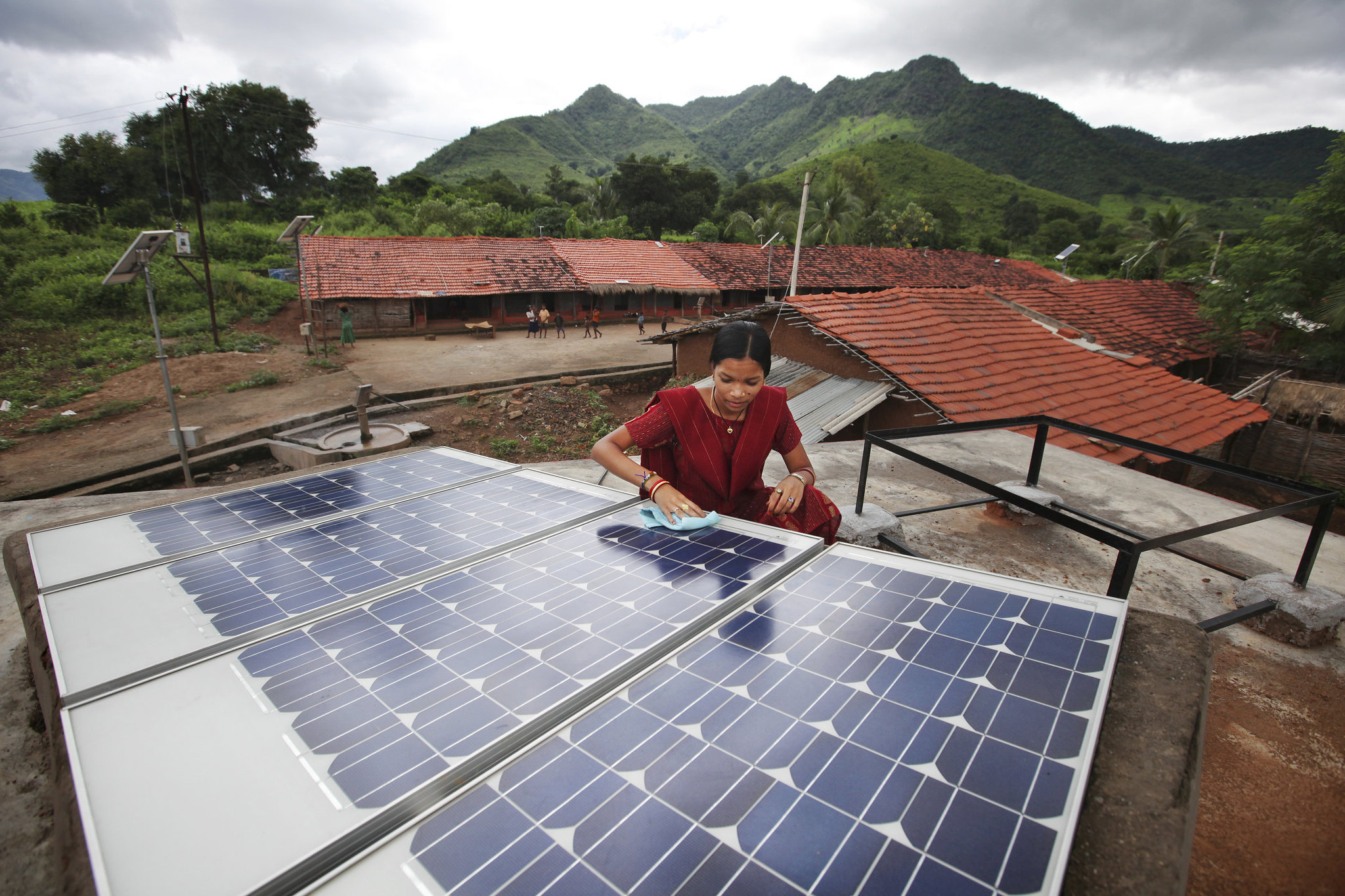
On COP29’s banner agenda item—the new climate finance goal—the conference did agree a new target to scale up financial support to the Global South by 2035: $300 billion per year from rich countries, notwithstanding clear objections from many countries. Conventional wisdom says that a negotiation is successful if all parties walk away equally unhappy. But the COP29 finance outcome felt even worse—more like renewing vows in a loveless marriage. This is because it effectively represents an extension of a climate finance reality marked by insufficiency, inadequacy and, above all, inequity.
There is broad-based consensus that the annual climate finance needs of the Global South add up to at least a 10-fold increase on current flows. The International High-Level Expert Group (IHLEG) on Climate Finance’s November 2024 report is a key reference, stating that international climate finance “… will need to cover $1 trillion per year of the total investment need by 2030 and around $1.3 trillion by 2035.” Another recent report, “Costing a Fossil Fuel Phaseout,” concludes that the total phaseout costs for developing and emerging economies (excluding China’s) are “likely somewhere between USD 1.5 and 2 trillion per year.”
As many were quick to point out, the $300 billion goal is actually far less than a “tripling” of the previous goal of $100 billion per year by 2020 once inflation is taken into account. Assuming a long-term inflation rate of 3 percent, the COP29 climate finance goal represents a 188 percent increase by 2035, rather than the 1,300 percent increase needed. In simple terms, COP29 fell short by a cool $1 trillion.
For low- and middle-income countries that rely on oil, gas and mineral exports, the impact will be particularly acute. An African regional dialogue on energy transition finance convened by NRGI ahead of COP29 made clear that limited financing hinders Africa’s transition potential. The IHLEG report echoes this conclusion and helps explain why:
“The largest increase in investment is required in [emerging markets and developing countries] other than China: these regions currently have low investment levels, significant development needs, and are projected to contribute over 50% of global emissions by 2030.”
The IHLEG is also very specific: “Ramping up climate investments in [emerging markets and developing countries] is the only way to reach the Paris Agreement goals of limiting the global temperature increase to well below 2 degrees Celsius…” (emphasis added.) Confirming this link, a Nigerian delegate made clear in a poignant intervention in the final minutes of the COP29 closing plenary that the consequence of the low finance goal would be lower ambition in national climate plans: “You expect us to have ambitious [nationally determined contributions (NDCs)]. The [new collective quantified goal] was supposed to enable us to have realistic finance goals. Three-hundred billion dollars is unrealistic. Let us tell ourselves the truth. This is 3 a.m. and we’re going to clap our hands and say this is what we’re going to do? I don’t think so."
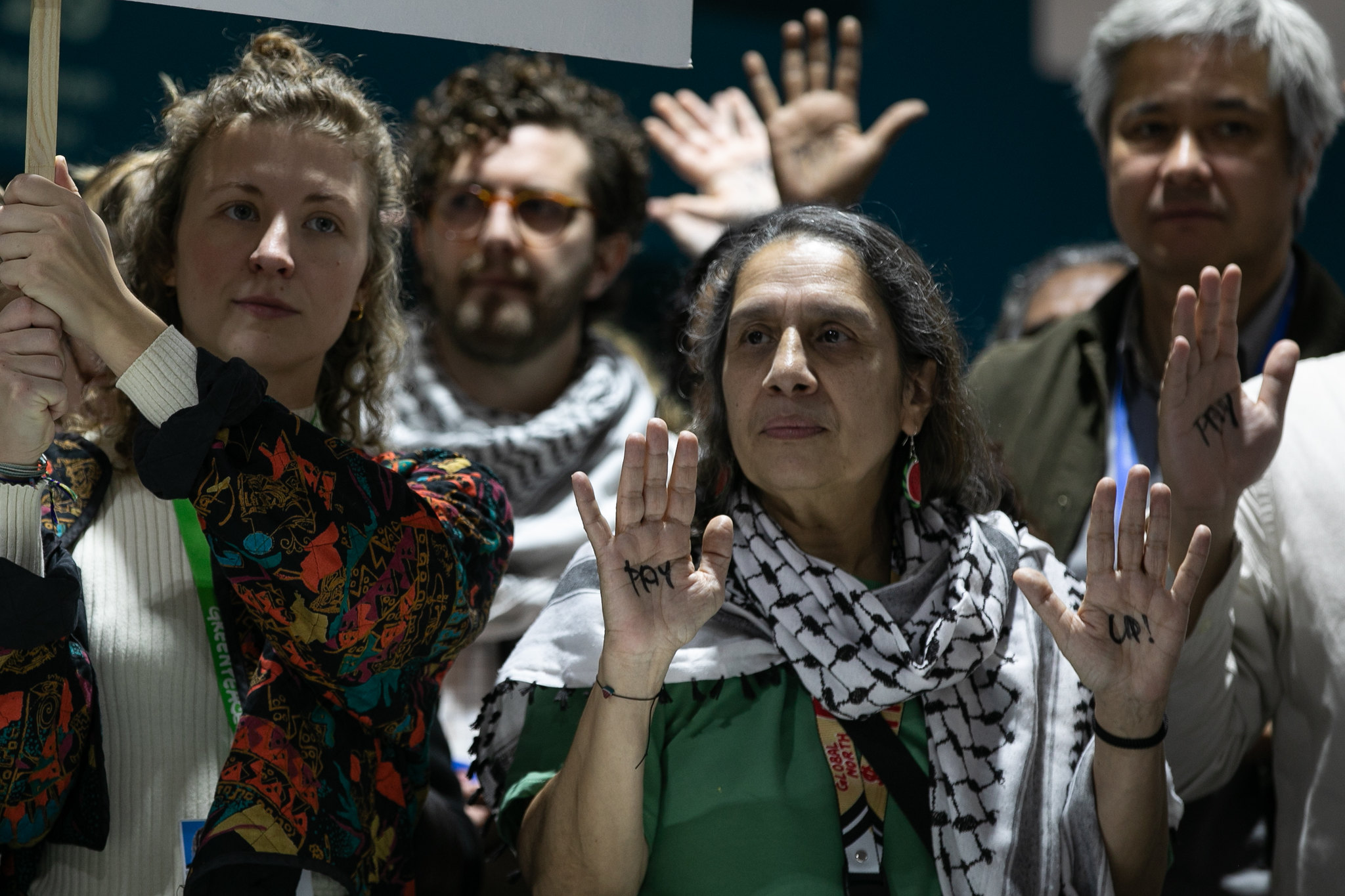
Failure on finance quantity and quality
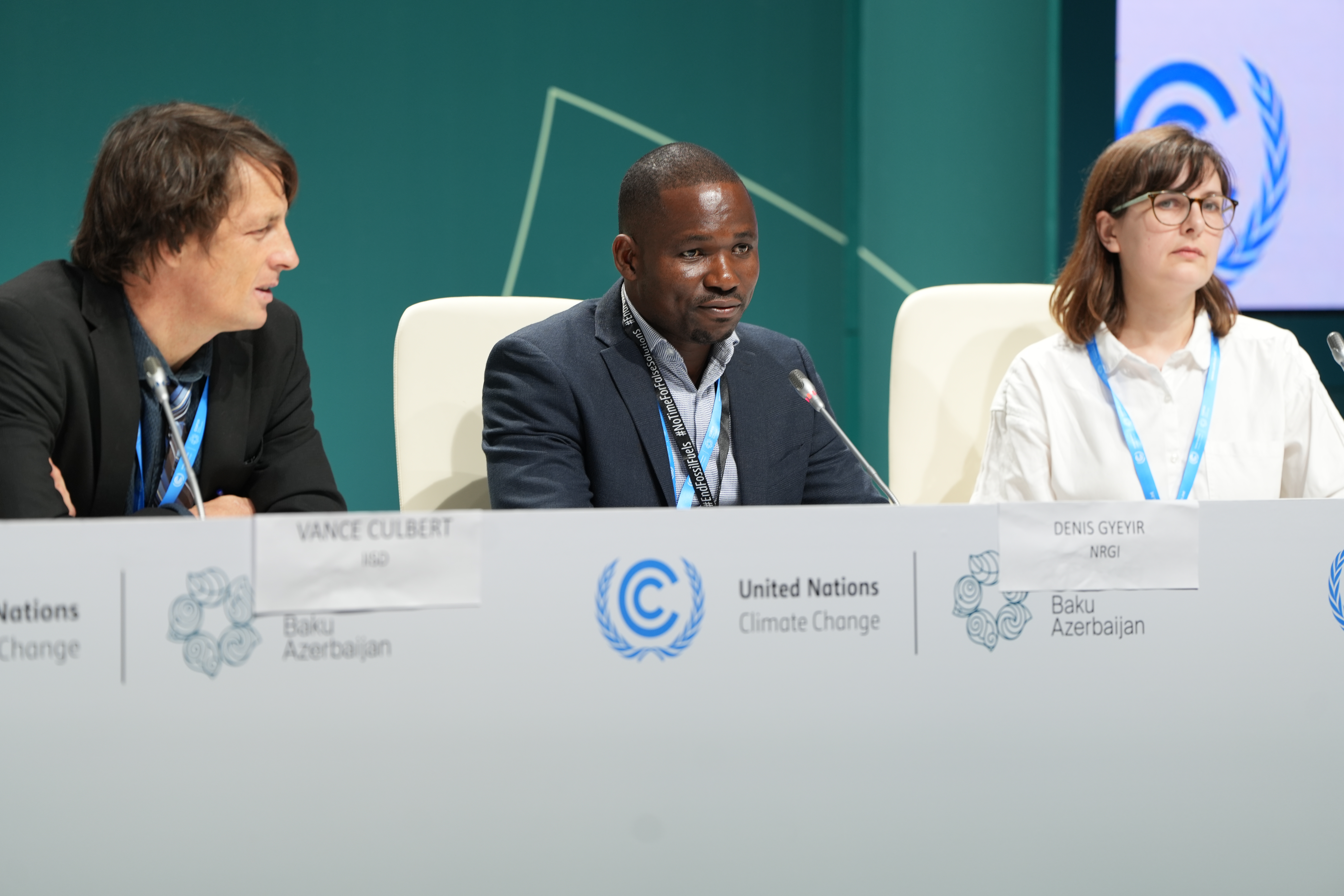
However insufficient, the deal reached at COP29 does at least increase the target amount of international climate finance. Critically, and even more concerning than the low target amount of climate finance, rich countries also failed to agree a much-needed step-shift in the quality of climate finance, especially around specifying sub-goals for grant-based financing and transparency of reporting their future contributions. NRGI’s Denis Gyeyir explained the importance of grants in Baku: “Non-debt instruments are critical for energy transition finance in African countries. Most African countries suffer a crushing debt service burden that constrains fiscal space. The lack of emphasis on grant-based financing in the COP29 finance decision is outrageous, and a just and equitable global transition requires that the G7 and other wealthy countries remedy this as they meet their commitments.”
Oxfam has regularly tracked finance flows rich countries counted toward their $100 billion per year commitment in its Climate Finance Shadow Report, finding that the grant equivalent value of climate finance provided via bilateral and multilateral channels amounted to “…just over one-third of the estimated $66.3 billion we found reported as public climate finance in 2019–20.” The obvious recommendation for the new climate finance goal set in Baku was to ensure that rich countries report loans and other non-grant finance contributions in terms of their grant equivalence—as they already do in reporting bilateral aid—so as to enhance transparency around their net financial value to recipient countries. The finance deal reflects no such improvement.
Across many other possible dimensions of climate finance quality, countries also considered but failed to agree on any improvements as part of the new climate finance goal. These include naming specific windows for mitigation, adaptation, loss and damage (or indeed energy transition); exclusion of market rate loans and export credits as qualifying contributions toward the finance goal; indicating a priority share for vulnerable country groups or categories; and linking mitigation finance to goals identified in the 2023 global stocktake (GST) of climate progress.
Wealthy countries should boost climate finance—for fairness and their own self-interest
One decision in Baku left the door open to address these issues of sufficiency and adequacy of climate finance over the coming year. The launch of the “Baku to Belém Roadmap to 1.3T” is effectively a year-long escape clause giving the Azerbaijani and Brazilian COP presidencies significant latitude to convene further meetings and produce a report by COP30 with the aim of “…scaling up climate finance to developing country Parties.”
The Baku bargain already calls on “all actors” to scale-up climate finance to the Global South to $1.3 trillion per year by 2035, but this amounts to little more than vague aspiration. “Baku to Belém Roadmap to 1.3T” offers a means to convert that aspiration into reality if rich countries are willing to raise the scale and nature of their commitments, including through innovative sources of international climate finance.
The $300 billion per year goal is a floor for future finance flows, not a ceiling. And the case for rich countries to deliver trillions, not billions, is clearly rooted in a “fair shares” approach to global equity and justice. As this year’s Civil Society Equity Review reminds us “No international effort to hold to any realistic 1.5°C pathway can honestly hope for success unless the efforts it demands are widely seen as being fairly shared.”
But if the case for fairness doesn’t convince Global North countries that over-delivery is in their interest, there’s also the narrow, economic case for action, which makes it even clearer that over-delivery is in their own self-interest. The 2024 IHLEG report describes investment in emerging markets and developing countries as the “growth story of the 21st century” and estimates corresponding avoided costs and co-benefits at 15–18 percent of global GDP in 2030.
More specifically, recent economic analysis reveals a net benefit of $5.1–$40 trillion over 2025–2035 accruing specifically to rich countries if they step up and provide adequate levels of international climate finance. As UN Secretary-General António Guterres said in his concluding remarks to world leaders at COP29, “Climate finance is not charity, it’s an investment.”
How the Global South can pave the way
For their part, low- and middle-income countries can strengthen their position over the coming year by spelling out the difference new and additional international climate finance would make in “conditional NDCs.” Under the Paris Agreement, countries committed to periodically share their own updated national climate pledges (or NDCs) with the international community. 2025 is the due date set for the next round, sometimes called NDC 3.0.
Many Global South countries have already labeled parts of their national plans as “conditional” on international support. Some, like Colombia, have put forward energy transition investment plans that situate major climate actions within their national development strategies. Global South countries can help ensure ongoing negotiations under the Baku to Belém Roadmap to 1.3T are grounded in real-world, up-to-date cost estimates linked to global progress towards the Paris Agreement objective by: adding more ambitious, “stretch goals” to their third round NDCs; costing the related additional financing requirement; and clearly presenting those components as pledges they can only achieve with international support as “conditional NDCs.”
Just transitions away from fossil fuels were too hot to handle
Two other discussions critical to the energy transitions of Global South oil, gas and mineral producers were postponed by COP29 and will be resumed at the Bonn UN climate talks in June 2025: the transition away from fossil fuels (the UAE Dialogue on Implementing GST Outcomes) and support for a just transition (the UAE Just Transition Work Program).
In both cases, lack of agreement reflected both broad-based support for action (which prevented backstepping) and the high stakes implications of decisions (i.e., “no deal is better than a bad one”). And the lack of agreement on both areas was also clearly tied to the low-ambition result on climate finance.
The historic call for a transition away from fossil fuels in the 2023 COP28 “Dubai deal” reflected a careful balance between country positions. This enabled agreement, while also opening the door to competing interpretations of what kinds of actions will help close the gap between current pledges and what’s needed to align with the Paris Agreement.
At COP29, the UAE Dialogue on Implementing GST Outcomes needed to both preserve this balance and flesh out details of how to enable and support a just, orderly and equitable exit. However, the draft decision ultimately presented by the Azerbaijani COP29 president failed to preserve this balance. While it reaffirmed the role of “transitional fuels” (read: gas), it made no mention of other elements of the Dubai deal, such as tripling renewables, doubling energy efficiency and transitioning away from fossil fuels.
Similarly, on the Just Transition Work Program (JTWP), divisions centered on two competing visions for what comprises a just energy transition. For the Global South, it is an integrated vision for a transition that better reflects their needs and realities, including pressing development priorities such as energy security, predictable state revenues and employment generation. This vision includes development of green industrial policy and sees international equity as central to achievement of just transitions.
In contrast, most wealthy countries at COP29 insisted on a narrower vision focused on worker transitions within the context of the existing climate mitigation and emissions reduction frame of the Paris Agreement. This was largely because rich countries generally take a legalistic approach to the UN climate negotiations that always seeks to minimize their own obligations and commitments.
As with the UAE Dialogue on Implementing GST Outcomes, agreement on future discussions under the JTWP ultimately foundered on a fatal combination of differing substantive positions and the low ambition reflected in the COP29 climate finance goal—both driven by the intransigence of Global North countries.
Transition minerals were firmly on the agenda
For countries in the Global South, linkages to the new climate finance goal are integral to any vision of a just, global energy transition. International equity is also relevant in other respects, such as in benefit sharing and the localization of profits from extraction of transition minerals, which was specifically referenced in the annual summary of the JTWP dialogues prior to COP29.
COP29 participants paid far greater attention to transition minerals compared to previous UN climate conferences, reflecting a growing awareness that, as with finance and mitigation ambition, progress on governance of transition minerals is a determining factor for the transition away from fossil fuels. This raises both questions around how the UN climate regime can advance the principles and recommendations of the UN Secretary-General’s Panel on Critical Energy Transition Minerals and how the Brazilian COP presidency will reflect these in just transition-related outcomes at COP30.
The outcome in Baku did little to improve financing prospects for urgent just energy transition priorities in low- and middle-income countries. However, it made clear that just transitions in these countries are the route to meeting pressing development needs and offer potential for healthy and sustainable returns on investment. Wealthier countries should support such transitions to fully meet their obligations under the Paris Agreement. Given the cumulative scale of future Global South emissions, they are also essential to achieving the Paris 1.5°C goal.
Beyond Baku, it is clearer than ever that just energy transitions remain the only way for oil-, gas- and mineral-producing countries to build a secure, inclusive and sustainable future. They should push forward with their own strategies and plans for a just, orderly and equitable energy transition beyond fossil fuels, making clear how international support affects the timing of their exit. Wealthy countries must bring new resources and proposals to the table to advance international climate diplomacy. All countries should work to ensure COP30 delivers a major course correction and puts the world back on track.
Authors

Antonio Hill
Advisor