
The Connective Fabric of Natural Resource Governance: Reflections from UNGA and Climate Week

Last week, a delegation from NRGI attended the UN General Assembly and Climate Week NYC. Below are our reflections from across more than 20 sessions, side events, our 20th anniversary convening and meetings, with partners from government, civil society, Indigenous Peoples, multilaterals, philanthropy and industry.
Natural resources rarely dominate the headlines at the UN General Assembly, yet they underpin almost every item on its agenda. Whether conversations centered on climate, economic development, trade or geopolitics, the governance of oil, gas and minerals ran through many of them.
That role, however, too often remains implicit. Elevating resource governance as a priority is essential if global efforts on climate, development and security are to deliver equitable outcomes for producer countries and their citizens, and a healthy, sustainable future for all of us.
Security and trade have reframed the journey, but not the destination
Energy security has displaced energy transition as the dominant lens for energy policy, with decisions increasingly driven by geopolitics and cost of living rather than decarbonization. While the end goal of sustainable energy and economic futures remains, this marks a structural shift in the narratives that shape policy and in how influence is exercised.
In the minerals sector, a trade lens now dominates, even during a “Climate Week”. Green industrialization was a central theme, welcomed by some and viewed with skepticism by others. At a UN-hosted Solutions Dialogue on the subject, producer countries, particularly those from Africa, stressed that high costs of capital and limited fiscal space must not constrain their economic and trade ambitions. African participants were clear that the gap is now implementation, not strategy: frameworks such as the African Mining Vision and the Africa Green Minerals Strategy already exist. Because no single country holds every mineral, energy source, skill and market, enabling countries to achieve more value requires regional integration. The African Continental Free Trade Area (AfCFTA) serving as an industrial platform rather than only a trade agreement. Success, many argued, should be measured by the jobs, skills and productive capabilities retained on the continent, not by processing capacity alone. In our remarks, NRGI emphasized the need for additional financing and technical support so that producer countries can design, implement and monitor value addition and diversification strategies that truly meet the needs of their people, and enforce high human rights, environmental and governance standards.
Green industrialization could serve as a bridge that brings mineral trade and climate policy closer together. We are looking forward to further progress at COP31 in November, as green industrialization is a key priority on the Action Agenda launched by Türkiye last week. Looking to next year, NRGI is also supporting a shared agenda on equitable mineral partnerships across the COP32 and UK-led G20 processes, where African countries have an opportunity to connect their climate positions with their leverage as producers of critical minerals.
"Critical for who?": equity and the governance gap
With “critical minerals” being used so often, the question "critical for who?" recurred throughout. Across discussions, there was a unifying call for a new and more equitable economic and political paradigm, but how this plays out in practice remains highly uncertain. There were multiple calls (including from NRGI) for critical minerals to underpin just, country-led transitions that serve producer countries' development aspirations, respect the free, prior and informed consent of Indigenous Peoples and frontline communities, and remedy legacy environmental harms. Several sessions went further, asking not just how much revenue extraction generates but whether it preserves national wealth across generations. Without this, producer countries risk exchanging finite mineral wealth for limited revenues while leaving depleted assets and environmental damage to future generations.
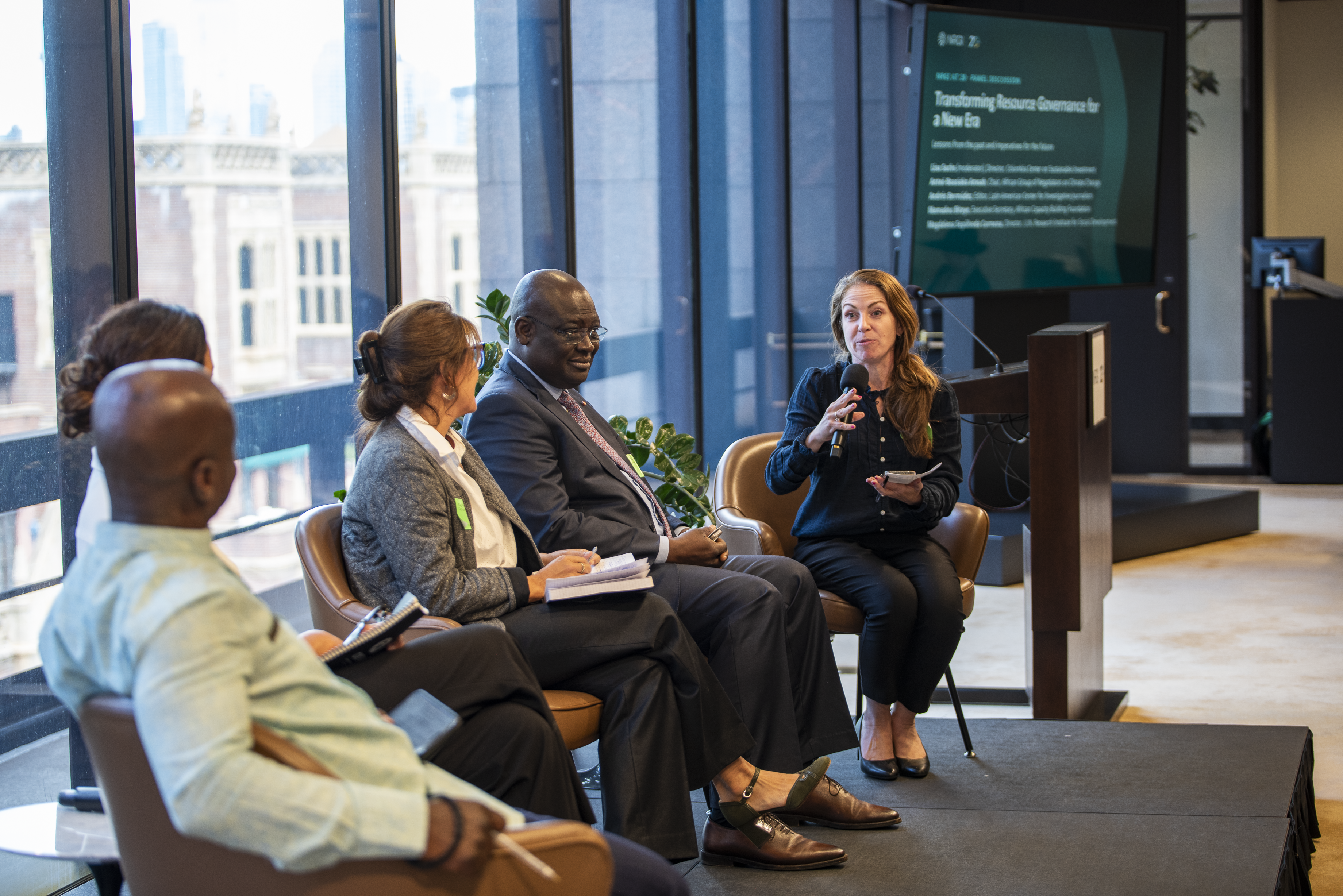
While critical minerals are the focus, the obstacles to fairer and more prosperous societies are structural and systemic – a theme that echoed throughout including in NRGI’s 20th anniversary event. Low- and middle-income countries remain underrepresented in setting new standards and paradigms, despite bearing their costs.
Encouragingly, the discussion has moved from what must change to how. Reformers shared approaches ranging from multi-stakeholder engagement and narrative storytelling to strategic litigation, the quantification of decommissioning liabilities and evidence on the financial materiality of community engagement. Each aims to ensure that community rights are respected and that polluters remediate the harm they cause. A recurring message was that affected communities need agency, not simply better consultation: access to information, the capacity to negotiate and the ability to speak for themselves with governments, companies, investors and financiers. These “unbankable” elements often determine whether supposedly bankable investments succeed.
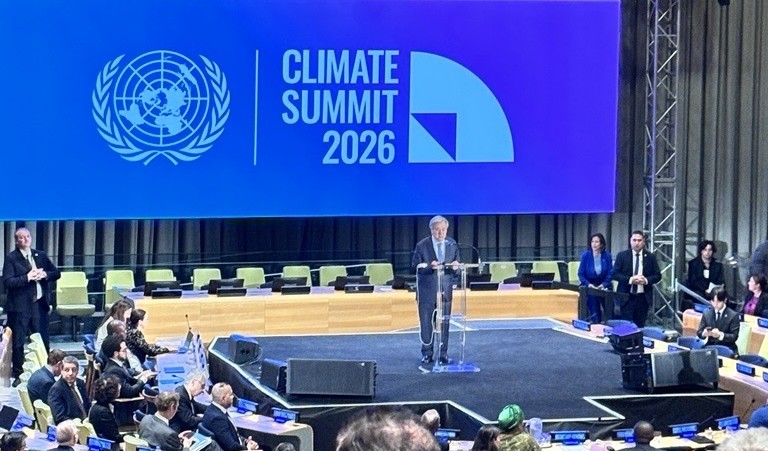
Concrete openings exist to keep making progress. At the UN Climate Summit, the Secretary-General announced a new country support mechanism for six mineral-rich developing countries to implement the recommendations of the UN Secretary-General's Panel on Critical Energy Transition Minerals. Having served on the panel, NRGI and our partners have pressed for this follow-through, including in this joint letter last July. We welcome the mechanism. Connecting with technical assistance partners outside the UN to deliver tailored, demand-led support will be critical to its success. (Learn more: See our video and press statement released during the week). The push for an International Panel on Inequality and next year’s planned SDG Summit offer further entry points to center producer countries in debates on the future economy. The ongoing review of the IFC Performance Standards is another, as these standards shape the practices of commercial banks, export-credit agencies and mining companies well beyond the IFC itself.
Artificial intelligence and the resources beneath it
Some described this as the "AI UNGA". Technology leaders addressed the Security Council, many world leaders mentioned AI in their speeches, and there were countless AI-focused side events. Yet beyond limited discussion focused on data centers, few conversations linked AI development to the minerals that build and power it. This is a gap that policymakers, companies and civil society alike must close.
A notable exception was a discussion convened by the government of the Democratic Republic of the Congo, entitled “AI and the New Geopolitics of Peace and Security”, in which NRGI participated. It followed a July Arria-formula meeting, held during the DRC's Security Council presidency, which called for a global normative framework reconciling peace, security, transparency and sustainable development. NRGI has provided technical input to that process, and this intersection is emerging as a key policy space.
The DRC's leadership is itself both noteworthy and an opportunity. It shows how low- and middle-income countries can shape emerging global norms on minerals, security and AI, rather than simply adopt rules set elsewhere.
A fragmented landscape demands trusted brokers
While emerging coalitions and new opportunities are being born of the current upheaval, fragmentation and polarization remain a challenge. Progress will depend on trusted brokers who can navigate contradictions to unite diverse groups, and on building new, action-focused coalitions.
For NRGI, we see this as a challenge and an opportunity. We will seek to leverage the trust, credibility and knowledge we have built over two decades, while holding a nuanced, independent position in a multi-polar world.
Authors

Suneeta Kaimal
President and Chief Executive Officer, NRGI Governing Board ex officio

Dillon Mann
Strategic Communications Director

Nafi Quarshie
Africa Director
Erica Westenberg
Governance Programs Director

Nicola Woodroffe
Lead Legal Analyst