
Natural Resource Governance: A Matter of Life and Death

Anthony Bebbington, International Program Director for Natural Resources and Climate Justice at the Ford Foundation, argues that resource governance is no longer only a question of who gains and who loses. It is a question of what is allowed to live, by whose authority and on what ethical grounds.
“Is a River Alive?”
This question, the title of a book by Robert Macfarlane, is not often asked in the natural resource governance community. But might posing questions like this open productive pathways? Pathways that lead not to the familiar trope of counter-posing development and nature, but that instead center responsibility, legitimacy and ethics. If one was to entertain the idea that rivers, forests and soils are life forms, then decisions that lead to their modification or destruction in the process of creating value would have to be understood as decisions to transform, redistribute and end opportunities to live, or to live well. Natural resource governance would then have to grapple explicitly with the ethical and existential questions that can otherwise be hidden by environmental impact assessments, budget sheets and growth models. It would accept that the governance of extractive industries is as much a politics of incommensurability as one of optimization.
In both its theory and its practice, natural resource governance has been mostly concerned with the steering of interests and incentives, of rents and taxes, of benefit sharing and compensation, of conflicts and their resolution, and of the behavior of companies, governments and organized civil society. It has elevated technical, institutional and managerial questions, and has understood itself as a field focused on the governance of wealth creation and distribution, rather than on the administration of life and death.
In many cultures, mountains, rivers and forests are understood as life forms and are governed and respected accordingly.
That said, there are spaces where these more existential questions are present. The ever-stronger debate on no-go zones raises these concerns, as do conversations in faith communities, popular culture, legal scholarship, creative industries and especially among Indigenous Peoples. Films such as Avatar and Dune, whatever else one thinks about them, are relentless in insisting that resource extraction is about decisions over what lives, and what dies, and the exercise of power to enforce those decisions. The papal encyclical, Laudato Si, did something similar, albeit more cautiously, insisting on the moral imperative of caring for creation in the face of extraction – a perspective also present in other faith traditions. The still nascent but emerging jurisprudence and legal scholarship on the rights of nature does not necessarily argue that abiotic nature is alive, but it gets close when it asserts a river’s status as a bearer of rights that merit legal protection against resource extraction (assertions that have sometimes prevailed in the courtroom). The growing scholarship on more-than-human life and “Earth Beings” entertains the same possibilities, and even if it may not pass its own judgement on whether abiotic nature is alive, it does recognize that in many cultures, mountains, rivers and forests are understood as life forms and are governed and respected accordingly.
For many in the natural resource industries, these contributions might be viewed as theoretical, unrealistic and anti-development. But those same voices are often quite comfortable with the idea that a corporation is a legal person with rights and obligations. And yet it would seem far harder to argue that a corporation is a being than to make the same claim for rivers, soils or forests.
My purpose here is not to be dramatic, nor to argue that resource extraction cannot create important opportunities—I come from a region that in large measure lived from coal mining and associated industries, and whose economy has really struggled since their demise. To ask bigger and ethical questions about resource extraction is not to argue against resource extraction in all its forms, nor to question that the good governance of resource extraction can make important contributions to human development—it clearly has done, and I grew up seeing many of those contributions. Rather, my purpose is to ask those of us in the natural resource governance field to live with the discomforts that we should live with. It is neither helpful nor honest to discuss resource governance or development governance without also centering the fact that these are fields that steer decisions about which and whose forms of living—human and biotic—will gain, and which and whose forms of living will suffer and, in some instances, be extinguished.
Recently, I was in a region experiencing vertiginous increases in mineral extraction, processing, capital investment and job creation. We spent time with Indigenous Peoples who not so long ago came out of isolation. Kind, funny, dignified and thoughtful, they are forced to navigate the sweeping transformations this growing resource extraction economy imposes on their lives with little to no support. The asymmetries of power this creates are appallingly large, and one came away with the sense that these communities are not being heard and have been largely left on their own to bear the costs. In a case like this, on what ethical grounds, and on the basis of what claims to legitimacy, are some able to decide that a form of life—in this case human—just doesn’t matter enough to stop it from slowly dying out. Is it sufficient to argue that the creation of tens of thousands of jobs justifies this? Is it adequate to argue that “we are the elected government”, or “we are a nationally strategic project” and therefore mandated to decide on these trade-offs? This is not clear, just as it is not obvious that citizens really intend their vote to give the governments they elect the power to decide what forms of life should prosper and which should die. Indeed, the idea that we might be delegating such power evokes a whole range of historical cataclysms.
As Earth is pushed up against or past almost all its planetary boundaries, the resource governance discussion is now more than anything else a discussion about what is allowed to live, and what not, why, when, by whom, and on what grounds. On what basis is the power to make such decisions given to those who govern natural resources? Discussing this should place ethicists, humanists, faith leaders, Indigenous Peoples and artists (for instance) alongside technocrats, company managers, bureaucrats, policymakers and scholars in a shared project of placing these really hard questions at the center of natural resource governance.
Decisions about extraction will become even more focused on wealth and war, and even less concerned with the flourishing of all life in all its wonder and glory.
Some of these difficult conversations about ethics, legitimacy and authority are already happening, but they should become much more central to the field. Building on Lisa Sachs’ recent commentary, to deepen such conversations would be a conscious effort to approach resource governance not only from within wider approaches to development, but also within wider approaches to democracy that understand democratic process as existing in service of life—all life. After so many centuries of unequally distributed harms, and in a context in which small groups of plutocrats and autocrats seek to steer ever more of our decisionmaking on issues of huge consequence, this centering of life and ethics seems a critical path in the face of the real risk that decisions about extraction will become even more focused on wealth and war, and even less concerned with the flourishing of all life in all its wonder and glory.

Anthony Bebbington is International Program Director for Natural Resources and Climate Justice at the Ford Foundation. He is a member of the National Academy of Sciences and the American Academy of Arts and Sciences and a Guggenheim Fellow, and has held professorships at the Universities of Melbourne, Manchester and Clark, along with Australian Research Council Laureate and Economic and Social Research Council professorial chairs. He has served as board chair of the Climate and Land Use Alliance and the TAI Collaborative, as a board member of Oxfam America, and has worked at the World Bank. He is an incoming trustee of the Natural Resource Charter Limited (NRCL), NRGI’s UK-registered charity. His work focuses on environmental and climate governance, extractive industries, rural livelihoods, social movements and non-governmental organizations. He contributed this piece as part of NRGI's 20th anniversary thought piece series on the future of resource governance.
After Raja Ampat, Can Indonesia Lead on Responsible Mining?

In June 2025, a viral protest over nickel mining in Raja Ampat has forced Indonesia to confront a deeper question: how can the country’s green-energy ambitions coexist with its environmental laws? When Greenpeace Indonesia spotlighted nickel mining on the small islands of the Raja Ampat archipelago of Southwest Papua earlier this year, public outrage spread rapidly online and prompted one of the fastest government responses to civil society pressure in recent memory.
Indonesia’s Law No. 1/2014 on the Management of Coastal Areas and Small Islands article 23 prohibits mining activities on islands with the total land area of 2000 km2 or less. The public called for an immediate halt to mining operations in Raja Ampat, an ecologically sensitive and popular tourist destination, especially among divers. Five mining concessions were identified within the Raja Ampat islands. Within a week, four mining permits were revoked, while the PT Gag mining concession was placed under review on legal grounds for alleged violations of the law preventing seawater pollution, sedimentation and deforestation.

The government’s rapid intervention drew national attention to how mining rules are applied in Indonesia. But, by early September, PT Gag had resumed its mining operations while the ongoing environmental audit continues. This decision drew sharp criticism from several environmental NGOs, including Greenpeace Indonesia and Auriga Nusantara, and from environmental experts who argued that PT Gag’s operations also violate the law that prohibits mining on small islands.
This incident illustrates a reactive rather than proactive approach to enforcing environmental rules in Indonesia, one driven by public outrage rather than systematic oversight. It underscores Indonesia’s need for a more robust environmental, social and governance (ESG) compliance system: not merely as a reputational safeguard, but as the structural foundation for long-term social acceptance, economic stability and environmental resilience.
Why stronger ESG systems are now essential
Strong mechanisms for public transparency and regular consultations with impacted communities are essential to ensure environmental rules are applied consistently, and that people living near mining projects have the tools necessary to identify and address risks before they become crises. Indonesia can learn and build on internationally recognized ESG frameworks such as the Extractive Industries Transparency Initiative (EITI), the Initiative for Responsible Mining Assurance (IRMA) and the Responsible Minerals Initiative (RMI), to name a few. Together, these initiatives provide a blueprint for balancing economic development with environmental stewardship and social justice.
Indonesia is currently among the world’s top producers of nickel, a critical input for electric vehicle batteries and other low-carbon technologies. The government's value addition policy (known as “downstreaming”) requires in-country processing of raw minerals. This has successfully attracted foreign investment and boosted export value. However, this strategy must be paired with credible ESG performance to ensure economic benefits do not come at the expense of environmental degradation or social conflict. Aligning national frameworks with international standards can enhance responsible investor confidence, improve market access and reduce reputational risks, while building durable social acceptance.
How international standards can strengthen Indonesia’s governance
Take EITI, for example. Beyond transparency, it provides a governance framework that fosters accountability through multi-stakeholder dialogue, where representatives from government, civil society, and extractive industries sit together. Indonesia has implemented EITI since 2010, but its potential remains underused. Rather than duplicating ESG guidelines, the government could deepen its EITI engagement by expanding disclosures on environmental impacts, community consultations and benefit-sharing mechanisms, to name a few. EITI’s multi-stakeholder group could make better use of this information, feeding it directly into public debate and policy decisions. While EITI itself can’t enforce corporate ESG compliance, it can provide a collaborative platform for shaping stronger policies.
IRMA on the other hand provides more detailed metrics for assessing site-level environmental, labor and governance performance, including respect for free, prior and informed consent (FPIC) of Indigenous Peoples—a critical issue in the context of Raja Ampat. Currently, there are only two mining companies operating in Indonesia that have been voluntarily submit to IRMA audit, which still ongoing for both of them.
Furthermore, the RMI provides due diligence tools that major global manufacturers use to ensure ethical sourcing of minerals. Adopting such tools within Indonesia’s own regulations would align domestic mining practices with global supply chain requirements. It would also strengthen Indonesia’s position as a reliable partner in the global energy transition. With the European Union introducing legislation mandating supply chain due diligence for imported transition minerals, alignment with established international standards has become not just good practice, but a competitive advantage.
From wake-up call to lasting reform
The Greenpeace protest and subsequent license revocations should serve as a wake-up call. They reflect a civil society that is increasingly informed, organized and influential in shaping policy outcomes. While industry actors lauded the economic gains of nickel mining, the lack of robust safeguards in environmentally sensitive areas like Raja Ampat weakens the integrity of Indonesia’s policy around mining as well as value addition. Establishing a credible ESG framework, grounded in international standards, is not just a technical necessity, but a strategic imperative.

Institutionalizing ESG compliance must go beyond box-ticking. It requires a cultural shift in governance, where transparency, accountability and stakeholder engagement are central to decision-making. Regulatory agencies must be empowered and better resourced to conduct rigorous environmental and social impact assessments, monitor compliance and enforce penalties for violations. Integrating ESG metrics into licensing and permitting processes—with independent verification—can further institutionalize best practices.
The events of early June offered both a warning and an opportunity. Indonesia can either treat ESG as a public relations tool to manage reputational risks, or as a transformative framework to guide its critical mineral development. The latter approach would not only strengthen its international standing but also ensures that economic growth does not undermine the environmental and social foundations on which it depends.
Indonesia stands at a crossroads. It can assert global leadership not only through its mineral reserves or smelting capacity, but by demonstrating that resource governance in the energy transition era is rooted in integrity, inclusion and international cooperation. The revocation of the Raja Ampat mining licenses was a welcome reactive measure. The next step must be proactive: embedding internationally recognized ESG standards into the very fabric of Indonesia’s mineral governance system. Indonesia now has the chance to show the world that responsible mining and economic development can go hand.
Corruption and Mining: Hidden Harms to People and Planet

As demand for transition minerals grows, the hidden costs of corruption are mounting. Decisions about mining — whether it should happen, where and how — are too often distorted by vested interests, undermining safeguards for communities, Indigenous Peoples and the environment.
This video highlights the findings of our joint briefing, Digging Into the Problem, which explores how corruption fuels socioenvironmental and human rights harms in mining, and what must change to build responsible and secure supply chains.
Beyond Oil: Rethinking the Amazon’s Future

As the world races to address the climate crisis, the urgency of transitioning to renewable energy is undeniable. But in the Amazon—one of the planet’s most vital ecosystems—oil extraction continues to exact a high price. Extracting oil and gas in the Amazon is no minor activity. It means drilling into the earth, carving roads into dense forests, polluting rivers and disrupting the lives of local communities. In the Peruvian Amazon alone, more than 1,460 oil spills were recorded between 1997 and 2023, mostly caused by operational failures and corrosion of infrastructure. These incidents have left deep environmental and social scars that are difficult to repair.
An industry in decline
Oil production in the Peruvian Amazon is steadily declining. A lack of investment, depleted reserves, international competition and the global shift towards clean energy have it a risky and increasingly unprofitable activity. Pushing ahead with new oil projects in the rainforest is a financial gamble e—one that could cost the Peruvian state, local communities and the Amazon itself dearly.
These risks aren’t just economic. Oil expansion has led to human rights violations, health threats to vulnerable and no-contact populations and the erosion of Indigenous rights. Many communities have not been adequately informed or consulted about these projects, directly violating their right to free, prior and informed consent. In the case of Indigenous peoples in voluntary isolation, any contact at all could threaten their survival.
And yet, Peru’s state-owned company, Perupetro, continues to push for new exploration in the Amazon, one of the world’s most ecologically and culturally precious regions. 25 of the 31 areas presented as investment opportunities are in the Peruvian jungle, with 14 of them in Loreto—covering nearly 6 million hectares or 16 percent of the department’s total area. These areas overlap with the territories of over 400 Indigenous communities, lands inhabited by Indigenous Peoples in voluntary isolation (PIACI for its acronym in Spanish) and ecosystems, such as the Pastaza Fan and the Pacaya Samiria National Reserve, which are vital to the planet's health.
Rethinking Loreto’s economic model
It’s true that many regional and local governments have historically relied on oil revenues to fund public works and basic services. But this era is ending. Continuing to rely on this unstable source of revenue puts local economies and the well-being of people at risk.
A new economic model for Loreto is not an option. It’s a necessity. Diversifying the region’s economy, including by investing in sustainable industries and centering local voices, is key to building a more secure and inclusive future.
The world is changing. The energy transition is already underway. The Amazon can —and must—be part of this shift. The region deserves a different future in which its biodiversity is valued, the rights of its people respected and alternative pathways to well-being are established. Moving beyond oil isn’t just possible. It’s urgent.
Amazonia: challenges and threats
Would you like to learn more about the extraction of hydrocarbons and the illegal mining of gold in the Peruvian Amazon?
Illegal Gold Mining: A Growing Threat to the Peruvian Amazon

Illegal gold mining has become one of the biggest threats to the Peruvian Amazon and important region to the world because of its role in regulating the climate and its extraordinary biodiversity. This illicit activity is expanding rapidly across several departments in the region, including Loreto, Madre de Dios, Amazonas, Huánuco and San Martín, and has already affected more than 30 districts in the country.
Distinguishing informal mining —which is undergoing a legal formalization process, from illegal mining—which operates entirely outside the law, often operating in prohibited areas using toxic substances and disregarding environmental and safety regulations—is crucial.
A highly profitable but deeply destructive activity
Illegal gold extraction is an extremely lucrative business. A single dredge can generate over USD 135,000 per month, which explains the rapid growth of this illicit trade. However, behind this profitability lies a trail of increasingly severe environmental, social, cultural and economic destruction.
In recent years, the situation has particularly worsened in Loreto, Peru’s largest department, whose geography facilitates the expansion of illegal mining along its rivers. While oil extraction was historically the main economic driver in Loreto, illegal mining has shown steady growth, fueled by rising gold prices, weakened territorial control and unclear formalization policies.
Today, much of this activity is concentrated in the Nanay River basin, one of Loreto’s five major watersheds and the main water source for its capital, Iquitos. By the end of 2024, 210 dredges were operating there out of the 280 identified across the department.
Criminal networks and weakened state control
Illegal mining in Loreto is not an isolated activity. It is closely linked to broader criminal networks and other illegal economies controlled by transnational criminal organizations. These groups influence public decision-making through political pressure, media manipulation and corruption.
Between 2021 and 2024, 25 legislative bills related to informal mining were submitted, 23 of which promoted the deregulation of the sector and weakened the state's ability to control it. While Loreto has not yet experienced full state capture, there are growing concerns that certain private interests are shaping public policies to their advantage.
Impact on communities
The expansion of illegal mining impacts local populations and Indigenous communities directly. While some communities maintain effective territorial control and denounce illegal activities, others have become involved, either by providing labor or by offering support services.
This creates internal tension, weakens social cohesion and fosters economic dependence on illicit activities.
An urgent challenge, a possible opportunity
Loreto faces a significant challenge. However, there is still an opportunity to reverse the situation and strengthen governance across its territories. This requires firm commitment from the Government, national institutions, clarity in formalization policies, and substantial improvements to monitoring and enforcement mechanisms.
The future of Loreto—and of the Peruvian Amazon—must be based on sustainable development that respects life, the rights of communities and the integrity of ecosystems.
Amazonia: challenges and threats
Would you like to learn more about the extraction of hydrocarbons and the illegal mining of gold in the Peruvian Amazon?
Digging Into the Problem
How corruption facilitates socioenvironmental, human rights, and Indigenous Peoples’ rights harms in the mining sector

Key messages
- As more mining takes place across the globe, the social, human rights and environmental harms associated with the sector are also growing. Corruption plays an essential, but often overlooked, role in facilitating, obscuring, and preventing accountability for these harms, particularly in mining for in-demand transition minerals and gold.
- This corruption can manifest in different ways depending on the form of mining and stage of the process. It may impact the political economy of mining countries or regions, undermining the legal frameworks that regulate the sector and leading to shrinking civic space. Decisions about whether mining should go ahead may be stacked in the favour of vested interests, while corruption in the operations of mines can lead to significant harm to workers, communities, and nature. Harm may also continue after the mining process, with corruption redirecting essential revenues and leading to poor mine closure practices.
- Ambiguous legal frameworks, weak governance, political transition or instability, geopolitical competition, and high demand and commodity prices all drive this corruption, often leading decision-makers to prioritize economic and supply security concerns over the needs of communities and nature.
- Although the harm of this corruption is often experienced primarily at the community level, it often has global roots. Addressing this problem therefore requires greater action from actors with leverage over mineral supply chains. Governments in major market jurisdictions should strengthen the enforcement of anticorruption legislation, pass corporate mandatory due diligence legislation that addresses corruption risks in the whole supply chain, and implement policies to reduce the overall demand for minerals. Downstream companies should do more to hold actors in their supply chain to account for corruption allegations, and international and multilateral bodies should better connect their agendas on fighting corruption, tackling climate change and biodiversity loss, and upholding human rights and Indigenous Peoples’ rights.
- To combat corruption effectively, it is essential to recognize that environmental justice and Indigenous Peoples’ rights are inherently linked. Equitable resource governance that respects Free Prior and Informed Consent (FPIC), ensures land tenure security, and integrates Indigenous stewardship not only reduces corruption risks but also protects biodiversity and supports sustainable practices.
Mining in its myriad forms is experiencing tremendous growth, against a backdrop of growing global inequality, transnational crime and geopolitical tension over future energy security. Yet this growth has also brought challenges, as corruption flourishes and enables a host of socioenvironmental and human rights harms.
Within this context, two areas emerge where the intersection between corruption and broader harms is particularly clear: transition minerals and gold mining. While many of the forms of corruption outlined in this briefing could apply across the mining sector, we highlight cases linked to these commodities because of the acute nature of demand for these products, the vulnerability of their mining processes to corruption and crime, their links to informal mining (often involving marginalized groups) and, crucially, the harms they pose to people and to nature.
Minerals with key applications in the renewable technologies and electrification of transport needed to deliver the energy transition (“transition minerals”) are receiving significant attention from policy-makers worldwide, who are concerned for future energy security. The International Energy Agency estimates that to meet the goals of the Paris Agreement, the next two decades will need to see an increase of 40 percent in rare earth elements, 60-70 percent in nickel and cobalt, and around 90 percent in lithium. However, it is important to note that these predictions are not a foregone conclusion. Shifting towards a circular economy—emphasizing mineral recycling, reuse, and efficiency improvements—can help reduce the reliance on new mining. With heightened pressure to meet growing demand, there is a real risk that corruption will increase commensurate to growth in these supply chains. The push for more mining can lead to corruption at the extraction stage, such as bribery or the manipulation of licenses, which can have far-reaching consequences in downstream industries, such as electronics, electric vehicle manufacture and other renewable energy industries.
At the same time, extremely high prices have also driven an explosive increase in gold mining. Gold bullion’s price gained 40 percent in the last year alone, reaching record highs in October 2024. The increase in gold mining has been particularly clear in the informal sector, where there are often fewer protections for workers, local communities and nature. In many cases, gold has provided an easily-laundered alternative to illicit commodities for organized crime groups or militias, with widespread consequences for the rule of law and the likelihood of conflict, violence and human rights violations.
As mining expands to meet demand, many actors have described the real consequences of its scale. In September 2024, Global Witness identified mining as the sector most associated with the killing of environmental and land defenders. Similarly, the Business and Human Rights Resource Centre (BHRRC) has consistently found mining to be the most dangerous sector for human rights defenders, documenting 630 allegations of human rights abuses over a 13-year period associated with transition minerals alone. These harms extend to nature—WWF has shown that current mining impacts up to one third of global forest ecosystems.
A key enabler of the profound harm mining does to people and nature is corruption—too often seen as a victimless crime or even as the inevitable ‘cost’ of doing business. Corruption diverts resources from service provision, undermines oversight institutions, the rule of law, and the state’s ability to uphold human rights, while being flagged as key to environmental crime. Such corruption also can undermine political stability, and it may even become profitable for some to retain levels of instability. The Natural Resource Governance Institute (NRGI) has identified over fifty cases of corruption in licensing and contracting of transition minerals projects.
These harms disproportionately impact Indigenous Peoples and local land-connected communities and lead to acute effects for women, children, and other vulnerable groups. Researchers from the University of Queensland have identified that 54 percent of energy transition minerals projects are found on or near Indigenous Peoples’ lands. Environmental justice and Indigenous Peoples’ rights are inseparable, as both are rooted in the equitable governance of natural resources. Indigenous Peoples are not only rights-holders but also stewards of nature, with their territories holding a majority of the world’s biodiversity. Upholding Indigenous Peoples’ rights is essential to addressing the harmful socioenvironmental impacts of mining.
Appreciating the risks associated with the growth in mining, in September 2024, the U.N. Secretary General launched principles to promote justice and equity in energy transition mineral supply chains, focusing on human rights, Indigenous Peoples’ rights, environmental protection, biodiversity and anticorruption measures. At the biodiversity COP16, the Colombian government launched an initiative to push for a new binding global treaty on traceability in mineral supply chains.
While such global policy developments help draw attention to these issues, their impact will depend on how effectively their recommendations are implemented at local, national and regional levels, and within company policies. A further key element of their success will be the extent to which reforms address the interconnected nature of these issues.
Policy-makers must pay greater attention to the often-overlooked role of corruption in enabling human rights abuses, violations of Indigenous Peoples’ rights, and social and environmental harm, and take action to combat it. This briefing seeks to support this work, breaking down silos between communities of expertise in the mining sector. It highlights the many forms of harm that corruption causes across the mining process, whether large-scale or artisanal and small-scale, formal or informal, and offers recommendations for addressing these challenges. To truly tackle the harms caused by mining to people, planet and our ability to exist within planetary boundaries, policy-makers must also be bolder in questioning how much mining is necessary, balanced against the imperative to deliver an energy transition across the globe that is truly just.
Featured people

Susannah Fitzgerald
Critical Minerals Governance Senior Officer

Matthieu Salomon
Lead, Anticorruption
Indonesia’s Energy Transition Ambitions: Nickel Downstreaming and Beyond

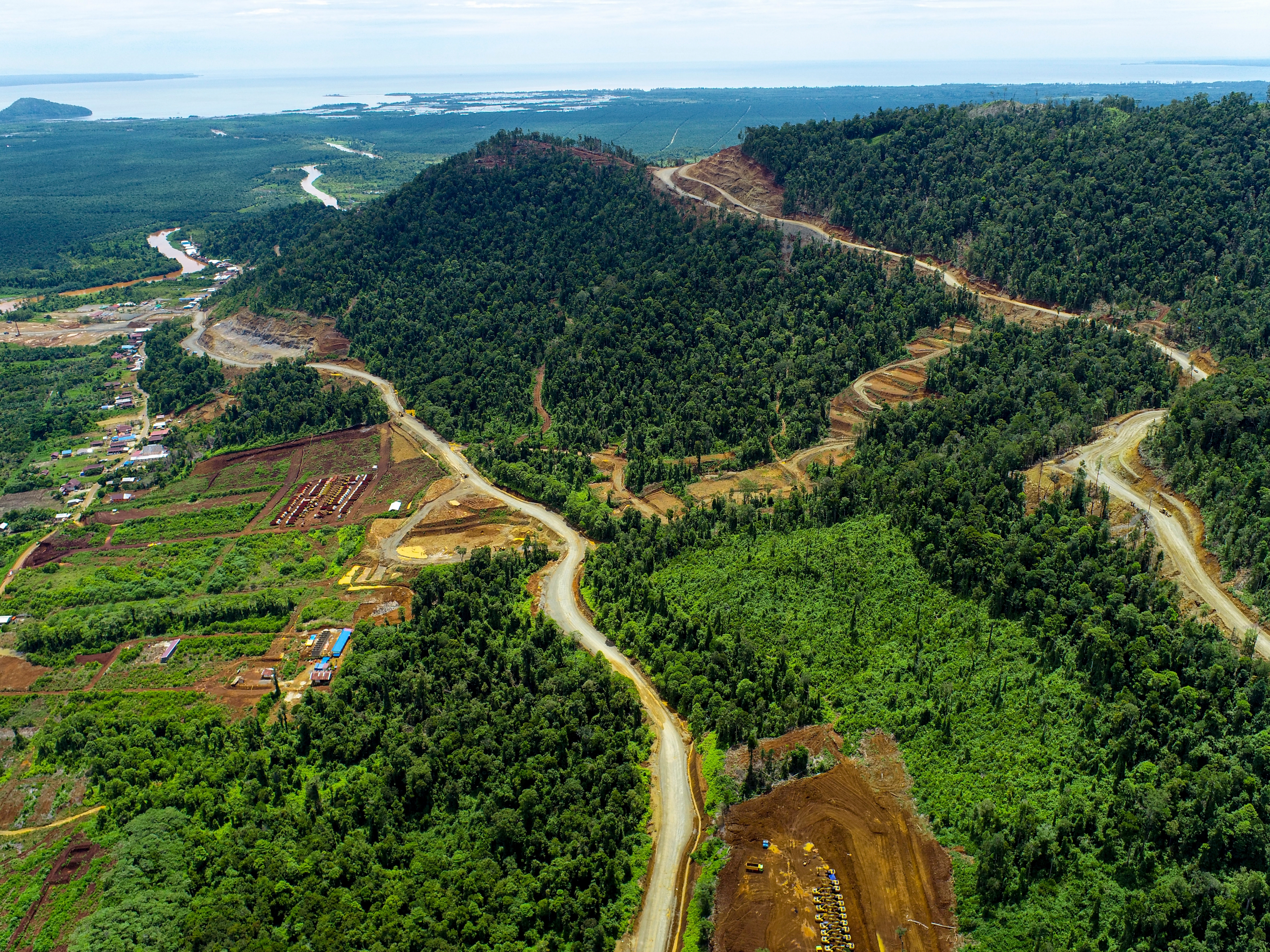
As the global demand for clean energy technologies rises, nickel—and other critical transition minerals—has become central to Indonesia's economic strategy. The country is leveraging its significant nickel reserves, key for electric vehicle (EV) batteries and stainless-steel production, to secure a growing share of the global market.
This economic success story, promoted by the Indonesian government and showcased in various media outlets, has contributed to the country’s overall economic growth, which remains at about 5 percent in 2024, and to growth in nickel-producing regions. For instance, North Maluku has been the best performing province, with an average economic growth of 20.1 percent from 2021 to 2023, driven largely by the nickel industry. Central Sulawesi, the second-best performing province, has similarly benefited from the nickel industry. Building on the successes of his predecessor, President Joko Widodo, the newly elected President Prabowo Subianto plans to further strengthen policies promoting exploitation and value addition of transition minerals, including through a possible revision of the mining law.

However, significant questions remain about how this growth will contribute to sustainable development outcomes for Indonesians, particularly in tackling poverty, unemployment and inequality in mining regions. Additionally, concerns around the socio-environmental impacts and the corruption risks associated with both mining and value addition continue to pose significant challenges. At a macroeconomic level, there is a rich debate on the role of mining and mineral value addition in a broader national strategy for economic diversification and broad-based economic development.
The world’s attention is increasingly focused on how Indonesia will tackle the next phases of its transition minerals story. Researchers and officials from a wide range of countries are looking to learn from Indonesia’s nickel story. At a recent NRGI-organized gathering at the Rockefeller Bellagio Center, leading thinkers from Africa, Asia and Latin America discussed innovations in the transition minerals space and options to implement recommendations from the UN Secretary-General’s Panel on Critical Energy Transition Minerals. However, some analysts have expressed skepticism about the viability of the government’s stated ambitions to further advance downstreaming— which include achieving full coverage of the EV nickel battery value chain in Indonesia, producing EVs in Indonesia and expanding downstreaming to other minerals and sectors in coming years. These differing perspectives underscore the ongoing clash of narratives around mining and value addition ambitions in Indonesia.
On 10-11 December 2024, NRGI, in collaboration with ViriyaENB, gathered more than 30 Indonesian experts to discuss how Indonesian citizens can further benefit from opportunities related to their country’s transition minerals wealth. The workshop focused on how to think through key governance challenges around Indonesian transition minerals, with NRGI experts contributing international experience and perspectives. This event marked a significant step in NRGI’s reengagement in Indonesia, which started in 2024. NRGI’s renewed engagement is part of its global priority to support the fair and sustainable management of the global race for transition minerals, including through successful value addition and equitable development policies.
The discussions at the workshop revealed several key present and future issues of relevance to the country’s transition minerals: the need to move beyond polarized narratives of downstreaming; the impact of technology and geopolitical uncertainty on the window of opportunity; the necessary ambition to improve environmental, social and governance (ESG) performance; and the importance to connect and bridge the gaps between Indonesian stakeholders.
Downstreaming: Moving beyond polarized narratives
Workshop participants discussed how views on Indonesia’s nickel downstreaming risk becoming polarizing—either focusing too heavily on “success” (e.g., growth in production and government revenues, progress along the nickel battery value chain) or on “failure” (e.g., social and environmental impacts, inequitable sharing of benefits). They noted that this lack of nuance can hinder constructive dialogue and improvements. A recurring theme was the need for better metrics for evaluating downstreaming policies beyond production and revenues. Participants highlighted the importance of building on existing research that analyzes both benefits and costs, helping understand how much value addition policies are benefiting Indonesians, particularly those living in mining-affected areas.
On the benefits side, participants indicated that metrics should include the issue of equitable distribution (e.g., at the subnational provincial and regency level) and various kinds of benefits (e.g., not just growth in production, revenues or GDP, but also the impact on unemployment and poverty reduction). Such metrics would also need to measure the tradeoffs that can result from downstreaming growth (e.g., negative impacts in the agriculture sector and agrarian conflicts, deforestation, pollution and emissions, etc.). Developing such metrics and integrating them more consistently into policy discourse was viewed by participants as particularly useful and timely given the new Indonesian government’s stated aim to continue and extend the downstreaming approach as referenced above.
These discussions aligned largely with NRGI’s recent briefing Six Keys to Unlocking Equitable Value Addition in Mining (now available in Bahasa Indonesia). The briefing emphasizes that governments need to set clear goals around their value addition strategies, analyze trade-offs and costs —not just benefits—and implement these strategies transparently to enable assessment by citizens and continuous improvement.
Window of opportunity: Impact of technological and geopolitical uncertainty
Participants expressed interest in deeper research and public discourse around the impact of various market and geopolitical scenarios. Indonesia’s nickel progress has been shaped by contextual factors such as rising global demand for nickel in clean energy applications like EV batteries. However, battery technologies are constantly evolving, with factors ranging from price and performance to supply and reputational risks (e.g., concerns around child labor and human rights in the sourcing of cobalt from the Democratic Republic of Congo or emissions and deforestation around nickel in Indonesia).
One issue raised was whether the window of opportunity for Indonesia’s nickel downstreaming is shrinking due to the projected growing market share of lithium iron phosphate (LFP) batteries, at the expense of nickel-based batteries (NMC). The government is aware of this challenge and is taking steps to mitigate it, including by managing nickel supplies to balance government revenues in the short term and lowering NMC battery costs to extend their viability.
Geopolitical tensions, particularly the potential for a U.S.-China trade war, were also discussed as a potential significant obstacle to Indonesia’s downstreaming ambitions. Chinese companies are major nickel mine owners in Indonesia, with around 40 percent of production, while Indonesian companies account for just 10 percent. Government industrial policies have also pushed Chinese investors to expand from nickel mining to refining, but this substantial involvement means rising trade tensions between the U.S. and China could be a barrier for Indonesian nickel reaching American markets—especially given how provisions in U.S. legislation discourage the use of minerals tied to Chinese companies. While geopolitical competition could attract more non-Chinese investment, the change in U.S. administrations have reduced the likelihood of a U.S.-Indonesia free trade agreement that could be catalytic for such investments.
ESG: Ambition to improve performance
The workshop also focused on how Indonesia can enhance its ESG performance in the mining sector. Participants emphasized that the current polarized environment means that civil society often has to raise issues by “shouting” to get attention on serious social and environmental, as well as governance and corruption concerns.
For example, corruption in mineral licensing—both upstream and downstream—is a significant barrier to equitable development in transition minerals supply chains globally, and Indonesia is no exception. This can significantly impact the success of downstreaming efforts. Workshop participants focused on ways to reduce corruption risks, emphasizing the risks around strong ties between politicians and the mining industry, and the lack of serious anticorruption commitments from many mining companies. Transparency International-Indonesia recently assessed 121 mining companies and found an average anti-corruption compliance score of only 0.31 out of 10, with only 6 companies having clear anticorruption policies.
Participants discussed initiatives launched by the government to improve ESG performance. The PROPER standard, managed by the Ministry of Environment and Forestry (KLHK), assesses company performance in environmental management. Separately, the Indonesia Sustainable Finance Taxonomy, previously the Indonesia Green Taxonomy, was also developed through an interministerial effort. Meanwhile, the SIMBARA system, managed jointly by the Ministry of Energy and Mineral Resources, the Ministry of Transportation, the Ministry of Industry and the Ministry of Trade and Ministry of Finance, was designed to strengthen commodities traceability. Initially used for coal, SIMBARA now also applies to nickel, and is expected to expand to more minerals.
Participants expressed cautious optimism about the potential of these initiatives to meet the growing demand for improved ESG in Indonesia, driven in parts by concerns from affected communities near mine sites. However, they still need to prove their effectiveness. These efforts could build on Indonesia’s commitment to the EITI (Extractive Industries Transparency Initiative), which includes a pilot community engagement in Morowali to ensure a just transition. Government-led initiatives could also learn from market-driven global standards like IRMA (Initiative for Responsible Mining Assurance), which is already gaining traction in Indonesia, with some companies committing to IRMA audits. These efforts can help encourage companies to adopt more responsible mining practices. The discussion also emphasized the need for Indonesian stakeholders to consider ESG standards within the global geopolitical context. As Western actors push for stronger ESG Standards, especially in competition with Chinese companies, Indonesian leaders must balance these dynamics while prioritizing the needs and rights of people.
Connection: Bridging the gaps between stakeholders
A key takeaway from the workshop was the need for stronger connections and collaboration between the diverse range of stakeholders involved in the governance of nickel, other transition minerals and processing. Participants highlighted that while Indonesian stakeholders have substantial expertise, collaboration is limited, impeding progress on equitable development. Deeper dialogue and coordination among various stakeholders is important, including among:
- Government entities (central and local), researchers, civil society and local communities.
- National and local actors, focused on national policy opportunities and risks at the local level near mining sites projects.
- Indonesian policy experts and geopolitics and global market analysts, to provide nuanced perspectives on ongoing reforms within the broader global context.
- Stakeholders working on equitable development in Indonesia and those focused on international mineral equity and governance initiatives.
- Experts on downstream products and markets (batteries, EVs)– and those focused on mining, to strengthen policy recommendations and connect mineral development with supply chain development and diversification.
The richness of the workshop underscored the depth of expertise in Indonesian civil society organizations, think tanks and academics on transition minerals. These voices must be amplified and included in policymaking to ensure that Indonesia’s people benefit from the opportunities provided by transition minerals while managing the associated risks.
Indonesia’s experience—both successes and challenges—can serve as a valuable model for other low- and middle-income mineral-producing countries as they develop and implement their own strategies to manage their transition minerals sustainably and equitably.
Transforming Governments' Permitting Process: Can the Dream Become Reality? (Mining Indaba)
Cape Town, South Africa

This event will explore strategies for streamlining permitting processes in the mining and energy sectors without compromising environmental, social, and governance (ESG) standards. It will bring together experts, policymakers, and industry stakeholders to share best practices, identify bottlenecks, and discuss innovative solutions for balancing efficient permitting with responsible resource management. The discussions will also delve into the roles of cadastral systems, the implications of 'use it or lose it' policies, and the integration of artisanal and small-scale miners into national permitting frameworks.
Speakers:
- Aidan Davy, Co-Chief Operating Officer, ICMM
- Josh Goldman, Co-founder and President, Kobold Metals
- Nafi Chinery, Africa Director, NRGI
- Martin Lokanc, Senior Mining Specialist, World Bank
- Helena Nonka, Strategy & Sustainability Director, Anglo American South Africa
Featuring NRGI's

Nafi Quarshie
Africa Director
The Consolidated Mining Standard Initiative Must Dig Deeper

Four mining industry associations— The Copper Mark, ICMM, Mining Association of Canada (MAC) and World Gold Council (WGC)—are consolidating their different voluntary responsible mining standards into one global standard, the Consolidated Mining Standard Initiative (CMSI). They aim to produce a standard that verifies practices at the level of facilities, such as mines or smelters, and that end users can ultimately use to identify responsibly mined materials.
While the stated goals of the CMSI—to reduce complexity and clarify responsible practices—are laudable, many civil society actors have expressed skepticism after reviewing the draft documents released for the October-December 2024 public consultation on the CMSI. Some question why a new standard is needed given that a strong, independent, facility-level standard already exists in the form of IRMA, the Initiative for Responsible Mining Assurance. Some are concerned that the CMSI could be a power grab by the industry associations—a way to preempt governments and international bodies which seek to establish rules to minimize the harms associated with the race to renewables, for which minerals and metals are critical inputs.
Given the reach and influence of the four partnering industry associations, everyone interested in responsible mining must take the CMSI seriously. The partner associations anticipate that the CMSI could be used by as many as 100 mining companies across approximately 600 facilities in around 60 countries. What is more, policy developments in some jurisdictions may further boost the potential influence of standards like the CMSI. Most notably, the EU Critical Raw Materials Act (CRMA) specifies that companies can use certification schemes that meet the EU’s criteria to verify compliance with sustainability standards for strategic projects involving critical raw materials, particularly those sourced outside the EU.
NRGI’s own analysis of the CSMI points to four key areas where the standard must be improved if it is to contribute positively to the sector. These comments are based on inputs from NRGI colleagues working in over a dozen mineral-producing countries. They also build on the recent NRGI publication Behind the Schemes which identifies gaps in the ways that many existing mining sector certification schemes—including those of The Copper Mark, ICMM and the Mining Association of Canada (MAC)—address corruption.
1. The CMSI’s performance framework needs significant adjustment to ensure credibility.
The draft CMSI presents requirements under three levels of performance: “foundational”, “good” and “leading.” While a gradual framework like this can present companies with a pathway to drive improved performance over time, the requirements at each level currently need careful adjustment:
- Many of the foundational level requirements are currently so low that they risk undermining the whole standard, particularly given that the current draft standard allows companies to still claim that they are in alignment with the standard even if they only meet foundational practice in some areas. Framers of the CMSI should strongly reconsider the foundational practice requirements or remove the level altogether.
- The good practice level should be renamed if it is to remain the level that is in line with industry standards and international norms, frameworks and guidelines. “Satisfactory practice” would be more appropriate. Furthermore, many requirements at this level currently fall short of existing standards including on contract transparency, payments to government, responsible taxation, and anticorruption. To demonstrate that this level aligns with the standards it claims to, the CMSI must publish an equivalency mapping ahead of the second consultation showing which existing standards, frameworks and guidelines have been considered and how they have been incorporated.
- The leading practice level should be called “good practice”; so many companies already demonstrate the constituent elements that the current title is inaccurate. True leading practice is about pushing past existing horizons and is a level beyond what can be contained in a written standard.
- Finally, there are problems with the way that international law relating to human rights, child labor, slavery, Indigenous peoples and corruption is represented among the three practice levels. Full compliance with local and international laws must be a foundational practice.
NRGI’s specific comments on the CMSI requirements are available in this document.
2. The CMSI needs a standard approach for instances where the standard’s requirements are prohibited by local laws.
There may be limited instances where facilities will not be able to meet certain CMSI requirements because they are prohibited to do so by local laws. For example, certain disclosures may be prohibited under confidentiality laws. In these instances, the standard should consistently 1) prevent companies from incorrectly claiming that local laws prohibit CMSI implementation, and 2) help host country jurisdictions improve and align their legal frameworks with international standards. To do this, the standard should compel companies to first identify and publish the specific legal text that prohibits compliance in the published assurance report; and second, notify the government that its legal framework is not in line with the CMSI.
3. The CMSI should set high thresholds for companies to make performance claims.
Much of the CMSI’s credibility will rest on how easy it is for companies to say that they meet the performance requirements of the CMSI. While there is a danger in setting this threshold so high that it acts as a deterrent to uptake and implementation, there is greater risk that the threshold is set so low that CMSI claims do not convey meaningful information about company practice. The policy should require facilities to meet all of the good practice requirements to make a performance claim. Requiring anything less than 100 percent adherence would mean that not all performance claims are equal, leaving uncertainty as to whether specific performance criteria have been met (e.g., child labor or human rights), and ultimately making the performance claim less meaningful. One alternative might be to identify core good practice requirements that must be met as part of a performance claim. However, this approach would add further complexity to the standard, and it may not be possible to reach consensus about which requirements should be excluded. The best option is to require facilities to meet all of the good practice requirements to make a performance claim.
4. The CMSI needs a robust multistakeholder governance model to remain relevant in the long term.
True multistakeholder governance would provide channels for different stakeholders to scrutinize and guide the development and application of the CMSI over time, allowing the CMSI to self-correct and evolve as problems are discovered, as circumstances change and as responsible mining practices evolve. Multistakeholder governance is also a requirement for any certification scheme to be recognized by the EU under the Critical Raw Materials Act.
The proposed governance structure, which specifies participation of different interests in the CMSI board and committees, ensures some level of diversity but falls short of true multistakeholder governance. As the EU Critical Raw Materials Act outlines, multistakeholder governance requires a mandate “which confirms or supports the involvement of the multi-stakeholder representatives of that certification scheme”. The proposed CMSI governance model falls short in four ways:
- Stakeholder groups are not able to select their own representatives. Rather, the choice of board and committee representatives is for the chair to decide in consultation with the Stakeholder Advisory Group and the Industry Advisory Group. This raises the possibility that representatives could be seen as illegitimate by the groups they represent.
- There is no process for how different board members should engage and consult with their constituencies. This is critical to ensure that individuals and groups outside of the formal governance structures of the CMSI have their interests and perspectives heard in CMSI policy processes. A straightforward fix would be to require and resource different stakeholder groups to develop their own constituency processes.
- The governance structure does not present any way of addressing the clear asymmetries of power that will be present in the proposed policy bodies. This presents the danger that powerful and well-resourced groups such as multinational companies are able to steamroll decisions, reducing the participation of less-resourced groups to window dressing. The CMSI should support stakeholder groups to develop their own coordination and support structures to ensure that constituency representatives are sufficiently prepared to engage in CMSI decision making processes.
- Some important stakeholder groups are missing from the proposed structure. A role for civil society is necessary for the CMSI to meet the EU definition of multistakeholder governance under the Critical Raw Materials Act, yet the governance model does not use the term civil society. Instead, it only mentions some of civil society’s constituent members under mining and value chain stakeholders. The CMSI must specify a role for civil society as a whole. Another important omission is governments, who are uniquely positioned to help mining companies meet the requirements of the CMSI.
NRGI’s specific comments on the CMSI governance model are available in this document.
Behind the Schemes
Decisionmakers are increasingly looking to certification schemes to provide information on the sustainability of mining operations, yet these schemes have significant room for improvement regarding how they address corruption in their standards.
How to Win the Race to Access Critical Minerals for the Energy Transition in a Sustainable and Equitable Manner?
Baku, Azerbaijan

Access to critical minerals is increasingly understood as a condition without which not to achieve the green transition and energy security. Ensuring the supply meets future demand requires that we work simultaneously on sustainability, equity and financing. In this session, we will hear from initiatives that are trying to strike that balance, what challenges and opportunities they face in the process, and what is required from policymakers and various stakeholders to address these.
Speakers:
- Antonio Hill, NRGI
- Tom Haslett, U.S. International Development Finance Corporation (DFC)
- John Lindberg, International Council on Mining and Metals (ICMM)
- Lisa Sachs, Columbia Center on Sustainable Investment (CCSI)
- Nour Amrani, FLS
Featuring NRGI's

Antonio Hill
Advisor