
Behind the Schemes: Anticorruption Gaps in Mining Sector Certifications

Key messages
- Decisionmakers are increasingly looking to certification schemes to provide information on the sustainability of mining operations, yet these schemes have significant room for improvement regarding how they address corruption in their standards.
- The report assesses the content of the performance standards used by the Aluminium Stewardship Initiative (ASI), the International Council on Mining and Metals (ICMM), the Initiative for Responsible Mining Assurance (IRMA), The Copper Mark, and Towards Sustainable Mining (TSM).
- Schemes address some topics, such as revenue and payments and anticorruption procedures, relatively well; this may reflect the extent to which legislation and regulations address these topics. Schemes’ standards less frequently covered other issues, such as beneficial ownership and allegations of corruption. Many schemes, and the mining companies that use them, are missing an opportunity to assess the implementation of corporate-level anticorruption policies in mine-site assessments.
- The quality of certification schemes’ governance and assurance processes is essential to their effectiveness, yet many fall short of best practice. This undermines their credibility. Key governance challenges include the unbalanced representation of different interests within schemes and the risk of conflicts of interest in the auditing process.
- Decisionmakers risk becoming overreliant on certification schemes as indicators of responsible business conduct, which may be facilitated in part by industry influence over policymaking processes. Certification schemes are not a replacement for ongoing, robust due diligence into the environmental, social, and governance impacts of mining operations, including corruption, and the design and enforcement of robust regulatory frameworks.
- In a shifting standards landscape where there are efforts to both consolidate and review existing certification schemes, and a moment where the risk of corruption is heightened by growing demand for transition minerals, governments, mining companies, and certification schemes themselves must do more to address the topic of corruption. To do so effectively, they should focus their attention on solutions that will have the most impact in addressing this issue.
Governments worldwide are paying more attention to the role of minerals in the renewable technologies needed to transition away from fossil fuels. To meet growing demand for these minerals, policy-makers are largely relying upon the mining industry, which has a notorious track record for harm. Mining companies have abused communities and workers, polluted water sources, and perpetrated or been complicit in widespread corruption. While the energy transition may present an economic opportunity for some mineral-rich countries, past mining booms have often failed to deliver on their development promise, and many citizens are justifiably questioning whether the costs of mining outweigh the benefits.
Faced with these concerns, some policy-makers and investors are setting out conditions regarding the environmental, social and governance sustainability of mining projects they are willing to support. Mining companies use voluntary standards and certification schemes, also known as third-party assurance and accreditation schemes, to demonstrate that they meet a certain level of performance regarding environmental and social protections and overall governance. Operators of certification schemes do this by assessing the performance of companies against sustainability criteria set out in a voluntary standard. These standards, often developed, led, and governed by industry actors, vary significantly and can be subject to concerns regarding the transparency, governance and rigor of their processes.
In this report we seek to address the gap surrounding anticorruption approaches to mining sector certification schemes by answering the following questions:
- How well do certification schemes in the mining sector require companies to demonstrate anticorruption good practice?
- What governance challenges are posed by the use or structure of certification schemes.
To do so, we have developed assessment criteria outlining anticorruption best practice, conducted desk-based research and engaged with representatives from certification schemes, multilateral bodies, civil society and academia. Each question will be addressed in the following sections of this report. This research builds on the existing work of the Natural Resource Governance Institute (NRGI) to strengthen both regulatory and voluntary approaches to transparency and accountability in the mining sector, including our work to ensure that information gathered through certification processes is more accessible and useful to local communities and civil society in Latin America.
Stronger Transition Minerals Governance Is Imperative for Biodiversity Conservation

Effective climate action requires a holistic approach; yet the critically related issues of biodiversity and mineral governance are too often tackled in isolation. For world leaders gathering at the COP16 biodiversity conference, and looking ahead to the COP29 and COP30 climate conferences, there are tremendous opportunities for concerted action on this critical triple nexus.
A dangerous disconnect: The importance of transition minerals and biodiversity to climate action
Transition minerals are essential to achieving the UNFCCC COP28 commitments to a just and orderly transition away from fossil fuels, which requires a tripling of renewable power and doubling of energy efficiency by 2030. The International Energy Agency (IEA) projects that demand for minerals to power solar panels, wind turbines and electric batteries will triple by 2030 and quadruple by 2040.
However, nearly 40 percent of those minerals are in countries that exhibit weak or failing governance, which means they lack the laws, policies, practices and accountability mechanisms to ensure that mining does no harm and instead delivers benefits to their populations. More than half of the potential reserves for transition minerals are also located on lands where Indigenous or peasant groups hold recognized or claimed rights.
Mining’s detrimental impact on the environment is well known—and the risk of further damage is increased by the race to secure transition minerals. In Indonesia, the rapidly expanding mining of nickel needed for lithium-ion batteries used in electric vehicles and renewable energy storage has already resulted in the deforestation of an area of tropical forest the size of New York City. Close to one-third of Brazil’s critical minerals reserves are located beneath the Amazon Basin, posing a high risk of deforestation in one of the world’s most biodiverse areas. As the quality and concentration of copper ores decline, mining companies are expanding exploration in highly biodiverse areas, such as the Andean-Amazonian Piedmont, the Chocó Forest in Colombia and Ecuador’s Intag cloud forest.

The protection and promotion of forests and biodiversity complement the move to clean energy. Forests help stabilize the climate, contribute to food and water security, protect human health, and support adaptation to a warming planet. David Kaimowitz, of the International Land and Forest Tenure Facility, recently suggested that “when it comes to storing carbon, forests can potentially buy an extra 10 or 20 years for the Earth to manage its transition from fossil fuels.” Biodiversity enhances the resilience and balance of ecosystems, ensuring that natural systems continue to sustain life. It is especially vital for local communities and Indigenous Peoples, who depend on these ecosystems for their livelihoods and cultural practices. Recognizing the importance of biodiversity, 88 heads of state have signed the Leaders Pledge for Nature, committing to halt and reverse biodiversity loss by 2030.
However, public institutions, social organizations and private companies working on forests, biodiversity or transition mineral governance often operate in silos. This is hugely problematic as the urgency to provide transition minerals—including opaque partnerships initiated by countries aiming to secure a steady supply of these minerals—can precipitate a race to the bottom that undermines socio-environmental and governance standards.

The path to good governance runs through the forest
Civil society organizations and the international community working on mining governance should adopt a more holistic view of how nature contributes to sustainable development and human wellbeing. This includes valuing the traditional knowledge of Indigenous Peoples and local communities, and designing programs and projects that recognize the overlap between mining and many other activities and traditions. Similarly, organizations working to protect biodiversity, Indigenous Peoples’ and communities’ rights should better integrate mining governance in their work, understanding the political economy dynamics that sustain patterns of extraction, and fighting the corruption that perpetuates asymmetric power relations.
There are several immediate opportunities for actors to advance this more holistic approach:
- Implementing UN transition minerals guidance and recommendations. The UN Secretary-General’s Panel on Critical Energy Transition Minerals released guidance and recommended actions in September, placing mineral governance at the top of the climate agenda. The panel situated the guiding principle that “the integrity of the planet, its environment and biodiversity must be safeguarded” as an interconnected element of related principles on human rights, justice, economic development, anticorruption and peace. Panel members—including representative experts from producer countries like Chile, DRC and Indonesia; consuming countries and blocs like the European Union, China, U.S. and U.K; industry, investors; multilateral initiatives; civil society organizations and Indigenous Peoples movements—recognized the pressure that critical minerals extraction can place on people, biodiversity, water, geodiversity and ecosystems. The panel called for a new mining paradigm that encourages governments to declare protected areas as “no-go” zones for transition minerals extraction and calls for equitable targets and timelines for material efficiency and circularity approaches along the entire life cycle of transition minerals.
Building on the work of the panel, the UN should draft international water and biodiversity protection guidelines for mining operations for the energy transition in cooperation with Indigenous Peoples and other relevant rightsholders and stakeholders. This should include stringent measures to protect sacred sites from mining activities, recognizing their cultural and spiritual significance. Governments and companies should prohibit and avoid any mineral exploration or development in protected conservation areas and other locations of high biodiversity, conservation and cultural heritage value, as well as high-value carbon sinks, and apply the precautionary principle to support effective environmental protection measures. Government and companies should also end criminalization of environmental defenders and recognize and commit to protecting their rights and legitimacy by adopting and disclosing relevant policies to protect them from attacks, assassination, extrajudicial killings, violence, harassment (including through the form of strategic litigation against public participation (SLAPP)), and repression, and provide effective reparation.
- Improving due diligence. Consumers increasingly expect companies to carry out due diligence on the provenance of the minerals they source. Guidelines like the OECD Due Diligence Guidance for Responsible Supply Chains of Minerals from Conflict-Affected and High-Risk Areas provide frameworks for companies to address some social and environmental risks associated with mineral supply chains. The international community must ensure that due diligence standards include issues of mining governance, especially strong anticorruption measures, alongside effective provisions to protect forests and biodiversity, and that these are met.
- Integrating minerals governance and biodiversity in just transition frameworks. There is increasing attention to the need to promote a just transition in the Global South, including a work program created at COP28 and financial mechanisms, such as just energy transition partnerships (JETPs), to help low- and middle-income countries accelerate the transition toward renewable energy. Global organizations and public institutions working on biodiversity should integrate provisions to protect forests and biodiversity in these programs, and ensure that these protections are among the just transition principles at the core of the UN climate convention. For example, Indonesia’s JETP secretariat included biodiversity as one of the standards guiding its approach to just transition.
This month’s COP16 biodiversity conference is also a pivotal opportunity to align conservation efforts with the imperative of a just energy transition. As host, the Colombian government is promoting a global agreement to advance responsible mining practices for the protection of life and the environment, building on the UN minerals panel recommendations. This and other spaces connecting climate and nature conversations are an opportunity to improve collaboration, especially as COP30 will be held in an Amazonian country, Brazil, in 2025. It is a crucial opportunity for governments and international agencies, such as the UNFCC and Convention on Biological Diversity (CBD), to shine a spotlight on the intersection of biodiversity conservation and a just energy transition.
A coalition between those who seek to preserve and protect biodiversity, forests, nature and the environment, and those working to ensure the scale-up of renewable technologies benefits, not harms people and planet would powerfully enable climate action. A focus on governance—on the laws and policies that shape actions, who has the power to take decisions, and who is held responsible for the results—will unify, amplify and accelerate these collective efforts. At COP16, NRGI will seize the opportunity to advance such concerted collaboration.
Transparent Endings: Principles for Oil and Gas Companies Transferring Assets

Nicola Woodroffe spoke at the launch of Responsible Exit Principles for Oil and Gas Companies, focusing on the guidance’s transparency and engagement principles. This is an excerpt of her remarks.
When transferring a petroleum asset, but also when disengaging from a project more generally, transparency is a critical factor, and a cross-cutting issue.
In these principles, we’ve affirmed existing international standards such as OECD guidelines, the Extractive Industries Transparency Initiative, the UN Guiding Principles on Business and Human Rights and others that basically require that companies 1) contribute to addressing climate change, 2) manage their environmental and social responsibilities, and 3) disengage responsibly from the countries and the communities in which they operate—and part of that is providing transparency on the impacts of their assets transfers.
Responsible Exit Principles for Oil and Gas Companies
A framework to guide asset transactions and ensure that environmental and operational integrity is upheld
Those broad international normative standards should not be viewed as just voluntary, but as increasingly binding and increasingly necessary to comply with in order to protect against legal, regulatory, financial and reputational risk. Part of the guidance’s transparency principle is about being able to demonstrate compliance with the principles through disclosures of key provisions of the sales and purchase agreements, which address how the buyers and sellers are going to comply with the decommissioning obligations and ensure that there's adequate funding and also the buyer’s commitments with respect to emissions management, measurement, reporting and reduction.
Another key aspect is providing clarity on the role of asset transfers in the seller’s broader transition strategy. A key goal of these principles is to prevent the conflation of asset transfers with meaningful emissions reduction. So the goal here is to distinguish and show how the transfer affects the seller’s absolute emissions, emissions intensity and progress towards emissions targets, building on existing standards such as the Greenhouse Gas Protocol, EDF and Ceres’ Climate Principles, and others.
A third very important component is providing clarity on how the buyer and seller are going to manage environmental and social impacts, the environmental and social liabilities that are attached to the asset that's being transferred, and how they will be managed after the transfer. This is a critical issue for ensuring social licence to operate and complying with existing international standards. This would include disclosing a list of the assets being transferred so that all stakeholders know what is included in the transfer, and what are the environmental and social liabilities that are attached to those assets. Also: disclosing the buyer’s commitments with respect to community development, local procurement, local employment and how they will be continued after the transfer based on what the seller was doing before, and how impacts will be minimized. There should also be transparency around the deployment of funds from the disposal of the asset and outcome of stakeholder consultation. It is an existing international standard requirement to consult with stakeholders when disengaging from an asset.
In the guidance we share some key issues for stakeholder engagement that we think are priorities based on the inputs we received from more than 100 consultees, but also our experience in working with a range of countries as NRGI and Carbon Tracker. This would include engaging with relevant stakeholders, like host governments at the national level (but also at the subnational level), Indigenous peoples, local communities, and civil society at large, on changes in government policy that may be required for host governments to implement their own climate strategies. This also includes engaging on changes in exploration and production contracts or domestic supply agreements that may be required as a result of government policy, but also commitments by the companies with respect to decommissioning and to limiting production. We also recommend engagement on ensuring that that local benefits are not reduced—looking at how to maintain community development arrangements; how to maintain employment; if there will be impacts on employment; whether there will be reskilling, upskilling, redeployment; and benefits for workers. It is also important that companies engage with their investors on specific asset transfers and on asset transfer policies in general.
There are more details in the principles, but one that I would highlight is ensuring consistency between lobbying and climate commitments and climate statements that companies make. This builds on standards such as the Global Standard on Corporate [Climate] Lobbying and it also applies to lobbying host governments. These should be aligned with the companies’ stated climate commitments.
And diversification opportunities. To the extent that a company is looking to diversify out of oil and gas, it would be beneficial to engage with relevant stakeholders on how the company can contribute to domestic diversification and clean energy provision [in host countries]. The goal is to engage to minimize decreases in local benefits and to promote sustainable development.
Responsible Exit Principles for Oil and Gas Companies

Asset transfers in the oil and gas industry are not new. Yet, as the energy transition accelerates, there is a growing risk that oil and gas companies sell assets in response to pressures to decarbonize. However, transferring assets to operators with lower standards can lead to higher emissions and increased risks. This briefing offers a framework to guide these transactions and ensure that environmental and operational integrity is upheld.
Designed for use by a range of stakeholders, these principles set out best practices to help companies manage financial, legal, environmental and reputational risks during asset transfers. They were developed with input from representatives of the oil and gas industry; investors, the financial, legal and accounting professions; the insurance industry; standard-setting bodies; academia; and civil society. All stakeholders can adopt and refine these standards to support a responsible, low-emissions future and harmonize regulatory practices across the industry.
These principles are relevant to:
- Buyers and sellers (public/state-owned/private) of upstream oil and gas assets to manage financial, environmental, legal and reputational risks.
- Financial institutions who can refer to these principles when determining whether and under what conditions to lend to, invest in, underwrite, advise or insure a company in the oil and gas sector
- Professional advisors (legal counsel, who can refer to these principles when drawing up contracts of sale; external auditors, who can assess the quality of optional disclosures in the notes to the financial statements and narrative disclosure; and consultants, who can weigh up the implications of these principles when advising on strategic priorities, including using M&A as a tool to accelerate business model transformation)
- Governments and financial regulators, who can use these principles to consider how best to regulate both decommissioning activities and asset transfers within their jurisdictions, including the impact such transfers may have on nationally determined contributions (NDCs), and the implications for fiscal policy.
- Host communities, civil society and other accountability actors who can monitor the terms and implementation of asset transfers to hold sellers and buyers accountable for their compliance (or non-compliance) with these principles, including as part of broader just transition considerations.
Related NRGI team members:

Nicola Woodroffe
Legal Analysis Lead

Erica Westenberg
Governance Programs Director
Responsible Change: How Governments Can Address Environmental, Social and Governance Challenges When Petroleum Assets Change Hands

-
As the world moves toward a future beyond oil and gas, petroleum assets will change hands, with different kinds of companies replacing others.
-
Since 2014, around USD 88 billion in assets have moved from publicly listed to private companies. The roles of sub-Saharan African and Latin American companies in their home countries have expanded.
-
Globally, the role of national oil companies (NOCs) is growing. NOCs have acquired around $24 billion in assets from non-NOCs since 2014.
-
The growing role of private and local companies and NOCs potentially gives producer countries greater control over their petroleum sectors, including the pace of an eventual phaseout.
-
However, these companies often have less capacity and fewer transparency, environmental, social and governance commitments than publicly listed international companies. This increases the risk that these companies’ operations will negatively impact the environment and communities, and that they will be unable to pay for decommissioning when production ends.
-
Many assets that sub-Saharan African and Latin American NOCs have acquired appear vulnerable to energy transition risks.
-
Governments should exercise approval rights over asset transfers to ensure buyers have requisite capacity to operate with high standards. They should ensure transparency to allow host communities and the public to better understand transfer impacts and how the government and/or companies will manage them, and strengthen regulations to address key issues arising from transfers including emissions management and reporting, and decommissioning funding.
-
Governments should require NOCs to make adequate disclosures about their acquisitions to ensure NOCs manage risks to the public purse.
As the world journeys towards a future beyond oil and gas, oil and gas assets will continue to change hands, with different kinds of companies filling the gap left behind by others.
There is growing concern that, as international oil companies (IOCs) face pressure to reduce emissions, they are selling upstream petroleum assets, in part, to shift emissions off their books and ostensibly achieve their decarbonization goals. On balance and at a global level, assets are moving from publicly listed to private companies and from companies with higher environmental commitments to those with weaker commitments. The result, according to some evidence, is that these sales do not simply transfer emissions to new parties but may increase them.
At the same time, some national oil companies (NOCs) seek to acquire assets left behind by the departure of IOCs to avoid production decline and ensure domestic energy supply.
This briefing shows how asset transfer trends may differ by region and country, and therefore present different risks and raise different policy considerations for producer country governments. It focuses on the Global South countries and regions in which the Natural Resource Governance Institute (NRGI) works.
NRGI analyzed upstream petroleum asset transfers from 2014 to the first half of 2023, using Rystad data to identify trends globally, at the sub-Saharan African and Latin American regional level, and in NRGI’s countries of focus.
This analysis shows that petroleum assets worldwide have moved primarily from publicly listed to private companies during the period studied. Since the start of 2014, around USD 88 billion in assets have moved from publicly listed to private companies. Both sub-Saharan Africa and Latin America have seen net divestment by publicly listed companies. In sub-Saharan Africa, there has been a transfer of around $23 billion in assets from publicly listed to private companies since the start of 2014, while in Latin America, around $11 billion in assets has moved from publicly listed to private companies.
Mining-Affected Communities: The Elephant Not in the Room

At Mining Indaba in Cape Town this week we heard countless references to mining-affected citizens of African countries. The word “communities” steadily fell from the mouths of mining executives and government officials. Most suggested that maximizing benefits and minimizing harms for community members was a sacrosanct priority.
But absent from almost all of the rooms where this word was repeatedly invoked were…members of mining-affected communities. The Indaba agenda did include one invitation-only engagement session, between the International Council on Mining and Metals and community representatives. And Indaba organizers graciously accommodated some international non-governmental organizations, including NRGI. But if communities’ perspectives are as crucial as executives and officials imply, then community members and activists must be present in a sustained way at Indaba and equivalent forums—and not just as featured guests. (NRGI president and CEO Suneeta Kaimal raised this issue last year in connection to the International Energy Agency's Critical Minerals Summit.)
My colleague Tengi George-Ikoli shared with me an African adage: “A man’s head should not be shaved in his absence.” Community voices are essential in spaces like Indaba to ensure that decisionmakers account for the social, economic and environmental impacts of mining and minimize them.

In that vein the deep-pocketed mining companies and rich-country governments that sponsor Mining Indaba could contribute to a pooled fund that grants admission and travel bursaries to community activists and reporters from Africa’s mineral-rich nations. One such journalist who was able to self-fund a trip to Cape Town this week told us that they were the only reporter from their country in attendance. “No media houses back home can pay for journalists to come here,” they said.
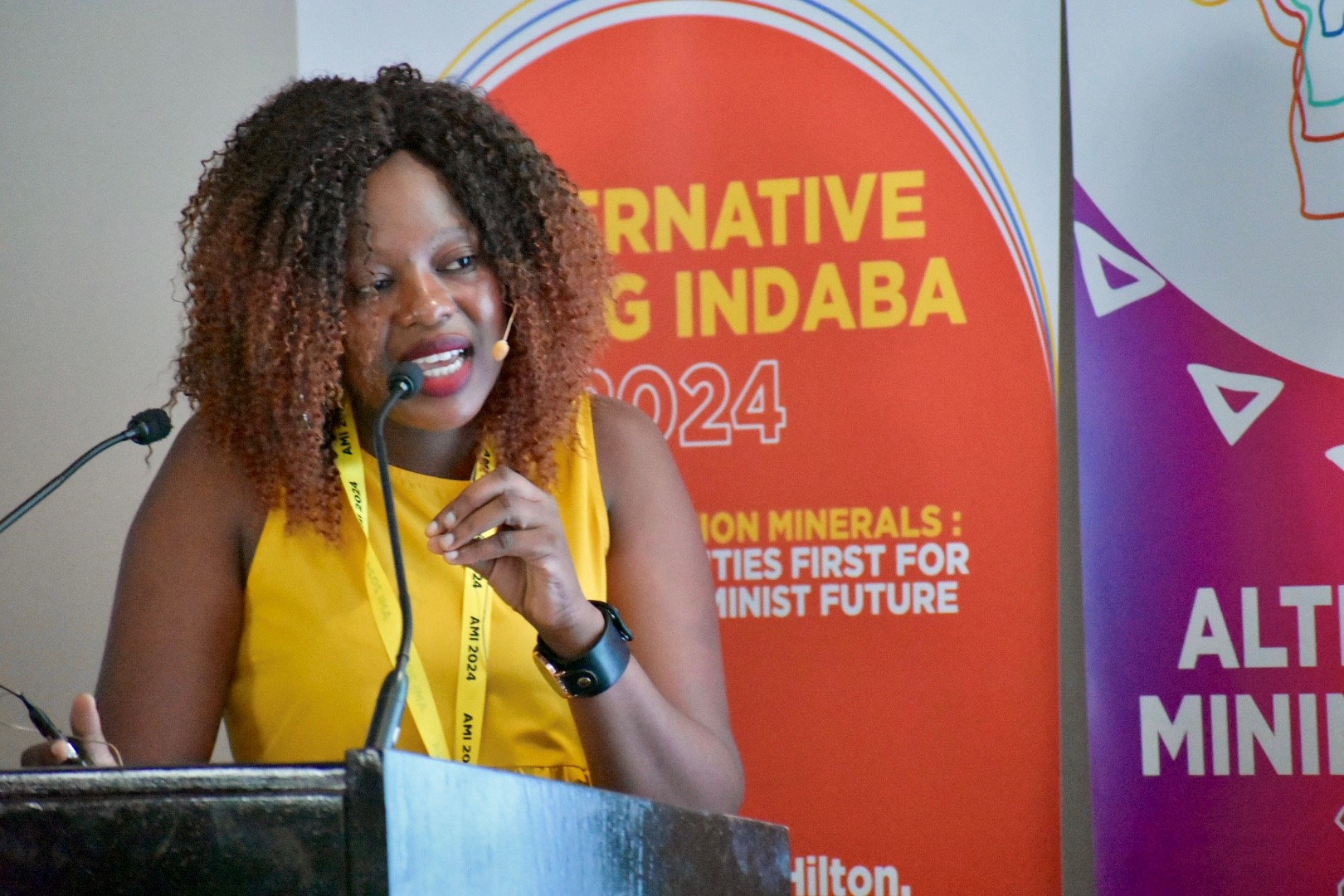
One place that was replete with community stakeholders was Alternative Mining Indaba, which has operated in distant parallel to the main Indaba for 15 years. (Many AMI attendees are funded by larger non-profits to undertake the trip.)
There, we heard searing accounts of the impacts on communities. A young woman from Zambia, speaking out against child labor in the industry, implored her listeners: “How can we children build a future for ourselves from inside of a mine?” She received enthusiastic applause—from people who on their own can do little to address her concerns. The power brokers were all at the main Indaba site six kilometers away.
While mining companies do invest in outreach to communities, and have provided valuable services in many instances, at the continent’s biggest mining confab those directly affected by extraction are scarce.
Community relations are just one facet of the work that remains for the influencers and decision-makers connected to the mining sector. State-state deals and the ways in which African countries might add value to raw commodities were also hot themes in Cape Town. (Though one industry lawyer said the quiet part out loud when he intoned from an Indaba stage that “governments really should have no role in mining.”) But until communities and civil society have a more fixed and prominent seat at the table, and agendas reflect the importance of their voices, progress on any of these challenges will be difficult.
Learn more about just energy transitions
How Companies at Africa’s Mining Indaba Can Take Meaningful Action for People and Planet

Next week, policymakers, industry executives, civil society actors and development partners will converge on Cape Town, South Africa for the 2024 African Mining Indaba. Now in its 30th year, Indaba is an annual confab, primarily known as a venue for dealmaking and discussions between governments and mining companies.
This year’s theme—“Embracing the power of positive disruption: A bold new future for African mining”—is encouraging. As players like the U.S., EU, China and most recently Gulf oil powers scramble for the continent’s minerals, this time must indeed be different. The history of mining in Africa is riddled with economic, social and environmental injustice, often accompanied by underinvestment and supply disruptions. A triple win—for people in African mining countries, for their environment, and for the energy transition itself—is sorely needed.
Only by reducing investor risks arising from disputes with governments and communities will companies be able to sufficiently increase capital flows into Africa's mining sector to take full advantage of booming demand.
Civil society organizations and activists at the Alternative Mining Indaba, a very un-corporate parallel Indaba universe, have for years made the case for a better deal for Africans. World leaders are belatedly recognizing the importance of transition mineral governance for ensuring the production of green technology needed for climate change mitigation. At the COP28 climate conference, UN Secretary-General António Guterres stated that “the extraction of critical minerals for the clean energy revolution… must be done in a sustainable, fair and just way.”
Companies must also ensure that Africans get a better deal. Only by reducing investor risks arising from disputes with governments and communities will they be able to sufficiently increase capital flows into the sector to take full advantage of booming demand. And it seems companies are beginning to realize this. At last year’s Indaba, industry executives made frequent reference to “ESG” (environmental, social and governance considerations). And at this year’s edition companies are again queuing up to speak on panels about sustainability.
However, in the last year concrete action has been sporadic at best. This year’s Indaba is a good opportunity for companies to clearly define what actions they will take. Below are some of these actions on value addition, social and environmental protection, and corruption.
Value addition
Value addition—usually meaning the refining of raw commodities into something closer to their final consumable form—is increasingly sought after in most mining nations, as it brings additional revenues, jobs and, in some cases, an opportunity to produce inputs for producers’ domestic economies. African leaders reinforced their call for more value addition to take place on the continent at last year’s inaugural Africa Climate Summit.

To realize these ambitions, African governments must develop a clear and credible mineral-specific strategy. International players such as the U.S. and European Union need to convert memoranda of understanding on mineral supply cooperation with the likes of the Democratic Republic of the Congo and Zambia into concrete action to derisk financing and address other bottlenecks.
However, industry also has a critical role. Companies should:
- Support independent, publicly disclosed value addition feasibility studies. Companies should work with governments to better incorporate value addition planning in the licensing process and ensure transparency at key decision points. Companies, such as those soon to start mining Tanzania’s rare earths and Ghana’s lithium, increasingly agree to some form of scoping of value addition feasibility. But these assessments are often ill-defined and lack clear timeframes, and neither the companies nor government tend to publish them. Independent, published feasibility studies as part of license conditions would not only help governments to manage public expectations when value addition is not feasible but also help them to make value addition more feasible in the longer term by identifying bottlenecks.
- Coordinate. Coordination between mining companies operating in the same or neighboring countries could alleviate challenges of costly infrastructure needs and scale. Guinea’s huge Simandou iron ore project is finally proceeding with at least eight companies coordinating to construct two mines, a railway and a port; but companies in Guinea continue to primarily export bauxite ore despite sufficient scale for large alumina refineries that could bring down costs if they coordinated to supply feedstock. Governments should help to bring companies around the table, but companies themselves can be more proactive in this regard.
Social and environmental protection
Limiting the social and environmental harms of mining is just as crucial as maximizing the benefits. Some mining companies have taken positive, preliminary steps in this area—for example, “nature positive” commitments made by International Council of Mining and Metals (ICMM) members last month. But companies can and must do more. They should:
- Observe and expand mining no-go zones. ICMM members have committed to not exploring or mining in UNESCO world heritage sites and complying with the objectives of legally designated protected areas. However, this falls short, for example, of protecting forests of high conservation value inside and outside of protected areas—a key step for protecting communities and the environment. Nearly 27 percent of the Congo Basin’s intact tropical rainforests overlap with mining concessions. Governments should designate no-go zones, but companies shouldn’t wait for that to act themselves.
- Meaningfully consult with communities. In principle, governments and companies have increasingly recognized the need for “free prior and informed consent” from communities before allowing extraction. However, this engagement often has limited meaning. A recent analysis of 26 African countries found that seven do not require public consultation until after companies have completed a draft environmental and social impact assessment, rather than during the drafting process. Given the importance of community relations for companies’ “social license to operate,” and the expertise that communities bring on managing their local environment, companies should undertake meaningful consultation irrespective of any legal requirements.
- Publish project-level information on impacts. More project-level information will enable greater engagement by local actors directly affected by mining’s social and environmental impacts. The new Global Reporting Initiative (GRI) mining standard, set to launch next week at Indaba, supports this move by emphasizing mine-site reporting on a wide range of impacts such as water, waste and emissions.
Corruption
Corruption stands in the way of a better deal for the people and environment in African mining countries, and with it more minerals to address the climate crisis. Without action, the risk that the scramble for Africa’s minerals fuels corruption is high: corruption allegations have already emerged in relation to the race for Africa’s lithium.
To effectively tackle corruption, companies should, among other actions:
- Reduce the use of agents and intermediaries. Corruption commonly comes in the form of company staff paying bribes to public officials via agents and intermediaries. Companies should follow the example of trader Trafigura, which in 2019 committed to no longer hiring third parties to perform “business development” functions (recently announced bribery charges related to activities in 2009-2011 show why action on corruption at the company was essential). Companies should exert extensive control over relationships with any remaining intermediaries.
- Be transparent. Companies should adopt and champion project-level contract, payment, commodity trading and beneficial ownership transparency in line with the Extractive Industries Transparency Initiative Standard (EITI) to make it easier for journalists, citizens and other accountability actors to detect corruption. While there are examples of good practice, such as Newmont and Rio Tinto, 73 percent of EITI supporting companies still do not meet the expectations on beneficial ownership transparency and 27 percent fall short on contract transparency.
- Ensure strong due diligence to avoid elite capture. In many countries, powerful officials and their allies receive unfair access to the mining sector and its profits, including through influencing the choice of subcontractors and partners. Petrobras, the Brazilian national oil company, has reduced these risks following the “Car Wash” scandal by requiring suppliers to report beneficial ownership information and verifying this information for higher-risk entities—and refusing to engage with any entity whose key personnel or beneficial owners have unmanageable conflicts of interest. Mining companies should follow suit.
As Indaba kicks off on Monday, we hope to see companies embrace the types of positive disruption outlined above to achieve a “triple win.” It’s in everyone’s interest that they do.
The extraction of critical minerals for the clean energy revolution must be done in a sustainable, fair and just way. The Democratic Republic of the Congo-Zambia battery plant offers an opportunity.
Chevron Deserts the Extractive Industries Transparency Initiative. Remaining Companies Must Step Up.

The energy transition requires that mining, oil and gas companies embrace transparency—not run away from it.
One way that companies can disclose information of public interest is through the Extractive Industries Transparency Initiative. Last year, the EITI defined expectations for “supporting companies” in order to create an accountability framework for private sector participants in the initiative.
The new EITI standard—agreed by governments, companies and civil society representatives in June—places the energy transition at the heart of good governance. The EITI has entered a new chapter to help inform and drive the transition away from coal, oil and gas to a world powered by solar, wind and other forms of renewable energy.

On 28 September, Chevron wrote to EITI board chair Helen Clark informing her of its decision to no longer participate as an EITI supporting company, joining fellow oil and gas major ConocoPhillips in turning its back on multistakeholder dialogue about extractive sector policy, transparency and accountability. EITI is not just a mechanism for reporting information about licenses, contracts, payments and other aspects of extractives relevant for citizens in resource-producing countries; it is also a rare and unique space for dialogue between diverse types of actors. It is one of the only forums where big companies like Chevron sit across the table from representatives of civil society.
While Chevron has said it will still participate in the EITI at the national level in countries where it extracts oil and gas, its disengagement at the global level leaves the company even further behind in what should be a race to the top in extractive sector reform. Chevron helped to shape the EITI Standard; what does Chevron mean by walking away from it? (The company was an EITI board member from the board’s inception until June 2022.)
This prompts the question of whether Chevron really bought into the EITI’s principles during its time on the board, or was rather using the initiative as a fig leaf to launder its reputation as an oil company indifferent to social and environmental impacts of its operations.
For too many years, Chevron actively undermined the EITI, efforts for climate action, and the introduction of laws for mandatory payment disclosure in the U.S. and elsewhere. Civil society groups involved in the EITI repeatedly called Chevron out for its duplicity. Avoiding such scrutiny seems a likely reason for the company’s recent exit from the initiative. Having a seat on the EITI board brings responsibility, and companies must show leadership by being earnest and genuine ambassadors of the EITI Standard. In today’s world, it means they must work with governments and civil society for a just energy transition.
But Chevron isn’t the only scofflaw. Despite consistent calls from communities around the world, some companies including ExxonMobil refuse to fully publish their project-level payments to governments in EITI-implementing and non-implementing countries (as described in EITI companies expectations nos. 2 and 3), according to a recent EITI assessment of supporting companies.
Project-level reporting of taxes, royalties, fees and other payments is at the heart of the EITI; and is now an international norm that goes beyond EITI. The Global Reporting Initiative includes project-by-project reporting as does the International Council of Mines and Metals (ICMM) in its policy standards for members. In Canada, the 27 EU nations, Norway, Switzerland, U.K. and more than 50 countries implementing the EITI companies make these disclosures, which are the minimum baseline level of transparency required to effectively monitor corruption in this notoriously opaque sector.
Yet many supporting companies fall short of EITI expectations. For example, 73 percent of supporting companies do not meet the expectations on beneficial ownership transparency and 27 percent have fallen short on contract transparency (expectations nos. 6 and 8).
It doesn’t have to be this way. Companies like Equinor, Newmont, Repsol, Rio Tinto and a few others fully meet the EITI’s company expectations, leading the way to better practices. This shows their commitment to transparency and the values of EITI. Though this does not automatically qualify them as responsible climate players, we strongly encourage others to follow their example.
The detailed findings of the EITI assessment of company performance were published after the last EITI conference in Dakar. Members therefore missed the opportunity to use the assessment as the basis for selecting the best performers to represent the private sector on the EITI board. In Dakar, a controversial nomination resulted in ExxonMobil remaining on the board. The company must step up rather than step down like Chevron and move toward greater transparency by addressing the gaps in its own adherence to EITI expectations of supporting companies. This will help lift the standards of integrity in the EITI.
The EITI’s new energy transition agenda will require the initiative to engage further with renewables companies, but now more than ever it needs big oil and gas companies to show leadership and strengthen their participation, instead of just walking away.
The authors are civil society representatives on EITI board (2023-2026). Clancy Moore is the CEO of Transparency International Australia. Matthieu Salomon is the anticorruption lead at the Natural Resource Governance Institute.
The IEA Critical Minerals Summit Must Plot a Path to Fairer Mining

This week in Paris, the International Energy Agency (IEA) will host its first-ever Critical Minerals and Clean Energy Summit. In the packed calendar of climate confabs, from Nairobi to New York, what opportunity will the summit provide to craft a more just and sustainable future?
As climate action and energy security top many countries’ priority lists, there is consensus that we must scale up the use of solar panels, wind turbines, electric vehicles and the like. Doing so requires a rapid, stable and sustainable increase in supply of minerals including lithium, cobalt and nickel – with demand set to grow by up to three and a half times current levels by 2030.
New technologies and smart policies that bring down overall demand for raw minerals can help ease this pressure, but the IEA still predicts that a significant increase in new mineral production will be needed to support electrification.
Yet officials and activists across mineral-rich African, Latin American and Asian countries know well the mining industry’s inglorious record of corruption, human rights abuses and pollution.
They are rightly asking: “what will be different this time?”

The IEA summit is an opportunity for policy makers and company executives from the Global North to answer this question, and they will be well represented. The governments of lower and middle-income mineral producers, however, will be less visible. And civil society and Indigenous delegates, who have the most to lose in the race to transition, will be largely absent.
If the IEA is to achieve its aim to “promote a secure and sustainable supply of critical minerals,” summit delegates must respond to the needs of those not in the room. Failing to do so will only serve to embed disruption and delay in mineral supply chains, derail global climate action, and deepen social and economic inequities that the mining sector has perpetuated.
First, citizens of mineral-producing countries need a fair and equitable share of the benefits from mining. This includes better upskilling, more job creation, and policies that diversify economies, address energy poverty, and boost producing countries’ own decarbonization efforts. The status quo, in which elites and foreign companies capture an undue share of revenues, is not sustainable.
Mineral-rich countries seek not only to extract commodities, but to capture more value by further refining and processing them. They also aim to generate more renewable power but need money and technical expertise to do so. In negotiating international mining deals and partnerships, those at the Paris summit should commit concrete financial and technical support to helping producing countries to achieve these ambitions.
Second, citizens need strong legal frameworks whereby mining companies respect community rights, protect the environment, and uphold the rule of law throughout their activities. As currently drafted, flagship European Union raw materials legislation risks outsourcing the assessments of mining projects’ sustainability to voluntary, flawed certification schemes and standards.
The message from communities and civil society is clear: such voluntary standards are no replacement for hard rules. But where voluntary standards are used to help bring greater transparency to mining companies’ activities, these must be based upon rigorous multi-stakeholder governance and audit. Anything less, including self regulation, opens the door to greenwashing and corruption.
Last, citizens need to know that authorities will enforce laws. This is a longstanding issue that has recently worsened. A major anticorruption case in the mining sector fell apart after a ten-year investigation in the U.K., in part due to lack of resources. IEA summit delegates must address these accountability failures if they are to inspire confidence among mining-affected communities that a just energy transition is possible.
If IEA member countries want to fully charge their renewable industries, they must plug in to these concerns. Inaction will be costly – for communities and for global climate ambitions.
This commentary was originally published by Context.