
Extractive Company Disclosure of Project-Level Greenhouse Gas Emissions is Critical

Climate change and the transition to a low-carbon economy present the citizens of oil-, gas- and mineral-producing countries with both risks and opportunities. The reality is that extractive projects that emit high quantities of greenhouse gasses (GHGs) as part of their operation will become less competitive, risking that some investments will become “stranded”—i.e., economically unviable. But the Extractive Industries Transparency Initiative (EITI), a global standard for the good governance of natural resources, can play a crucial role in preventing this outcome.
Civil society organizations as well as some EITI member governments are therefore asking oil and mining companies to disclose granular, project-specific greenhouse gas (GHG) emissions data. With this information, governments can plan for the risks that the energy transition will bring to projects in which they have invested a significant amount of public finance, and citizens groups can exercise oversight of government decisions.
While the energy transition is imperative, in the near term it will have significant implications for government revenues, jobs, and business opportunities, and these must be better understood. And for that, GHG data are essential. Among all climate risk disclosures, GHG emissions are a top priority (even though there are other key disclosures as well, such as information about reserves).
Many oil and gas companies have so far resisted demands from the public and investors for more meaningfully detailed GHG disclosures, claiming that they already disclose GHG emissions data through multiple evolving disclosure initiatives. Granted, many large publicly listed extractives companies publish GHG emissions data in their own sustainability reports or through the CDP, a disclosure system for climate change information.
Most of these disclosures meet voluntary market-led standards including the recommendations of the Task Force on Climate-Related Financial Disclosures (TCFD), or the Sustainability Reporting Guidance for the Oil and Gas Industry. Moreover, governments and regulators, including the EU and the U.S. Securities and Exchange Commission, are taking steps to mandate these disclosures, while the newly formed International Sustainability Standards Board (ISSB) is developing a new set of standards to serve as a “global baseline,” with high-level backing from the G7, the G20, and finance ministers and central bank governors from over 40 jurisdictions.
But these emerging initiatives do not meet the data needs of key stakeholders; nor is the dissemination, public use, and impact of such disclosures by any means assured. The emerging disclosure architecture for GHG emissions is largely investor-focused. And while company-wide figures can help investors, these data are practically useless for government officials and citizens who seek to understand how company risks and opportunities impact specific jurisdictions and communities. For this they need project-level data.
Such granular detail would also aid investors, allowing them to see precise risks within asset portfolios. For example, project-level emissions data in Repsol’s 2021 CDP disclosures showed that one asset, the PM3 oil field in Malaysia, produced as much as 31 percent of the company’s annual scope 1 emissions in 2020. Project-level data also allows investors to understand how companies work to address their emissions. Repsol sold PM3 in 2021, a potential example of how companies may be using asset transfers to make questionable progress toward their emissions reduction targets. Acknowledging this trend, non-profit organizations Ceres and the Environmental Defense Fund recently recommended asset-level emissions disclosure as part of a set of climate principles for mergers and acquisitions in the oil and gas sector. They developed the guidance in consultation with a range of asset managers, private equity firms, banks, and oil and gas companies.
Civil society and government advocacy for project-level reporting of GHG emissions for oil, gas and mining companies has recently focused on EITI. Including such a provision in the EITI standard makes eminent sense for three reasons.
First, EITI is an extractives-specific governance standard, and this is an extractives-specific governance issue. Second, EITI focuses on government and company disclosures that policy makers and citizens can use—precisely the stakeholders that the evolving investor-focused initiatives have left out. And these EITI disclosures tend to be granular, often when relevant at the project level. Third, and perhaps most importantly, EITI has an advanced participatory implementation structure that supports national-level discussion and engagement between companies, governments and civil society—which the existing disclosure initiatives for GHG emissions reporting do not provide.
Company executives have suggested that bringing GHG emissions reporting into EITI could be duplicative. But it need not be. Among other sources of data, the EITI generally accepts routine disclosures through official websites, journals or publications. This means that most companies could comply with an EITI GHG disclosure guidance by simply adding a project-level breakdown to the GHG reporting they already make through the CDP or their own sustainability reports.
In fact, of the 10 exploration and production companies represented on the global EITI board, three—Anglo American, BHP and Newmont—do this already; while a further three—Equinor, Kosmos Energy and Royal Dutch Shell—provide country-level data that in some instances is close to project-level in detail. For these companies an EITI recommendation for project-level reporting would simply level the playing field, bringing the practices of less-forthcoming companies up to their high standards. Importantly, this would include national oil companies and privately held companies, which fly under the radar of most international reporting standards, but not EITI.
Members of the EITI board—including representatives of rich countries supporting the initiative, emerging countries, industry and civil society—are deciding on a new EITI standard which will govern the initiative for at least the next three years. They owe it to citizens and policymakers in producing countries, to investors, and to the future of the planet to ensure meaningful transparency about GHG emissions. It is time for disaggregated data disclosures of GHG emissions in EITI.
Photo by bhumann34 for Pixabay
The EITI Standard now promotes GHG emissions disclosure by companies for the first time.
Europe Must Tackle Mining-Sector Corruption

On 16 March—just over one year after Russia’s invasion of Ukraine threw Europe’s energy system into turmoil—the European Commission published its highly anticipated proposal for the Critical Raw Materials Act. But the draft law falls well short when it comes to addressing corruption, one of the most crucial issues in the extractives sector.
Why is the EU legislating on transition minerals?
Less than three months after air strikes began in Ukraine, the REPowerEU plan set out the EU’s intention to accelerate the energy transition and reduce dependency on Russian fossil fuels, which included legislation on transition mineral supply and ramping up efforts to secure associated partnerships. In announcing the Critical Raw Materials Act, Commissioner Thierry Breton declared that “we must avoid becoming dependent again, as we did with oil and gas.”
Processing of key minerals is more geographically concentrated than that of oil and gas, and EU policymakers are concerned by China’s dominance. The International Energy Agency outlined that China refines 35 percent of the world’s nickel, 50-70 percent of its lithium and cobalt, and a whopping 90 percent of rare earth elements. This has led EU countries to frantically seek supplies elsewhere.
Alongside a renewed (and worrying) push for fast-tracked domestic mining, consumer countries have sought allies to meet their growing mineral needs. This search has led to the creation of the U.S.-led Minerals Security Partnership; strategic partnerships between the EU and countries like Namibia, Kazakhstan, Ukraine and Canada; and visits from European leaders to priority countries like Chile, Argentina and the Democratic Republic of the Congo.
But diversifying away from China is not enough to secure sustainable and responsible supply chains. By turning a blind eye to mining-sector corruption, Europe risks derailing its energy security efforts.
How well does the Critical Raw Materials Act address corruption?
There is welcome recognition of corruption in the Critical Raw Materials Act proposal, yet the commission could significantly strengthen the provisions.
Article 5 of the regulation outlines sustainability criteria for any business that wishes to develop a strategic project, which are eligible for streamlined permitting and financing opportunities. Encouragingly, these criteria include “the use of transparent business practices with adequate compliance policies to prevent and minimise risks of adverse impacts on the proper functioning of public administration, including corruption and bribery”.
Yet the measures for assessing compliance with these criteria are worryingly weak. They rely overwhelmingly on third party certification schemes, many of which are of dubious quality, or compliance with draft due diligence legislation that fails to address corruption.
This language suggests that only unsavory characters in mineral-rich countries perpetrate corruption, ignoring the often-central role of extractives companies based in high-income jurisdictions, including the EU.
The commission recognizes “known sensitivities and challenges in extractive industries” and the need to support good governance capacity and transparent business practices in non-EU countries. But this language suggests that only unsavory characters in mineral-rich countries perpetrate corruption, ignoring the often-central role of extractives companies based in high-income jurisdictions, including the EU. Requiring companies across the minerals supply chain to undertake due diligence on governance impacts could help address this imbalance in the CRMA.
Germany's Olaf Scholz meets with Chile's Gabriel Boric. Photo by Bloomberg via Getty Images.
As drafted, the CRMA risks gliding over critical corruption risks. Much remains unclear. Will the previous poor conduct of companies be taken into account when making strategic project decisions? Who will monitor or legally enforce compliance with sustainability criteria? How will third parties effectively report alleged breaches of these criteria?
To strengthen sustainability measures in the EU’s critical raw materials policies, particularly around corruption, the European Parliament and Council should:
- Include robust due diligence provisions for environmental, social, and governance concerns in the Critical Raw Materials Act, with a particular focus on governance issues unaddressed in draft due diligence legislation.
- Take into account the previous conduct of companies as part of the decision-making process for strategic projects, to help ensure the integrity of EU funding.
- Develop ways to effectively monitor and enforce sustainability criteria, ensure that civil society actors can report sustainability breaches, and give oversight bodies the necessary powers and responsibility to take remedial action within a set time period.
Why does tackling corruption matter?
First and foremost, corrupt actors steal from societies to enrich themselves. Revenues from the extractives sector that should fund schools, healthcare and essential infrastructure instead line the pockets of corrupt leaders and dubious agents, helping to cement the rule of autocrats the world over before being frittered away on luxury property and superyachts.
Corruption is also an efficiency concern. NRGI research has identified that mining lead can be 2-3 years shorter in jurisdictions with better governance—years humanity can ill afford to waste as we approach climate tipping points. In Guinea, wrangling over alleged corruption has led to decades of delays to development of the world’s richest iron ore deposit. Similar delays regarding transition minerals could derail progress toward a low-carbon future.

Furthermore, corruption jeopardizes much-needed environmental and social safeguards around mining. Licensing approvals can run roughshod over community members’ wishes. Companies can cover up environmental damage, which officials ignore. These injustices can then be eased with a timely political donation, a subcontract granted to favored contacts, or straight-up bribes.
The mining industry has a long and inglorious history of such behavior and, in the rush to diversify away from China, European policymakers risk deepening longstanding inequalities rather than upending them, and enabling corrupt actors rather than holding them to account.
If Europe misses this crucial opportunity to tackle extractive-sector corruption it will have failed to learn from the past year’s energy upheaval, decades of mining industry exploitation, and the lessons of its own recent corruption scandal. Cleaner energy requires cleaner politics and cleaner business. To achieve this goal, the Critical Raw Materials Act will be critical indeed.
Governments and Companies Must Address Climate and Governance Risks When Petroleum Assets Change Hands

Whether driven by climate targets, reputational risk, financial considerations, or a combination of factors, some multinational enterprises are selling petroleum assets, sometimes as part of their decarbonization strategies. However, simply selling petroleum projects may not reduce, and may actually increase, climate impacts if assets are transferred from companies with stronger environmental and reporting commitments to those with weaker commitments. Moreover, unless handled responsibly, disengagement by reputable firms may increase certain other risks for host developing countries and their citizens, such as exacerbating weak governance, corporate capture and corruption, conflict, and human rights abuses. Governments, companies, investors and civil society actors should ensure that, when petroleum projects change hands, sustainability and governance standards do not slip. This may require revisiting approaches to petroleum laws and contracts and updating our understanding of company and investor social responsibility.
Seller companies should recognize that they too have important responsibilities. Sellers may soon see limits on a “clean” exit when transferring petroleum assets to less responsible parties. Increasing attention to the environmental consequences of such asset sales may mean growing reputational risks associated with irresponsible exits, along with pushback on whether such divestments should count as part of a company’s net-zero strategy. On the mining side, some legal experts have recommended that sellers conduct due diligence on buyers to assess their mission and reputation, ESG standards and adherence to international best practices, and that agreements include buyer commitments to maintain operating standards, stakeholder commitments and rehabilitation requirements. Such measures are critical for petroleum asset sales too, and sellers may build on existing approaches, such as buyer due diligence, to address anti-corruption risks. The appropriate mechanisms will depend in part on relevant laws of the applicable jurisdictions, but sellers will want to avoid the appearance of washing their hands of dirty projects to take a step forward on achieving their own net zero and ESG targets, while the host country and the planet take a step back.
Further, investors, regulators and standard-setting bodies that shape sector norms have a critical role to play in influencing company incentives and behavior. Climate disclosure and emissions reduction rules and standards must address reporting on transfers and transferred emissions. Emerging industry norms should also address broader risks associated with fossil fuel asset sales. These actors should develop standards that require sellers to conduct, and report on, due diligence on key policies and practices of buying companies, such as their environmental commitments, stakeholder engagement and measures to combat corruption internally and in engagements with high-risk partners.

Nicola Woodroffe and Erica Westenberg, ‘Governments and companies must address climate and governance risks when petroleum assets change hands,’ Columbia FDI Perspectives, No. 352, March 6, 2023. Reproduced with permission from the Columbia Center on Sustainable Investment.
Top photo by Spencer Thomas; bottom image by Shutterstock
NRGI in 2022: Facing the Future

In 2022, NRGI will intensify its support to an equitable, sustainable and beneficial energy transition. We will push the global climate action dialogue to recognize the unique challenges faced by resource-rich developing countries, where we will grow a transition focus in our programs both longstanding and new.
To enable these strategic and programmatic pivots we must ensure that the organization is also fit for purpose. We will strengthen NRGI by further investing in strategic communications, and internal and external capacity development, and reinvigorating our approaches to grant-making and partnerships. Deepening diversity, equity and inclusion will be at the heart of our policies, practices and programming.
Focusing on an equitable and beneficial energy transition
NRGI will work to ensure that demand for critical minerals generates sustainable benefits for citizens in producing countries. We will advocate for increased focus on corruption and governance in global supply-chain and national reform efforts. We will identify the leading corruption risks facing the critical minerals sector, and prioritize associated anticorruption measures, leveraging our work on beneficial ownership screening, use of intermediaries and procurement guidelines. We will support dialogue and generate analysis with partners within producer countries to improve governance of cobalt, lithium, and other critical minerals. We will further develop and apply our expertise on economic linkages, value chain development, licensing, fiscal regimes and state-owned enterprise governance as they apply to the rapidly changing markets for these minerals, adapting cross-cutting research to live national policy debates.
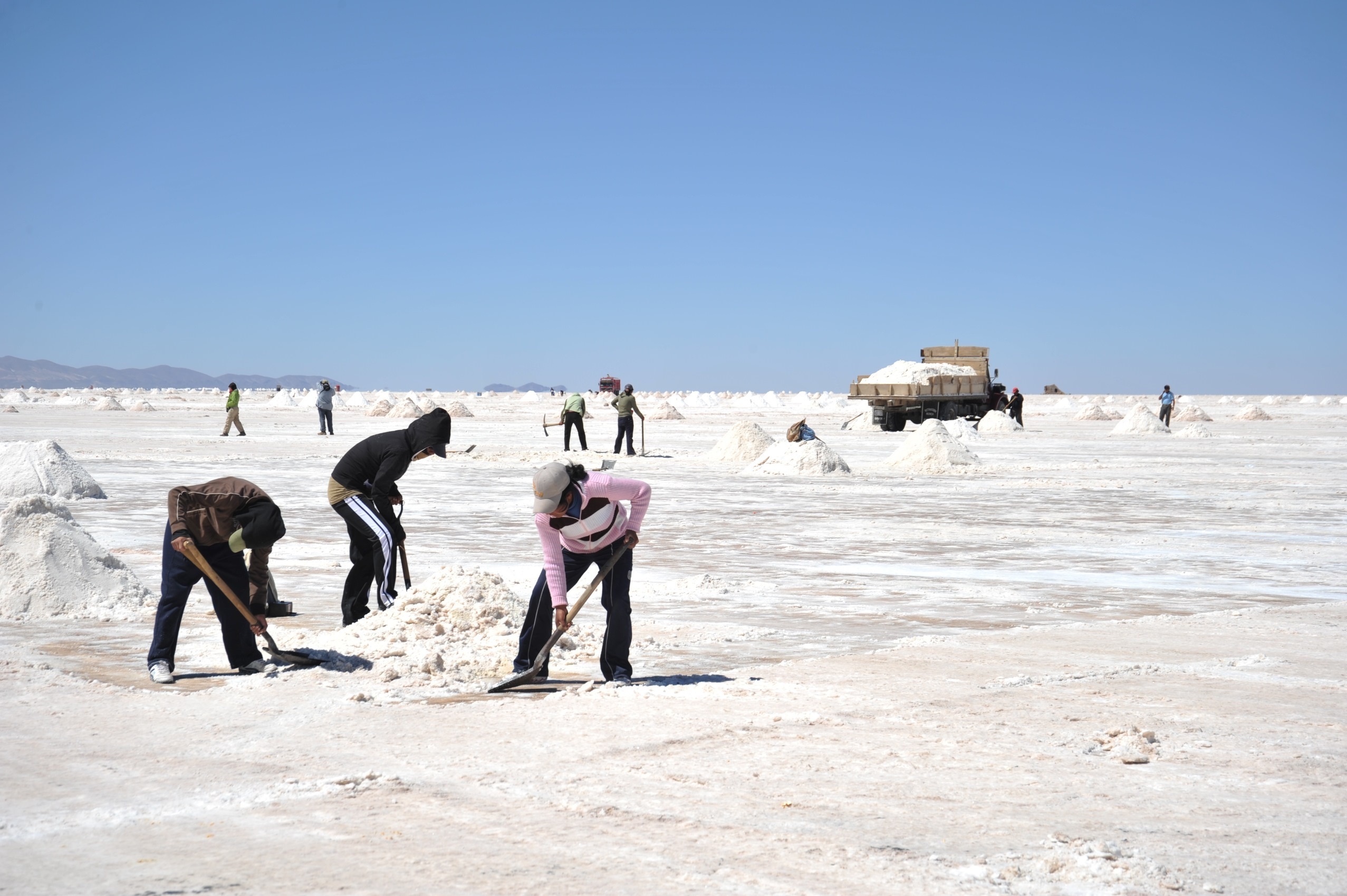
We will ensure that policy makers in fossil fuel-producing developing countries take decisions that reflect citizens’ long-term development needs and advance energy transition plans. Responding to demand, we will strengthen the movement for accountability amid the energy transition. As we did in the early years of the extractive industries governance movement, in 2022 NRGI will build a suite of capacity development tools to enhance the knowledge and strategic foundations of civil society actors and government officials contending with new realities of the climate crisis and economic impacts of the pandemic.
We will build on our field-leading work on the risks that national oil company (NOC) investments pose to their countries’ economic sustainability and their impact on global climate objectives. At the global level, we will work with climate and resource governance advocacy organizations to shape climate risk, environmental, social and Ggvernance factors (ESG), sustainability and transparency standards. In some countries, such as Ghana and Uganda, our support to analysis and advocacy by national actors to reduce NOC risk-taking will inform current policy decisions in 2022. In other countries, including Mexico and Tanzania, we will work with partners to begin to build constituencies for NOC reform over the longer term, conducting analysis to frame public debates around priorities and place the importance of NOC reform more centrally on domestic political agendas.
And we will leverage our analytical framework to help civil society and governments interrogate plans, policies, and investment choices around forward linkages from natural gas. In 2022, we will further hone the framework, and use it to spark dialogue around gas-to-power policies and ambitions in Senegal, Ghana, Peru and Nigeria, and around Lebanon’s domestic energy future.
We will also contribute to emerging areas of debate, building on past commentary and events, to advocate for a more equitable transition and to explore whether and how NRGI can support renewables governance.
Revamping our country programs
With NRGI’s prioritization of energy transition and Indonesia’s regional importance, we will re-engage in the country in 2022. Using the Resource Governance Index methodology, we will assess Indonesia’s extractive industries to prioritize issues for further research and engagement, including working with partners exploring just transition in the coal industry.
We are re-establishing our presence in Nigeria, shifting focus to the country’s economic future beyond oil. We are establishing new partnerships and have re-engaged with key partners from early incarnations of the program. We are focusing on select instruments of reform: national oil and gas policies, the Gas Master Plan, and the Petroleum Industry Act. We aim to build awareness and momentum by working with allies to ensure that support and planning for a post-oil economy is on the 2023 national election agenda.
NRGI has offered analysis and Resource Governance Index assessments, assisting state-owned companies in the improvement of their transparency and accountability practices, and supporting civil society organizations and oversight actors to monitor the sector.
Following the launch of our Senegal country program last year, we are supporting ongoing reforms of the country’s institutional and regulatory frameworks for the extractive sector, ranging from an overhaul of its participation in the EITI process, design of a new petroleum code and local content law, revision of its mining code, and the finalization of an oil and gas revenue management law. NRGI has offered analysis and Resource Governance Index assessments, assisting state-owned companies in the improvement of their transparency and accountability practices, and supporting civil society organizations and oversight actors to monitor the sector.
We will continue adapting and evolving our work in other NRGI countries of engagement, including Colombia, DRC, Mexico, Mongolia, Guinea, Peru, Tanzania, Tunisia, and Uganda.

Expanding our frontiers
Responding to demands and evolutions in the field requires continual learning and evolution of our work.
In 2022, we will build on our recently concluded work in partnership with the World Resources Institute on gender and extractives. We will explore how NRGI can actively address the gender imbalances in the natural resource sector, aligning with NRGI’s commitment to diversity, equity and inclusion.
We are seeing growing demand on subnational resource revenue sharing, policy makers and civil society counterparts to support improvements in the design and monitoring of subnational revenue sharing systems. We will determine whether to deepen our engagement and renew our expertise in this area.
We will also explore the future of our work with investors and how we leverage corporate power to advance resource governance aims.
After two whirlwind couple years of adaptation, transition, and uncertainty, we now find ourselves grounded and ready to face the future. Though strategic evolutions remain, we have newfound clarity on our contribution to the energy transition and how to seize political openings. We are at the ready to help people in resource-rich countries to face the future.
Top photo by Axel Fassio/CIFOR for Flickr
Middle photo by Free Wind 2014 for Shutterstock
Bottom photo by Joe Saade/UN Women for Flickr
NRGI envisions a world where natural resources enable fair, prosperous and sustainable societies, instead of undermining them.
Quitting the Race to the Bottom in Extractive Industries

NRGI’s Latin America director Juan Luis Dammert spoke on 25 May at the United Nations Global Roundtable on Extractive Industries as an Engine for Sustainable Development, hosted by UN Secretary-General António Guterres. Dammert spoke on the subject "How should developing countries, including of Latin America and the Caribbean, approach industrial, fiscal and regulatory policies to avoid the race to bottom in attracting investments and ensure that the extractives sector contributes to their sustainable development?" These are his remarks:
It is an honor to be here and be able to share some reflections on the challenges of the extractive sector from a civil society perspective.
In my view, the crucial question is: how are resource-rich countries going to ride the wave of economic recovery after the crisis generated by the coronavirus pandemic?
Extraction is certainly going to play a central role. We now see enormous efforts from countries to attract investments, to increase production and to get as much profit as they can from their natural resources.
One of the risks of this strategy is to promote extraction while reducing social, environmental and governance standards and giving fiscal incentives that do not benefit citizens.
Because of the urgency for an economic recovery, the risk of a “race to the bottom” in attracting investments is higher.
In Latin America, for example, we see an ongoing narrative, mostly coming from some players from the private sector, that equates environmental and social standards with “obstacles” to development.
In this context, what can countries do to avoid the race to bottom in attracting investments and ensure that the extractives sector contributes to their sustainable development?
The extractive sector has a great potential to contribute to sustainable development.
Countries should try to use the current crisis as an opportunity to increase the benefits they receive from extraction, and racing to the bottom is not the path for increased benefits.
A basic recommendation is that countries do not engage in lowering of fiscal conditions and environmental, social and governance standards, including transparency, to attract investments.
When it comes to taxation, countries must find the balance between getting as much rent as possible while not driving away investments with high taxes.
Countries should also develop policies around economic linkages. Countries should not aim to engage in activities in which they are in no position to compete, but at the same time, they should not leave everything for the market to decide.
Without planning or policies, resource-rich countries will only be suppliers of raw materials and will not add any value to the resources they have. Policies promoting backward and forward linkages are very important.
Finally, the current crisis is an opportunity to think differently about resource extraction. This means that countries should avoid inertia and past shortcomings in resource governance, and should also avoid dependency on resource extraction. Extraction must take place with respect to the energy transition and the climate agenda.
In sum, countries should try to find a balance in fiscal policy, strengthen institutions to uphold environmental and social standards, and develop policies to promote economic linkages with extraction. In this way extraction can contribute to sustainable development.
Time to Pivot: The Role of the Energy Transition and Investors in Forging Resilient Resource-Rich Country Outcomes

This is the second in a series of posts originally published by the Brookings Institution on the future of natural resource governance that builds upon a virtual October 2020 dialogue co-hosted by the Leveraging Transparency to Reduce Corruption project, the Natural Resource Governance Institute, and the Transparency and Accountability Initiative. The first post is here, and the third is here.
At a time when the world is confronting a global pandemic and unprecedented challenges related to climate change and inequality, the natural resource governance field must undertake concrete, urgent, and drastic changes in strategies and tactics to achieve much-needed progress. Here, we outline two core areas that demand focused attention and new ways of thinking: the energy transition and the role of investors.
The critical role of resource governance in the energy transition
Against the backdrop of the urgent realities of climate change, the pandemic, and the decline in oil prices, the necessity for oil- and gas-producing countries to immediately engage in the transition toward sustainable energy sources has come to the fore. This pivot must be central to a revamped natural resource governance field now and in the years to come. However, as needed as the transition is, it raises its own set of socio-economic challenges. It is imperative that the natural resource governance field addresses the issues which will result from reduced extractive revenue, stranded assets, and related risks. Moreover, the economic consequences of the transition will fall asymmetrically—with dramatic negative impacts on countries and communities dependent on oil, gas and coal revenues, and a rise in opportunities for those rich in transition minerals like copper, cobalt, and lithium.
Because many resource-rich countries struggle with effective governance, the natural resource governance field should support them with initiatives that build on past efforts and pivot to respond to current challenges. These include:
- Building an evidence base around how governance challenges will affect the energy transition and how the lessons learned in the natural resource governance field can be applied in this new reality
- Tapping into the overlapping expertise of currently siloed movements working toward a common goal by building coalitions among them
- Fostering informed public debate about the effects that the global energy transition is having, and will likely continue to have, on geopolitics, national development, and the country’s economic health (including a focus on realistic fiscal revenues)
- Supporting efforts by resource-rich countries to use increasingly available and affordable clean energy technologies to safeguard peoples’ health, environment, and energy needs
- Improving sector governance of the extractive and renewable energy sectors, both nationally and sub-nationally
- Supporting major efforts toward economic diversification
- Mitigating wind-down costs for vulnerable populations reliant on commodities that will decline in the energy transition
- Ensuring that citizens and communities in producing regions and those living far from capital cities have a substantive role in policy discussions and decisionmaking
The central role of those working to improve governance in resource-rich countries will continue as those nations transition into a new energy reality—one where there is a decarbonization imperative.
Just as misgovernance has impeded efforts in the past to translate extraction into development, it now threatens to stymie countries’ efforts to grapple with the decline of fossil fuels, take advantage of technological progress, and build economic resiliency in a low-carbon future. Unless critical issues of corruption, state capture, and mismanagement are addressed, a just energy transition will be impossible.
Consequently, activists, decisionmakers, funders, institutions, and researchers must work to realize a transition to a green economy in a way that does not widen inequality gaps either between resource-rich countries and others or between individuals in resource-rich countries.
As part of the energy transition, some levels of fossil fuel production will continue in the short term, while the demand for critical minerals for renewable energy generation will only increase moving forward. The natural resource governance field must therefore not abandon oversight and accountability efforts regarding mineral, oil, and gas extraction, which will continue to have a massive impact on the billions of people living in resource-rich countries.
At the same time, an accelerated rate of energy transition provides a moment for those working in the natural resource governance space to pivot as well. Activists, donors, and researchers should examine and probe how the expertise, lessons, and tools from extractives governance efforts might be applied to wind and solar energy and other sustainable resources.
The new challenges of the energy transition require a new perspective, including a revamped vocabulary and a new role for resource governance. This role must fully integrate economic and climate realities, address long-standing inequities and injustices, be mindful of politics, and (crucially) build resilience.
The natural resource governance field has a well of expertise that should not be left untapped. However, the levers that the field has historically relied on (technical advice, transparency, capacity building, and the like) have not always been enough to motivate changemakers around the world. Connecting the dots between current resource extraction, the energy transition, the extraction that will continue even in an energy system based on renewables, and the weak governance that can undermine each of those systems, will require new evidence for what works and new forms of coalition- and community-building.
Underpinning it all should be an awareness of the lessons the field has learned to date, how they can be applied in new contexts and with renewable energy sources to improve governance outcomes, and which revamped strategies are needed and new methods are most effective in promoting resilience and a sustainable energy future. Further, we need to be mindful that major geopolitical shifts will continue, with major implications for the energy field. In this context, the role of corporations and investors will also be key. We turn to the latter next.
The role of investors and international financial institutions
Investors and international financial institutions (IFIs) are a priority audience for lessons learned and anticipated transitions ahead. Governance dimensions need to be an important consideration in their influential decisionmaking.
Investors and IFIs are central players in the energy transition. Today, private capital is migrating from fossil fuel companies to those positioned as more sustainable. This past summer, for example, the market valuation of the electric vehicle and clean energy company Tesla exceeded that of the oil and gas giant ExxonMobil.
Investors and IFIs, however, can do more than make market-moving investments. They can promote environmental, social, and governance (ESG) factors; sustainable financing models; and the implementation of transparency and other good governance conditions when making loans or investments to mitigate structural factors that can undermine returns. Investors need to be attracted to the table for discussion and mutual learning, while IFIs need to further their work on governance throughout their funding.
This has never been more necessary given a recent explosion of interest from investors in ESG, especially decarbonization, not only in the United States and the European Union but also in emerging markets. Last year alone, the investment management giant BlackRock announced that it would put climate considerations at the heart of all investment strategies; more than two dozen institutional investors joined the UN-convened Net-Zero Asset Owner Alliance to align with the Paris Agreement; and shareholders pushed for climate action even at ExxonMobil.
The natural resource governance community can further this movement by allying with investors. The push for effective ESG should focus not just on country- or macro-level factors but also on specific companies and deals. The natural resource governance community should apply pressure on investors to take a sophisticated approach to impact—that is, demonstrating ESG outcomes, not just inputs.
Although investors have the potential to influence positive change, public interests and the interests of investors are not always aligned. As such, ensuring effective oversight over investors and the transactions that they broker can be just as important to improving governance as leveraging their influence to shape commercial or government practices in the first place. Investors, if they are seeking to act responsibly and sustainably, have a responsibility to improve their own policies and practices. Notably, they must ensure adequate transparency and due diligence for corruption and governance risks—both in their own operations and in the deals they finance.
Investors also have a pivotal role to play in sustainable financing to create a more resilient and sustainable future. In addition, conditionality in IFI lending may have a role to play. The natural resource governance field is rife with standards and measurements for good governance, from the EITI Standard to the Resource Governance Index to the Open Contracting Data Standard, that could be considered as requirements for lending.
Some participants in the October 2020 dialogue argued that IFIs need to impose stronger governance conditions during sovereign debt restructuring. IFI governance pre-conditions could also include transparency in climate risk assessments, requirements for governments to stop investing in oil and gas companies, and other sustainability initiatives.
Conditions imposed by outside actors obviously cannot deliver lasting change. While IFIs need to step up regarding governance in the support and funds they provide, meaningful change in countries requires capacity-building, fostering political will, and addressing political economy constraints.
Looking ahead
In the coming years, the energy transition and investor focus on ESG, particularly regarding decarbonization, will only strengthen and accelerate. Today, major oil and gas company Total announced that it will not be renewing its membership in the American Petroleum Institute, a powerful oil and gas lobbying group, as a result of the latter’s stance on climate, including its support for American political candidates who oppose the Paris Agreement.
The next decade will usher in staggering shifts in the political economy of energy as these trends continue. The natural resource governance field needs to transform itself as well: It must not miss the opportunity to proactively and positively shape these shifts by leveraging the lessons learned and expertise developed over the past three decades in new contexts. For this, we must also seize the opportunity to engage new actors and work in these new arenas—as we will discuss further in our third installment of this series.
Read the first entry of this series here, and the third entry here. Share your thoughts on these and other issues related to the future of natural resource governance on Twitter using #futureofNRG.