
Financing Africa’s Energy Future: Outcomes from Future of Energy Conference 2025

On 27 August 2025 our CEO, Suneeta Kaimal, delivered the keynote address on Day 2 of the Future of Energy Conference (FEC) 2025, where she discussed strategies for an inclusive and sustainable energy future in Africa.
This year’s theme, “Financing Africa’s Energy Future: Unlocking Investments for Energy Access and Economic Transformation” responds to the enduring challenges of energy poverty. Over 600 million Africans lack electricity and nearly a billion rely on traditional biomass for cooking.
Last month, at the fourth Financing for Development Conference in Seville, Kenya helped drive the launch of a bold new coalition, joined by Benin, Sierra Leone, Somalia and others. Together, they committed to taxing premium air travel to raise new, additional, and predictable flows of public finance for sustainable development.
If implemented globally, this measure alone could raise more than $80 billion in revenue—not loans or aid—every year. To put this in perspective: the International Energy Agency (IEA) estimates that achieving universal access to modern energy in Africa requires only $25 billion each year.
At first glance, this is just another tax. But it is far more significant. It represents the kind of financial innovation that African leaders can replicate, scale up, and channel to unlock energy access and economic transformations for Africa.
The challenge of this moment
Let me step back for a moment to explain “why” we need such innovation now, more than ever.
$500 billion. $500 billion, along with related infrastructure spending, is the estimated cost for sub-Saharan Africa to close the energy poverty gap and transition its energy system to a sustainable basis. $500billion. That is a stunning figure.
By contrast, in 2023, financing for clean and renewable energy in all developing countries, not just sub-Saharan Africa, reached only $22 billion. Think about that. $500 billion needed for sub-Saharan Africa alone, $22 billion available for all developing countries.
Just a year ago, many still believed that bridging this massive financing gap might be achieved through “blended finance”. Blended finance is the idea that we use relatively small amounts of public finance to de-risk and leverage much larger flows of private investment. That was how the EU and the US managed to recover from the 2008 financial crisis.
The promise of this “billions to trillions” narrative was that if African governments covered the risks and offered something like 9 percent yields on bonds intended to drive energy transition investments, then private investors would come flooding in. Multiplying public money by ten, a hundred, even a thousand times.
But actual results show that the “billions to trillions” idea is an illusion. The Blended Finance Task Force found that, rather than multipliers of ten, 100, or 1,000, the results are closer to 0.3, which means that every dollar in public money brings only 30 cents in private finance.
If you combine that reality with plummeting international development assistance levels and the constant chaos of tariff wars, one thing is clear: the rules of this game will not address Africa’s needs to finance energy access and sustainable development.
So, the challenge Ben Boakye, the Executive Director of ACEP, put to us yesterday is the right one: how do we innovate to meet the rightful expectations and aspirations for energy access of the next generation— those in this room and beyond. If as the keynote speaker, you thought I would have the answers, sorry to disappoint. I’m counting on all of you for that.
But building on NRGI’s work with partners in government, and in civil society around the world, I’ll share some insights into what must change to enable lasting, innovative financing solutions.

Strategic, inclusive just energy transitions
Successful financing starts with a strategic, inclusive vision for just energy transitions. There is no single path for defining the energy and economic futures of countries. We need context-specific solutions that are aligned with the country’s development ambitions and reflect the voices and needs of different populations.
Here in Ghana and in Nigeria, we have collaborated with partners to launch national dialogues, ensuring that energy transition plans align with public priorities. In Ghana’s oil-producing regions, we have engaged with communities to amplify the concerns of fisherfolk, women, and youth.
In Senegal, we trained civil society partners to understand and engage with public consultations on the Just Energy Transition Partnership, and to raise concerns about energy access and equity.
Building such strategic, inclusive visions ensures that the financing that is raised is directed towards the needs and ambitions of the people and their national development plans.
Changing the color of money
The second change needed is the color of the money.
Even promising initiatives like Senegal’s Just Energy Transition Partnership risk pushing countries further into the debt trap. Of the financing pledged for the JETP, only 6.6 percent is in grants. More than 80 percent is structured as loans. Instead of creating fiscal space for investments in rural electrification or retraining workers, it risks adding pressure to unsustainable debt.
Governments across Africa spend nearly 17 percent of their revenues on debt service—the highest of any developing region. Over half of Africans now live in countries that spend more on debt than on health or education.
New lending models are needed to mobilize private capital. But these must offer African nations fair interest rates that recognize their growth trajectories and avoid overburdening public budgets. They must also be paired with technical and technological support for renewables, addressing barriers to licensing and intellectual property.
Reinvigorating domestic resource mobilization
Finally, we must reinvigorate domestic resource mobilization, the primary engine of sustainable development financing.
Africa holds immense resources – including 30 percent of the world’s transition mineral reserves. African countries can leverage the global demand for minerals for strategic bargaining to move up the value chain, diversify their economies and increase public resources.
Take Zambia. They have attracted European support for a planned cobalt refinery and to facilitate investment in an electricity interconnector between Zambia and Tanzania. That will reduce the impact of increasing drought risks on their hydro capacity.
Value addition like this is not feasible in all countries and contexts, but such regional collaboration can overcome constraints such as scale, supply of inputs, and small downstream markets, and help unlock more benefits from the mining sectors. In doing so, countries can move concertedly up the value chain, increasing domestic financing for just energy transitions and advancing renewable technologies at home.

The opportunity is now
Strategic, inclusive just transitions. Changing the color of the money. Reinvigorating domestic resource mobilization. These are not small asks— they require long-term, sustained, and concerted focus. The influence of rich, consumer countries still limits the scale of financing and compromises sovereignty over energy and resources. And rich countries must not be allowed to abdicate their roles and responsibilities.
But there are opportunities to shift the global conversation today. Or at least, next week at the Second Climate Week in Addis Ababa.
The UN climate regime has, for too long, been silent on the issue of minerals that are critical to delivering just transitions. The UN Secretary General himself said: “The race to net zero cannot trample over the poor.” As a member of the UN Panel on Critical Energy Transition Minerals, I and many others pushed hard for principles and actions for a new mining paradigm to guide the renewables revolution toward justice.
At the Second Climate Week in Addis next week, we have an opportunity to elevate the issue of minerals governance onto the UN Climate agenda through the Just Transition Work Program. Join us at the Africa Climate Summit and on the road to COP 30 to issue a strong, united call for multilateral action and outcomes that center the needs and ambitions of Africans for improved transition mineral governance, just energy transitions and fair financing.
The Seville coalition showed that African leaders are already bringing practical, innovative ideas to the table. They must now be resolute in forging their own paths as the aid paradigm crumbles. By bringing the political will and ambition to scale, replicate and channel innovative sources of finance to energy transition priorities, we can ensure that bold ideas lead to real progress and that real progress leads to economic and energy transformation for all Africans.
Future of Energy Conference 2025
Accra, Ghana
Our CEO, Suneeta Kaimal, delivered the keynote address on Day 2 of the Future of Energy Conference (FEC) 2025, where she discussed strategies for an inclusive and sustainable energy future in Africa.
This year’s theme, “Financing Africa’s Energy Future: Unlocking Investments for Energy Access and Economic Transformation,” responds to the enduring challenges of energy poverty. Over 600 million Africans lack electricity and nearly a billion rely on traditional biomass for cooking.
Full transcript:
Thank you to Ben and Charles for hosting us and for the opportunity to be here with distinguished colleagues, partners, and friends from around the world. I would like to extend a special welcome to the participants in the NRGI-ACEP 2025 Summer School on the Governance of Extractive Industries. You are the next generation of leaders whose ideas and innovations will shape Africa’s energy future. If you will please stand for a moment of recognition.
Last month, at the fourth Financing for Development Conference in Seville, Kenya helped drive the launch of a bold new coalition, joined by Benin, Sierra Leone, Somalia and others. Together, they committed to taxing premium air travel to raise new, additional, and predictable flows of public finance for sustainable development.
If implemented globally, this measure alone could raise more than $80 billion in revenue—not loans or aid—every year. To put this in perspective: the International Energy Agency (IEA) estimates that achieving universal access to modern energy in Africa requires only $25 billion each year.
At first glance, this is just another tax. But it is far more significant. It represents the kind of financial innovation that African leaders can replicate, scale up, and channel to unlock energy access and economic transformations for Africa.
The challenge of this moment
Let me step back for a moment to explain “why” we need such innovation now, more than ever.
$500 billion. $500 billion, along with related infrastructure spending, is the estimated cost for sub-Saharan Africa to close the energy poverty gap and transition its energy system to a sustainable basis. $500billion. That is a stunning figure.
By contrast, in 2023, financing for clean and renewable energy in all developing countries, not just sub-Saharan Africa, reached only $22 billion. Think about that. $500 billion needed for sub-Saharan Africa alone, $22 billion available for all developing countries.
Just a year ago, many still believed that bridging this massive financing gap might be achieved through “blended finance”. Blended finance is the idea that we use relatively small amounts of public finance to de-risk and leverage much larger flows of private investment. That was how the EU and the US managed to recover from the 2008 financial crisis.
The promise of this “billions to trillions” narrative was that if African governments covered the risks and offered something like 9 percent yields on bonds intended to drive energy transition investments, then private investors would come flooding in. Multiplying public money by ten, a hundred, even a thousand times.
But actual results show that the “billions to trillions” idea is an illusion. The Blended Finance Task Force found that, rather than multipliers of ten, 100, or 1,000, the results are closer to 0.3, which means that every dollar in public money brings only 30 cents in private finance.
If you combine that reality with plummeting international development assistance levels and the constant chaos of tariff wars, one thing is clear: the rules of this game will not address Africa’s needs to finance energy access and sustainable development.
So, the challenge Ben Boakye, the Executive Director of ACEP, put to us yesterday is the right one: how do we innovate to meet the rightful expectations and aspirations for energy access of the next generation— those in this room and beyond. If as the keynote speaker, you thought I would have the answers, sorry to disappoint. I’m counting on all of you for that.
But building on NRGI’s work with partners in government, and in civil society around the world, I’ll share some insights into what must change to enable lasting, innovative financing solutions.
Strategic, inclusive just energy transitions
Successful financing starts with a strategic, inclusive vision for just energy transitions. There is no single path for defining the energy and economic futures of countries. We need context-specific solutions that are aligned with the country’s development ambitions and reflect the voices and needs of different populations.
Here in Ghana and in Nigeria, we have collaborated with partners to launch national dialogues, ensuring that energy transition plans align with public priorities. In Ghana’s oil-producing regions, we have engaged with communities to amplify the concerns of fisherfolk, women, and youth.
In Senegal, we trained civil society partners to understand and engage with public consultations on the Just Energy Transition Partnership, and to raise concerns about energy access and equity.
Building such strategic, inclusive visions ensures that the financing that is raised is directed towards the needs and ambitions of the people and their national development plans.
Changing the color of money
The second change needed is the color of the money.
Even promising initiatives like Senegal’s Just Energy Transition Partnership risk pushing countries further into the debt trap. Of the financing pledged for the JETP, only 6.6 percent is in grants. More than 80 percent is structured as loans. Instead of creating fiscal space for investments in rural electrification or retraining workers, it risks adding pressure to unsustainable debt.
Governments across Africa spend nearly 17 percent of their revenues on debt service—the highest of any developing region. Over half of Africans now live in countries that spend more on debt than on health or education.
New lending models are needed to mobilize private capital. But these must offer African nations fair interest rates that recognize their growth trajectories and avoid overburdening public budgets. They must also be paired with technical and technological support for renewables, addressing barriers to licensing and intellectual property.
Reinvigorating domestic resource mobilization
Finally, we must reinvigorate domestic resource mobilization, the primary engine of sustainable development financing.
Africa holds immense resources – including 30 percent of the world’s transition mineral reserves. African countries can leverage the global demand for minerals for strategic bargaining to move up the value chain, diversify their economies and increase public resources.
Take Zambia. They have attracted European support for a planned cobalt refinery and to facilitate investment in an electricity interconnector between Zambia and Tanzania. That will reduce the impact of increasing drought risks on their hydro capacity.
Value addition like this is not feasible in all countries and contexts, but such regional collaboration can overcome constraints such as scale, supply of inputs, and small downstream markets, and help unlock more benefits from the mining sectors. In doing so, countries can move concertedly up the value chain, increasing domestic financing for just energy transitions and advancing renewable technologies at home.
The opportunity is now
Strategic, inclusive just transitions. Changing the color of the money. Reinvigorating domestic resource mobilization. These are not small asks— they require long-term, sustained, and concerted focus. The influence of rich, consumer countries still limits the scale of financing and compromises sovereignty over energy and resources. And rich countries must not be allowed to abdicate their roles and responsibilities.
But there are opportunities to shift the global conversation today. Or at least, next week at the Second Climate Week in Addis Ababa.
The UN climate regime has, for too long, been silent on the issue of minerals that are critical to delivering just transitions. The UN Secretary General himself said: “The race to net zero cannot trample over the poor.” As a member of the UN Panel on Critical Energy Transition Minerals, I and many others pushed hard for principles and actions for a new mining paradigm to guide the renewables revolution toward justice.
At the Second Climate Week in Addis next week, we have an opportunity to elevate the issue of minerals governance onto the UN Climate agenda through the Just Transition Work Program. Join us at the Africa Climate Summit and on the road to COP 30 to issue a strong, united call for multilateral action and outcomes that center the needs and ambitions of Africans for improved transition mineral governance, just energy transitions and fair financing.
The Seville coalition showed that African leaders are already bringing practical, innovative ideas to the table. They must now be resolute in forging their own paths as the aid paradigm crumbles. By bringing the political will and ambition to scale, replicate and channel innovative sources of finance to energy transition priorities, we can ensure that bold ideas lead to real progress and that real progress leads to economic and energy transformation for all Africans.

Keynote at FEC 2025

Suneeta Kaimal
President and Chief Executive Officer
Youth from Mexico’s Oil-Producing Regions Toward a Just Energy Transition
Ciudad de México, México

The Local Conferences of Youth (LCOY) bring together young Mexicans to discuss, learn, and propose solutions to the climate crisis.
These gatherings are held under the guidance of YOUNGO, the official youth constituency of the United Nations Framework Convention on Climate Change (UNFCCC), with the goal of influencing intergovernmental climate policies. Brenda Rodríguez and Julián Martínez are facilitating a workshop with youth from oil-producing regions to reflect on how the industry has shaped their communities and what their aspirations are for an inclusive energy transition.
At NRGI, we focus on:
- Advancing youth-led climate agendas.
- Prioritizing the local realities of oil-producing regions.
- Amplifying the voices of young people living in these areas.
The event includes 200 delegates, 6 working sessions, and networking opportunities, with outcomes to be compiled into a National Youth Declaration. Notable participants include organizations like Reacciona, Greenpeace, Oxfam, UNICEF, ICM, UNAM, Conexiones Climáticas, and Nuestro Futuro, among others.
The Climate Imperative: Prioritizing a Continental Just Energy Transition (Mining Indaba)
Cape Town, South Africa

Across Africa, the energy transition is a key opportunity for the continent to fully industrialize. How are policymakers seizing this initiative to pursue their energy ambitions through mining? How can Africa take advantage of the energy transition to enhance mineral value chains and green industrialization while increasing local beneficiation? As more foreign environmental legislations impose greater limits on heavy industrial sectors, are external stakeholders setting standards that disregard the imperative of African development?
This session will feature:
- Nkandu Beltz, MD, Beltz Mining
- Aida Diop, Senior Program Officer, NRGI
- Benjamin Boakye, Executive Director , ACEP
- Joanne Yawitch, Head of the JET PMU, Presidency of South Africa
- Tapiwa Chimbganda, Just Transition Advisor, GIZ
Featuring NRGI's

Aida Diop
Country Manager, Senegal
Beyond Baku: Financing Remains Central to Just Energy Transitions

COP29 wrapped in a pre-dawn haze of anger, frustration and relief. The bare-minimum agreement in Baku did little to improve financing prospects for urgent just energy transition priorities in low- and middle-income countries.
For Global South countries dependent on the production of oil, gas and minerals, the outcome of the Baku UN climate conference (COP29) paints a challenging picture. These nations, most of them low- and middle-income countries, walk a tightrope while balancing two pressing goals: the energy transition beyond fossil fuels on the one hand, and their citizens’ development needs on the other. The question is whether international climate diplomacy will ever help bring these together in support of just energy transitions.
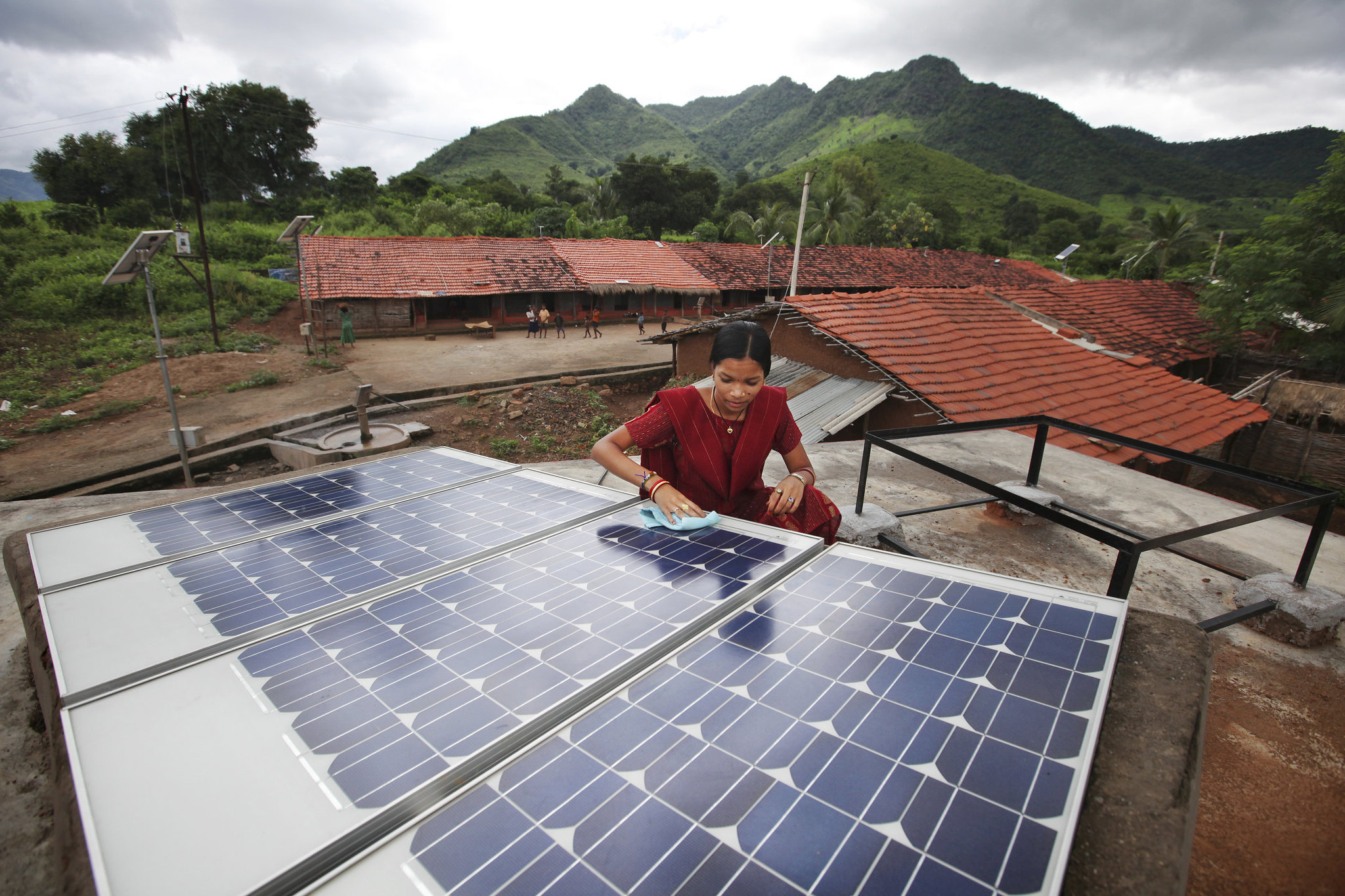
On COP29’s banner agenda item—the new climate finance goal—the conference did agree a new target to scale up financial support to the Global South by 2035: $300 billion per year from rich countries, notwithstanding clear objections from many countries. Conventional wisdom says that a negotiation is successful if all parties walk away equally unhappy. But the COP29 finance outcome felt even worse—more like renewing vows in a loveless marriage. This is because it effectively represents an extension of a climate finance reality marked by insufficiency, inadequacy and, above all, inequity.
There is broad-based consensus that the annual climate finance needs of the Global South add up to at least a 10-fold increase on current flows. The International High-Level Expert Group (IHLEG) on Climate Finance’s November 2024 report is a key reference, stating that international climate finance “… will need to cover $1 trillion per year of the total investment need by 2030 and around $1.3 trillion by 2035.” Another recent report, “Costing a Fossil Fuel Phaseout,” concludes that the total phaseout costs for developing and emerging economies (excluding China’s) are “likely somewhere between USD 1.5 and 2 trillion per year.”
As many were quick to point out, the $300 billion goal is actually far less than a “tripling” of the previous goal of $100 billion per year by 2020 once inflation is taken into account. Assuming a long-term inflation rate of 3 percent, the COP29 climate finance goal represents a 188 percent increase by 2035, rather than the 1,300 percent increase needed. In simple terms, COP29 fell short by a cool $1 trillion.
For low- and middle-income countries that rely on oil, gas and mineral exports, the impact will be particularly acute. An African regional dialogue on energy transition finance convened by NRGI ahead of COP29 made clear that limited financing hinders Africa’s transition potential. The IHLEG report echoes this conclusion and helps explain why:
“The largest increase in investment is required in [emerging markets and developing countries] other than China: these regions currently have low investment levels, significant development needs, and are projected to contribute over 50% of global emissions by 2030.”
The IHLEG is also very specific: “Ramping up climate investments in [emerging markets and developing countries] is the only way to reach the Paris Agreement goals of limiting the global temperature increase to well below 2 degrees Celsius…” (emphasis added.) Confirming this link, a Nigerian delegate made clear in a poignant intervention in the final minutes of the COP29 closing plenary that the consequence of the low finance goal would be lower ambition in national climate plans: “You expect us to have ambitious [nationally determined contributions (NDCs)]. The [new collective quantified goal] was supposed to enable us to have realistic finance goals. Three-hundred billion dollars is unrealistic. Let us tell ourselves the truth. This is 3 a.m. and we’re going to clap our hands and say this is what we’re going to do? I don’t think so."
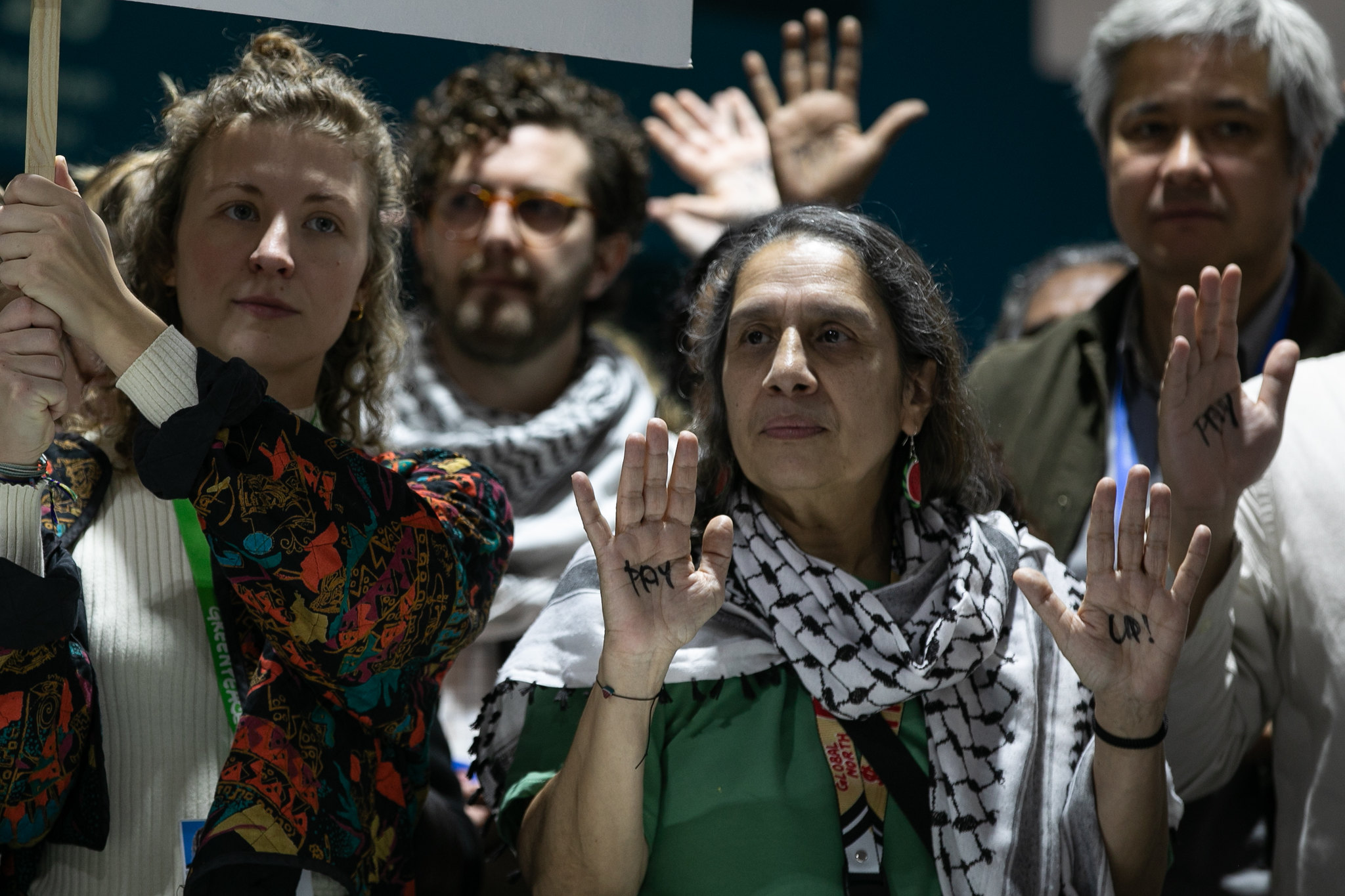
Failure on finance quantity and quality
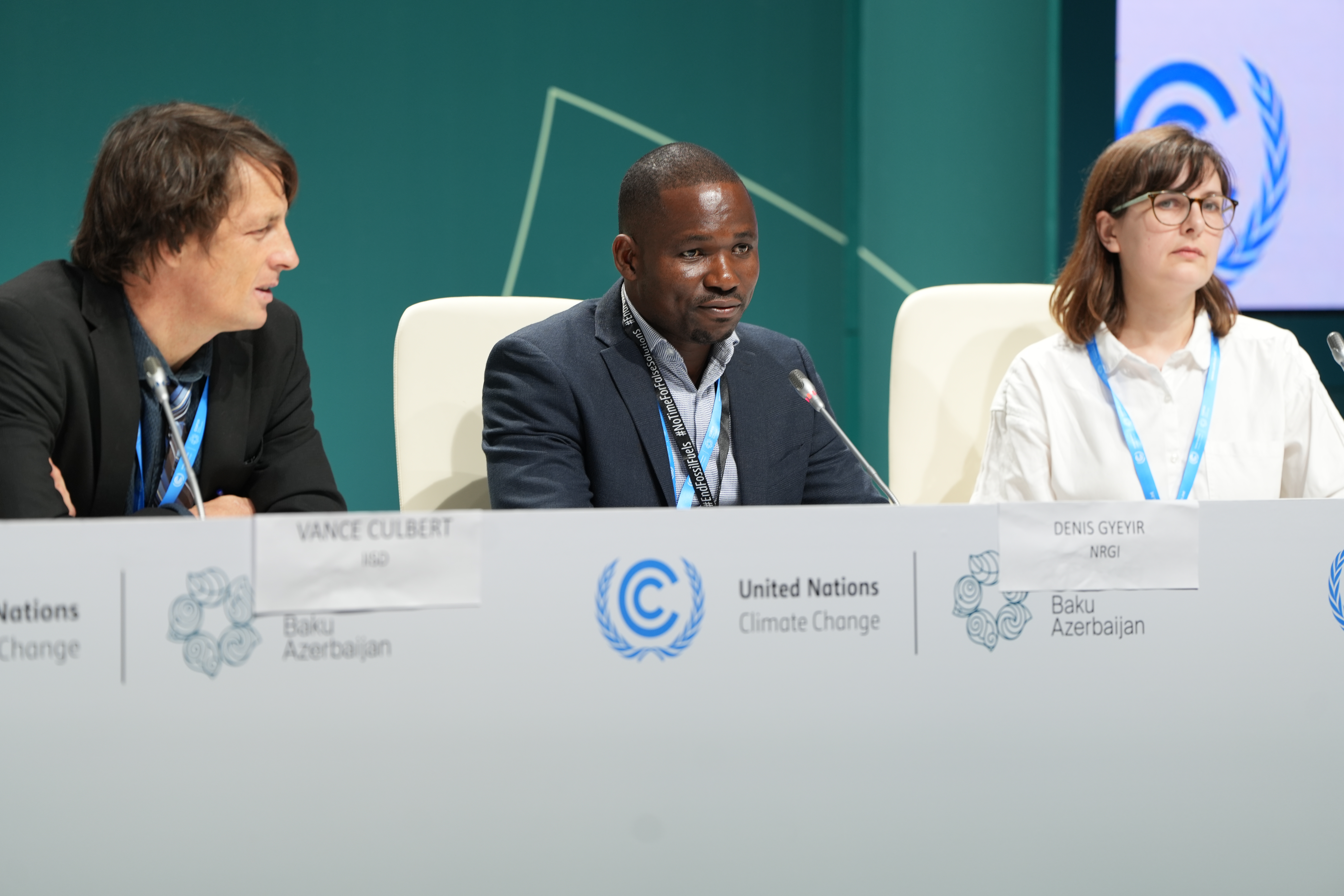
However insufficient, the deal reached at COP29 does at least increase the target amount of international climate finance. Critically, and even more concerning than the low target amount of climate finance, rich countries also failed to agree a much-needed step-shift in the quality of climate finance, especially around specifying sub-goals for grant-based financing and transparency of reporting their future contributions. NRGI’s Denis Gyeyir explained the importance of grants in Baku: “Non-debt instruments are critical for energy transition finance in African countries. Most African countries suffer a crushing debt service burden that constrains fiscal space. The lack of emphasis on grant-based financing in the COP29 finance decision is outrageous, and a just and equitable global transition requires that the G7 and other wealthy countries remedy this as they meet their commitments.”
Oxfam has regularly tracked finance flows rich countries counted toward their $100 billion per year commitment in its Climate Finance Shadow Report, finding that the grant equivalent value of climate finance provided via bilateral and multilateral channels amounted to “…just over one-third of the estimated $66.3 billion we found reported as public climate finance in 2019–20.” The obvious recommendation for the new climate finance goal set in Baku was to ensure that rich countries report loans and other non-grant finance contributions in terms of their grant equivalence—as they already do in reporting bilateral aid—so as to enhance transparency around their net financial value to recipient countries. The finance deal reflects no such improvement.
Across many other possible dimensions of climate finance quality, countries also considered but failed to agree on any improvements as part of the new climate finance goal. These include naming specific windows for mitigation, adaptation, loss and damage (or indeed energy transition); exclusion of market rate loans and export credits as qualifying contributions toward the finance goal; indicating a priority share for vulnerable country groups or categories; and linking mitigation finance to goals identified in the 2023 global stocktake (GST) of climate progress.
Wealthy countries should boost climate finance—for fairness and their own self-interest
One decision in Baku left the door open to address these issues of sufficiency and adequacy of climate finance over the coming year. The launch of the “Baku to Belém Roadmap to 1.3T” is effectively a year-long escape clause giving the Azerbaijani and Brazilian COP presidencies significant latitude to convene further meetings and produce a report by COP30 with the aim of “…scaling up climate finance to developing country Parties.”
The Baku bargain already calls on “all actors” to scale-up climate finance to the Global South to $1.3 trillion per year by 2035, but this amounts to little more than vague aspiration. “Baku to Belém Roadmap to 1.3T” offers a means to convert that aspiration into reality if rich countries are willing to raise the scale and nature of their commitments, including through innovative sources of international climate finance.
The $300 billion per year goal is a floor for future finance flows, not a ceiling. And the case for rich countries to deliver trillions, not billions, is clearly rooted in a “fair shares” approach to global equity and justice. As this year’s Civil Society Equity Review reminds us “No international effort to hold to any realistic 1.5°C pathway can honestly hope for success unless the efforts it demands are widely seen as being fairly shared.”
But if the case for fairness doesn’t convince Global North countries that over-delivery is in their interest, there’s also the narrow, economic case for action, which makes it even clearer that over-delivery is in their own self-interest. The 2024 IHLEG report describes investment in emerging markets and developing countries as the “growth story of the 21st century” and estimates corresponding avoided costs and co-benefits at 15–18 percent of global GDP in 2030.
More specifically, recent economic analysis reveals a net benefit of $5.1–$40 trillion over 2025–2035 accruing specifically to rich countries if they step up and provide adequate levels of international climate finance. As UN Secretary-General António Guterres said in his concluding remarks to world leaders at COP29, “Climate finance is not charity, it’s an investment.”
How the Global South can pave the way
For their part, low- and middle-income countries can strengthen their position over the coming year by spelling out the difference new and additional international climate finance would make in “conditional NDCs.” Under the Paris Agreement, countries committed to periodically share their own updated national climate pledges (or NDCs) with the international community. 2025 is the due date set for the next round, sometimes called NDC 3.0.
Many Global South countries have already labeled parts of their national plans as “conditional” on international support. Some, like Colombia, have put forward energy transition investment plans that situate major climate actions within their national development strategies. Global South countries can help ensure ongoing negotiations under the Baku to Belém Roadmap to 1.3T are grounded in real-world, up-to-date cost estimates linked to global progress towards the Paris Agreement objective by: adding more ambitious, “stretch goals” to their third round NDCs; costing the related additional financing requirement; and clearly presenting those components as pledges they can only achieve with international support as “conditional NDCs.”
Just transitions away from fossil fuels were too hot to handle
Two other discussions critical to the energy transitions of Global South oil, gas and mineral producers were postponed by COP29 and will be resumed at the Bonn UN climate talks in June 2025: the transition away from fossil fuels (the UAE Dialogue on Implementing GST Outcomes) and support for a just transition (the UAE Just Transition Work Program).
In both cases, lack of agreement reflected both broad-based support for action (which prevented backstepping) and the high stakes implications of decisions (i.e., “no deal is better than a bad one”). And the lack of agreement on both areas was also clearly tied to the low-ambition result on climate finance.
The historic call for a transition away from fossil fuels in the 2023 COP28 “Dubai deal” reflected a careful balance between country positions. This enabled agreement, while also opening the door to competing interpretations of what kinds of actions will help close the gap between current pledges and what’s needed to align with the Paris Agreement.
At COP29, the UAE Dialogue on Implementing GST Outcomes needed to both preserve this balance and flesh out details of how to enable and support a just, orderly and equitable exit. However, the draft decision ultimately presented by the Azerbaijani COP29 president failed to preserve this balance. While it reaffirmed the role of “transitional fuels” (read: gas), it made no mention of other elements of the Dubai deal, such as tripling renewables, doubling energy efficiency and transitioning away from fossil fuels.
Similarly, on the Just Transition Work Program (JTWP), divisions centered on two competing visions for what comprises a just energy transition. For the Global South, it is an integrated vision for a transition that better reflects their needs and realities, including pressing development priorities such as energy security, predictable state revenues and employment generation. This vision includes development of green industrial policy and sees international equity as central to achievement of just transitions.

In contrast, most wealthy countries at COP29 insisted on a narrower vision focused on worker transitions within the context of the existing climate mitigation and emissions reduction frame of the Paris Agreement. This was largely because rich countries generally take a legalistic approach to the UN climate negotiations that always seeks to minimize their own obligations and commitments.
As with the UAE Dialogue on Implementing GST Outcomes, agreement on future discussions under the JTWP ultimately foundered on a fatal combination of differing substantive positions and the low ambition reflected in the COP29 climate finance goal—both driven by the intransigence of Global North countries.
Transition minerals were firmly on the agenda
For countries in the Global South, linkages to the new climate finance goal are integral to any vision of a just, global energy transition. International equity is also relevant in other respects, such as in benefit sharing and the localization of profits from extraction of transition minerals, which was specifically referenced in the annual summary of the JTWP dialogues prior to COP29.
COP29 participants paid far greater attention to transition minerals compared to previous UN climate conferences, reflecting a growing awareness that, as with finance and mitigation ambition, progress on governance of transition minerals is a determining factor for the transition away from fossil fuels. This raises both questions around how the UN climate regime can advance the principles and recommendations of the UN Secretary-General’s Panel on Critical Energy Transition Minerals and how the Brazilian COP presidency will reflect these in just transition-related outcomes at COP30.
The outcome in Baku did little to improve financing prospects for urgent just energy transition priorities in low- and middle-income countries. However, it made clear that just transitions in these countries are the route to meeting pressing development needs and offer potential for healthy and sustainable returns on investment. Wealthier countries should support such transitions to fully meet their obligations under the Paris Agreement. Given the cumulative scale of future Global South emissions, they are also essential to achieving the Paris 1.5°C goal.
Beyond Baku, it is clearer than ever that just energy transitions remain the only way for oil-, gas- and mineral-producing countries to build a secure, inclusive and sustainable future. They should push forward with their own strategies and plans for a just, orderly and equitable energy transition beyond fossil fuels, making clear how international support affects the timing of their exit. Wealthy countries must bring new resources and proposals to the table to advance international climate diplomacy. All countries should work to ensure COP30 delivers a major course correction and puts the world back on track.
Recognizing the Link Between Biodiversity Loss and Climate Change
Cali, Colombia

The aim of the event is to explore and discuss the opportunities and challenges for implementing concrete actions to enhance synergies between the biodiversity and climate change agendas, and to highlight how these advances contribute to the concept of 'Peace with Nature'.
Panelists
- Marina Silva, Brazilian Ministry of Environment and Climate Change
- Mauricio Cabrera, Colombian Ministry of Environment
- Luisz Olmedo, Parques Nacionales Naturales de Colombia
- Felipe Arango, Transforma
- Ana Carolina González Espinosa, NRGI
- José Luis Gómez, WCS

Ana Carolina González Espinosa
Senior Director for Programs and Latin America Director
Practical Action on Methane Emissions: How the IMF and Others Can Help
Online

Urgent action on climate is vital for achieving long-term development goals of prosperity and global health, and some actions have immediate benefits; methane reduction in the energy sector is one of them. Action is needed to provide benefits at the national level while helping to achieve the 2021 Global Methane Pledge—endorsed by 150 countries—to reduce global methane emissions by 30 percent by 2030 to shave 0.2 degrees Celsius from global warming and save millions of lives. There is much scope for action. Research published by the United Nations University WIDER finds that 7.5 percent of natural gas is now wasted each year with a gas sales value of USD $100 billion per year while the Social Cost of Atmospheric Release (SCAR) methodology shows the disproportionately large impact of methane particularly on human health and food security.
Practical solutions are available today through a combination of emissions measurement, transparency, gas monetization technologies, and fiscal measures. These create large opportunities for oil- and gas- producing countries with local as well as global benefits, such as additional government revenues and contributions to the Sustainable Development Goals (SDGs).
For this event, the Center for Global Development (CGD) brought together the perspectives of country policy makers and regulators, fiscal policy experts, and researchers to share insights on how some countries are already leading in application and on how other countries can benefit. Solutions are in part based on innovative work and the global clout of the International Monetary Fund (IMF). As this event was in the lead up to COP28, the panelists delved into how IMF teams can raise this issue to help country authorities act quickly, and discussed how the IMF and other related institutions can incentivize practical action on methane emissions for prosperity and a better climate.
Panelists
- Aida Diop, Senegal senior program officer, Natural Resource Governance Institute
- Ian Parry, principal environmental fiscal policy expert, Fiscal Affairs Department, International Monetary Fund
- Margaret Adesida, director of information, communication and technology, National Oil Spill Detection and Response Agency (NOSDRA), Nigeria
- Kathryn McPhail, chief executive officer, EnergyCC
- John Hicklin, non-resident fellow, CGD
Moderator
Mark Plant, chief operating officer, CEO of CGD Europe and senior policy fellow, CGD
Aida Diop
Country Manager, Senegal
The Road to COP28: Fueling a Green Revolution in the Middle East and North Africa by Bridging the Climate Finance Gap

Climate challenges and energy transition opportunities in MENA
The MENA region faces a mounting climate threat. In the worst-case climate scenario of global temperatures reaching 4°C above pre-industrial levels, countries like Algeria, Iraq and Saudi Arabia might grapple with summer temperatures soaring by up to 8°C by the century’s close. The fluctuating patterns also threaten the Mediterranean coastlines, with rainfall potentially halved, while regions like the southern Arabian Peninsula might face intensifying floods. Coastal cities like Tunis might experience a sea level rise of 1.2 meters by 2080.
Besides being vulnerable to the effects of climate change, the MENA region has a significant role to play in mitigation efforts because of its deep ties to hydrocarbons. While as consumers of hydrocarbons the people of the region have historically contributed little to climate change, the region’s fossil fuel production has made it home to some of the world’s top per capita carbon emitters.
Authorities in the MENA region must urgently address climate change and pursue energy transition; citizens simply cannot afford the luxury of inaction. Besides being vulnerable to the effects of climate change, the MENA region has a significant role to play in mitigation efforts because of its deep ties to hydrocarbons. While as consumers of hydrocarbons the people of the region have historically contributed little to climate change, the region’s fossil fuel production has made it home to some of the world’s top per capita carbon emitters (when scope 3 emissions are counted), including Bahrain, Kuwait, Qatar, Saudi Arabia and UAE. On the current trajectory, greenhouse gas (GHG) emissions from the region could triple by 2060.
However, in the shadow of these looming challenges lie many opportunities. MENA is bathed in a substantial portion of the earth’s solar energy. A single square kilometer in solar energy potential can rival the energy from 1-2 million barrels of oil every year. If harnessed efficiently, this could substantially contribute to global electricity supply. Wind energy potential, high in nations like Egypt, Morocco and Tunisia, also offers promise.
Transition to low-carbon energy in MENA: an imperative and an opportunity
Transitioning to a low-carbon energy system in MENA isn’t just an environmental imperative—it’s an economic and political one. Embracing renewables could invigorate economic growth, inspire industrial diversity and open doors to significant employment opportunities. For instance, Morocco’s shift in this direction could usher in nearly 400,000 jobs in the next twenty years. Uptake of renewables would also contribute to regional energy security in the long term. For example, Jordan aims to be a regional hub for renewable energy and to export through existing and planned interconnected transnational grids; it has already exported electricity to Palestine and is planning to expand exports to Lebanon and Iraq. In addition, the International Renewable Energy Agency projects that renewables could provide 53 percent of energy to the region by 2050 if governments institute the right policies.
While MENA governments acknowledge the critical importance of transitioning to low-carbon energy systems and leveraging the region’s renewable energy potential, achieving this transition requires not just political and economic will, but also the right financial mechanisms. Given the extensive economic and employment opportunities renewables can bring, as demonstrated in countries such as Morocco and Jordan, the international climate finance community must support the region’s effort to address the financial underpinnings of this shift. Climate finance mechanisms can bring the needed support. By harnessing tools such as grants, concessional loans, green bonds, and sukuk, the region’s governments and private sector can better navigate the financial challenges posed by global economic shifts and ensure the accessibility and affordability of green energy.
Finance remains an obstacle to MENA’s energy transition
In the 2015 Paris climate agreement, developed countries (Annex I) committed to assisting developing countries (Annex II) with climate finance to help them mitigate and adapt to climate change. MENA, mostly composed of Annex II countries, needs these funds to address its climate-related challenges. OECD data from 2020 indicate that the region attracted a flow of climate finance averaging between $2 and $3 billion annually since 2012. This steady flow, while additive, is modest when juxtaposed against the region’s pressing needs and vast potential for sustainable growth.
MENA countries are grappling with a substantial funding gap for the effective implementation of adaptation and mitigation measures, and concurrently, the international community is also struggling to allocate funds for climate projects in the region. A 2022 United Nations Economic and Social Commission for Western Asia policy brief, using OECD data and nationally determined contributions (NDCs) concluded that MENA countries, including Egypt, Iraq, Jordan, Mauritania, Morocco, Palestine, Sudan and Tunisia, now need a total of USD 570 billion in climate funding. Notably, Egypt, Iraq and Morocco account for USD 450 billion of this required funding. But MENA received a mere 11 percent of climate finance over the period 2000-2020, with a meager 4 percent deriving from UNFCCC climate funds.
Improving national governance systems
Governance challenges in the region impede the effective pursuit of climate finance. Notably, many countries lack comprehensive frameworks to adeptly harness, manage and supervise such funds. The UN offers guidance on instituting “integrated national financing frameworks.” However, the absence of detailed sectoral plans, strong governance, clear climate finance policies, accurate cost estimates for NDCs, and strategies for engaging the private sector makes it challenging for regional governments to determine which green projects to support and how to finance them. These shortcomings can also deter potential investors or donors.
Improving international climate finance schemes
Developed countries mainly provide public finance such as loans, resulting in an increase in borrowing countries’ public debt levels. Stakeholders can institute an array of alternatives to avoid compounding the financial burden on debt-laden countries that seek to advance their energy transition. For instance, debt-for-nature swaps—in which a portion of a developing country’s foreign debt is forgiven in exchange for local investments in environmental conservation measures—could be a double boon. And transparency in public climate finance accounting can instill confidence among domestic and international investors. To improve their access to climate finance and the terms on which it is provided, MENA countries can support related international initiatives.
Tapping public and private sources of climate finance
According to the World Bank, MENA receives the least climate finance of any region. To bridge the financing gap, governments in the region should try to mobilize both public and private sources of funding. Regarding public finance, according to the International Monetary Fund, significant amounts of international public climate funds remain unused: “[W]orldwide deposits in climate funds have totaled $35 billion (from $43 billion in pledges). Of that amount, only $28 billion has been set aside for approved projects.” By putting together bankable projects, MENA countries could try to tap into these funds. In addition, countries in the region could mobilize domestic public finance by e.g., increasing public revenues or sovereign wealth fund investments.
Regarding private sector funding, banks, pension funds, insurance entities and domestic capital markets can play pivotal roles in financing climate mitigation efforts (though it is more challenging to get private funding for adaptation). The private sector accounts for a substantial proportion of climate finance on a global level. This increased consistently from 2011 to 2020, representing approximately 50 percent of total accumulated finance provided over the period. To further tap into these funds, MENA countries can improve their investment environment (e.g., through improving overall governance, which can be weak in the region), as well as using tools like sovereign green bonds or green sukuk or other methods to allow private financing of public or otherwise unprofitable projects, such as co-financing. Green bonds differ from regular bonds because they are specifically designed to finance climate-related investments.. Additionally, sovereign guarantees can minimize perceived risks for the private sector. However, evidence is limited on how well such “blended finance” works in practice.
MENA governments could encourage domestic private investors to shift toward low-carbon investments by strengthening requirements for firms to disclose or mitigate climate-related risks, and requiring domestic financial sectors to dedicate a share of its investments to climate finance.
Recommendations for governments at COP28
For governments of donor nations and advanced economies:
- Develop a nuanced understanding of the MENA region’s diverse challenges and potential. Climate finance donors must provide tailored support in line with national priorities. They should combine this with active assistance to MENA governments to develop capacities to manage and invest climate finance.
- Generate and heed lessons from developed countries’ failure to deliver the USD 100 billion dollars committed in Copenhagen in 2009. The new collective quantified goal (NCQG) (initiated by parties to the UNFCCC at COP21) for a long-term financial plan needs to be built upon such lessons. The NCQG should include specific and clear criteria in collection, distribution and financial instruments, prioritizing grants for developing countries that are already swamped with debt.
For MENA governments:
- Build regional alliances. Collaborative initiatives, borne from shared challenges, can magnify impact.
- Introduce agility to investment strategies, seizing opportunities that align with sustainable development goals without awaiting ideal conditions. Governments should approach climate funders with bankable projects grounded in a holistic vision for their countries.
Abderrahim Assab is an economic and financial analysis specialist and a PhD researcher at the University of Edinburgh Business School. Hala Al Hamawi is PhD researcher specializing in climate finance politics at Nottingham Trent University.
This post summarizes key points discussed during the Arabic-language online event “Energy Transition and Climate Finance in MENA” held on 31 August 2023 as part of the webinar series: MENA Energy Transition and the Road to COP 28.
Africa’s Energy Future: Navigating the Path to Sustainability at the Africa Climate Summit
How Africa’s Resource-Rich Countries and Partners Can Turn the Nairobi Declaration into Concrete Progress

The inaugural Africa Climate Summit (ACS), which took place earlier this month, marked a significant milestone in the continent’s climate dialogue. Bringing together 18 heads of state, experts from various sectors, civil society representatives, global climate leaders and development partners, the summit resulted in the Nairobi Declaration on Climate Change and Call to Action.
This declaration committed participating governments to accelerating climate-positive growth, strengthening coordination across the continent, and mainstreaming adaptation into development policies. It called upon Africa’s partners to meet their climate finance commitments and reduce bottlenecks that have prevented African countries from accessing funds to deploy renewable energy and other necessary technologies.
This week the baton passed from Nairobi to New York. The outcomes and lessons drawn from ACS hold significant relevance for delegates to the UN Climate Ambition Summit convened by U.N. Secretary-General António Guterres. In the Nairobi Declaration Africa’s leaders illuminate critical pathways toward sustainable climate action, offering valuable insights that can inform and inspire the discussions, commitments and decisions in New York.
For Africa’s resource-rich nations, heavily dependent on mineral and fossil fuel extraction, the Nairobi summit presented an opportunity to explore a transition toward cleaner and sustainable energy sources.
However, skepticism prevailed among civil society activists and representatives of African regional institutions who felt that they had heard similar promises before from African governments and the international donor community. In the lead-up to the summit, NRGI suggested five areas of focus for resource-rich countries. Reflecting on the summit’s outcomes, here we highlight three steps that African governments, regional institutions, activists and international donors can take to translate the Nairobi Declaration into impactful measures for resource-rich African countries, in anticipation of December’s COP28 and beyond.
1. Open up space for public dialogue
The Nairobi Declaration recognizes the dual challenge faced by African countries, including resource-rich ones: the need to accelerate climate mitigation and adaptation while promoting economic development and energy access. This requires mechanisms for public involvement in just transition planning and an inclusive, people-centered vision for the transition that prioritizes fair distribution of benefits and costs; protects vulnerable communities; promotes skill development, decent jobs, equity and social inclusion; and ensures active public engagement. Unfortunately, in many resource-rich countries, decision-making around energy transition planning has remained confined to the corridors of power walked by policy makers and political elites.
The Nairobi summit regrettably failed to significantly advance public dialogue on energy transition. Despite calls from African activists for meaningful representation of civil society and communities on the front lines of climate impact, the summit was dominated by high-level government officials and investors, with limited space for discussions on the human impact of climate change and the governance of the transition from a people-centered perspective.
Moving forward, African governments must establish open consultative mechanisms for public engagement in understanding energy transition opportunities and challenges. Failure to do so could allow special interests to dominate policy processes and deepen citizens’ distrust.
International institutions, including the African Union and multilateral development banks, as well as donors, must prioritize governance and public participation in future milestone meetings. They should ensure adequate funding for national and local participatory processes in advance of such events and as part of national transition planning. Democratizing the energy transition agenda, aligning it with people’s aspirations, and securing broad-based support are imperative to navigate the complexities and build a sustainable and equitable future.
To accelerate global capital mobilization effectively and address the crises of climate change and development, decisive action on inclusive and effective international tax cooperation is essential. For example, United Nations Resolution A/C.2/77/L.11/REV.1 aims to reduce Africa’s annual loss of $27 billion in corporate tax revenue by at least 50 percent by 2030 and 75 percent by 2050 through curbing profit shifting.
2. Get specific
While the Nairobi Declaration touches on key drivers of change for resource-rich countries, it lacks specificity. Notably, the signatories omitted from the final version references to accelerating the development and value addition of Africa’s green transition minerals. While the declaration vaguely alludes to this goal, calling for more energy-intensive processing of Africa’s raw materials to take place on the continent, it falls short of outlining specific goals related to transition minerals and commitments from African governments and institutions. The continent’s governments must cooperate and coordinate to develop economically viable cross-border value chains.
The African Union’s Green Minerals Strategy, presented at the summit, can serve as a crucial tool for aligning government policies. Nevertheless, African officials must commit to specific actions to harmonize policies, promote cross-border collaboration, develop costed plans for value addition, and establish governance priorities. This push requires coordination among regional institutions and individual governments, emphasizing good governance, transparency, and public dialogue to avoid repeating the mistakes of past resource booms. Development partners must support African governments and civil society in strengthening policies, enforcement, and public oversight to prevent a one-sided geopolitical game.
Another central theme at the summit was climate finance, emphasized in the declaration’s calls for global capital mobilization, honoring unmet global finance commitments, and reducing the risks and costs of green investments for African governments. While donor nations and multilateral organizations present pledged approximately USD 26 billion at the summit, these promises must translate into tangible support to realize greenhouse gas reductions in Africa. Resource-rich countries must closely examine the intersection of public revenues, investment plans and transition ambitions, developing clear agendas to mobilize and use finance strategically. People-centered planning processes are crucial to building national consensus and leveraging external funding opportunities. Just energy transition partnerships (JETPs) can play a pivotal role in this process, exemplified by the JETP in Senegal, which can serve as a test case for scaling up energy access and renewable deployment. Achieving this will require governments’ commitment to transparency and public engagement to ensure that JETPs serve public rather than vested interests.
International efforts to combat illicit financial flows and boost domestic resource mobilization—such as the Addis Ababa agenda and the UN resolution on international tax cooperation—can play an important role in leveling the playing field and boosting African governments’ efforts to finance a just transition. But multi-national companies must vigorously implement them, and bolstering government enforcement capacity is essential. Policies requiring company reporting on their tax payments on a country-by-country basis and publication of beneficial ownership information are also needed. And the demand for transition minerals necessitates accelerated steps toward operationalizing the automatic exchange of tax information.
3. Get organized
African leaders can navigate the energy transition successfully, establish sustainable and resilient energy systems, and contribute to a more environmentally friendly and prosperous future, in line with the African Union’s Agenda 2063. However, achieving this vision will require the continent’s political leadership to organize better and develop clear agendas.
It also requires the involvement of citizens and civil society. To secure an equitable energy transition and to advance climate action, civil society organizations (CSOs) can:
- Invest in collaborative coalitions. Form coalitions that bring together organizations, activists, and individuals committed to advancing the energy transition agenda. Collaborate with experts in climate change, renewable energy, environmental justice, and related fields to create a united front that can effectively engage and exert pressure on regional and international authorities to expand consultation and decision-making spaces for diverse representation.
- Increase awareness and skills. Recognize the varying levels of awareness and understanding of the impact of a just energy transition among different groups. Launch a comprehensive awareness-raising, skills enhancement, and advocacy campaign to educate stakeholders about the implications of the transition in Africa. Invest in mobilizing grassroots support through community engagement to ensure local communities are informed advocates for clean energy solutions, effectively influencing decision-makers.
- Participate and engage decision makers. Establish effective communication channels with government policymakers, regional institutions, and other stakeholders involved in climate negotiations and energy policy. Advocate for inclusivity in decision-making processes and civil society participation and representatives in official delegations and advisory committees.
- Shape the narrative. Invest in research and development to generate evidence-based policy recommendations that support the energy transition agenda from an African perspective, considering regional nuances. Collaborate with experts in energy, economics and environmental science to create robust proposals tailored to the African context.
- Deepen international collaboration. Form partnerships with international organizations, NGOs and climate-focused institutions that can provide resources, expertise and global visibility. Collaborating with international allies helps to amplify messages and drive support.
- Monitor progress and demand accountability. Continuously monitor government and corporate commitments to the energy transition agenda. Use the Nairobi Declaration as a foundation to hold governments and international institutions accountable. Recognize that energy transition and climate advocacy are long-term efforts and be prepared to adapt strategies as circumstances evolve.
Turning the Nairobi Declaration into concrete progress for Africa’s resource-rich countries demands a holistic approach. It requires public dialogue, participation, representation with key actors and civil society organizing to actively engage in shaping the transition. Governments, international partners and corporations must collaborate to ensure that the energy transition benefits all and contributes to a sustainable, equitable future for Africa.