
Climate finance accountability and think tanks in the Global South: six opportunities
Africa’s Energy Future: Navigating the Path to Sustainability at the Africa Climate Summit

With Africa already grappling with the devastating impacts of global warming on its people, ecosystems and economies, the 2023 Africa Climate Summit could set the stage for a brighter and greener future for Africa. Now is the moment for the region’s leaders to address the critical intersection of environmental preservation and economic growth, and the need for a just energy transition in Africa.
Summit host President William Ruto of Kenya has called the meeting an opportunity to “define and refine [Africa’s] fresh and distinctive position” on climate action, for which renewed multilateral governance is needed. He has also called for equitable funding to address the climate emergency, and is marshalling support for a Nairobi Declaration on Green Growth and Climate Finance.
Africa boasts a significant share of the world’s natural resource reserves, with 30 percent of mineral reserves, eight percent of gas reserves and 12 percent of oil reserves. It holds substantial reserves of gold, chromium, platinum, diamonds, and also transition minerals like cobalt and copper. The continent’s heavy dependence on the production of fossil fuels makes it vulnerable to economic shocks when demand for these fuels drastically decline. Nigeria’s government budget, for instance, relied on oil exports for 31 percent of its revenue generation in 2022, underlining the need for a diversified economic strategy and energy mix. Similarly, oil and gas contributed 12.5 percent of Ghana’s total revenue for the 2022 fiscal year.
Nonetheless, African nations are making earnest strides toward a fossil fuel phase-out, as Nigeria’s energy transition plan and Ghana’s energy transition framework demonstrate. Nigeria’s energy transition demands an estimated investment of USD 1.9 trillion, while Ghana’s framework is projected to require around USD 561.8 billion for full realization. The announcement of a EUR 2.5 billion just energy transition partnership (JETP) for Senegal signals a commitment by Senegal’s government and its international partners to advance toward resilient, universal energy access and low-carbon systems.
In terms of mining, Africa’s mineral wealth is crucial for the global shift toward renewable energy systems. The continent holds significant reserves of minerals critical to the energy transition, including 19 percent of the minerals needed for battery-powered electric vehicles.
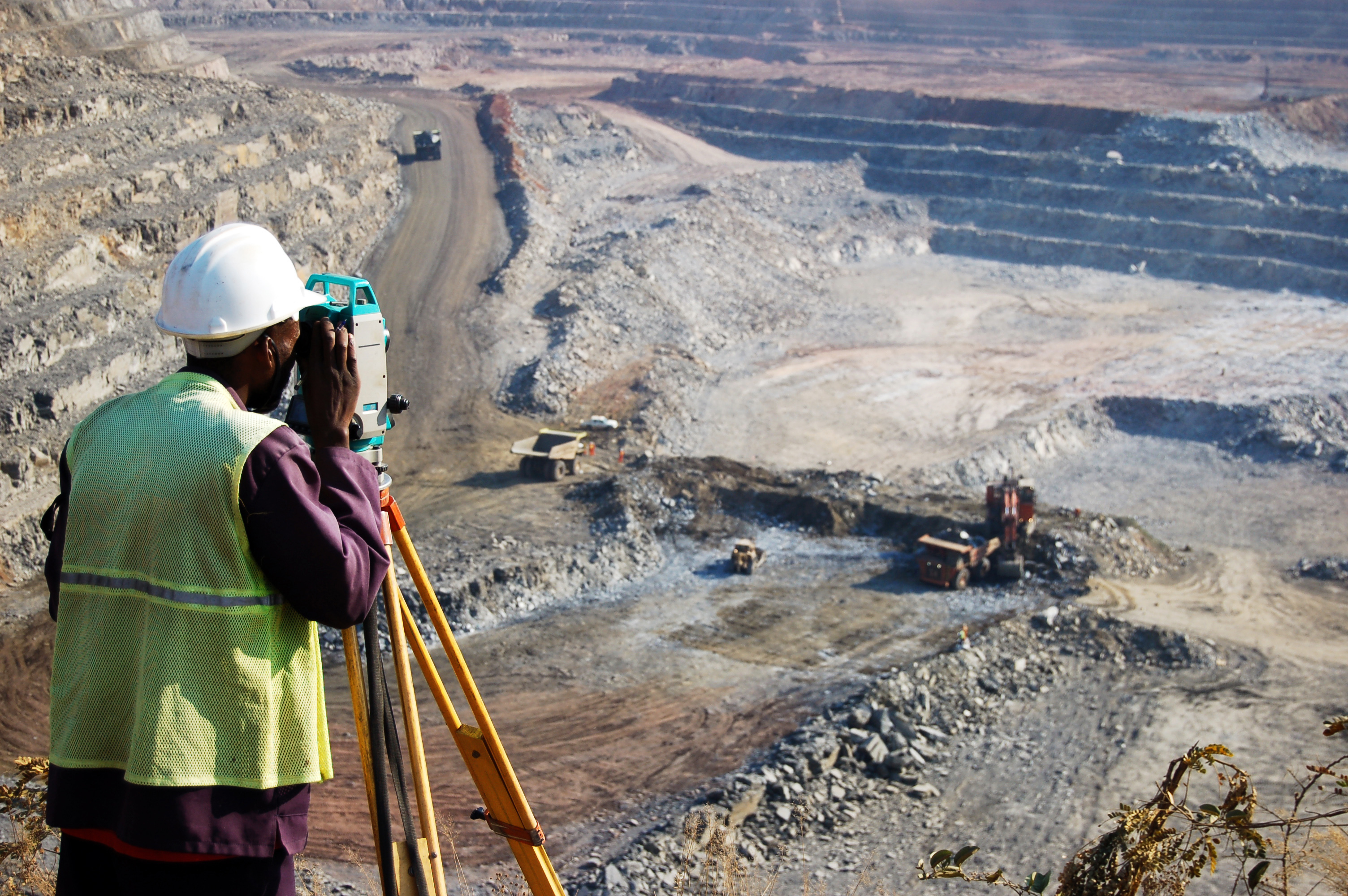
The amount of financing needed for Africa’s energy transition and climate adaptation—including sustainably developing transition minerals, building reliable energy systems and developing viable alternatives to fiscal systems dependent on fossil fuel exports—is staggering, and current resources are vastly insufficient. The continent will require huge financial and technological investments to exploit transition mineral deposits meaningfully and profitably.
The financial support promised by wealthier nations to aid in this transition has fallen short. These countries have not fulfilled their 2009 promise to provide $100 billion annually to aid developing countries in climate response, and their emissions reduction efforts remain inadequate to prevent warming beyond critical thresholds. Meanwhile the COP27 climate conference yielded new commitments, including a fund for loss and damage, a commitment to the 1.5-degree target and increased financial support for developing countries.
In June, French President Emmanuel Macron launched the New Global Financing Pact, recognizing the urgency to overhaul multilateral institutions, and emphasized the need for enhanced financial support for developing countries to confront challenges like climate change and future pandemics.
Also in June, at the Bonn Climate Change Conference, Emirati minister state oil chief and COP28 president-designate Sultan Al Jaber underscored the role of renewable energy and support to developing countries in phasing out fossil fuels and noted that the transition should not only meet the 1.5°C target but also be just and inclusive, accommodating all nations and regions. This phase-out of fossil fuels is inevitable, its pace determined by the swiftness of the transition to zero-carbon alternatives that prioritize energy security, accessibility and affordability.
Africa’s abundant resources hold the key to global decarbonization, making the upcoming summit a pivotal moment for leaders to drive actionable change before COP28.
At NRGI, we work with African government officials, civil society actors and communities, and they increasingly express an urgent need for policies and strategies that reduce fossil fuel dependence, mitigate economic shocks and foster prosperity.
In advance of the Africa Climate Summit, we offer five potentially transformative policy recommendations developed from our work across the continent:
1. Improve mining governance
Africa will not attract transition mineral investments at scale or ensure shared benefits without a concerted focus on good governance. As they plan future mineral developments, government officials should work to minimize harms to communities and the environment. The international community should enhance international standards on company responsibility and provide financial support to bolster government oversight capacity.
2. Foster regional collaboration
Economic cooperation and coordination across countries have been a longstanding goal of many African governments, which have taken important steps forward in recent years. Enhanced regional collaboration can help to unlock potential for African countries to move up transition mineral value and supply chains: generating additional revenues and jobs, enhancing energy security and access, and in some cases, supporting the restructuring of economies that are highly dependent on exports of fossil fuels. African governments should redouble investments in cross-border planning, both bilateral and multilateral, and implement existing strategies and policies such as the Africa Mining Vision and ECOWAS Model Mining and Minerals Development Act. The African Union with the Green Minerals Partners should also fast-track the development of the Africa green mineral strategy.
3. Promote equitable, people-centered dialogue on energy transitions
In both petroleum- and mineral-rich communities, energy transition has the potential to help unlock new pathways to sustainable development to benefit citizens. But this is far from guaranteed, and many people fear that the transition will exacerbate inequality and deprive the vulnerable of opportunities. African governments must establish mechanisms that ensure that civil society organizations and local communities have a say in how decisions are made and implemented, and how their interests should be protected. This can include establishing mechanisms for participation, consultation and consent. Bilateral donors and partners, international development banks, and international NGOs should support non-governmental efforts to ensure that the most vulnerable are not left behind.
4. Combat corruption
To attract responsible mining investment and foster sustainable growth, governments in producing countries should strengthen anticorruption laws and institutions and implement best practice transparency standards. All governments must do more to enforce anticorruption measures, prosecute corrupt officials and companies, and compensate potential victims of corruption. Recent setbacks in the fight for accountability are especially concerning as the boom in demand for transition minerals heightens corruption risks. Multistakeholder initiatives can play an important role in shaping the actions of countries and companies across the supply chain but require stronger anticorruption provisions and robust implementation.
5. Enable access to finance and innovative funding mechanisms
All of these recommendations require financing to become a reality. The Bretton Woods institutions and the wealthiest (and highest-emitting) countries, through international climate finance and innovative funding mechanisms, can support the deployment of clean energy projects at scale, propelling the transition. African leaders should work collaboratively to attract investments, align financial incentives, and de-risk projects to accelerate the transition.
The summit marks an opportunity to forge a new path for Africa, where leaders develop, agree and commit to concrete agendas and actions for Africa’s sustainable energy journey and shape a future that is cleaner, safer and more prosperous. Achieving this requires bold action, unwavering commitment, and collaborative efforts from all stakeholders.
How to score a triple win
Africa's endowments of minerals needed for the energy transition are critical to humanity's future and the continent's prosperity.
Constellation of Crises: Why Tackling Extractive-Sector Corruption Is Crucial in 2023

Corruption has plagued many resource-rich countries for decades, yet a constellation of crises requires renewed focus on the fight against corruption in 2023. A boom in demand for transition minerals that underpin renewable technologies poses major corruption risks, while actors with vested interests in fossil fuels stand in the way of a greener future. At the same time, kleptocrats in resource-rich countries continue to threaten democracy and security.
A boom in transition minerals poses major corruption risks
The International Energy Agency (IEA) projects that meeting Paris Agreement goals will require at least a quadrupling by 2040 of demand for minerals used in technologies like solar panels, wind turbines and electric vehicles. We know that past commodity booms have unleashed large waves of corruption. Fast-paced dealmaking and the promise of soaring profits serve to increase the risk tolerance of private and public sector actors alike—all while regulators struggle to keep up. The history of mining is already riddled with injustice, by which elites have grown richer at the expense of local communities and nature. And large amounts of key minerals are in countries that rank poorly on Transparency International’s Corruption Perceptions Index. Action is needed now to address these burgeoning corruption risks, which threaten to both disrupt transition mineral supply and hinder a just energy transition. USAID administrator Samantha Power, IEA, the OECD and others have recognized that these minerals may become an even more significant node of corruption in the future.
Actors with vested interests in fossil fuels may derail effective climate action
Global Witness found that fossil fuel lobbyists at COP27 outnumbered the representatives of the ten nations most impacted by the climate crisis. Research from Influence Map has shown that the five largest publicly traded oil and gas companies spent over USD 1 billion on misleading climate-related branding and lobbying in the three years following the 2015 Paris Agreement.
Actors with vested interests in fossil fuels may seek to manipulate or influence energy transition policies and practices
Yet undue influence risks extend beyond international oil companies; some national oil companies (NOCs) are susceptible to being used by corrupt ruling elites for their own personal or political benefits, creating particular risks that we have identified in targeted guidance. Actors with vested interests in fossil fuels may seek to manipulate or influence energy transition policies and practices (thanks to the opacity of government decision-making around energy transition policies and public subsidies) in ways that advance their own private interests but fail to protect the wellbeing of the country’s population or the global interest of avoiding climate disaster. NOCs produce half of the world’s oil and gas, and are responsible for 40 percent of capital investment in the global oil and gas industry. At NRGI we found that NOCs planned to invest more than $400 billion in costly oil and gas projects that will break even only if humanity exceeds its emissions targets and allows the global temperature to rise more than 2 degrees Celsius.
Resource-rich kleptocrats threaten democracy and security
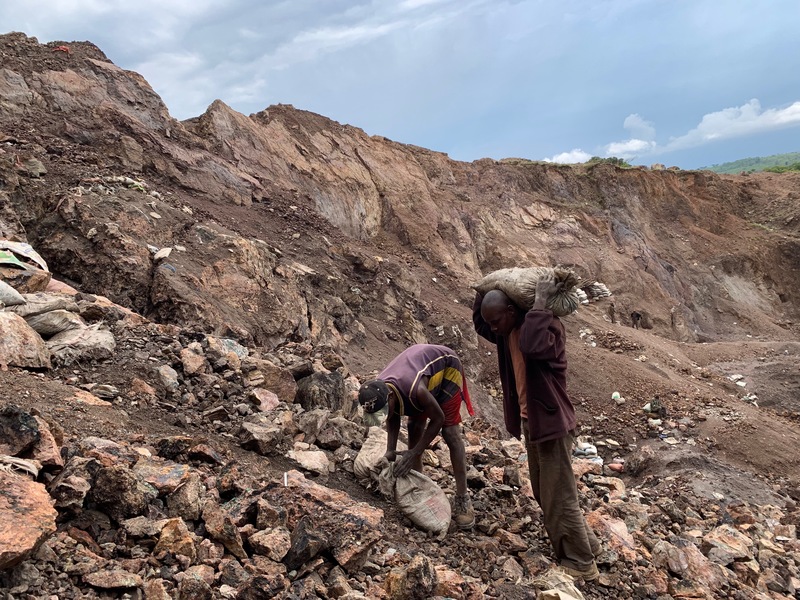
Countries with authoritarian regimes produce much of the world’s oil, with these revenues propping up kleptocratic actors across the world. Russia’s war on Ukraine has shown the devastating impact of such regimes, and the ways in which natural resource wealth can often power conflict and aggression. Some of the best-known Russian oligarchs made their fortunes in the natural resource sectors, often enabled by European and U.S. energy companies and commodity traders that have turned a blind eye to Putin’s aggression. BP, Royal Dutch Shell, Wintershall Dea, ExxonMobil, TotalEnergies, Equinor, OMV and Trafigura have contributed over $95 billion to the Russian government via oil and gas projects since the invasion of Crimea in 2014. Combatting kleptocrats will be impossible without concerted action to address the source of their power: expropriated natural resource wealth. And this is not limited to the oil sector. Minerals have helped fuel conflict and authoritarianism in countries like the Democratic Republic of the Congo, Myanmar, Sierra Leone and Sudan, often aided by private military contractors such as the Wagner Group.
Call to action: Where next for anticorruption efforts in 2023?
Amid these challenges—as well as rising poverty and inequality—a concerted effort to tackle natural resource corruption is needed now more than ever. Transnational problems require transnational solutions, so cooperation will be key in the efforts to squeeze the space for corrupt actors to operate. There are important efforts to work together across civil society to tackle the many ways in which corruption can harm the planet, with a growing network of campaigners working to ensure integrity in climate governance and finance and taking on illegal logging and wildlife trafficking.
But unfortunately key decisionmakers are missing opportunities. They’re wavering on legislation to strengthen corporate due diligence, and backsliding on key anticorruption achievements such as public registers of beneficial ownership information.
To tackle extractive-sector corruption head-on, government officials, international organizations, aid donors, and activists from the anticorruption, extractives governance and climate communities should together push for stronger rules and enforcement, better community engagement, and crackdowns on actors with vested interests in fossil fuels and all those who enable them.
In 2023, NRGI will continue to work closely with our partners in the anticorruption space to support these efforts through:
- Advocating to governments, businesses, investors and international organizations on the need to tackle corruption in the transition mineral sector, using recommendations NRGI developed alongside experts from around the world and key opportunities like the EU Critical Raw Materials Act.
- Supporting stakeholders in resource-rich countries (including Chile, DRC and Guinea) to tackle corruption with our Corruption Diagnostic Tool, highlighting lessons from pilot projects, and publishing new modules on topics such as artisanal and small-scale mining and actors with vested interested in fossil fuels.
- Identifying key studies to better understand how actors with vested interests in fossil fuel production within and around NOCs may unduly influence policies and practices around energy transition at the national level for their own benefits and at the expense of climate action for the public interest.
This post is adapted from opening remarks made by NRGI president and CEO Suneeta Kaimal during a plenary session at the International Anti-Corruption Conference (IACC) in Washington, D.C. in December 2022.
VIDEOS: Dispatches from NRGI at COP27

NRGI experts engaged with a variety of partners at the COP27 climate conference in Sharm El-Sheikh, Egypt, which took place in November 2022. They advocated for a just and equitable energy transition that unlocks economic opportunity and sustainable development in resource-rich countries, and shared the following summaries of key discussions around resource governance and a just energy transition.
Learn more about NRGI's activities at COP27 with this microsite.
Nafi Chinery
Ana Carolina González Espinosa
Ana Carolina González Espinosa (Spanish)
Ana Carolina González Espinosa (French)
Silas Olan'g
Abir Yahyaoui
Thomas Scurfield
For key takeaways for resource-rich countries from COP27, listen to NRGI's podcast.
VIDEOS: NRGI Stakeholders on Securing Inclusive and Equitable Transition at COP27

In advance of the COP27 climate conference in Sharm El-Sheikh, Egypt, which took place in November 2022, NRGI spoke to stakeholders in its priority countries in Africa and Latin America and aggregated their voices and perspectives. Find out what they want from their countries’ energy transitions below, and learn more about NRGI's activities at COP27 with this microsite.
Voices from Africa
Solomon Kusi Ampofo, Friends of the Nation, Ghana
Magdalena Gisse, Tanzania Young Feminist Movement
Victoria Ibezim-Ohaeri, Spaces for Change, Nigeria
Nafi Chinery, NRGI
Charles Wanguhu, NRGI governing board
Lucain Nyassi Tchakounte
Lucain Nyassi Tchakounte, NRGI (with French subtitles)
Tijah Bolton-Akpan
Justine Mponda, Africa Youth Transformation, Tanzania
Lina Marcela Tobon Yagari, Colombia
Charles Ofori, ACEP, Ghana
Ranin Koshi, Peru
Net Zero is Impossible Without Africa’s Transition Minerals

This month, cinemagoers will flock to see Black Panther: Wakanda Forever, seeking thrills from superheroes in the fictional African country which is rich in a world-saving metal vibranium. Meanwhile, in the real Africa, world leaders have flocked to the COP27 climate conference in Egypt, aiming for progress on agreed emissions reductions.
While the top brass at COP are surely too busy to catch a movie, the return of the Black Panther should remind them that African mining is highly relevant to their goals: buried in the soil of the host continent are the metals critical to moving away from humanity’s reliance on fossil fuels.
The main task of world leaders and climate negotiators in Egypt is to secure the path to emissions reductions. Yet they’re paying scant attention to the metals needed to move away from high-emitting fossil fuels...
'Energy Futures that Protect the Planet': NRGI's Suneeta Kaimal on the Global Registry of Fossil Fuels

NRGI president and CEO moderated the 26 September 2022 launch of the Global Registry of Fossil Fuels, hosted by Carbon Tracker. These are her opening remarks.
NRGI aims to help fossil-fuel producing countries make informed choices about their energy futures that protect the planet, strengthen their economies and create fairer societies. This work is grounded in the reality that the world must produce much less oil, natural gas and coal starting now if we are to avoid climate catastrophe.
As we are gathering here in New York for Climate Week, the imperative of managing fossil fuel production is top of mind for all of us. As the most recent UNEP production gap report shows, greenhouse gas emissions continue to grow, fossil fuels still make up about 80 percent of the energy mix worldwide, and governments and companies around the world are still planning to produce more than double the supply of fossil fuels by 2030 that is compatible with the Paris Agreement.
Efforts to cut fossil fuel consumption are at the absolute core of global climate efforts. But these alone are unlikely to keep warming under 1.5C.
Getting back on track is absolutely crucial at this juncture. Efforts to cut fossil fuel consumption are at the absolute core of global climate efforts. But these alone are unlikely to keep warming under 1.5C. Managed supply cuts are also needed. And this is where the Global Registry of Fossil Fuels can help.
By providing us with information on reserves and how much coal, oil and gas is being produced, how much it is likely to cost, and what it means in terms of the remaining carbon budget, the registry gives international researchers and investors information we need to have a sensible conversation on fossil fuel supply and the pace of decline. It also provides leaders and activists within fossil fuel producing countries with a valuable tool to debate the risks – economic and environmental – associated with their production plans.
NRGI is pleased to support Carbon Tracker on this crucial project because we believe that making this information available can help in three distinct ways:
First and foremost, national policy makers can understand the scope of the problem, and they can engage in more inclusive and participatory decision-making.
Today, many producer countries continue to follow the same fossil-fuel-dependent pathways they have for decades, and are struggling to wrestle with the implication of what a managed decline means for them — whether that is on tax revenues, local business opportunities and employment, and on national climate commitments. Engaging with affected parties can help lead to outcomes that are better for all stakeholders involved.
More informed national debate might also help policy makers avoid risky bets, such as pouring public money into national oil company projects that will only break even if humanity exceeds its emissions targets.
In Nigeria, NRGI is working with local NGO BudgIT and the Nigeria Extractive Industries Transparency Initiative (NEITI) to support national dialogues on a future beyond oil that will examine questions like these. The registry will no doubt provide useful insights to inform conversations like this that need to happen all around the world.
Second, accountability actors can use production data to hold governments, companies, and others accountable to the commitments that they have made. And when producers fall short, civil society can facilitate market pressure, public shaming or litigation in response.
Finally, access to reliable data on production puts international stakeholders in a better place to cooperate to reach our shared goals. Globally inclusive dialogue is needed on important questions such as which countries should reduce production first. Many developing and emerging market producers with small carbon footprints are already calling on wealthy higher-emitting producers to lead the decline and to help provide support for national transition plans. Comparable data on production and emissions can lead to better understanding on what constitutes a managed, just and equitable transition away from fossil fuels.
Europe’s Demand for Africa’s Gas: Toward More Responsible Engagement in a Just Energy Transition

Through the publication on 18 May of its external energy strategy, the EU somewhat clarified its approach to diversifying gas supplies. The strategy is of course written from a European perspective; its implications for African producer countries require a bit of dissection. These implications are important given live debates around the role of gas in Africa’s future and more broadly, including at the G7 level.
The EU strategy (and the broader “REPowerEU” package in which it sits) indicates that Europe is seeking a short-term injection of additional gas—but also that it is accelerating its transition to cleaner energy sources. The EU is therefore unlikely to seek longer-term (post-2030) sources of gas. Current and prospective African gas producers ought to take note and adapt accordingly. If European interest in African gas is indeed primarily short-term, responsible EU-Africa engagement would require European officials to clarify their intentions and needs, and relevant African policymakers to ensure that related expectations in their countries are realistic given likely future scenarios.
With such clarity, the handful of African countries ready now (or soon) to start or increase gas production can seize a short-term opportunity to increase public revenues. But given major uncertainties around the future of gas, officials in these and other countries should focus primarily on building more sustainable economies and domestic energy systems, not investing billions of dollars of public capital in long-term gas projects that face tough obstacles and risk carbon lock-in.
There is a bigger opportunity in Europe’s energy rethink for African countries: they can use it to push the EU to follow through on its promises of financing and technology for renewable energy growth in Africa. Europe could couple the realization of these commitments with near-term gas procurement from certain African countries, contributing to long-term partnerships in service of a just energy transition.
Implications for African gas: Timing is everything
Some of the main reactions to the EU strategy have focused on important areas of climate-related concern. The strategy also brings mixed messages for policymakers in countries evaluating opportunities to export gas.
Europe’s main tool for reducing Russian gas imports will be reducing gas consumption.
The REPowerEU plan details how Europe will expedite its energy transition in the wake of the Russian invasion of Ukraine. Europe’s main tool for reducing Russian gas imports will be reducing gas consumption. The plan doubles down on a previous objective to lower consumption by 30 percent by 2030 (around 100 billion cubic meters (bcm)); it details European aims to reduce consumption by a further 11 percent (35 bcm) by 2030 through a combination of energy efficiency and clean energy substitution.
Alongside the reduction in consumption, the EU envisions an increase in gas imports from non-Russian sources: mostly of liquefied natural gas (LNG) (an additional 50 bcm), but also pipeline gas (an additional 10 bcm or more).
So, for whom is this an opportunity, and for how long? On this, the strategy is less clear.
One point of ambiguity concerns the timeframe for increased non-Russian gas imports. The strategy references the need “over the coming years” but omits further detail. Nevertheless, this will likely sync with the strengthened plans around reduced gas consumption by 2030, meaning that if the EU sticks to its decarbonization objectives it is unlikely to need much additional longer-term supply (i.e., for 2030-2050) given its 2050 net-zero target.
A second point of ambiguity relates to the prospective sources of additional supply. The EU has already advanced some deals for short-term supply, including a political agreement with the U.S. for additional LNG imports of at least 15 bcm in 2022 and approximately 50 bcm annually until at least 2030. The 50 bcm would cover all of the EU’s planned increase in LNG supply, meaning there may not be any opportunities for other producers. And yet the strategy also references separate efforts to source gas (e.g., LNG from Egypt and Israel, and piped gas from Algeria and Azerbaijan) and specifically mentions the “untapped LNG potential” of countries in sub-Saharan Africa.
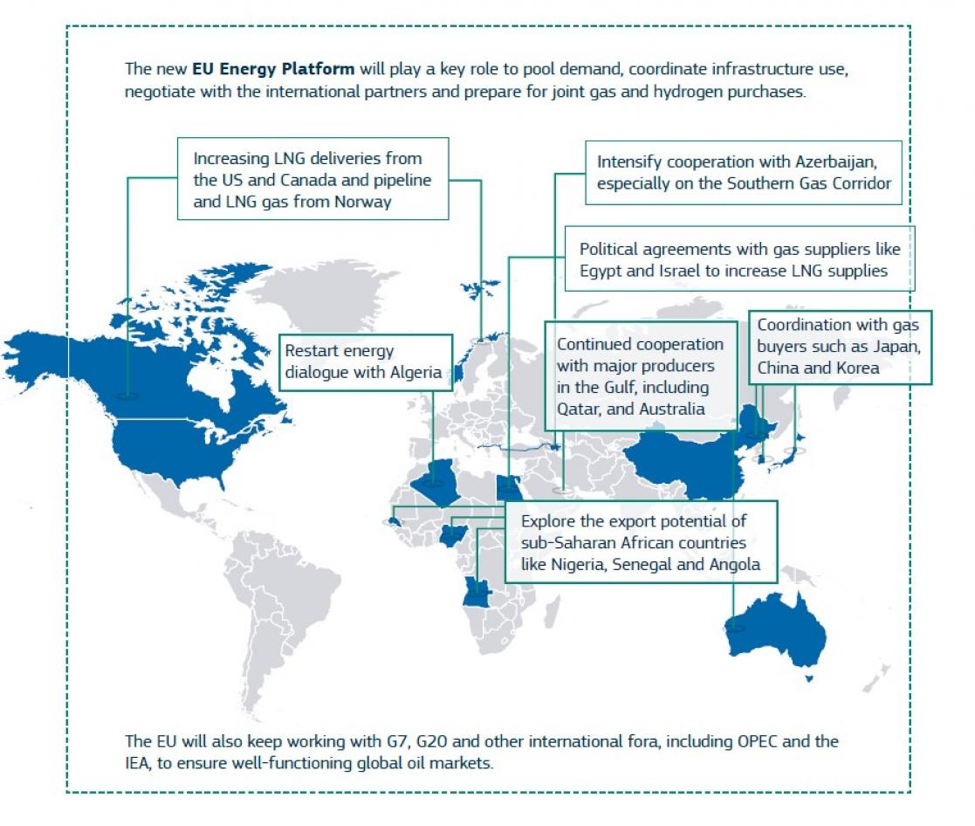
And so it seems that within Africa the opportunity is for existing producers, or those with projects on the cusp of production, that can supply gas before 2030. These could include Angola, Egypt and Nigeria insofar as they can quickly ramp up production. Senegal has already sold the LNG from its initial GTA project, due to start producing in 2023, to Asian buyers, but a final investment decision on a second phase is possible within the next year and production on that phase could start within the next few years.
More generally, expansion of projects with existing infrastructure would be particularly attractive to Europe for a few reasons. It could potentially avoid signing long-term commitments that trigger investments. European officials could also argue that expansions do not constitute development of “new oil and gas fields,” which the IEA has deemed incompatible with achieving net zero by 2050. European demand is unlikely to be much of an opportunity for other countries (or other projects in the above countries) that can only export in the longer-term (2030-2050); these would clearly constitute “new production.”
Europe’s identification of other potential sources of LNG may just be insurance against the possibility that EU-U.S. negotiations fail to result in the full supply of 50 bcm—or a tactic to increase European leverage in those negotiations. Like any insurance policy, this one may not be used, and ultimately significant European demand for additional African supply may not materialize even in the near term. And it may be that Europe wants the “insurance” but isn’t willing to pay the “premium”—or at least not a very high one—in the form of long-term gas purchase agreements necessary to secure financing for projects or funding new infrastructure. If the EU does not plan to make big, long-term investments in African LNG in that way, the responsible course would be to say so explicitly now, rather than leave prospective African suppliers to interpret ambiguities in the strategy.
Officials in producing countries should note these nuances and recognize that Europe and other importers generally prefer to have a diversity of producers, though Europe’s climate considerations may temper the EU’s preference. Many producing countries may never reach the “front of the queue.” Responsible engagement by officials in producing countries would mean avoiding significant risk when jostling for position—by entering a “race to the bottom” negotiation, investing significant public capital to de-risk projects for investors, or getting locked into oversized domestic gas infrastructure that may crowd out cheaper renewable energy alternatives.
EU energy strategy: Missed opportunity on just transition?
In its strategy the EU states that a “just and socially fair” transition is integral to its external energy policy. In practice, its plans around supplier diversification seem shortsightedly agnostic as to where supplies originate—essentially anywhere but Russia.
In a truly just transition, the EU would reduce rather than increase gas imports from countries such as the U.S. and Qatar, as these wealthier countries should be among the first to cut production in a just fossil fuel phaseout. As researchers and advocates for an equitable transition are increasingly recognizing, countries with more urgent development needs should have priority within the remaining carbon budget given their lower capacity to finance their own even more challenging energy transitions. In the absence of an agreed international framework for managed phaseout of fossil fuels, such priority access for developing producers is unlikely. But the EU should support the development of such a framework—or at least apply just principles where it can, as in its international energy strategy.
If consumer countries fail to adopt good governance criteria when selecting future energy suppliers, they risk repeating the mistakes of the past, when Western companies and governments served as key enablers of Putin’s catastrophic kleptocracy. The EU has laid important groundwork on this front, with democratic values and good governance/transparency as key principles for partnerships under its Global Gateway initiative. However, plans to intensify cooperation with authoritarian regimes as part of the EU’s gas diversification strategy raise concerns about its commitment to avoid enabling corrupt regimes.
As part of a responsible engagement the EU and its prospective African gas suppliers should account for the risk that citizens in these African countries may view gas export to the EU as coming at the expense of domestic energy plans.
Developing countries’ domestic energy needs, particularly in Africa where about 600 million people (around half of the population) lack access to electricity, are essential to a just transition. The EU should prioritize delivering on its stated support for increasing renewables in such countries. The strategy’s recognition that renewable energy exports to Europe (e.g., as green hydrogen) should not adversely impact a country’s domestic energy access is significant; the EU should develop this further. But the EU strategy is noticeably silent on the potential impact of increased gas exports to Europe on domestic energy needs in gas-producing countries. This is particularly relevant for discussions around sub-Saharan African gas producers, given the significance (rightly or wrongly) assigned to gas in strategies for addressing domestic energy needs. As part of a responsible engagement the EU and its prospective African gas suppliers should account for the risk that citizens in these African countries may view gas export to the EU as coming at the expense of domestic energy plans. This could accelerate resentment as Europe uses African gas while objecting to gas-supported electrification within Africa for climate reasons.
A way forward
More broadly, the EU should redouble its engagement around ensuring a just transition for developing countries that produce, or aim to produce, fossil fuels. The strategy’s reference to these countries’ interest in exporting green energy shows that the EU appreciates the importance of replacing revenue sources that lower-income countries will lose as part of the energy transition. The EU should support such long-term “revenue smoothing.” This could be part of an Africa-EU green energy initiative inclusive of partnerships of the type launched with South Africa at COP26.
The EU and producer countries should not over-rely on the idea included in the strategy that combining gas cooperation with long-term energy cooperation on hydrogen can “avoid stranded assets and ensure the green transition.” Avoiding stranded assets should be a priority, but not based on an overly broad assumption that fossil fuel infrastructure can be repurposed for other uses.
The EU should instead avoid stranded asset risk in the first place by being as clear as possible on likely future gas demand. With that clarity, African gas-producing countries can determine whether and how they can benefit in the short-term, while avoiding the temptation to sink billions of dollars in public capital in projects predicated on long-term European demand.
Podcast: Fossil Fuels and Climate Change, Featuring NRGI’s David Manley

In this episode of Sheila Khama’s Extractives podcast produced on 17 August, David Manley, a senior economic analyst with NRGI, discusses what the energy transition is, its drivers and responses, and its impact on regions like Africa.
In the recording, Manley highlights a technological revolution and a huge shift in the way we use technologies, such as solar or wind power generation, as well as the radical decline in the cost of these technologies.
“The Paris Agreement is also, to some extent, driving the energy transition," Manley says. It gives investors and businesses some certainty that over the next few decades there will be a market for renewable energy."
Regarding the impact of global energy transition on oil- and gas-producing countries in Africa, Manley points to a foreseeable decline in demand for their exports. However, as the African continent is particularly vulnerable to the severe effects of climate change, he also points to some of the benefits of global transition:
“By far these severe effects will outweigh most of the economic effects from reducing fossil fuel demand. So if the energy transition and the Paris Agreement can help limit that change, that is a great thing we should be aiming for.”
One significant upside for some countries is the increasing demand for metals and minerals, such as copper, cobalt and lithium, which are needed to develop green technologies. With demand for these metals expected to increase in the coming decades, many mining countries could benefit. Manley emphasizes that Africa has the most to gain from this boom.
Given the challenges and opportunities facing resource-rich developing countries, Manley stresses the importance of good governance for a successful transition.
He explains: “For oil- and gas-rich countries, the top priority is to manage these risks, be proactive and ensure that governments are not assuming high oil prices and that everything will be fine. We need to make a big change, using scenarios and thinking more pessimistically, for example, if there is a big drop in gas prices and collapse in production, what that means for countries’ economies and finances, and develop a plan to respond before it is too late.”
David Manley is a senior economic analyst at the Natural Resource Governance Institute (NRGI).
Podcast: Fossil Fuels and Climate Change, Featuring NRGI’s Patrick Heller

Examining the regional differences in the way state-owned companies are responding to climate change and looking to adapt their business models, Patrick points to national oil companies (NOCs) in the Gulf region and North Africa, such as Sonatrach, Saudi Aramco and Qatar Petroleum, which are taking more concrete steps toward investing in clean energy and diversifying their portfolios than companies, for example, in sub-Saharan Africa or Latin America. "The main reason we see this in the Gulf countries is that these SOEs have more money to experiment with. Some of them see this as an opportunity to move to spaces that may enable them to continue to thrive as the world shifts to cleaner energy," explains Patrick.
The potential economic costs to countries dependent on oil and gas are striking. In their report "Risky Bet: National Oil Companies in the Energy Transition," David Manley and Patrick Heller found that out of the public money NOCs will spend over the next decade, more than $400 billion will not break even if the world meets or comes close to meeting the Paris Agreement.
"If producing countries continue to think that the revenues that have been pumped out for the last several decades will be the same that they will see in the coming decades, they are in for a rude awakening. They need to get serious about economic diversification now and figure out what the alternative drivers of these economies are," stresses Patrick.
While it is both morally and in self-interest for countries to support climate adaptation and transition in low-income oil- and gas-producing countries, past unfulfilled commitments and unpredictable policy debates in wealthier countries pose a risk to developing countries. It is thus critical that the voices of developing and low-income countries are at the center of global climate debates and decision-making processes, emphasizes Patrick. He adds, "Because of the leadership vacuum we sometimes see in wealthier countries, developing countries are at risk of becoming victims of climate change, both in terms of their economies and direct environmental impacts. They need to take serious steps to invest in their future."
Looking at the public's role in these debates and the extent to which citizens contribute to carbon emissions, Patrick highlights the importance of a civic action: "As individual citizens of the world, we all have a responsibility to engage in clean practices to the maximum degree that we can to reduce our individual carbon footprint. But beyond the choices we make individually, what we do with our votes, the pressure we put on those around us for systemic change - that's what all citizens can have a responsibility to do."
Fossil fuel transition
Plans for a future beyond fossil fuels must address energy poverty and support sustainable development.