
Indonesia’s Energy Transition Ambitions: Nickel Downstreaming and Beyond

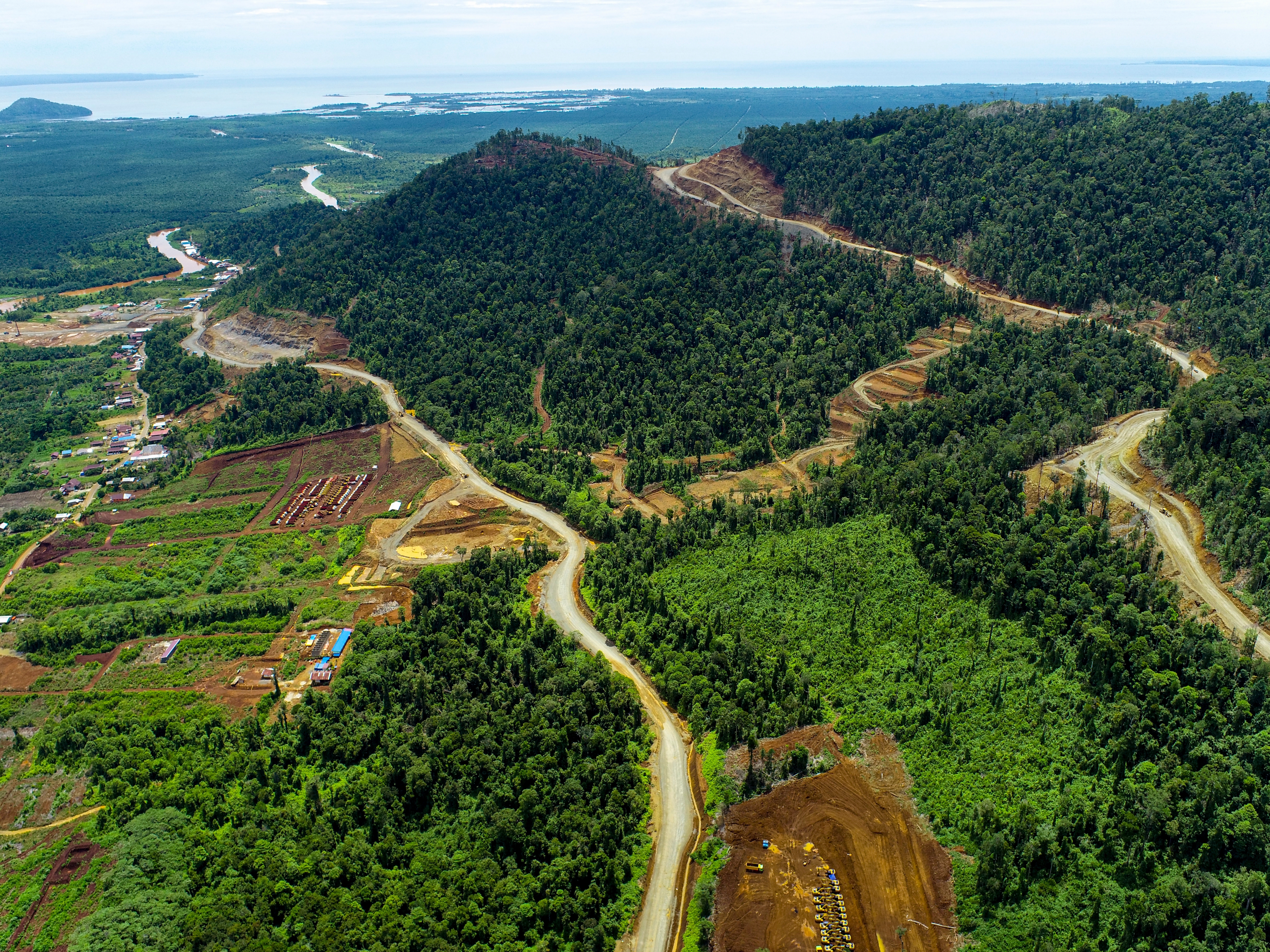
As the global demand for clean energy technologies rises, nickel—and other critical transition minerals—has become central to Indonesia's economic strategy. The country is leveraging its significant nickel reserves, key for electric vehicle (EV) batteries and stainless-steel production, to secure a growing share of the global market.
This economic success story, promoted by the Indonesian government and showcased in various media outlets, has contributed to the country’s overall economic growth, which remains at about 5 percent in 2024, and to growth in nickel-producing regions. For instance, North Maluku has been the best performing province, with an average economic growth of 20.1 percent from 2021 to 2023, driven largely by the nickel industry. Central Sulawesi, the second-best performing province, has similarly benefited from the nickel industry. Building on the successes of his predecessor, President Joko Widodo, the newly elected President Prabowo Subianto plans to further strengthen policies promoting exploitation and value addition of transition minerals, including through a possible revision of the mining law.

However, significant questions remain about how this growth will contribute to sustainable development outcomes for Indonesians, particularly in tackling poverty, unemployment and inequality in mining regions. Additionally, concerns around the socio-environmental impacts and the corruption risks associated with both mining and value addition continue to pose significant challenges. At a macroeconomic level, there is a rich debate on the role of mining and mineral value addition in a broader national strategy for economic diversification and broad-based economic development.
The world’s attention is increasingly focused on how Indonesia will tackle the next phases of its transition minerals story. Researchers and officials from a wide range of countries are looking to learn from Indonesia’s nickel story. At a recent NRGI-organized gathering at the Rockefeller Bellagio Center, leading thinkers from Africa, Asia and Latin America discussed innovations in the transition minerals space and options to implement recommendations from the UN Secretary-General’s Panel on Critical Energy Transition Minerals. However, some analysts have expressed skepticism about the viability of the government’s stated ambitions to further advance downstreaming— which include achieving full coverage of the EV nickel battery value chain in Indonesia, producing EVs in Indonesia and expanding downstreaming to other minerals and sectors in coming years. These differing perspectives underscore the ongoing clash of narratives around mining and value addition ambitions in Indonesia.
On 10-11 December 2024, NRGI, in collaboration with ViriyaENB, gathered more than 30 Indonesian experts to discuss how Indonesian citizens can further benefit from opportunities related to their country’s transition minerals wealth. The workshop focused on how to think through key governance challenges around Indonesian transition minerals, with NRGI experts contributing international experience and perspectives. This event marked a significant step in NRGI’s reengagement in Indonesia, which started in 2024. NRGI’s renewed engagement is part of its global priority to support the fair and sustainable management of the global race for transition minerals, including through successful value addition and equitable development policies.
The discussions at the workshop revealed several key present and future issues of relevance to the country’s transition minerals: the need to move beyond polarized narratives of downstreaming; the impact of technology and geopolitical uncertainty on the window of opportunity; the necessary ambition to improve environmental, social and governance (ESG) performance; and the importance to connect and bridge the gaps between Indonesian stakeholders.
Downstreaming: Moving beyond polarized narratives
Workshop participants discussed how views on Indonesia’s nickel downstreaming risk becoming polarizing—either focusing too heavily on “success” (e.g., growth in production and government revenues, progress along the nickel battery value chain) or on “failure” (e.g., social and environmental impacts, inequitable sharing of benefits). They noted that this lack of nuance can hinder constructive dialogue and improvements. A recurring theme was the need for better metrics for evaluating downstreaming policies beyond production and revenues. Participants highlighted the importance of building on existing research that analyzes both benefits and costs, helping understand how much value addition policies are benefiting Indonesians, particularly those living in mining-affected areas.
On the benefits side, participants indicated that metrics should include the issue of equitable distribution (e.g., at the subnational provincial and regency level) and various kinds of benefits (e.g., not just growth in production, revenues or GDP, but also the impact on unemployment and poverty reduction). Such metrics would also need to measure the tradeoffs that can result from downstreaming growth (e.g., negative impacts in the agriculture sector and agrarian conflicts, deforestation, pollution and emissions, etc.). Developing such metrics and integrating them more consistently into policy discourse was viewed by participants as particularly useful and timely given the new Indonesian government’s stated aim to continue and extend the downstreaming approach as referenced above.
These discussions aligned largely with NRGI’s recent briefing Six Keys to Unlocking Equitable Value Addition in Mining (now available in Bahasa Indonesia). The briefing emphasizes that governments need to set clear goals around their value addition strategies, analyze trade-offs and costs —not just benefits—and implement these strategies transparently to enable assessment by citizens and continuous improvement.
Window of opportunity: Impact of technological and geopolitical uncertainty
Participants expressed interest in deeper research and public discourse around the impact of various market and geopolitical scenarios. Indonesia’s nickel progress has been shaped by contextual factors such as rising global demand for nickel in clean energy applications like EV batteries. However, battery technologies are constantly evolving, with factors ranging from price and performance to supply and reputational risks (e.g., concerns around child labor and human rights in the sourcing of cobalt from the Democratic Republic of Congo or emissions and deforestation around nickel in Indonesia).
One issue raised was whether the window of opportunity for Indonesia’s nickel downstreaming is shrinking due to the projected growing market share of lithium iron phosphate (LFP) batteries, at the expense of nickel-based batteries (NMC). The government is aware of this challenge and is taking steps to mitigate it, including by managing nickel supplies to balance government revenues in the short term and lowering NMC battery costs to extend their viability.
Geopolitical tensions, particularly the potential for a U.S.-China trade war, were also discussed as a potential significant obstacle to Indonesia’s downstreaming ambitions. Chinese companies are major nickel mine owners in Indonesia, with around 40 percent of production, while Indonesian companies account for just 10 percent. Government industrial policies have also pushed Chinese investors to expand from nickel mining to refining, but this substantial involvement means rising trade tensions between the U.S. and China could be a barrier for Indonesian nickel reaching American markets—especially given how provisions in U.S. legislation discourage the use of minerals tied to Chinese companies. While geopolitical competition could attract more non-Chinese investment, the change in U.S. administrations have reduced the likelihood of a U.S.-Indonesia free trade agreement that could be catalytic for such investments.
ESG: Ambition to improve performance
The workshop also focused on how Indonesia can enhance its ESG performance in the mining sector. Participants emphasized that the current polarized environment means that civil society often has to raise issues by “shouting” to get attention on serious social and environmental, as well as governance and corruption concerns.
For example, corruption in mineral licensing—both upstream and downstream—is a significant barrier to equitable development in transition minerals supply chains globally, and Indonesia is no exception. This can significantly impact the success of downstreaming efforts. Workshop participants focused on ways to reduce corruption risks, emphasizing the risks around strong ties between politicians and the mining industry, and the lack of serious anticorruption commitments from many mining companies. Transparency International-Indonesia recently assessed 121 mining companies and found an average anti-corruption compliance score of only 0.31 out of 10, with only 6 companies having clear anticorruption policies.
Participants discussed initiatives launched by the government to improve ESG performance. The PROPER standard, managed by the Ministry of Environment and Forestry (KLHK), assesses company performance in environmental management. Separately, the Indonesia Sustainable Finance Taxonomy, previously the Indonesia Green Taxonomy, was also developed through an interministerial effort. Meanwhile, the SIMBARA system, managed jointly by the Ministry of Energy and Mineral Resources, the Ministry of Transportation, the Ministry of Industry and the Ministry of Trade and Ministry of Finance, was designed to strengthen commodities traceability. Initially used for coal, SIMBARA now also applies to nickel, and is expected to expand to more minerals.
Participants expressed cautious optimism about the potential of these initiatives to meet the growing demand for improved ESG in Indonesia, driven in parts by concerns from affected communities near mine sites. However, they still need to prove their effectiveness. These efforts could build on Indonesia’s commitment to the EITI (Extractive Industries Transparency Initiative), which includes a pilot community engagement in Morowali to ensure a just transition. Government-led initiatives could also learn from market-driven global standards like IRMA (Initiative for Responsible Mining Assurance), which is already gaining traction in Indonesia, with some companies committing to IRMA audits. These efforts can help encourage companies to adopt more responsible mining practices. The discussion also emphasized the need for Indonesian stakeholders to consider ESG standards within the global geopolitical context. As Western actors push for stronger ESG Standards, especially in competition with Chinese companies, Indonesian leaders must balance these dynamics while prioritizing the needs and rights of people.
Connection: Bridging the gaps between stakeholders
A key takeaway from the workshop was the need for stronger connections and collaboration between the diverse range of stakeholders involved in the governance of nickel, other transition minerals and processing. Participants highlighted that while Indonesian stakeholders have substantial expertise, collaboration is limited, impeding progress on equitable development. Deeper dialogue and coordination among various stakeholders is important, including among:
- Government entities (central and local), researchers, civil society and local communities.
- National and local actors, focused on national policy opportunities and risks at the local level near mining sites projects.
- Indonesian policy experts and geopolitics and global market analysts, to provide nuanced perspectives on ongoing reforms within the broader global context.
- Stakeholders working on equitable development in Indonesia and those focused on international mineral equity and governance initiatives.
- Experts on downstream products and markets (batteries, EVs)– and those focused on mining, to strengthen policy recommendations and connect mineral development with supply chain development and diversification.
The richness of the workshop underscored the depth of expertise in Indonesian civil society organizations, think tanks and academics on transition minerals. These voices must be amplified and included in policymaking to ensure that Indonesia’s people benefit from the opportunities provided by transition minerals while managing the associated risks.
Indonesia’s experience—both successes and challenges—can serve as a valuable model for other low- and middle-income mineral-producing countries as they develop and implement their own strategies to manage their transition minerals sustainably and equitably.
Authors

Matthieu Salomon
Lead, Anticorruption
Frenky Simanjuntak
Indonesia Consultant
Amir Shafaie
Legal and Economic Programs Director

Patrick Heller
Chief Program Officer