
Senegal: What we know about the oil contracts that Bassirou Diomaye Faye wants to renegotiate
Notes
-
1
William Davis, Andrew Bauer, and Papa Daouda Diene, “Managing Senegal’s Oil and Gas Revenues” (Natural Resource Governance Institute, 14 December 2021), www.resourcegovernance.org/publications/managing-senegals-oil-and-gas-revenues.
-
2
Papa Daouda Diene and Thomas Scurfield, “Senegal’s New JETP: Four Crucial Next Steps,” Natural Resource Governance Institute (blog), 22 June 2023, www.resourcegovernance.org/articles/senegals-new-jetp-four-crucial-next-steps.
-
3
African Natural Resources Management and Investment Centre, “Minimising Greenhouse Gas Emissions in the Petroleum Sector: The Opportunity for Emerging Producers” (African Development Bank, 2022), www.newproducersgroup.online/wp-content/uploads/2022/11/Minimising-Greenhouse-Gas-Emissions-in-the-Petroleum-Sector.pdf.
-
4
Chantal Beck et al., “The Future of Oil and Gas Is Now: How Companies Can Decarbonize,” McKinsey & Company, 7 January 2020, www.mckinsey.com/industries/oil-and-gas/our-insights/the-future-is-now-how-oil-and-gas-companies-can-decarbonize.
-
5
Carbon Limits AS, “Methane in Africa – A High-Level Assessment of Anthropogenic Methane Emissions in Africa with Case Studies on Potential Evolution and Abatement,” Text (African Development Bank, 5 November 2022), www.afdb.org/en/documents/methane-africa-high-level-assessment-anthropogenic-methane-emissions-africa-case-studies-potential-evolution-and-abatement.
-
6
“Homepage,” Global Methane Hub, 11 September 2023, www.globalmethanehub.org/.
-
7
IEA, “Global Methane Tracker 2023” (IEA, February 2023), www.iea.org/reports/global-methane-tracker-2023.
-
8
RMI, “Assessing Global Oil and Gas Emissions,” Oil Climate Index plus Gas, 2023, www.ociplus.rmi.org.
-
9
Based on available data from 2015 to 2022 on “Upstream Emissions Intensity (kgCO2eq/boe)” and “Upstream Methane Intensity (kgCH4/boe).”
-
10
There are three oil and gas projects in Senegal that are likely to start production in the immediate or near term: Grand Tortue Ahmeyim (GTA), Sangomar and Yakaar-Teranga. Sangomar has mainly oil reserves but contains some unassociated and associated gas (for an explanation see "Associated and Nonassociated Gas,” PetroWiki, accessed 11 September 2023, petrowiki.spe.org/Associated_and_nonassociated_gas)—the use of which is still being discussed by the government and companies, though reinjection is planned initially. GTA and Yaakar-Teranga are unassociated gas projects. The first phase of GTA will mainly produce liquefied natural gas (LNG) for export, as well as potentially supply some gas to the domestic market. The first phase of Yakaar Teranga is yet to reach a final investment decision (FID) but is expected to direct most if not all of its gas to the domestic market. (For an explanation of FID, see “FID,” Energy Insights by McKinsey, accessed 11 September 2023, www.mckinseyenergyinsights.com/resources/refinery-reference-desk/fid/). Until recently, this phase was expected to supply the domestic market only. But government statements suggest that some of its gas may now be exported as LNG – see Ed Reed, “BP Tipped to Reach next Senegal FID This Year,” Energy Voice, 27 January 2023, www.energyvoice.com/oilandgas/africa/lng-africa/478810/senegal-bp-lng-fid.
-
11
“Senegal – Develop a National SLCP Plan and National Methane Roadmap [SN-23-001],” Climate & Clean Air Coalition, accessed 11 September 2023, www.ccacoalition.org/content/senegal-develop-national-slcp-plan-and-national-methane-roadmap-sn-23-001.
-
12
“Homepage,” Climate & Clean Air Coalition, 14 September 2023, www.ccacoalition.org.
-
13
Ian W. H. Parry et al., “How to Cut Methane Emissions,” Staff Climate Notes 2022, no. 008 (31 October 2022), doi.org/10.5089/9798400224256.066.A001.
-
14
“IMF Reaches Staff-Level Agreement with Senegal on an Extended Fund Facility (EFF) and Extended Credit Facility (ECF), Combined with the Resilience and Sustainability Facility (RSF),” IMF, 11 May 2023, www.imf.org/en/News/Articles/2023/05/11/pr23146-senegal-imf-reaches-staff-level-agreement-eff-and-ecf-combined-rsf.
-
15
Katarina Hoije, “Senegal Pitches Its Gas as European Option to Russia Supply - Bloomberg,” Bloomberg, 13 August 2022, www.bloomberg.com/news/articles/2022-08-12/senegal-pitches-its-gas-as-european-alternative-to-russia-supply.
-
16
European Commission, “Communication from the Commission to the European Parliament, the Council, the European Economic and Social Committee and the Committee of the Regions on an EU Strategy to Reduce Methane Emissions,” European Commission, 14 October 2020, www.eur-lex.europa.eu/legal-content/EN/TXT/HTML/?uri=CELEX:52020DC0663.
-
17
Maurice Berns et al., “How Institutional Investors See the Future of Oil and Gas,” BCG, 4 January 2022, www.bcg.com/publications/2022/how-investors-see-future-of-oil-gas.
-
18
Clara Tan, “Asia’s Major LNG Buyers Launch Methane Reduction Initiative,” Energy Intelligence, 18 July 2023, www.energyintel.com/00000189-6853-de6e-a5ef-f8ffffd90000.
-
19
In 2022, Asia was the destination of over 50 percent of west Africa’s gas exports by value. “Merchandise Trade Matrix in Thousands United States Dollars, Annual, 2016-2022,” UNCTADStat, accessed 4 September 2023, www.unctadstat.unctad.org/wds/TableViewer/tableView.aspx.
-
20
Rystad assumes a hurdle rate in nominal terms of 10 percent and an inflation rate of 2.5 percent.
-
21
Reed, “BP Tipped to Reach next Senegal FID This Year.”
-
22
David Manley and Patrick R. P. Heller, “Risky Bet: National Oil Companies in the Energy Transition” (Natural Resource Governance Institute, February 2021), www.resourcegovernance.org/sites/default/files/documents/risky-bet-national-oil-companies-in-the-energy-transition.pdf.
-
23
“Guidance on Fossil Fuel Energy at the Multilateral Development Banks,” accessed 11 September 2023, www.home.treasury.gov/system/files/136/Fossil-Fuel-Energy-Guidance-for-the-Multilateral-Development-Banks.pdf.
-
24
IEA, “World Energy Investment 2023” (Paris: IEA), accessed 11 September 2023, www.iea.org/reports/world-energy-investment-2023.
-
25
Christine Juta, Julie Joly, and Langenbrunner Baird, “The Scramble for Africa’s Gas” (Global Energy Monitor, December 2022), www.globalenergymonitor.org/wp-content/uploads/2022/11/GEM-Scramble-for-Africas-Gas.pdf.
-
26
Damian Carrington, “Revealed: 1,000 Super-Emitting Methane Leaks Risk Triggering Climate Tipping Points,” The Guardian, 6 March 2023, www.theguardian.com/environment/2023/mar/06/revealed-1000-super-emitting-methane-leaks-risk-triggering-climate-tipping-points.
-
27
John Hicklin, “Launching the RST: Country Policies Must Adapt—and So Too Must IMF Conditionality,” Center For Global Development, 21 February 2023, www.cgdev.org/blog/launching-rst-country-policies-must-adapt-and-so-too-must-imf-conditionality.
-
28
IEA, “Africa Energy Outlook 2022” (Paris: IEA Publications, May 2023), www.iea.org/reports/africa-energy-outlook-2022.
- 29
-
30
Camillus Eboh, “Nigerian Minister Says Plan to Commercialise Gas Flaring at Advanced Stage,” Reuters, 14 September 2022, www.reuters.com/world/africa/nigerian-minister-says-plan-commercialise-gas-flaring-advanced-stage-2022-09-14.
-
31
Esme Stallard, “Iraqi Minister Admits Gas Flaring Cancer Link,” BBC News, 17 October 2022, www.bbc.com/news/science-environment-63284896.
-
32
Etienne Romsom and Kathryn McPhail, Capturing Economic and Social Value from Hydrocarbon Gas Flaring: Evaluation of the Issues, 5th ed., vol. 2021, WIDER Working Paper (UNU-WIDER, 2021), www.doi.org/10.35188/UNU-WIDER/2021/939-6.
-
33
Omoniyi Babatunde Alimi and John Gibson, The Impact of Gas Flaring on Child Health in Nigeria, Policy Research Working Papers (The World Bank, 2022), www.doi.org/10.1596/1813-9450-10153.
-
34
John Kanayochukwu Nduka, Vincent Nwalieji Okafor, and Isaac Omoche Odiba, “Impact of Oil and Gas Activities on Acidity of Rain and Surface Water of Niger Delta, Nigeria: An Environmental and Public Health Review,” Journal of Environmental Protection 7, no. 4 (8 March 2016): 566–81, www.doi.org/10.4236/jep.2016.74051.
-
35
Tristan Baurick, “Satellites Can Now Catch Small but ‘nefarious’ Methane Emissions from Offshore Oil Platforms,” Nola, 22 September 2022, www.nola.com/news/environment/satellites-can-now-catch-small-but-nefarious-methane-emissions-from-offshore-oil-platforms/article_c616ab5e-3aae-11ed-b….
-
36
Ellen Gray and Karl Hille, “NASA Scientists Scrutinize Arctic Gas Flaring Pollution,” NASA, 26 April 2016, www.nasa.gov/feature/goddard/2016/nasa-scientists-scrutinize-arctic-gas-flaring-pollution.
-
37
Nathan Andrews et al., “Oil, Fisheries and Coastal Communities: A Review of Impacts on the Environment, Livelihoods, Space and Governance,” Energy Research & Social Science 75 (1 May 2021): 102009, www.doi.org/10.1016/j.erss.2021.102009.
-
38
Antonio Hill, “Equity and Good Governance Are Essential for the Energy Transition,” Natural Resource Governance Institute (blog), 28 March 2022, resourcegovernance.org/articles/equity-and-good-governance-are-essential-energy-transition.
-
39
“Rankings,” Notre Dame Global Adaptation Initiative, accessed 6 September 2023, gain.nd.edu/our-work/country-index/rankings/.
-
40
Fatih Birol, “COP28 Is a Moment of Truth for the Oil and Gas Industry’s Efforts on Climate - Commentary,” IEA, 13 May 2023, www.iea.org/commentaries/cop28-is-a-moment-of-truth-for-the-oil-and-gas-industry-s-efforts-on-climate.
-
41
“Page d’acceuil,” ITIE Initiative pour la Transparence dans les Industries Extractives du Sénégal, accessed 6 September 2023, www.itie.sn.
-
42
Daniel Kaufmann and Robert Pitman, “Extractive Company Disclosure of Project-Level Greenhouse Gas Emissions Is Critical,” Natural Resource Governance Institute (blog), 1 May 2023, resourcegovernance.org/articles/extractive-company-disclosure-project-level-greenhouse-gas-emissions-critical.
-
43
“EITI Standard 2023,” EITI, 24 June 2023, eiti.org/collections/eiti-standard.
-
44
“EITI Standard 2023.”
-
45
African Natural Resources Management and Investment Centre, “Minimising Greenhouse Gas Emissions in the Petroleum Sector.”
-
46
African Natural Resources Management and Investment Centre.
Senegal: Bassirou Diomaye Faye aims to renegotiate contracts with oil giants BP, Kosmos, Woodside
Notes
-
1
William Davis, Andrew Bauer, and Papa Daouda Diene, “Managing Senegal’s Oil and Gas Revenues” (Natural Resource Governance Institute, 14 December 2021), www.resourcegovernance.org/publications/managing-senegals-oil-and-gas-revenues.
-
2
Papa Daouda Diene and Thomas Scurfield, “Senegal’s New JETP: Four Crucial Next Steps,” Natural Resource Governance Institute (blog), 22 June 2023, www.resourcegovernance.org/articles/senegals-new-jetp-four-crucial-next-steps.
-
3
African Natural Resources Management and Investment Centre, “Minimising Greenhouse Gas Emissions in the Petroleum Sector: The Opportunity for Emerging Producers” (African Development Bank, 2022), www.newproducersgroup.online/wp-content/uploads/2022/11/Minimising-Greenhouse-Gas-Emissions-in-the-Petroleum-Sector.pdf.
-
4
Chantal Beck et al., “The Future of Oil and Gas Is Now: How Companies Can Decarbonize,” McKinsey & Company, 7 January 2020, www.mckinsey.com/industries/oil-and-gas/our-insights/the-future-is-now-how-oil-and-gas-companies-can-decarbonize.
-
5
Carbon Limits AS, “Methane in Africa – A High-Level Assessment of Anthropogenic Methane Emissions in Africa with Case Studies on Potential Evolution and Abatement,” Text (African Development Bank, 5 November 2022), www.afdb.org/en/documents/methane-africa-high-level-assessment-anthropogenic-methane-emissions-africa-case-studies-potential-evolution-and-abatement.
-
6
“Homepage,” Global Methane Hub, 11 September 2023, www.globalmethanehub.org/.
-
7
IEA, “Global Methane Tracker 2023” (IEA, February 2023), www.iea.org/reports/global-methane-tracker-2023.
-
8
RMI, “Assessing Global Oil and Gas Emissions,” Oil Climate Index plus Gas, 2023, www.ociplus.rmi.org.
-
9
Based on available data from 2015 to 2022 on “Upstream Emissions Intensity (kgCO2eq/boe)” and “Upstream Methane Intensity (kgCH4/boe).”
-
10
There are three oil and gas projects in Senegal that are likely to start production in the immediate or near term: Grand Tortue Ahmeyim (GTA), Sangomar and Yakaar-Teranga. Sangomar has mainly oil reserves but contains some unassociated and associated gas (for an explanation see "Associated and Nonassociated Gas,” PetroWiki, accessed 11 September 2023, petrowiki.spe.org/Associated_and_nonassociated_gas)—the use of which is still being discussed by the government and companies, though reinjection is planned initially. GTA and Yaakar-Teranga are unassociated gas projects. The first phase of GTA will mainly produce liquefied natural gas (LNG) for export, as well as potentially supply some gas to the domestic market. The first phase of Yakaar Teranga is yet to reach a final investment decision (FID) but is expected to direct most if not all of its gas to the domestic market. (For an explanation of FID, see “FID,” Energy Insights by McKinsey, accessed 11 September 2023, www.mckinseyenergyinsights.com/resources/refinery-reference-desk/fid/). Until recently, this phase was expected to supply the domestic market only. But government statements suggest that some of its gas may now be exported as LNG – see Ed Reed, “BP Tipped to Reach next Senegal FID This Year,” Energy Voice, 27 January 2023, www.energyvoice.com/oilandgas/africa/lng-africa/478810/senegal-bp-lng-fid.
-
11
“Senegal – Develop a National SLCP Plan and National Methane Roadmap [SN-23-001],” Climate & Clean Air Coalition, accessed 11 September 2023, www.ccacoalition.org/content/senegal-develop-national-slcp-plan-and-national-methane-roadmap-sn-23-001.
-
12
“Homepage,” Climate & Clean Air Coalition, 14 September 2023, www.ccacoalition.org.
-
13
Ian W. H. Parry et al., “How to Cut Methane Emissions,” Staff Climate Notes 2022, no. 008 (31 October 2022), doi.org/10.5089/9798400224256.066.A001.
-
14
“IMF Reaches Staff-Level Agreement with Senegal on an Extended Fund Facility (EFF) and Extended Credit Facility (ECF), Combined with the Resilience and Sustainability Facility (RSF),” IMF, 11 May 2023, www.imf.org/en/News/Articles/2023/05/11/pr23146-senegal-imf-reaches-staff-level-agreement-eff-and-ecf-combined-rsf.
-
15
Katarina Hoije, “Senegal Pitches Its Gas as European Option to Russia Supply - Bloomberg,” Bloomberg, 13 August 2022, www.bloomberg.com/news/articles/2022-08-12/senegal-pitches-its-gas-as-european-alternative-to-russia-supply.
-
16
European Commission, “Communication from the Commission to the European Parliament, the Council, the European Economic and Social Committee and the Committee of the Regions on an EU Strategy to Reduce Methane Emissions,” European Commission, 14 October 2020, www.eur-lex.europa.eu/legal-content/EN/TXT/HTML/?uri=CELEX:52020DC0663.
-
17
Maurice Berns et al., “How Institutional Investors See the Future of Oil and Gas,” BCG, 4 January 2022, www.bcg.com/publications/2022/how-investors-see-future-of-oil-gas.
-
18
Clara Tan, “Asia’s Major LNG Buyers Launch Methane Reduction Initiative,” Energy Intelligence, 18 July 2023, www.energyintel.com/00000189-6853-de6e-a5ef-f8ffffd90000.
-
19
In 2022, Asia was the destination of over 50 percent of west Africa’s gas exports by value. “Merchandise Trade Matrix in Thousands United States Dollars, Annual, 2016-2022,” UNCTADStat, accessed 4 September 2023, www.unctadstat.unctad.org/wds/TableViewer/tableView.aspx.
-
20
Rystad assumes a hurdle rate in nominal terms of 10 percent and an inflation rate of 2.5 percent.
-
21
Reed, “BP Tipped to Reach next Senegal FID This Year.”
-
22
David Manley and Patrick R. P. Heller, “Risky Bet: National Oil Companies in the Energy Transition” (Natural Resource Governance Institute, February 2021), www.resourcegovernance.org/sites/default/files/documents/risky-bet-national-oil-companies-in-the-energy-transition.pdf.
-
23
“Guidance on Fossil Fuel Energy at the Multilateral Development Banks,” accessed 11 September 2023, www.home.treasury.gov/system/files/136/Fossil-Fuel-Energy-Guidance-for-the-Multilateral-Development-Banks.pdf.
-
24
IEA, “World Energy Investment 2023” (Paris: IEA), accessed 11 September 2023, www.iea.org/reports/world-energy-investment-2023.
-
25
Christine Juta, Julie Joly, and Langenbrunner Baird, “The Scramble for Africa’s Gas” (Global Energy Monitor, December 2022), www.globalenergymonitor.org/wp-content/uploads/2022/11/GEM-Scramble-for-Africas-Gas.pdf.
-
26
Damian Carrington, “Revealed: 1,000 Super-Emitting Methane Leaks Risk Triggering Climate Tipping Points,” The Guardian, 6 March 2023, www.theguardian.com/environment/2023/mar/06/revealed-1000-super-emitting-methane-leaks-risk-triggering-climate-tipping-points.
-
27
John Hicklin, “Launching the RST: Country Policies Must Adapt—and So Too Must IMF Conditionality,” Center For Global Development, 21 February 2023, www.cgdev.org/blog/launching-rst-country-policies-must-adapt-and-so-too-must-imf-conditionality.
-
28
IEA, “Africa Energy Outlook 2022” (Paris: IEA Publications, May 2023), www.iea.org/reports/africa-energy-outlook-2022.
- 29
-
30
Camillus Eboh, “Nigerian Minister Says Plan to Commercialise Gas Flaring at Advanced Stage,” Reuters, 14 September 2022, www.reuters.com/world/africa/nigerian-minister-says-plan-commercialise-gas-flaring-advanced-stage-2022-09-14.
-
31
Esme Stallard, “Iraqi Minister Admits Gas Flaring Cancer Link,” BBC News, 17 October 2022, www.bbc.com/news/science-environment-63284896.
-
32
Etienne Romsom and Kathryn McPhail, Capturing Economic and Social Value from Hydrocarbon Gas Flaring: Evaluation of the Issues, 5th ed., vol. 2021, WIDER Working Paper (UNU-WIDER, 2021), www.doi.org/10.35188/UNU-WIDER/2021/939-6.
-
33
Omoniyi Babatunde Alimi and John Gibson, The Impact of Gas Flaring on Child Health in Nigeria, Policy Research Working Papers (The World Bank, 2022), www.doi.org/10.1596/1813-9450-10153.
-
34
John Kanayochukwu Nduka, Vincent Nwalieji Okafor, and Isaac Omoche Odiba, “Impact of Oil and Gas Activities on Acidity of Rain and Surface Water of Niger Delta, Nigeria: An Environmental and Public Health Review,” Journal of Environmental Protection 7, no. 4 (8 March 2016): 566–81, www.doi.org/10.4236/jep.2016.74051.
-
35
Tristan Baurick, “Satellites Can Now Catch Small but ‘nefarious’ Methane Emissions from Offshore Oil Platforms,” Nola, 22 September 2022, www.nola.com/news/environment/satellites-can-now-catch-small-but-nefarious-methane-emissions-from-offshore-oil-platforms/article_c616ab5e-3aae-11ed-b….
-
36
Ellen Gray and Karl Hille, “NASA Scientists Scrutinize Arctic Gas Flaring Pollution,” NASA, 26 April 2016, www.nasa.gov/feature/goddard/2016/nasa-scientists-scrutinize-arctic-gas-flaring-pollution.
-
37
Nathan Andrews et al., “Oil, Fisheries and Coastal Communities: A Review of Impacts on the Environment, Livelihoods, Space and Governance,” Energy Research & Social Science 75 (1 May 2021): 102009, www.doi.org/10.1016/j.erss.2021.102009.
-
38
Antonio Hill, “Equity and Good Governance Are Essential for the Energy Transition,” Natural Resource Governance Institute (blog), 28 March 2022, resourcegovernance.org/articles/equity-and-good-governance-are-essential-energy-transition.
-
39
“Rankings,” Notre Dame Global Adaptation Initiative, accessed 6 September 2023, gain.nd.edu/our-work/country-index/rankings/.
-
40
Fatih Birol, “COP28 Is a Moment of Truth for the Oil and Gas Industry’s Efforts on Climate - Commentary,” IEA, 13 May 2023, www.iea.org/commentaries/cop28-is-a-moment-of-truth-for-the-oil-and-gas-industry-s-efforts-on-climate.
-
41
“Page d’acceuil,” ITIE Initiative pour la Transparence dans les Industries Extractives du Sénégal, accessed 6 September 2023, www.itie.sn.
-
42
Daniel Kaufmann and Robert Pitman, “Extractive Company Disclosure of Project-Level Greenhouse Gas Emissions Is Critical,” Natural Resource Governance Institute (blog), 1 May 2023, resourcegovernance.org/articles/extractive-company-disclosure-project-level-greenhouse-gas-emissions-critical.
-
43
“EITI Standard 2023,” EITI, 24 June 2023, eiti.org/collections/eiti-standard.
-
44
“EITI Standard 2023.”
-
45
African Natural Resources Management and Investment Centre, “Minimising Greenhouse Gas Emissions in the Petroleum Sector.”
-
46
African Natural Resources Management and Investment Centre.
Senegal’s New Leader Plans to Revisit Oil Deals with BP, Kosmos
Notes
-
1
William Davis, Andrew Bauer, and Papa Daouda Diene, “Managing Senegal’s Oil and Gas Revenues” (Natural Resource Governance Institute, 14 December 2021), www.resourcegovernance.org/publications/managing-senegals-oil-and-gas-revenues.
-
2
Papa Daouda Diene and Thomas Scurfield, “Senegal’s New JETP: Four Crucial Next Steps,” Natural Resource Governance Institute (blog), 22 June 2023, www.resourcegovernance.org/articles/senegals-new-jetp-four-crucial-next-steps.
-
3
African Natural Resources Management and Investment Centre, “Minimising Greenhouse Gas Emissions in the Petroleum Sector: The Opportunity for Emerging Producers” (African Development Bank, 2022), www.newproducersgroup.online/wp-content/uploads/2022/11/Minimising-Greenhouse-Gas-Emissions-in-the-Petroleum-Sector.pdf.
-
4
Chantal Beck et al., “The Future of Oil and Gas Is Now: How Companies Can Decarbonize,” McKinsey & Company, 7 January 2020, www.mckinsey.com/industries/oil-and-gas/our-insights/the-future-is-now-how-oil-and-gas-companies-can-decarbonize.
-
5
Carbon Limits AS, “Methane in Africa – A High-Level Assessment of Anthropogenic Methane Emissions in Africa with Case Studies on Potential Evolution and Abatement,” Text (African Development Bank, 5 November 2022), www.afdb.org/en/documents/methane-africa-high-level-assessment-anthropogenic-methane-emissions-africa-case-studies-potential-evolution-and-abatement.
-
6
“Homepage,” Global Methane Hub, 11 September 2023, www.globalmethanehub.org/.
-
7
IEA, “Global Methane Tracker 2023” (IEA, February 2023), www.iea.org/reports/global-methane-tracker-2023.
-
8
RMI, “Assessing Global Oil and Gas Emissions,” Oil Climate Index plus Gas, 2023, www.ociplus.rmi.org.
-
9
Based on available data from 2015 to 2022 on “Upstream Emissions Intensity (kgCO2eq/boe)” and “Upstream Methane Intensity (kgCH4/boe).”
-
10
There are three oil and gas projects in Senegal that are likely to start production in the immediate or near term: Grand Tortue Ahmeyim (GTA), Sangomar and Yakaar-Teranga. Sangomar has mainly oil reserves but contains some unassociated and associated gas (for an explanation see "Associated and Nonassociated Gas,” PetroWiki, accessed 11 September 2023, petrowiki.spe.org/Associated_and_nonassociated_gas)—the use of which is still being discussed by the government and companies, though reinjection is planned initially. GTA and Yaakar-Teranga are unassociated gas projects. The first phase of GTA will mainly produce liquefied natural gas (LNG) for export, as well as potentially supply some gas to the domestic market. The first phase of Yakaar Teranga is yet to reach a final investment decision (FID) but is expected to direct most if not all of its gas to the domestic market. (For an explanation of FID, see “FID,” Energy Insights by McKinsey, accessed 11 September 2023, www.mckinseyenergyinsights.com/resources/refinery-reference-desk/fid/). Until recently, this phase was expected to supply the domestic market only. But government statements suggest that some of its gas may now be exported as LNG – see Ed Reed, “BP Tipped to Reach next Senegal FID This Year,” Energy Voice, 27 January 2023, www.energyvoice.com/oilandgas/africa/lng-africa/478810/senegal-bp-lng-fid.
-
11
“Senegal – Develop a National SLCP Plan and National Methane Roadmap [SN-23-001],” Climate & Clean Air Coalition, accessed 11 September 2023, www.ccacoalition.org/content/senegal-develop-national-slcp-plan-and-national-methane-roadmap-sn-23-001.
-
12
“Homepage,” Climate & Clean Air Coalition, 14 September 2023, www.ccacoalition.org.
-
13
Ian W. H. Parry et al., “How to Cut Methane Emissions,” Staff Climate Notes 2022, no. 008 (31 October 2022), doi.org/10.5089/9798400224256.066.A001.
-
14
“IMF Reaches Staff-Level Agreement with Senegal on an Extended Fund Facility (EFF) and Extended Credit Facility (ECF), Combined with the Resilience and Sustainability Facility (RSF),” IMF, 11 May 2023, www.imf.org/en/News/Articles/2023/05/11/pr23146-senegal-imf-reaches-staff-level-agreement-eff-and-ecf-combined-rsf.
-
15
Katarina Hoije, “Senegal Pitches Its Gas as European Option to Russia Supply - Bloomberg,” Bloomberg, 13 August 2022, www.bloomberg.com/news/articles/2022-08-12/senegal-pitches-its-gas-as-european-alternative-to-russia-supply.
-
16
European Commission, “Communication from the Commission to the European Parliament, the Council, the European Economic and Social Committee and the Committee of the Regions on an EU Strategy to Reduce Methane Emissions,” European Commission, 14 October 2020, www.eur-lex.europa.eu/legal-content/EN/TXT/HTML/?uri=CELEX:52020DC0663.
-
17
Maurice Berns et al., “How Institutional Investors See the Future of Oil and Gas,” BCG, 4 January 2022, www.bcg.com/publications/2022/how-investors-see-future-of-oil-gas.
-
18
Clara Tan, “Asia’s Major LNG Buyers Launch Methane Reduction Initiative,” Energy Intelligence, 18 July 2023, www.energyintel.com/00000189-6853-de6e-a5ef-f8ffffd90000.
-
19
In 2022, Asia was the destination of over 50 percent of west Africa’s gas exports by value. “Merchandise Trade Matrix in Thousands United States Dollars, Annual, 2016-2022,” UNCTADStat, accessed 4 September 2023, www.unctadstat.unctad.org/wds/TableViewer/tableView.aspx.
-
20
Rystad assumes a hurdle rate in nominal terms of 10 percent and an inflation rate of 2.5 percent.
-
21
Reed, “BP Tipped to Reach next Senegal FID This Year.”
-
22
David Manley and Patrick R. P. Heller, “Risky Bet: National Oil Companies in the Energy Transition” (Natural Resource Governance Institute, February 2021), www.resourcegovernance.org/sites/default/files/documents/risky-bet-national-oil-companies-in-the-energy-transition.pdf.
-
23
“Guidance on Fossil Fuel Energy at the Multilateral Development Banks,” accessed 11 September 2023, www.home.treasury.gov/system/files/136/Fossil-Fuel-Energy-Guidance-for-the-Multilateral-Development-Banks.pdf.
-
24
IEA, “World Energy Investment 2023” (Paris: IEA), accessed 11 September 2023, www.iea.org/reports/world-energy-investment-2023.
-
25
Christine Juta, Julie Joly, and Langenbrunner Baird, “The Scramble for Africa’s Gas” (Global Energy Monitor, December 2022), www.globalenergymonitor.org/wp-content/uploads/2022/11/GEM-Scramble-for-Africas-Gas.pdf.
-
26
Damian Carrington, “Revealed: 1,000 Super-Emitting Methane Leaks Risk Triggering Climate Tipping Points,” The Guardian, 6 March 2023, www.theguardian.com/environment/2023/mar/06/revealed-1000-super-emitting-methane-leaks-risk-triggering-climate-tipping-points.
-
27
John Hicklin, “Launching the RST: Country Policies Must Adapt—and So Too Must IMF Conditionality,” Center For Global Development, 21 February 2023, www.cgdev.org/blog/launching-rst-country-policies-must-adapt-and-so-too-must-imf-conditionality.
-
28
IEA, “Africa Energy Outlook 2022” (Paris: IEA Publications, May 2023), www.iea.org/reports/africa-energy-outlook-2022.
- 29
-
30
Camillus Eboh, “Nigerian Minister Says Plan to Commercialise Gas Flaring at Advanced Stage,” Reuters, 14 September 2022, www.reuters.com/world/africa/nigerian-minister-says-plan-commercialise-gas-flaring-advanced-stage-2022-09-14.
-
31
Esme Stallard, “Iraqi Minister Admits Gas Flaring Cancer Link,” BBC News, 17 October 2022, www.bbc.com/news/science-environment-63284896.
-
32
Etienne Romsom and Kathryn McPhail, Capturing Economic and Social Value from Hydrocarbon Gas Flaring: Evaluation of the Issues, 5th ed., vol. 2021, WIDER Working Paper (UNU-WIDER, 2021), www.doi.org/10.35188/UNU-WIDER/2021/939-6.
-
33
Omoniyi Babatunde Alimi and John Gibson, The Impact of Gas Flaring on Child Health in Nigeria, Policy Research Working Papers (The World Bank, 2022), www.doi.org/10.1596/1813-9450-10153.
-
34
John Kanayochukwu Nduka, Vincent Nwalieji Okafor, and Isaac Omoche Odiba, “Impact of Oil and Gas Activities on Acidity of Rain and Surface Water of Niger Delta, Nigeria: An Environmental and Public Health Review,” Journal of Environmental Protection 7, no. 4 (8 March 2016): 566–81, www.doi.org/10.4236/jep.2016.74051.
-
35
Tristan Baurick, “Satellites Can Now Catch Small but ‘nefarious’ Methane Emissions from Offshore Oil Platforms,” Nola, 22 September 2022, www.nola.com/news/environment/satellites-can-now-catch-small-but-nefarious-methane-emissions-from-offshore-oil-platforms/article_c616ab5e-3aae-11ed-b….
-
36
Ellen Gray and Karl Hille, “NASA Scientists Scrutinize Arctic Gas Flaring Pollution,” NASA, 26 April 2016, www.nasa.gov/feature/goddard/2016/nasa-scientists-scrutinize-arctic-gas-flaring-pollution.
-
37
Nathan Andrews et al., “Oil, Fisheries and Coastal Communities: A Review of Impacts on the Environment, Livelihoods, Space and Governance,” Energy Research & Social Science 75 (1 May 2021): 102009, www.doi.org/10.1016/j.erss.2021.102009.
-
38
Antonio Hill, “Equity and Good Governance Are Essential for the Energy Transition,” Natural Resource Governance Institute (blog), 28 March 2022, resourcegovernance.org/articles/equity-and-good-governance-are-essential-energy-transition.
-
39
“Rankings,” Notre Dame Global Adaptation Initiative, accessed 6 September 2023, gain.nd.edu/our-work/country-index/rankings/.
-
40
Fatih Birol, “COP28 Is a Moment of Truth for the Oil and Gas Industry’s Efforts on Climate - Commentary,” IEA, 13 May 2023, www.iea.org/commentaries/cop28-is-a-moment-of-truth-for-the-oil-and-gas-industry-s-efforts-on-climate.
-
41
“Page d’acceuil,” ITIE Initiative pour la Transparence dans les Industries Extractives du Sénégal, accessed 6 September 2023, www.itie.sn.
-
42
Daniel Kaufmann and Robert Pitman, “Extractive Company Disclosure of Project-Level Greenhouse Gas Emissions Is Critical,” Natural Resource Governance Institute (blog), 1 May 2023, resourcegovernance.org/articles/extractive-company-disclosure-project-level-greenhouse-gas-emissions-critical.
-
43
“EITI Standard 2023,” EITI, 24 June 2023, eiti.org/collections/eiti-standard.
-
44
“EITI Standard 2023.”
-
45
African Natural Resources Management and Investment Centre, “Minimising Greenhouse Gas Emissions in the Petroleum Sector.”
-
46
African Natural Resources Management and Investment Centre.
Au Sénégal, le projet gazier GTA s’invite dans la campagne
Notes
-
1
William Davis, Andrew Bauer, and Papa Daouda Diene, “Managing Senegal’s Oil and Gas Revenues” (Natural Resource Governance Institute, 14 December 2021), www.resourcegovernance.org/publications/managing-senegals-oil-and-gas-revenues.
-
2
Papa Daouda Diene and Thomas Scurfield, “Senegal’s New JETP: Four Crucial Next Steps,” Natural Resource Governance Institute (blog), 22 June 2023, www.resourcegovernance.org/articles/senegals-new-jetp-four-crucial-next-steps.
-
3
African Natural Resources Management and Investment Centre, “Minimising Greenhouse Gas Emissions in the Petroleum Sector: The Opportunity for Emerging Producers” (African Development Bank, 2022), www.newproducersgroup.online/wp-content/uploads/2022/11/Minimising-Greenhouse-Gas-Emissions-in-the-Petroleum-Sector.pdf.
-
4
Chantal Beck et al., “The Future of Oil and Gas Is Now: How Companies Can Decarbonize,” McKinsey & Company, 7 January 2020, www.mckinsey.com/industries/oil-and-gas/our-insights/the-future-is-now-how-oil-and-gas-companies-can-decarbonize.
-
5
Carbon Limits AS, “Methane in Africa – A High-Level Assessment of Anthropogenic Methane Emissions in Africa with Case Studies on Potential Evolution and Abatement,” Text (African Development Bank, 5 November 2022), www.afdb.org/en/documents/methane-africa-high-level-assessment-anthropogenic-methane-emissions-africa-case-studies-potential-evolution-and-abatement.
-
6
“Homepage,” Global Methane Hub, 11 September 2023, www.globalmethanehub.org/.
-
7
IEA, “Global Methane Tracker 2023” (IEA, February 2023), www.iea.org/reports/global-methane-tracker-2023.
-
8
RMI, “Assessing Global Oil and Gas Emissions,” Oil Climate Index plus Gas, 2023, www.ociplus.rmi.org.
-
9
Based on available data from 2015 to 2022 on “Upstream Emissions Intensity (kgCO2eq/boe)” and “Upstream Methane Intensity (kgCH4/boe).”
-
10
There are three oil and gas projects in Senegal that are likely to start production in the immediate or near term: Grand Tortue Ahmeyim (GTA), Sangomar and Yakaar-Teranga. Sangomar has mainly oil reserves but contains some unassociated and associated gas (for an explanation see "Associated and Nonassociated Gas,” PetroWiki, accessed 11 September 2023, petrowiki.spe.org/Associated_and_nonassociated_gas)—the use of which is still being discussed by the government and companies, though reinjection is planned initially. GTA and Yaakar-Teranga are unassociated gas projects. The first phase of GTA will mainly produce liquefied natural gas (LNG) for export, as well as potentially supply some gas to the domestic market. The first phase of Yakaar Teranga is yet to reach a final investment decision (FID) but is expected to direct most if not all of its gas to the domestic market. (For an explanation of FID, see “FID,” Energy Insights by McKinsey, accessed 11 September 2023, www.mckinseyenergyinsights.com/resources/refinery-reference-desk/fid/). Until recently, this phase was expected to supply the domestic market only. But government statements suggest that some of its gas may now be exported as LNG – see Ed Reed, “BP Tipped to Reach next Senegal FID This Year,” Energy Voice, 27 January 2023, www.energyvoice.com/oilandgas/africa/lng-africa/478810/senegal-bp-lng-fid.
-
11
“Senegal – Develop a National SLCP Plan and National Methane Roadmap [SN-23-001],” Climate & Clean Air Coalition, accessed 11 September 2023, www.ccacoalition.org/content/senegal-develop-national-slcp-plan-and-national-methane-roadmap-sn-23-001.
-
12
“Homepage,” Climate & Clean Air Coalition, 14 September 2023, www.ccacoalition.org.
-
13
Ian W. H. Parry et al., “How to Cut Methane Emissions,” Staff Climate Notes 2022, no. 008 (31 October 2022), doi.org/10.5089/9798400224256.066.A001.
-
14
“IMF Reaches Staff-Level Agreement with Senegal on an Extended Fund Facility (EFF) and Extended Credit Facility (ECF), Combined with the Resilience and Sustainability Facility (RSF),” IMF, 11 May 2023, www.imf.org/en/News/Articles/2023/05/11/pr23146-senegal-imf-reaches-staff-level-agreement-eff-and-ecf-combined-rsf.
-
15
Katarina Hoije, “Senegal Pitches Its Gas as European Option to Russia Supply - Bloomberg,” Bloomberg, 13 August 2022, www.bloomberg.com/news/articles/2022-08-12/senegal-pitches-its-gas-as-european-alternative-to-russia-supply.
-
16
European Commission, “Communication from the Commission to the European Parliament, the Council, the European Economic and Social Committee and the Committee of the Regions on an EU Strategy to Reduce Methane Emissions,” European Commission, 14 October 2020, www.eur-lex.europa.eu/legal-content/EN/TXT/HTML/?uri=CELEX:52020DC0663.
-
17
Maurice Berns et al., “How Institutional Investors See the Future of Oil and Gas,” BCG, 4 January 2022, www.bcg.com/publications/2022/how-investors-see-future-of-oil-gas.
-
18
Clara Tan, “Asia’s Major LNG Buyers Launch Methane Reduction Initiative,” Energy Intelligence, 18 July 2023, www.energyintel.com/00000189-6853-de6e-a5ef-f8ffffd90000.
-
19
In 2022, Asia was the destination of over 50 percent of west Africa’s gas exports by value. “Merchandise Trade Matrix in Thousands United States Dollars, Annual, 2016-2022,” UNCTADStat, accessed 4 September 2023, www.unctadstat.unctad.org/wds/TableViewer/tableView.aspx.
-
20
Rystad assumes a hurdle rate in nominal terms of 10 percent and an inflation rate of 2.5 percent.
-
21
Reed, “BP Tipped to Reach next Senegal FID This Year.”
-
22
David Manley and Patrick R. P. Heller, “Risky Bet: National Oil Companies in the Energy Transition” (Natural Resource Governance Institute, February 2021), www.resourcegovernance.org/sites/default/files/documents/risky-bet-national-oil-companies-in-the-energy-transition.pdf.
-
23
“Guidance on Fossil Fuel Energy at the Multilateral Development Banks,” accessed 11 September 2023, www.home.treasury.gov/system/files/136/Fossil-Fuel-Energy-Guidance-for-the-Multilateral-Development-Banks.pdf.
-
24
IEA, “World Energy Investment 2023” (Paris: IEA), accessed 11 September 2023, www.iea.org/reports/world-energy-investment-2023.
-
25
Christine Juta, Julie Joly, and Langenbrunner Baird, “The Scramble for Africa’s Gas” (Global Energy Monitor, December 2022), www.globalenergymonitor.org/wp-content/uploads/2022/11/GEM-Scramble-for-Africas-Gas.pdf.
-
26
Damian Carrington, “Revealed: 1,000 Super-Emitting Methane Leaks Risk Triggering Climate Tipping Points,” The Guardian, 6 March 2023, www.theguardian.com/environment/2023/mar/06/revealed-1000-super-emitting-methane-leaks-risk-triggering-climate-tipping-points.
-
27
John Hicklin, “Launching the RST: Country Policies Must Adapt—and So Too Must IMF Conditionality,” Center For Global Development, 21 February 2023, www.cgdev.org/blog/launching-rst-country-policies-must-adapt-and-so-too-must-imf-conditionality.
-
28
IEA, “Africa Energy Outlook 2022” (Paris: IEA Publications, May 2023), www.iea.org/reports/africa-energy-outlook-2022.
- 29
-
30
Camillus Eboh, “Nigerian Minister Says Plan to Commercialise Gas Flaring at Advanced Stage,” Reuters, 14 September 2022, www.reuters.com/world/africa/nigerian-minister-says-plan-commercialise-gas-flaring-advanced-stage-2022-09-14.
-
31
Esme Stallard, “Iraqi Minister Admits Gas Flaring Cancer Link,” BBC News, 17 October 2022, www.bbc.com/news/science-environment-63284896.
-
32
Etienne Romsom and Kathryn McPhail, Capturing Economic and Social Value from Hydrocarbon Gas Flaring: Evaluation of the Issues, 5th ed., vol. 2021, WIDER Working Paper (UNU-WIDER, 2021), www.doi.org/10.35188/UNU-WIDER/2021/939-6.
-
33
Omoniyi Babatunde Alimi and John Gibson, The Impact of Gas Flaring on Child Health in Nigeria, Policy Research Working Papers (The World Bank, 2022), www.doi.org/10.1596/1813-9450-10153.
-
34
John Kanayochukwu Nduka, Vincent Nwalieji Okafor, and Isaac Omoche Odiba, “Impact of Oil and Gas Activities on Acidity of Rain and Surface Water of Niger Delta, Nigeria: An Environmental and Public Health Review,” Journal of Environmental Protection 7, no. 4 (8 March 2016): 566–81, www.doi.org/10.4236/jep.2016.74051.
-
35
Tristan Baurick, “Satellites Can Now Catch Small but ‘nefarious’ Methane Emissions from Offshore Oil Platforms,” Nola, 22 September 2022, www.nola.com/news/environment/satellites-can-now-catch-small-but-nefarious-methane-emissions-from-offshore-oil-platforms/article_c616ab5e-3aae-11ed-b….
-
36
Ellen Gray and Karl Hille, “NASA Scientists Scrutinize Arctic Gas Flaring Pollution,” NASA, 26 April 2016, www.nasa.gov/feature/goddard/2016/nasa-scientists-scrutinize-arctic-gas-flaring-pollution.
-
37
Nathan Andrews et al., “Oil, Fisheries and Coastal Communities: A Review of Impacts on the Environment, Livelihoods, Space and Governance,” Energy Research & Social Science 75 (1 May 2021): 102009, www.doi.org/10.1016/j.erss.2021.102009.
-
38
Antonio Hill, “Equity and Good Governance Are Essential for the Energy Transition,” Natural Resource Governance Institute (blog), 28 March 2022, resourcegovernance.org/articles/equity-and-good-governance-are-essential-energy-transition.
-
39
“Rankings,” Notre Dame Global Adaptation Initiative, accessed 6 September 2023, gain.nd.edu/our-work/country-index/rankings/.
-
40
Fatih Birol, “COP28 Is a Moment of Truth for the Oil and Gas Industry’s Efforts on Climate - Commentary,” IEA, 13 May 2023, www.iea.org/commentaries/cop28-is-a-moment-of-truth-for-the-oil-and-gas-industry-s-efforts-on-climate.
-
41
“Page d’acceuil,” ITIE Initiative pour la Transparence dans les Industries Extractives du Sénégal, accessed 6 September 2023, www.itie.sn.
-
42
Daniel Kaufmann and Robert Pitman, “Extractive Company Disclosure of Project-Level Greenhouse Gas Emissions Is Critical,” Natural Resource Governance Institute (blog), 1 May 2023, resourcegovernance.org/articles/extractive-company-disclosure-project-level-greenhouse-gas-emissions-critical.
-
43
“EITI Standard 2023,” EITI, 24 June 2023, eiti.org/collections/eiti-standard.
-
44
“EITI Standard 2023.”
-
45
African Natural Resources Management and Investment Centre, “Minimising Greenhouse Gas Emissions in the Petroleum Sector.”
-
46
African Natural Resources Management and Investment Centre.
Africa’s Biggest Gas Finds Hit by Political Turmoil and Debt Spirals
Notes
-
1
William Davis, Andrew Bauer, and Papa Daouda Diene, “Managing Senegal’s Oil and Gas Revenues” (Natural Resource Governance Institute, 14 December 2021), www.resourcegovernance.org/publications/managing-senegals-oil-and-gas-revenues.
-
2
Papa Daouda Diene and Thomas Scurfield, “Senegal’s New JETP: Four Crucial Next Steps,” Natural Resource Governance Institute (blog), 22 June 2023, www.resourcegovernance.org/articles/senegals-new-jetp-four-crucial-next-steps.
-
3
African Natural Resources Management and Investment Centre, “Minimising Greenhouse Gas Emissions in the Petroleum Sector: The Opportunity for Emerging Producers” (African Development Bank, 2022), www.newproducersgroup.online/wp-content/uploads/2022/11/Minimising-Greenhouse-Gas-Emissions-in-the-Petroleum-Sector.pdf.
-
4
Chantal Beck et al., “The Future of Oil and Gas Is Now: How Companies Can Decarbonize,” McKinsey & Company, 7 January 2020, www.mckinsey.com/industries/oil-and-gas/our-insights/the-future-is-now-how-oil-and-gas-companies-can-decarbonize.
-
5
Carbon Limits AS, “Methane in Africa – A High-Level Assessment of Anthropogenic Methane Emissions in Africa with Case Studies on Potential Evolution and Abatement,” Text (African Development Bank, 5 November 2022), www.afdb.org/en/documents/methane-africa-high-level-assessment-anthropogenic-methane-emissions-africa-case-studies-potential-evolution-and-abatement.
-
6
“Homepage,” Global Methane Hub, 11 September 2023, www.globalmethanehub.org/.
-
7
IEA, “Global Methane Tracker 2023” (IEA, February 2023), www.iea.org/reports/global-methane-tracker-2023.
-
8
RMI, “Assessing Global Oil and Gas Emissions,” Oil Climate Index plus Gas, 2023, www.ociplus.rmi.org.
-
9
Based on available data from 2015 to 2022 on “Upstream Emissions Intensity (kgCO2eq/boe)” and “Upstream Methane Intensity (kgCH4/boe).”
-
10
There are three oil and gas projects in Senegal that are likely to start production in the immediate or near term: Grand Tortue Ahmeyim (GTA), Sangomar and Yakaar-Teranga. Sangomar has mainly oil reserves but contains some unassociated and associated gas (for an explanation see "Associated and Nonassociated Gas,” PetroWiki, accessed 11 September 2023, petrowiki.spe.org/Associated_and_nonassociated_gas)—the use of which is still being discussed by the government and companies, though reinjection is planned initially. GTA and Yaakar-Teranga are unassociated gas projects. The first phase of GTA will mainly produce liquefied natural gas (LNG) for export, as well as potentially supply some gas to the domestic market. The first phase of Yakaar Teranga is yet to reach a final investment decision (FID) but is expected to direct most if not all of its gas to the domestic market. (For an explanation of FID, see “FID,” Energy Insights by McKinsey, accessed 11 September 2023, www.mckinseyenergyinsights.com/resources/refinery-reference-desk/fid/). Until recently, this phase was expected to supply the domestic market only. But government statements suggest that some of its gas may now be exported as LNG – see Ed Reed, “BP Tipped to Reach next Senegal FID This Year,” Energy Voice, 27 January 2023, www.energyvoice.com/oilandgas/africa/lng-africa/478810/senegal-bp-lng-fid.
-
11
“Senegal – Develop a National SLCP Plan and National Methane Roadmap [SN-23-001],” Climate & Clean Air Coalition, accessed 11 September 2023, www.ccacoalition.org/content/senegal-develop-national-slcp-plan-and-national-methane-roadmap-sn-23-001.
-
12
“Homepage,” Climate & Clean Air Coalition, 14 September 2023, www.ccacoalition.org.
-
13
Ian W. H. Parry et al., “How to Cut Methane Emissions,” Staff Climate Notes 2022, no. 008 (31 October 2022), doi.org/10.5089/9798400224256.066.A001.
-
14
“IMF Reaches Staff-Level Agreement with Senegal on an Extended Fund Facility (EFF) and Extended Credit Facility (ECF), Combined with the Resilience and Sustainability Facility (RSF),” IMF, 11 May 2023, www.imf.org/en/News/Articles/2023/05/11/pr23146-senegal-imf-reaches-staff-level-agreement-eff-and-ecf-combined-rsf.
-
15
Katarina Hoije, “Senegal Pitches Its Gas as European Option to Russia Supply - Bloomberg,” Bloomberg, 13 August 2022, www.bloomberg.com/news/articles/2022-08-12/senegal-pitches-its-gas-as-european-alternative-to-russia-supply.
-
16
European Commission, “Communication from the Commission to the European Parliament, the Council, the European Economic and Social Committee and the Committee of the Regions on an EU Strategy to Reduce Methane Emissions,” European Commission, 14 October 2020, www.eur-lex.europa.eu/legal-content/EN/TXT/HTML/?uri=CELEX:52020DC0663.
-
17
Maurice Berns et al., “How Institutional Investors See the Future of Oil and Gas,” BCG, 4 January 2022, www.bcg.com/publications/2022/how-investors-see-future-of-oil-gas.
-
18
Clara Tan, “Asia’s Major LNG Buyers Launch Methane Reduction Initiative,” Energy Intelligence, 18 July 2023, www.energyintel.com/00000189-6853-de6e-a5ef-f8ffffd90000.
-
19
In 2022, Asia was the destination of over 50 percent of west Africa’s gas exports by value. “Merchandise Trade Matrix in Thousands United States Dollars, Annual, 2016-2022,” UNCTADStat, accessed 4 September 2023, www.unctadstat.unctad.org/wds/TableViewer/tableView.aspx.
-
20
Rystad assumes a hurdle rate in nominal terms of 10 percent and an inflation rate of 2.5 percent.
-
21
Reed, “BP Tipped to Reach next Senegal FID This Year.”
-
22
David Manley and Patrick R. P. Heller, “Risky Bet: National Oil Companies in the Energy Transition” (Natural Resource Governance Institute, February 2021), www.resourcegovernance.org/sites/default/files/documents/risky-bet-national-oil-companies-in-the-energy-transition.pdf.
-
23
“Guidance on Fossil Fuel Energy at the Multilateral Development Banks,” accessed 11 September 2023, www.home.treasury.gov/system/files/136/Fossil-Fuel-Energy-Guidance-for-the-Multilateral-Development-Banks.pdf.
-
24
IEA, “World Energy Investment 2023” (Paris: IEA), accessed 11 September 2023, www.iea.org/reports/world-energy-investment-2023.
-
25
Christine Juta, Julie Joly, and Langenbrunner Baird, “The Scramble for Africa’s Gas” (Global Energy Monitor, December 2022), www.globalenergymonitor.org/wp-content/uploads/2022/11/GEM-Scramble-for-Africas-Gas.pdf.
-
26
Damian Carrington, “Revealed: 1,000 Super-Emitting Methane Leaks Risk Triggering Climate Tipping Points,” The Guardian, 6 March 2023, www.theguardian.com/environment/2023/mar/06/revealed-1000-super-emitting-methane-leaks-risk-triggering-climate-tipping-points.
-
27
John Hicklin, “Launching the RST: Country Policies Must Adapt—and So Too Must IMF Conditionality,” Center For Global Development, 21 February 2023, www.cgdev.org/blog/launching-rst-country-policies-must-adapt-and-so-too-must-imf-conditionality.
-
28
IEA, “Africa Energy Outlook 2022” (Paris: IEA Publications, May 2023), www.iea.org/reports/africa-energy-outlook-2022.
- 29
-
30
Camillus Eboh, “Nigerian Minister Says Plan to Commercialise Gas Flaring at Advanced Stage,” Reuters, 14 September 2022, www.reuters.com/world/africa/nigerian-minister-says-plan-commercialise-gas-flaring-advanced-stage-2022-09-14.
-
31
Esme Stallard, “Iraqi Minister Admits Gas Flaring Cancer Link,” BBC News, 17 October 2022, www.bbc.com/news/science-environment-63284896.
-
32
Etienne Romsom and Kathryn McPhail, Capturing Economic and Social Value from Hydrocarbon Gas Flaring: Evaluation of the Issues, 5th ed., vol. 2021, WIDER Working Paper (UNU-WIDER, 2021), www.doi.org/10.35188/UNU-WIDER/2021/939-6.
-
33
Omoniyi Babatunde Alimi and John Gibson, The Impact of Gas Flaring on Child Health in Nigeria, Policy Research Working Papers (The World Bank, 2022), www.doi.org/10.1596/1813-9450-10153.
-
34
John Kanayochukwu Nduka, Vincent Nwalieji Okafor, and Isaac Omoche Odiba, “Impact of Oil and Gas Activities on Acidity of Rain and Surface Water of Niger Delta, Nigeria: An Environmental and Public Health Review,” Journal of Environmental Protection 7, no. 4 (8 March 2016): 566–81, www.doi.org/10.4236/jep.2016.74051.
-
35
Tristan Baurick, “Satellites Can Now Catch Small but ‘nefarious’ Methane Emissions from Offshore Oil Platforms,” Nola, 22 September 2022, www.nola.com/news/environment/satellites-can-now-catch-small-but-nefarious-methane-emissions-from-offshore-oil-platforms/article_c616ab5e-3aae-11ed-b….
-
36
Ellen Gray and Karl Hille, “NASA Scientists Scrutinize Arctic Gas Flaring Pollution,” NASA, 26 April 2016, www.nasa.gov/feature/goddard/2016/nasa-scientists-scrutinize-arctic-gas-flaring-pollution.
-
37
Nathan Andrews et al., “Oil, Fisheries and Coastal Communities: A Review of Impacts on the Environment, Livelihoods, Space and Governance,” Energy Research & Social Science 75 (1 May 2021): 102009, www.doi.org/10.1016/j.erss.2021.102009.
-
38
Antonio Hill, “Equity and Good Governance Are Essential for the Energy Transition,” Natural Resource Governance Institute (blog), 28 March 2022, resourcegovernance.org/articles/equity-and-good-governance-are-essential-energy-transition.
-
39
“Rankings,” Notre Dame Global Adaptation Initiative, accessed 6 September 2023, gain.nd.edu/our-work/country-index/rankings/.
-
40
Fatih Birol, “COP28 Is a Moment of Truth for the Oil and Gas Industry’s Efforts on Climate - Commentary,” IEA, 13 May 2023, www.iea.org/commentaries/cop28-is-a-moment-of-truth-for-the-oil-and-gas-industry-s-efforts-on-climate.
-
41
“Page d’acceuil,” ITIE Initiative pour la Transparence dans les Industries Extractives du Sénégal, accessed 6 September 2023, www.itie.sn.
-
42
Daniel Kaufmann and Robert Pitman, “Extractive Company Disclosure of Project-Level Greenhouse Gas Emissions Is Critical,” Natural Resource Governance Institute (blog), 1 May 2023, resourcegovernance.org/articles/extractive-company-disclosure-project-level-greenhouse-gas-emissions-critical.
-
43
“EITI Standard 2023,” EITI, 24 June 2023, eiti.org/collections/eiti-standard.
-
44
“EITI Standard 2023.”
-
45
African Natural Resources Management and Investment Centre, “Minimising Greenhouse Gas Emissions in the Petroleum Sector.”
-
46
African Natural Resources Management and Investment Centre.
How the Nigerian Government Can Right Size Its Gas Ambitions for Economic Development

Meeting Nigeria’s domestic energy needs remains one of the most significant barriers to sustainable development and economic growth in the country. Only half of Nigeria’s 200 million citizens currently have access to energy, and with the population set to double by 2050, universal access is a huge challenge.
The government proposes to ramp up gas production, utilization and export, with the aims of supporting industrialization, boosting domestic energy supply (for power, cooking and transport), and increasing government revenues. By doing so, the government expects to enhance economic activity, thus improving the lives of the half of the population living in extreme poverty.
The status of gas amid energy transition
Whether ramping up gas utilization is feasible, or indeed the appropriate approach to achieving Nigeria’s energy supply and economic ambitions, is uncertain. What is certain is that global pressure to transition away to cleaner energies and defund fossil fuel projects complicates the process of realizing that goal and could lead to wasted investments that jeopardize the economic and energy security of Nigerians in the future.
As the top oil producer with the largest gas reserves in Africa, set at around 200 tcf of proven reserves, Nigeria should be able to easily meet its domestic energy needs. But weak legal and regulatory frameworks, big infrastructure gaps, a non-cost-reflective pricing regime and host community conflicts have made the domestic gas sector uncompetitive and unattractive to investors. This, in turn, has left gas reserves underexploited, especially more expensive non-associated gas which represents half of Nigeria’s reserves.
Implementation of reforms by successive governments through the 2008 Gas Master Plan (GMP), the 2017 National Gas Policy (NGP) and other instruments have proven slow. With the passage of the Petroleum Industry Act (PIA) 2021, the legal, fiscal and regulatory framework of the gas sector has been strengthened with the creation of dedicated regulators, a dedicated minister, provision of third party access to infrastructure, and other improvements. But many gaps remain.
Thus the Decade of Gas Policy, launched in 2021 to address the limitations to achieving domestic gas-based industrialization and economic prosperity, and reduce energy poverty, faces greater challenges. The ambitious plan, not yet in the public domain, is intended to implement all previous ambitions in the GMP and NGP, including construction of the Nigeria-Morocco gas export pipeline, expansion of the Nigerian Liquified Natural Gas (NLNG) facility, and revival of the Nigerian Gas Flare Commercialisation Programme (NGFCP).
The government also intended the policy to settle debts to gas producers and initiate discussions on 10 key gas projects, aimed at unlocking greater volumes of gas both for domestic use and export. Nigeria seeks to unlock 3.1 bcf/d of gas to attract $14 billion in foreign direct investment, create over 2 million jobs and add $12 billion to the federal government’s revenue. However, three years on, authorities have publicized neither the policy itself nor progress updates, despite calls for clarification from several civil society actors, including the African Initiative for Transparency Accountability and Leadership, Civil Society Legislative Advocacy Centre, Centre for Journalism Innovation and Development, Stakeholder Democracy Network, Paradigm Leadership Support Initiative, Extractive360 and Nextier.
A challenging calculus
Despite the passage of the PIA, the push for gas expansion may have come decades too late. Fossil fuel projects are being defunded. The European Union will slap gas cargoes it deems to be of high methane and carbon intensity with punitive levies aimed at making them less competitive with cleaner fuels.
Consequently, African ambitions to bridge the still pervasive infrastructure deficit and expand investments to ramp up supply are more challenged than ever before. Countries on the continent only received 5 percent of global funding for gas power projects in 2022 compared to 12 percent in 2015. International public money for gas production in lower-income countries is less than $4 billion a year on average, with most going to Mozambique. With a gas infrastructure investment deficit of $20 billion per year, the Federal Ministry of Petroleum Resources and Power may need to prioritize alternative energy sources, in the midst of the government balancing its ambitions to transition its energy raising $10 billion annually.
Further, Nigeria’s government has not aligned its gas ambitions with broader energy transition plans, even as it bases its transition on leveraging gas as a “transition fuel.” New investments in gas fields as envisioned in section 9 of the PIA runs counter to the evolving global shift away from fossil fuels. New investments require long lead times before projects come online (and returns are realized), at which point there will likely be an oversupply of products and no demand. If countries’ commitments to combat climate change hold, Nigeria may be unable to export gas at the level it has come to rely on. That could potentially lead to stranded assets, including the pipeline investments to Europe, and infrastructure lock-in if renewable demand increases. Similarly, as gas production and use expand, the release of methane from flaring and venting gas, and from fugitive emissions, will likely increase. Those increased emissions will limit Nigeria’s ability to fulfil global methane emission reduction commitments, and also impact the health and environmental safety of nearby communities.
How the Nigerian government can move forward
To manage the decade of gas to enable Nigeria to meet its domestic energy needs and foster economic growth while accounting for global energy transition, the Nigerian government should:
- Manage its gas ambitions. Regurgitating all previous gas plans’ ambitions within the context of global commitments to defund fossil fuel investments is unrealistic. The government should instead acknowledge the reality of the energy transition; review its previous gas plans; access the available funds for projects; and adjust and articulate a shared agenda for financing a holistic domestic energy system with gas and renewables accounted for.
- Publicly disclose comprehensive details of gas plans. Unlike the GMP and NGP, the Decade of Gas Policy was neither approved by the Federal Executive Council nor published. The Federal Ministry of Petroleum Resources (Gas) and the Decade of Gas Secretariat must disclose details on the planned projects, realistic financial projections, and periodic progress updates so that Nigerians and investors can track progress and implementation and hold the government accountable.
- Align with national, subnational and energy transition plans. The Federal Ministry of Petroleum Resources (Gas) should work with the National Council on Climate Change and the Energy Transition Office to align gas plans with the energy transition plans to ensure sustainability. The Federal and State Ministries of Budget and National Planning should ensure that the gas plans do not contradict national and subnational development plans, and align to help achieve goals such as reducing household wood fuel use and increasing electrification.
- Manage the risks associated with expanding gas use. The Federal Ministry of Petroleum Resources (Gas) and the Federal Ministry of Environment should properly assess the risks involved with gas expansion, and create a strategy to minimize the impacts, maximize the benefits, phase out oil and gas assets, and plan for a post-oil and gas future.
- Demonstrate sustainability. The Nigerian Upstream Petroleum Regulatory Commission (NUPRC) and the Nigerian Midstream Downstream Petroleum Regulatory Authority (NMDPRA) should clarify how they intend to fund gas expansion, resolve legacy power sector debt, utilize flared gas through the NGFCP, and attract international oil company investments for more gas generation and infrastructure development. Most importantly, authorities should clarify how these investments will comply with Nigeria’s global commitments to reduce methane emissions.
- Require all gas projects to include community development agreements (CDAs). Gas projects should include community development initiatives such as health care services, educational programs which can directly benefit marginalized groups such as women and youth, and enhance quality of life in affected communities. The involvement of communities in project decisions would determine CDAs’ level of impact.
- Close the inequality gap. The Federal Ministry of Petroleum Resources; Gas and the Decade of Gas Secretariat should manage the Decade of Gas initiatives in a way that supports the economic independence of women and youth, especially, and specifically improve women’s decision-making power in use and distribution of gas, thereby contributing to gender equality and social inclusion.
- Include civil society. Authorities should deliberately engage civil society and the media to ensure they translate the government’s decisions to the Nigerian people. Media can guide the government to stay on course through consistent investigations, reviewing and agenda setting.
If Nigerian authorities can develop gas expansion plans sensitive to the increasing constraints (financial, infrastructural, human resource-related) imposed by the energy transition, they could better balance the need to meet domestic energy demand and achieve a sustainable energy future.
The authors wish to thank members of the civil society coalition on gas—Louis Ogbeifun (AfriTAL), Alexander Sewell (Stakeholder Democracy Network), Charles Majomi (NEXTIER) and Juliet Alohan Ukanwosu (Extractive360)—for their contributions to this post.
Notes
-
1
William Davis, Andrew Bauer, and Papa Daouda Diene, “Managing Senegal’s Oil and Gas Revenues” (Natural Resource Governance Institute, 14 December 2021), www.resourcegovernance.org/publications/managing-senegals-oil-and-gas-revenues.
-
2
Papa Daouda Diene and Thomas Scurfield, “Senegal’s New JETP: Four Crucial Next Steps,” Natural Resource Governance Institute (blog), 22 June 2023, www.resourcegovernance.org/articles/senegals-new-jetp-four-crucial-next-steps.
-
3
African Natural Resources Management and Investment Centre, “Minimising Greenhouse Gas Emissions in the Petroleum Sector: The Opportunity for Emerging Producers” (African Development Bank, 2022), www.newproducersgroup.online/wp-content/uploads/2022/11/Minimising-Greenhouse-Gas-Emissions-in-the-Petroleum-Sector.pdf.
-
4
Chantal Beck et al., “The Future of Oil and Gas Is Now: How Companies Can Decarbonize,” McKinsey & Company, 7 January 2020, www.mckinsey.com/industries/oil-and-gas/our-insights/the-future-is-now-how-oil-and-gas-companies-can-decarbonize.
-
5
Carbon Limits AS, “Methane in Africa – A High-Level Assessment of Anthropogenic Methane Emissions in Africa with Case Studies on Potential Evolution and Abatement,” Text (African Development Bank, 5 November 2022), www.afdb.org/en/documents/methane-africa-high-level-assessment-anthropogenic-methane-emissions-africa-case-studies-potential-evolution-and-abatement.
-
6
“Homepage,” Global Methane Hub, 11 September 2023, www.globalmethanehub.org/.
-
7
IEA, “Global Methane Tracker 2023” (IEA, February 2023), www.iea.org/reports/global-methane-tracker-2023.
-
8
RMI, “Assessing Global Oil and Gas Emissions,” Oil Climate Index plus Gas, 2023, www.ociplus.rmi.org.
-
9
Based on available data from 2015 to 2022 on “Upstream Emissions Intensity (kgCO2eq/boe)” and “Upstream Methane Intensity (kgCH4/boe).”
-
10
There are three oil and gas projects in Senegal that are likely to start production in the immediate or near term: Grand Tortue Ahmeyim (GTA), Sangomar and Yakaar-Teranga. Sangomar has mainly oil reserves but contains some unassociated and associated gas (for an explanation see "Associated and Nonassociated Gas,” PetroWiki, accessed 11 September 2023, petrowiki.spe.org/Associated_and_nonassociated_gas)—the use of which is still being discussed by the government and companies, though reinjection is planned initially. GTA and Yaakar-Teranga are unassociated gas projects. The first phase of GTA will mainly produce liquefied natural gas (LNG) for export, as well as potentially supply some gas to the domestic market. The first phase of Yakaar Teranga is yet to reach a final investment decision (FID) but is expected to direct most if not all of its gas to the domestic market. (For an explanation of FID, see “FID,” Energy Insights by McKinsey, accessed 11 September 2023, www.mckinseyenergyinsights.com/resources/refinery-reference-desk/fid/). Until recently, this phase was expected to supply the domestic market only. But government statements suggest that some of its gas may now be exported as LNG – see Ed Reed, “BP Tipped to Reach next Senegal FID This Year,” Energy Voice, 27 January 2023, www.energyvoice.com/oilandgas/africa/lng-africa/478810/senegal-bp-lng-fid.
-
11
“Senegal – Develop a National SLCP Plan and National Methane Roadmap [SN-23-001],” Climate & Clean Air Coalition, accessed 11 September 2023, www.ccacoalition.org/content/senegal-develop-national-slcp-plan-and-national-methane-roadmap-sn-23-001.
-
12
“Homepage,” Climate & Clean Air Coalition, 14 September 2023, www.ccacoalition.org.
-
13
Ian W. H. Parry et al., “How to Cut Methane Emissions,” Staff Climate Notes 2022, no. 008 (31 October 2022), doi.org/10.5089/9798400224256.066.A001.
-
14
“IMF Reaches Staff-Level Agreement with Senegal on an Extended Fund Facility (EFF) and Extended Credit Facility (ECF), Combined with the Resilience and Sustainability Facility (RSF),” IMF, 11 May 2023, www.imf.org/en/News/Articles/2023/05/11/pr23146-senegal-imf-reaches-staff-level-agreement-eff-and-ecf-combined-rsf.
-
15
Katarina Hoije, “Senegal Pitches Its Gas as European Option to Russia Supply - Bloomberg,” Bloomberg, 13 August 2022, www.bloomberg.com/news/articles/2022-08-12/senegal-pitches-its-gas-as-european-alternative-to-russia-supply.
-
16
European Commission, “Communication from the Commission to the European Parliament, the Council, the European Economic and Social Committee and the Committee of the Regions on an EU Strategy to Reduce Methane Emissions,” European Commission, 14 October 2020, www.eur-lex.europa.eu/legal-content/EN/TXT/HTML/?uri=CELEX:52020DC0663.
-
17
Maurice Berns et al., “How Institutional Investors See the Future of Oil and Gas,” BCG, 4 January 2022, www.bcg.com/publications/2022/how-investors-see-future-of-oil-gas.
-
18
Clara Tan, “Asia’s Major LNG Buyers Launch Methane Reduction Initiative,” Energy Intelligence, 18 July 2023, www.energyintel.com/00000189-6853-de6e-a5ef-f8ffffd90000.
-
19
In 2022, Asia was the destination of over 50 percent of west Africa’s gas exports by value. “Merchandise Trade Matrix in Thousands United States Dollars, Annual, 2016-2022,” UNCTADStat, accessed 4 September 2023, www.unctadstat.unctad.org/wds/TableViewer/tableView.aspx.
-
20
Rystad assumes a hurdle rate in nominal terms of 10 percent and an inflation rate of 2.5 percent.
-
21
Reed, “BP Tipped to Reach next Senegal FID This Year.”
-
22
David Manley and Patrick R. P. Heller, “Risky Bet: National Oil Companies in the Energy Transition” (Natural Resource Governance Institute, February 2021), www.resourcegovernance.org/sites/default/files/documents/risky-bet-national-oil-companies-in-the-energy-transition.pdf.
-
23
“Guidance on Fossil Fuel Energy at the Multilateral Development Banks,” accessed 11 September 2023, www.home.treasury.gov/system/files/136/Fossil-Fuel-Energy-Guidance-for-the-Multilateral-Development-Banks.pdf.
-
24
IEA, “World Energy Investment 2023” (Paris: IEA), accessed 11 September 2023, www.iea.org/reports/world-energy-investment-2023.
-
25
Christine Juta, Julie Joly, and Langenbrunner Baird, “The Scramble for Africa’s Gas” (Global Energy Monitor, December 2022), www.globalenergymonitor.org/wp-content/uploads/2022/11/GEM-Scramble-for-Africas-Gas.pdf.
-
26
Damian Carrington, “Revealed: 1,000 Super-Emitting Methane Leaks Risk Triggering Climate Tipping Points,” The Guardian, 6 March 2023, www.theguardian.com/environment/2023/mar/06/revealed-1000-super-emitting-methane-leaks-risk-triggering-climate-tipping-points.
-
27
John Hicklin, “Launching the RST: Country Policies Must Adapt—and So Too Must IMF Conditionality,” Center For Global Development, 21 February 2023, www.cgdev.org/blog/launching-rst-country-policies-must-adapt-and-so-too-must-imf-conditionality.
-
28
IEA, “Africa Energy Outlook 2022” (Paris: IEA Publications, May 2023), www.iea.org/reports/africa-energy-outlook-2022.
- 29
-
30
Camillus Eboh, “Nigerian Minister Says Plan to Commercialise Gas Flaring at Advanced Stage,” Reuters, 14 September 2022, www.reuters.com/world/africa/nigerian-minister-says-plan-commercialise-gas-flaring-advanced-stage-2022-09-14.
-
31
Esme Stallard, “Iraqi Minister Admits Gas Flaring Cancer Link,” BBC News, 17 October 2022, www.bbc.com/news/science-environment-63284896.
-
32
Etienne Romsom and Kathryn McPhail, Capturing Economic and Social Value from Hydrocarbon Gas Flaring: Evaluation of the Issues, 5th ed., vol. 2021, WIDER Working Paper (UNU-WIDER, 2021), www.doi.org/10.35188/UNU-WIDER/2021/939-6.
-
33
Omoniyi Babatunde Alimi and John Gibson, The Impact of Gas Flaring on Child Health in Nigeria, Policy Research Working Papers (The World Bank, 2022), www.doi.org/10.1596/1813-9450-10153.
-
34
John Kanayochukwu Nduka, Vincent Nwalieji Okafor, and Isaac Omoche Odiba, “Impact of Oil and Gas Activities on Acidity of Rain and Surface Water of Niger Delta, Nigeria: An Environmental and Public Health Review,” Journal of Environmental Protection 7, no. 4 (8 March 2016): 566–81, www.doi.org/10.4236/jep.2016.74051.
-
35
Tristan Baurick, “Satellites Can Now Catch Small but ‘nefarious’ Methane Emissions from Offshore Oil Platforms,” Nola, 22 September 2022, www.nola.com/news/environment/satellites-can-now-catch-small-but-nefarious-methane-emissions-from-offshore-oil-platforms/article_c616ab5e-3aae-11ed-b….
-
36
Ellen Gray and Karl Hille, “NASA Scientists Scrutinize Arctic Gas Flaring Pollution,” NASA, 26 April 2016, www.nasa.gov/feature/goddard/2016/nasa-scientists-scrutinize-arctic-gas-flaring-pollution.
-
37
Nathan Andrews et al., “Oil, Fisheries and Coastal Communities: A Review of Impacts on the Environment, Livelihoods, Space and Governance,” Energy Research & Social Science 75 (1 May 2021): 102009, www.doi.org/10.1016/j.erss.2021.102009.
-
38
Antonio Hill, “Equity and Good Governance Are Essential for the Energy Transition,” Natural Resource Governance Institute (blog), 28 March 2022, resourcegovernance.org/articles/equity-and-good-governance-are-essential-energy-transition.
-
39
“Rankings,” Notre Dame Global Adaptation Initiative, accessed 6 September 2023, gain.nd.edu/our-work/country-index/rankings/.
-
40
Fatih Birol, “COP28 Is a Moment of Truth for the Oil and Gas Industry’s Efforts on Climate - Commentary,” IEA, 13 May 2023, www.iea.org/commentaries/cop28-is-a-moment-of-truth-for-the-oil-and-gas-industry-s-efforts-on-climate.
-
41
“Page d’acceuil,” ITIE Initiative pour la Transparence dans les Industries Extractives du Sénégal, accessed 6 September 2023, www.itie.sn.
-
42
Daniel Kaufmann and Robert Pitman, “Extractive Company Disclosure of Project-Level Greenhouse Gas Emissions Is Critical,” Natural Resource Governance Institute (blog), 1 May 2023, resourcegovernance.org/articles/extractive-company-disclosure-project-level-greenhouse-gas-emissions-critical.
-
43
“EITI Standard 2023,” EITI, 24 June 2023, eiti.org/collections/eiti-standard.
-
44
“EITI Standard 2023.”
-
45
African Natural Resources Management and Investment Centre, “Minimising Greenhouse Gas Emissions in the Petroleum Sector.”
-
46
African Natural Resources Management and Investment Centre.
Investors commit $1bn to gas-to-power projects
Notes
-
1
William Davis, Andrew Bauer, and Papa Daouda Diene, “Managing Senegal’s Oil and Gas Revenues” (Natural Resource Governance Institute, 14 December 2021), www.resourcegovernance.org/publications/managing-senegals-oil-and-gas-revenues.
-
2
Papa Daouda Diene and Thomas Scurfield, “Senegal’s New JETP: Four Crucial Next Steps,” Natural Resource Governance Institute (blog), 22 June 2023, www.resourcegovernance.org/articles/senegals-new-jetp-four-crucial-next-steps.
-
3
African Natural Resources Management and Investment Centre, “Minimising Greenhouse Gas Emissions in the Petroleum Sector: The Opportunity for Emerging Producers” (African Development Bank, 2022), www.newproducersgroup.online/wp-content/uploads/2022/11/Minimising-Greenhouse-Gas-Emissions-in-the-Petroleum-Sector.pdf.
-
4
Chantal Beck et al., “The Future of Oil and Gas Is Now: How Companies Can Decarbonize,” McKinsey & Company, 7 January 2020, www.mckinsey.com/industries/oil-and-gas/our-insights/the-future-is-now-how-oil-and-gas-companies-can-decarbonize.
-
5
Carbon Limits AS, “Methane in Africa – A High-Level Assessment of Anthropogenic Methane Emissions in Africa with Case Studies on Potential Evolution and Abatement,” Text (African Development Bank, 5 November 2022), www.afdb.org/en/documents/methane-africa-high-level-assessment-anthropogenic-methane-emissions-africa-case-studies-potential-evolution-and-abatement.
-
6
“Homepage,” Global Methane Hub, 11 September 2023, www.globalmethanehub.org/.
-
7
IEA, “Global Methane Tracker 2023” (IEA, February 2023), www.iea.org/reports/global-methane-tracker-2023.
-
8
RMI, “Assessing Global Oil and Gas Emissions,” Oil Climate Index plus Gas, 2023, www.ociplus.rmi.org.
-
9
Based on available data from 2015 to 2022 on “Upstream Emissions Intensity (kgCO2eq/boe)” and “Upstream Methane Intensity (kgCH4/boe).”
-
10
There are three oil and gas projects in Senegal that are likely to start production in the immediate or near term: Grand Tortue Ahmeyim (GTA), Sangomar and Yakaar-Teranga. Sangomar has mainly oil reserves but contains some unassociated and associated gas (for an explanation see "Associated and Nonassociated Gas,” PetroWiki, accessed 11 September 2023, petrowiki.spe.org/Associated_and_nonassociated_gas)—the use of which is still being discussed by the government and companies, though reinjection is planned initially. GTA and Yaakar-Teranga are unassociated gas projects. The first phase of GTA will mainly produce liquefied natural gas (LNG) for export, as well as potentially supply some gas to the domestic market. The first phase of Yakaar Teranga is yet to reach a final investment decision (FID) but is expected to direct most if not all of its gas to the domestic market. (For an explanation of FID, see “FID,” Energy Insights by McKinsey, accessed 11 September 2023, www.mckinseyenergyinsights.com/resources/refinery-reference-desk/fid/). Until recently, this phase was expected to supply the domestic market only. But government statements suggest that some of its gas may now be exported as LNG – see Ed Reed, “BP Tipped to Reach next Senegal FID This Year,” Energy Voice, 27 January 2023, www.energyvoice.com/oilandgas/africa/lng-africa/478810/senegal-bp-lng-fid.
-
11
“Senegal – Develop a National SLCP Plan and National Methane Roadmap [SN-23-001],” Climate & Clean Air Coalition, accessed 11 September 2023, www.ccacoalition.org/content/senegal-develop-national-slcp-plan-and-national-methane-roadmap-sn-23-001.
-
12
“Homepage,” Climate & Clean Air Coalition, 14 September 2023, www.ccacoalition.org.
-
13
Ian W. H. Parry et al., “How to Cut Methane Emissions,” Staff Climate Notes 2022, no. 008 (31 October 2022), doi.org/10.5089/9798400224256.066.A001.
-
14
“IMF Reaches Staff-Level Agreement with Senegal on an Extended Fund Facility (EFF) and Extended Credit Facility (ECF), Combined with the Resilience and Sustainability Facility (RSF),” IMF, 11 May 2023, www.imf.org/en/News/Articles/2023/05/11/pr23146-senegal-imf-reaches-staff-level-agreement-eff-and-ecf-combined-rsf.
-
15
Katarina Hoije, “Senegal Pitches Its Gas as European Option to Russia Supply - Bloomberg,” Bloomberg, 13 August 2022, www.bloomberg.com/news/articles/2022-08-12/senegal-pitches-its-gas-as-european-alternative-to-russia-supply.
-
16
European Commission, “Communication from the Commission to the European Parliament, the Council, the European Economic and Social Committee and the Committee of the Regions on an EU Strategy to Reduce Methane Emissions,” European Commission, 14 October 2020, www.eur-lex.europa.eu/legal-content/EN/TXT/HTML/?uri=CELEX:52020DC0663.
-
17
Maurice Berns et al., “How Institutional Investors See the Future of Oil and Gas,” BCG, 4 January 2022, www.bcg.com/publications/2022/how-investors-see-future-of-oil-gas.
-
18
Clara Tan, “Asia’s Major LNG Buyers Launch Methane Reduction Initiative,” Energy Intelligence, 18 July 2023, www.energyintel.com/00000189-6853-de6e-a5ef-f8ffffd90000.
-
19
In 2022, Asia was the destination of over 50 percent of west Africa’s gas exports by value. “Merchandise Trade Matrix in Thousands United States Dollars, Annual, 2016-2022,” UNCTADStat, accessed 4 September 2023, www.unctadstat.unctad.org/wds/TableViewer/tableView.aspx.
-
20
Rystad assumes a hurdle rate in nominal terms of 10 percent and an inflation rate of 2.5 percent.
-
21
Reed, “BP Tipped to Reach next Senegal FID This Year.”
-
22
David Manley and Patrick R. P. Heller, “Risky Bet: National Oil Companies in the Energy Transition” (Natural Resource Governance Institute, February 2021), www.resourcegovernance.org/sites/default/files/documents/risky-bet-national-oil-companies-in-the-energy-transition.pdf.
-
23
“Guidance on Fossil Fuel Energy at the Multilateral Development Banks,” accessed 11 September 2023, www.home.treasury.gov/system/files/136/Fossil-Fuel-Energy-Guidance-for-the-Multilateral-Development-Banks.pdf.
-
24
IEA, “World Energy Investment 2023” (Paris: IEA), accessed 11 September 2023, www.iea.org/reports/world-energy-investment-2023.
-
25
Christine Juta, Julie Joly, and Langenbrunner Baird, “The Scramble for Africa’s Gas” (Global Energy Monitor, December 2022), www.globalenergymonitor.org/wp-content/uploads/2022/11/GEM-Scramble-for-Africas-Gas.pdf.
-
26
Damian Carrington, “Revealed: 1,000 Super-Emitting Methane Leaks Risk Triggering Climate Tipping Points,” The Guardian, 6 March 2023, www.theguardian.com/environment/2023/mar/06/revealed-1000-super-emitting-methane-leaks-risk-triggering-climate-tipping-points.
-
27
John Hicklin, “Launching the RST: Country Policies Must Adapt—and So Too Must IMF Conditionality,” Center For Global Development, 21 February 2023, www.cgdev.org/blog/launching-rst-country-policies-must-adapt-and-so-too-must-imf-conditionality.
-
28
IEA, “Africa Energy Outlook 2022” (Paris: IEA Publications, May 2023), www.iea.org/reports/africa-energy-outlook-2022.
- 29
-
30
Camillus Eboh, “Nigerian Minister Says Plan to Commercialise Gas Flaring at Advanced Stage,” Reuters, 14 September 2022, www.reuters.com/world/africa/nigerian-minister-says-plan-commercialise-gas-flaring-advanced-stage-2022-09-14.
-
31
Esme Stallard, “Iraqi Minister Admits Gas Flaring Cancer Link,” BBC News, 17 October 2022, www.bbc.com/news/science-environment-63284896.
-
32
Etienne Romsom and Kathryn McPhail, Capturing Economic and Social Value from Hydrocarbon Gas Flaring: Evaluation of the Issues, 5th ed., vol. 2021, WIDER Working Paper (UNU-WIDER, 2021), www.doi.org/10.35188/UNU-WIDER/2021/939-6.
-
33
Omoniyi Babatunde Alimi and John Gibson, The Impact of Gas Flaring on Child Health in Nigeria, Policy Research Working Papers (The World Bank, 2022), www.doi.org/10.1596/1813-9450-10153.
-
34
John Kanayochukwu Nduka, Vincent Nwalieji Okafor, and Isaac Omoche Odiba, “Impact of Oil and Gas Activities on Acidity of Rain and Surface Water of Niger Delta, Nigeria: An Environmental and Public Health Review,” Journal of Environmental Protection 7, no. 4 (8 March 2016): 566–81, www.doi.org/10.4236/jep.2016.74051.
-
35
Tristan Baurick, “Satellites Can Now Catch Small but ‘nefarious’ Methane Emissions from Offshore Oil Platforms,” Nola, 22 September 2022, www.nola.com/news/environment/satellites-can-now-catch-small-but-nefarious-methane-emissions-from-offshore-oil-platforms/article_c616ab5e-3aae-11ed-b….
-
36
Ellen Gray and Karl Hille, “NASA Scientists Scrutinize Arctic Gas Flaring Pollution,” NASA, 26 April 2016, www.nasa.gov/feature/goddard/2016/nasa-scientists-scrutinize-arctic-gas-flaring-pollution.
-
37
Nathan Andrews et al., “Oil, Fisheries and Coastal Communities: A Review of Impacts on the Environment, Livelihoods, Space and Governance,” Energy Research & Social Science 75 (1 May 2021): 102009, www.doi.org/10.1016/j.erss.2021.102009.
-
38
Antonio Hill, “Equity and Good Governance Are Essential for the Energy Transition,” Natural Resource Governance Institute (blog), 28 March 2022, resourcegovernance.org/articles/equity-and-good-governance-are-essential-energy-transition.
-
39
“Rankings,” Notre Dame Global Adaptation Initiative, accessed 6 September 2023, gain.nd.edu/our-work/country-index/rankings/.
-
40
Fatih Birol, “COP28 Is a Moment of Truth for the Oil and Gas Industry’s Efforts on Climate - Commentary,” IEA, 13 May 2023, www.iea.org/commentaries/cop28-is-a-moment-of-truth-for-the-oil-and-gas-industry-s-efforts-on-climate.
-
41
“Page d’acceuil,” ITIE Initiative pour la Transparence dans les Industries Extractives du Sénégal, accessed 6 September 2023, www.itie.sn.
-
42
Daniel Kaufmann and Robert Pitman, “Extractive Company Disclosure of Project-Level Greenhouse Gas Emissions Is Critical,” Natural Resource Governance Institute (blog), 1 May 2023, resourcegovernance.org/articles/extractive-company-disclosure-project-level-greenhouse-gas-emissions-critical.
-
43
“EITI Standard 2023,” EITI, 24 June 2023, eiti.org/collections/eiti-standard.
-
44
“EITI Standard 2023.”
-
45
African Natural Resources Management and Investment Centre, “Minimising Greenhouse Gas Emissions in the Petroleum Sector.”
-
46
African Natural Resources Management and Investment Centre.
Reading the COP28 Tea Leaves on Gas

You’ve seen the headlines: the final agreement from COP28 includes some long-overdue if limited commitments to move away from fossil fuels. But then there is this sentence, tucked away in paragraph 29: “Transitional fuels can play a role in facilitating the energy transition while ensuring energy security.” It reads almost like a throwaway line, yet some commentators and state parties see it as the biggest of a “litany of loopholes” that could entrench fossil fuel use for decades.
What exactly is a “transitional fuel”? The agreement doesn’t say, but the term has been used in the past to refer to fossil gas. Fossil fuel lobbyists were out in force in Dubai, as were climate negotiators from some of the world’s biggest, wealthiest and most influential gas exporters like the U.S., Australia and Qatar.
This comes as less wealthy governments across Africa, Asia and Latin America are making plans to produce and burn more gas in the name of energy security. The list includes Colombia, Ghana, Lebanon, Mexico, Nigeria and Senegal. Their leaders argue that this will give them sufficient, uninterrupted electricity service; lower, more stable energy costs and prices; and the ability to make decisions about energy free from foreign interests, rules and norms.
Some of these countries will need gas to achieve these goals, at least for a while. But perversely, depending too much on gas for energy security can make economies and energy systems—and ultimately, the lives of people—less stable.
The challenges start with predicting how much gas a country will need for its own energy. It is simply hard to know how many new users of gas a country will have, how long it will take to build new gas infrastructure, or how quickly the country will transition to cleaner energy sources. The costs of a bad guess can be high, from electricity shortages to wasted public revenues, as countries like Ghana, Thailand or Egypt have learned.
And governments of some lower- and middle-income countries aren’t being realistic about where future gas supplies will come from, rolling out big plans that will not materialize for several reasons. The extraction of gas for domestic use rather than exports is becoming especially tough to finance: investors see it as not only bad for the climate but also unprofitable. If a country’s remaining gas reserves cost too much to produce, the state will probably have to spend more on subsidies or make consumers pay higher prices for electricity and other goods and services made with gas.
And what happens when a country cannot extract enough of its own gas to fuel the power plants and other domestic gas infrastructure it has built? Its main choice will be to buy imported gas, either through pipelines or aboard ships, as liquified natural gas (LNG). Deals to import gas can play a role in boosting energy security, yet governments should approach them with caution. They can tie a country’s energy system to many forces and events outside its control, sometimes with disastrous results.
In the worst cases, dependence on imported LNG can send shock waves through an economy, as middle-income South Asian gas producers like Pakistan and Bangladesh learned after Russia invaded Ukraine in 2022. Sudden LNG shortages and record prices led to closed power plants and factories; skyrocketing electricity costs; weaker local currencies and foreign exchange shortages; costly public debt; high inflation; millions of lost jobs; and a return to even dirtier, dangerous fuel sources like coal and private generators.
Faced with such risks, governments need to find right-sized, time-bound roles for gas. Otherwise, they could lock their people into using an unsustainable, expensive, polluting fuel with a very uncertain future. They also need to fully consider renewables as an alternative to gas.
Gas advocates rightly claim that solar and wind power cannot yet provide everything gas can: they are not ingredients in fertilizer or plastics, for instance, nor can they make heat for manufacturing cement, steel or other metals that countries need. Renewables also come with their own challenges, like intermittent power supply and high up-front costs, which can make them a tough choice for lower-income countries. Compared to gas power plants, though, solar and wind farms can be easier to plan for, quicker to build, less dependent on foreign energy prices and market trends, and more attractive to a wider pool of investors. All these advantages are likely to increase with time.
As part of NRGI’s work on domestic energy transition, we aim to help decisionmakers and oversight actors in the countries where we work, from Senegal and Nigeria to Mexico and Colombia, interrogate whether further investments in gas truly will make them more secure. The second part of our gas-to-power framework, coming in January, will focus on this question. The framework helps non-experts in government, civil society, research and the media weigh the competing claims around gas, laying out the latest thinking in a balanced way.
In the current debate around gas extraction and use, buzzwords like energy security can obscure the risks countries can face if they invest too much in gas, as well as the challenges of leaving fossil fuels behind. A different kind of debate is needed, one that focuses more on which energy sources can best meet a country’s needs at the least cost to its economy, people’s lives and the planet. COP28’s nebulous nod to “transitional fuels” shows there is still work to be done.
Notes
-
1
William Davis, Andrew Bauer, and Papa Daouda Diene, “Managing Senegal’s Oil and Gas Revenues” (Natural Resource Governance Institute, 14 December 2021), www.resourcegovernance.org/publications/managing-senegals-oil-and-gas-revenues.
-
2
Papa Daouda Diene and Thomas Scurfield, “Senegal’s New JETP: Four Crucial Next Steps,” Natural Resource Governance Institute (blog), 22 June 2023, www.resourcegovernance.org/articles/senegals-new-jetp-four-crucial-next-steps.
-
3
African Natural Resources Management and Investment Centre, “Minimising Greenhouse Gas Emissions in the Petroleum Sector: The Opportunity for Emerging Producers” (African Development Bank, 2022), www.newproducersgroup.online/wp-content/uploads/2022/11/Minimising-Greenhouse-Gas-Emissions-in-the-Petroleum-Sector.pdf.
-
4
Chantal Beck et al., “The Future of Oil and Gas Is Now: How Companies Can Decarbonize,” McKinsey & Company, 7 January 2020, www.mckinsey.com/industries/oil-and-gas/our-insights/the-future-is-now-how-oil-and-gas-companies-can-decarbonize.
-
5
Carbon Limits AS, “Methane in Africa – A High-Level Assessment of Anthropogenic Methane Emissions in Africa with Case Studies on Potential Evolution and Abatement,” Text (African Development Bank, 5 November 2022), www.afdb.org/en/documents/methane-africa-high-level-assessment-anthropogenic-methane-emissions-africa-case-studies-potential-evolution-and-abatement.
-
6
“Homepage,” Global Methane Hub, 11 September 2023, www.globalmethanehub.org/.
-
7
IEA, “Global Methane Tracker 2023” (IEA, February 2023), www.iea.org/reports/global-methane-tracker-2023.
-
8
RMI, “Assessing Global Oil and Gas Emissions,” Oil Climate Index plus Gas, 2023, www.ociplus.rmi.org.
-
9
Based on available data from 2015 to 2022 on “Upstream Emissions Intensity (kgCO2eq/boe)” and “Upstream Methane Intensity (kgCH4/boe).”
-
10
There are three oil and gas projects in Senegal that are likely to start production in the immediate or near term: Grand Tortue Ahmeyim (GTA), Sangomar and Yakaar-Teranga. Sangomar has mainly oil reserves but contains some unassociated and associated gas (for an explanation see "Associated and Nonassociated Gas,” PetroWiki, accessed 11 September 2023, petrowiki.spe.org/Associated_and_nonassociated_gas)—the use of which is still being discussed by the government and companies, though reinjection is planned initially. GTA and Yaakar-Teranga are unassociated gas projects. The first phase of GTA will mainly produce liquefied natural gas (LNG) for export, as well as potentially supply some gas to the domestic market. The first phase of Yakaar Teranga is yet to reach a final investment decision (FID) but is expected to direct most if not all of its gas to the domestic market. (For an explanation of FID, see “FID,” Energy Insights by McKinsey, accessed 11 September 2023, www.mckinseyenergyinsights.com/resources/refinery-reference-desk/fid/). Until recently, this phase was expected to supply the domestic market only. But government statements suggest that some of its gas may now be exported as LNG – see Ed Reed, “BP Tipped to Reach next Senegal FID This Year,” Energy Voice, 27 January 2023, www.energyvoice.com/oilandgas/africa/lng-africa/478810/senegal-bp-lng-fid.
-
11
“Senegal – Develop a National SLCP Plan and National Methane Roadmap [SN-23-001],” Climate & Clean Air Coalition, accessed 11 September 2023, www.ccacoalition.org/content/senegal-develop-national-slcp-plan-and-national-methane-roadmap-sn-23-001.
-
12
“Homepage,” Climate & Clean Air Coalition, 14 September 2023, www.ccacoalition.org.
-
13
Ian W. H. Parry et al., “How to Cut Methane Emissions,” Staff Climate Notes 2022, no. 008 (31 October 2022), doi.org/10.5089/9798400224256.066.A001.
-
14
“IMF Reaches Staff-Level Agreement with Senegal on an Extended Fund Facility (EFF) and Extended Credit Facility (ECF), Combined with the Resilience and Sustainability Facility (RSF),” IMF, 11 May 2023, www.imf.org/en/News/Articles/2023/05/11/pr23146-senegal-imf-reaches-staff-level-agreement-eff-and-ecf-combined-rsf.
-
15
Katarina Hoije, “Senegal Pitches Its Gas as European Option to Russia Supply - Bloomberg,” Bloomberg, 13 August 2022, www.bloomberg.com/news/articles/2022-08-12/senegal-pitches-its-gas-as-european-alternative-to-russia-supply.
-
16
European Commission, “Communication from the Commission to the European Parliament, the Council, the European Economic and Social Committee and the Committee of the Regions on an EU Strategy to Reduce Methane Emissions,” European Commission, 14 October 2020, www.eur-lex.europa.eu/legal-content/EN/TXT/HTML/?uri=CELEX:52020DC0663.
-
17
Maurice Berns et al., “How Institutional Investors See the Future of Oil and Gas,” BCG, 4 January 2022, www.bcg.com/publications/2022/how-investors-see-future-of-oil-gas.
-
18
Clara Tan, “Asia’s Major LNG Buyers Launch Methane Reduction Initiative,” Energy Intelligence, 18 July 2023, www.energyintel.com/00000189-6853-de6e-a5ef-f8ffffd90000.
-
19
In 2022, Asia was the destination of over 50 percent of west Africa’s gas exports by value. “Merchandise Trade Matrix in Thousands United States Dollars, Annual, 2016-2022,” UNCTADStat, accessed 4 September 2023, www.unctadstat.unctad.org/wds/TableViewer/tableView.aspx.
-
20
Rystad assumes a hurdle rate in nominal terms of 10 percent and an inflation rate of 2.5 percent.
-
21
Reed, “BP Tipped to Reach next Senegal FID This Year.”
-
22
David Manley and Patrick R. P. Heller, “Risky Bet: National Oil Companies in the Energy Transition” (Natural Resource Governance Institute, February 2021), www.resourcegovernance.org/sites/default/files/documents/risky-bet-national-oil-companies-in-the-energy-transition.pdf.
-
23
“Guidance on Fossil Fuel Energy at the Multilateral Development Banks,” accessed 11 September 2023, www.home.treasury.gov/system/files/136/Fossil-Fuel-Energy-Guidance-for-the-Multilateral-Development-Banks.pdf.
-
24
IEA, “World Energy Investment 2023” (Paris: IEA), accessed 11 September 2023, www.iea.org/reports/world-energy-investment-2023.
-
25
Christine Juta, Julie Joly, and Langenbrunner Baird, “The Scramble for Africa’s Gas” (Global Energy Monitor, December 2022), www.globalenergymonitor.org/wp-content/uploads/2022/11/GEM-Scramble-for-Africas-Gas.pdf.
-
26
Damian Carrington, “Revealed: 1,000 Super-Emitting Methane Leaks Risk Triggering Climate Tipping Points,” The Guardian, 6 March 2023, www.theguardian.com/environment/2023/mar/06/revealed-1000-super-emitting-methane-leaks-risk-triggering-climate-tipping-points.
-
27
John Hicklin, “Launching the RST: Country Policies Must Adapt—and So Too Must IMF Conditionality,” Center For Global Development, 21 February 2023, www.cgdev.org/blog/launching-rst-country-policies-must-adapt-and-so-too-must-imf-conditionality.
-
28
IEA, “Africa Energy Outlook 2022” (Paris: IEA Publications, May 2023), www.iea.org/reports/africa-energy-outlook-2022.
- 29
-
30
Camillus Eboh, “Nigerian Minister Says Plan to Commercialise Gas Flaring at Advanced Stage,” Reuters, 14 September 2022, www.reuters.com/world/africa/nigerian-minister-says-plan-commercialise-gas-flaring-advanced-stage-2022-09-14.
-
31
Esme Stallard, “Iraqi Minister Admits Gas Flaring Cancer Link,” BBC News, 17 October 2022, www.bbc.com/news/science-environment-63284896.
-
32
Etienne Romsom and Kathryn McPhail, Capturing Economic and Social Value from Hydrocarbon Gas Flaring: Evaluation of the Issues, 5th ed., vol. 2021, WIDER Working Paper (UNU-WIDER, 2021), www.doi.org/10.35188/UNU-WIDER/2021/939-6.
-
33
Omoniyi Babatunde Alimi and John Gibson, The Impact of Gas Flaring on Child Health in Nigeria, Policy Research Working Papers (The World Bank, 2022), www.doi.org/10.1596/1813-9450-10153.
-
34
John Kanayochukwu Nduka, Vincent Nwalieji Okafor, and Isaac Omoche Odiba, “Impact of Oil and Gas Activities on Acidity of Rain and Surface Water of Niger Delta, Nigeria: An Environmental and Public Health Review,” Journal of Environmental Protection 7, no. 4 (8 March 2016): 566–81, www.doi.org/10.4236/jep.2016.74051.
-
35
Tristan Baurick, “Satellites Can Now Catch Small but ‘nefarious’ Methane Emissions from Offshore Oil Platforms,” Nola, 22 September 2022, www.nola.com/news/environment/satellites-can-now-catch-small-but-nefarious-methane-emissions-from-offshore-oil-platforms/article_c616ab5e-3aae-11ed-b….
-
36
Ellen Gray and Karl Hille, “NASA Scientists Scrutinize Arctic Gas Flaring Pollution,” NASA, 26 April 2016, www.nasa.gov/feature/goddard/2016/nasa-scientists-scrutinize-arctic-gas-flaring-pollution.
-
37
Nathan Andrews et al., “Oil, Fisheries and Coastal Communities: A Review of Impacts on the Environment, Livelihoods, Space and Governance,” Energy Research & Social Science 75 (1 May 2021): 102009, www.doi.org/10.1016/j.erss.2021.102009.
-
38
Antonio Hill, “Equity and Good Governance Are Essential for the Energy Transition,” Natural Resource Governance Institute (blog), 28 March 2022, resourcegovernance.org/articles/equity-and-good-governance-are-essential-energy-transition.
-
39
“Rankings,” Notre Dame Global Adaptation Initiative, accessed 6 September 2023, gain.nd.edu/our-work/country-index/rankings/.
-
40
Fatih Birol, “COP28 Is a Moment of Truth for the Oil and Gas Industry’s Efforts on Climate - Commentary,” IEA, 13 May 2023, www.iea.org/commentaries/cop28-is-a-moment-of-truth-for-the-oil-and-gas-industry-s-efforts-on-climate.
-
41
“Page d’acceuil,” ITIE Initiative pour la Transparence dans les Industries Extractives du Sénégal, accessed 6 September 2023, www.itie.sn.
-
42
Daniel Kaufmann and Robert Pitman, “Extractive Company Disclosure of Project-Level Greenhouse Gas Emissions Is Critical,” Natural Resource Governance Institute (blog), 1 May 2023, resourcegovernance.org/articles/extractive-company-disclosure-project-level-greenhouse-gas-emissions-critical.
-
43
“EITI Standard 2023,” EITI, 24 June 2023, eiti.org/collections/eiti-standard.
-
44
“EITI Standard 2023.”
-
45
African Natural Resources Management and Investment Centre, “Minimising Greenhouse Gas Emissions in the Petroleum Sector.”
-
46
African Natural Resources Management and Investment Centre.
Between Delays and BP’s Exit, Senegalese Gas Projects Prompt Concern

A nascent producer of natural gas, Senegal has received increased attention in recent years as importers have sought new supply in the wake of geopolitical tumult. And within the country, the gas fields are seen as a pathway to further electrification and economic development.
Most recently, headlines have been about setbacks in Senegal’s exploitation of gas. First came the delay of oil and gas production from the Sangomar and GTA fields, followed by BP’s withdrawal from the Yakaar-Teranga project, with Kosmos Energy taking over BP’s interest. As a result of the latter, PETROSEN, Senegal’s national oil company, may substantially increase its stake in Yakaar-Teranga.
These transformative developments demand close scrutiny from citizens and raise challenges for civil society. With this post we aim to raise awareness, foster vigilant monitoring, and pose critical questions to stimulate public debate and potentially support advocacy efforts.
Impacts of delays on the economy and energy access
The anticipated delays in oil and gas production, now postponed again to 2024, have raised concerns. Delays are common in new oil and gas producers. A study by NRGI colleagues found that since 2000, new sub-Saharan African producers took 73 percent longer to move from discovery to production than initially projected. Sangomar and GTA, which initially targeted production starting in 2021, are now three years behind schedule. Kosmos is targeting first gas from Yakaar-Teranga in 2027, but the likelihood of a 2027 start will partly depend on how quickly PETROSEN and Kosmos finalize questions around the ownership structure, orientation of the project (e.g., size, export vs domestic orientation) and financing.
These delays have captured the attention of civil society and media, and it is crucial to understand the reasons behind them, but even more so the impacts associated with those delays. Civil society’s role is vital in ensuring that Senegal’s government conducts and shares an assessment of the economic impact of these delays, addressing the lost revenues and implemented mitigation measures.
Managing public expectations becomes critical, especially as delays affect budget forecasts and national growth. For instance, the IMF reduced the growth forecast for 2024 from 10.6 percent to 8.3 percent due to the delay in hydrocarbon production. The government has acknowledged the situation, recently publishing a budgetary risk statement in which it assessed the impact of a 50 percent production reduction from 2024 forecasts (equivalent to a one-year delay) on the growth and budget for 2024. A decline in production will necessitate adjustments in public expenditures to maintain the projected deficit level.
The Senegalese public must also understand how these delays affect project economics and profitability, and especially other key government plans such as gas-to-power ambitions, an area of considerable interest to the Senegalese population. For example, these delays will likely extend the usage of Karpowership, a floating power plant initially procured as a short-term energy supply source given high and volatile pricing.
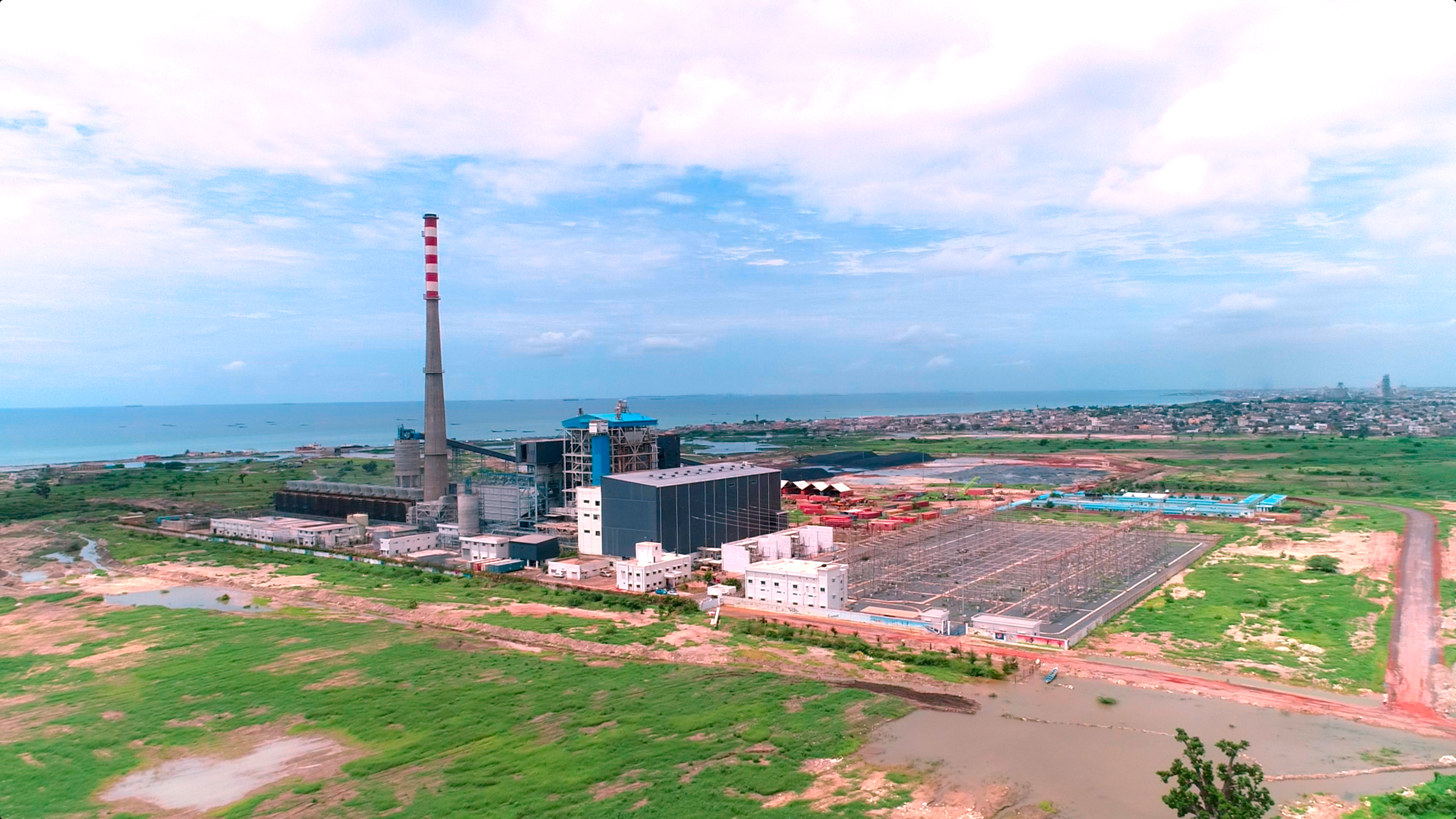
To safeguard against risks associated with delays, government officials must exercise caution in their planning in other related or impacted areas such as domestic gas use, sovereign borrowing, revenue utilization and refinery projects.
Why did BP exit and what’s next for the project consortium?
Several Senegalese civil society actors welcomed PETROSEN’s ambition to eventually increase its current 10 percent interest in the Yakaar-Teranga consortium to 34 percent, seeing it as a sign that authorities are committed to delivering on plans to leverage gas from the field for electricity access and economic development. In the public narrative the announcement around PETROSEN’s ambitions has overshadowed the potential negative consequences of BP's departure.
PETROSEN’s ambitions have a basis in the legal framework governing the project. In the case of a surrender (renonciation) by a member of the consortium, which PETROSEN says is the case with BP’s exit, Article 13 of the joint venture agreement (accord d’association) provides that the remaining members can at no cost assume the surrendered share in proportion to their participating interest, and that PETROSEN would not acquire the obligations that would come with such an additional interest (i.e., PETROSEN’s interest would continue to be “carried” with respect to exploration and evaluation costs). PETROSEN also has the option under that agreement and the relevant production sharing contract to increase its share in the project a further 10 percent at the exploitation stage.
But beyond the legal feasibility, the bigger question is the economic or financial consequence of such a larger interest. While PETROSEN’s interest is “carried” during exploration, per Article 24 of the production sharing contract, PETROSEN would be expected to proportionately finance the development stage costs of the project. The specific costs are yet undetermined and depend on the approach to the project, but the cost would be very significant and could raise questions about the feasibility and prudence of such an investment. That is likely also why PETROSEN’s statement on BP’s departure references adding a third partner, who would surely have a strong voice in the direction of the project.
In considering the future of the project it would also be helpful to consider why BP withdrew. While there has been speculation around disagreements over project fiscal terms and profitability, the size of reserves and the approach to developing them (for domestic use versus export) or even BP’s corporate energy transition strategy, the true and detailed reasons behind BP’s exit remain unknown. The minister of petroleum and energy has provided preliminary clarifications encompassing daily production capacity, commercial strategy, and the anticipated inaugural gas delivery date. However, a comprehensive account of the specific points of contention and a deeper exploration of the proposals put forth by BP would be welcome.
Transparent communication from the government is essential to maintain investor confidence and public trust. Evaluating the financial implications, including unrealized commitments, costs incurred, technical expertise replacement, and job preservation, requires meticulous scrutiny. The government should provide clarity on payments that BP could have been required to cover before surrendering its interest (including those stipulated in the article 13.5 of the accord d’association and the obligations under the 2021 renewal of the production sharing contract).
PETROSEN’s growing role should be matched by growing oversight
These events mark an expansion in PETROSEN’s ambitions. This comes as PETROSEN has also moved to play a more significant role in the downstream sector, including through the creation of subsidiaries like the Réseau Gazier du Sénégal (RGS) and PETROSEN TS.
Given PETROSEN’s growing role, state and non-state oversight actors including parliamentarians and civil society organizations should better monitor the state-owned company. This oversight includes PETROSEN’s exposure to fluctuating oil and gas prices preventing it from making risky bets and ensuring sufficient adaptation in a context of global energy transition. The Senegalese government could fund PETROSEN’s stake in developing projects such as Yakaar-Teranga directly from the budget or from debt. In either case, government officials should carefully weigh the opportunity cost of this investment compared to funding other development priorities.
PETROSEN borrowing funds directly does not avoid these opportunity costs. National oil companies are known to be effective vehicles for financing and can bear a significant portion of public debt, potentially leading to significant and costly bailouts with public funds. To finance PETROSEN’s participation in other petroleum projects, the government has resorted to a Eurobond as recently as in 2021. The Ministry of Finance as well as civil society must meticulously monitor the debts of both PETROSEN and the government to ensure that they are sustainable.
NRGI’s recent recommendations for more transparency and accountability from PETROSEN are even more relevant in this context. PETROSEN must incorporate more good governance practices, such as publishing annual activity reports, clarifying its dividend distribution policy, appointing independent directors, and requiring asset declarations from directors.
What to look for with the potential entry of a new partner in the Yakaar-Teranga gas project
Senegalese authorities have worked extensively to improve the licensing procedure in the petroleum sector. As the Yakaar-Teranga project advances, civil society should monitor the entry of any new partner to avoid any unpleasant surprises. The entry of a third partner would likely involve a sale of some of Kosmos’ interest, which under the production sharing contract would require ministerial approval. It is important to consider the justification for granting such approval (or not).
Public engagement is crucial in such a context, including civil society monitoring to ensure that when oil projects change hands, sustainability and governance standards do not weaken, such as having assets transferred to companies with weaker environmental and transparency commitments.
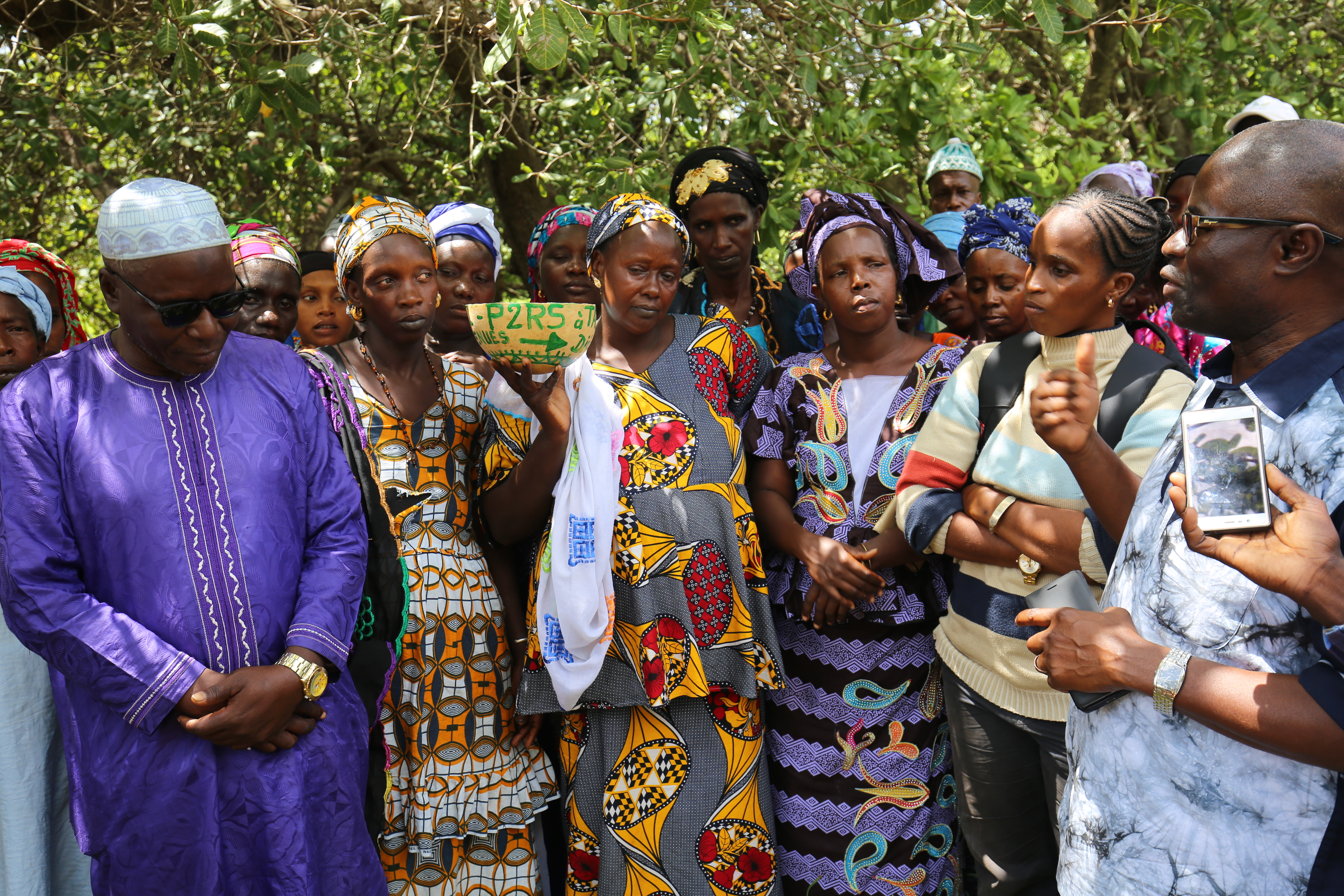
Government approval of a third partner in Yakaar-Teranga should hinge on the prospective partner’s essential technical and financial capacity to meet industry standards, including in light of the role envisioned for the partner (i.e., operator or non-operator) and the company’s environmental, social and governance practices. The Extractive Industries Transparency Initiative (EITI) offers a valuable transparency forum for asset and interest transfers, but the government should disclose this information before final approval, allowing the public to flag any concerns in advance of the transfer.
Recent developments in Senegal’s hydrocarbon sector present legitimate concerns, warranting continued vigilance from civil society. As citizens and stakeholders navigate these challenges, fostering transparency, assessing economic impacts, and promoting responsible governance will be instrumental in shaping the trajectory of Senegal’s hydrocarbon sector.
Notes
-
1
William Davis, Andrew Bauer, and Papa Daouda Diene, “Managing Senegal’s Oil and Gas Revenues” (Natural Resource Governance Institute, 14 December 2021), www.resourcegovernance.org/publications/managing-senegals-oil-and-gas-revenues.
-
2
Papa Daouda Diene and Thomas Scurfield, “Senegal’s New JETP: Four Crucial Next Steps,” Natural Resource Governance Institute (blog), 22 June 2023, www.resourcegovernance.org/articles/senegals-new-jetp-four-crucial-next-steps.
-
3
African Natural Resources Management and Investment Centre, “Minimising Greenhouse Gas Emissions in the Petroleum Sector: The Opportunity for Emerging Producers” (African Development Bank, 2022), www.newproducersgroup.online/wp-content/uploads/2022/11/Minimising-Greenhouse-Gas-Emissions-in-the-Petroleum-Sector.pdf.
-
4
Chantal Beck et al., “The Future of Oil and Gas Is Now: How Companies Can Decarbonize,” McKinsey & Company, 7 January 2020, www.mckinsey.com/industries/oil-and-gas/our-insights/the-future-is-now-how-oil-and-gas-companies-can-decarbonize.
-
5
Carbon Limits AS, “Methane in Africa – A High-Level Assessment of Anthropogenic Methane Emissions in Africa with Case Studies on Potential Evolution and Abatement,” Text (African Development Bank, 5 November 2022), www.afdb.org/en/documents/methane-africa-high-level-assessment-anthropogenic-methane-emissions-africa-case-studies-potential-evolution-and-abatement.
-
6
“Homepage,” Global Methane Hub, 11 September 2023, www.globalmethanehub.org/.
-
7
IEA, “Global Methane Tracker 2023” (IEA, February 2023), www.iea.org/reports/global-methane-tracker-2023.
-
8
RMI, “Assessing Global Oil and Gas Emissions,” Oil Climate Index plus Gas, 2023, www.ociplus.rmi.org.
-
9
Based on available data from 2015 to 2022 on “Upstream Emissions Intensity (kgCO2eq/boe)” and “Upstream Methane Intensity (kgCH4/boe).”
-
10
There are three oil and gas projects in Senegal that are likely to start production in the immediate or near term: Grand Tortue Ahmeyim (GTA), Sangomar and Yakaar-Teranga. Sangomar has mainly oil reserves but contains some unassociated and associated gas (for an explanation see "Associated and Nonassociated Gas,” PetroWiki, accessed 11 September 2023, petrowiki.spe.org/Associated_and_nonassociated_gas)—the use of which is still being discussed by the government and companies, though reinjection is planned initially. GTA and Yaakar-Teranga are unassociated gas projects. The first phase of GTA will mainly produce liquefied natural gas (LNG) for export, as well as potentially supply some gas to the domestic market. The first phase of Yakaar Teranga is yet to reach a final investment decision (FID) but is expected to direct most if not all of its gas to the domestic market. (For an explanation of FID, see “FID,” Energy Insights by McKinsey, accessed 11 September 2023, www.mckinseyenergyinsights.com/resources/refinery-reference-desk/fid/). Until recently, this phase was expected to supply the domestic market only. But government statements suggest that some of its gas may now be exported as LNG – see Ed Reed, “BP Tipped to Reach next Senegal FID This Year,” Energy Voice, 27 January 2023, www.energyvoice.com/oilandgas/africa/lng-africa/478810/senegal-bp-lng-fid.
-
11
“Senegal – Develop a National SLCP Plan and National Methane Roadmap [SN-23-001],” Climate & Clean Air Coalition, accessed 11 September 2023, www.ccacoalition.org/content/senegal-develop-national-slcp-plan-and-national-methane-roadmap-sn-23-001.
-
12
“Homepage,” Climate & Clean Air Coalition, 14 September 2023, www.ccacoalition.org.
-
13
Ian W. H. Parry et al., “How to Cut Methane Emissions,” Staff Climate Notes 2022, no. 008 (31 October 2022), doi.org/10.5089/9798400224256.066.A001.
-
14
“IMF Reaches Staff-Level Agreement with Senegal on an Extended Fund Facility (EFF) and Extended Credit Facility (ECF), Combined with the Resilience and Sustainability Facility (RSF),” IMF, 11 May 2023, www.imf.org/en/News/Articles/2023/05/11/pr23146-senegal-imf-reaches-staff-level-agreement-eff-and-ecf-combined-rsf.
-
15
Katarina Hoije, “Senegal Pitches Its Gas as European Option to Russia Supply - Bloomberg,” Bloomberg, 13 August 2022, www.bloomberg.com/news/articles/2022-08-12/senegal-pitches-its-gas-as-european-alternative-to-russia-supply.
-
16
European Commission, “Communication from the Commission to the European Parliament, the Council, the European Economic and Social Committee and the Committee of the Regions on an EU Strategy to Reduce Methane Emissions,” European Commission, 14 October 2020, www.eur-lex.europa.eu/legal-content/EN/TXT/HTML/?uri=CELEX:52020DC0663.
-
17
Maurice Berns et al., “How Institutional Investors See the Future of Oil and Gas,” BCG, 4 January 2022, www.bcg.com/publications/2022/how-investors-see-future-of-oil-gas.
-
18
Clara Tan, “Asia’s Major LNG Buyers Launch Methane Reduction Initiative,” Energy Intelligence, 18 July 2023, www.energyintel.com/00000189-6853-de6e-a5ef-f8ffffd90000.
-
19
In 2022, Asia was the destination of over 50 percent of west Africa’s gas exports by value. “Merchandise Trade Matrix in Thousands United States Dollars, Annual, 2016-2022,” UNCTADStat, accessed 4 September 2023, www.unctadstat.unctad.org/wds/TableViewer/tableView.aspx.
-
20
Rystad assumes a hurdle rate in nominal terms of 10 percent and an inflation rate of 2.5 percent.
-
21
Reed, “BP Tipped to Reach next Senegal FID This Year.”
-
22
David Manley and Patrick R. P. Heller, “Risky Bet: National Oil Companies in the Energy Transition” (Natural Resource Governance Institute, February 2021), www.resourcegovernance.org/sites/default/files/documents/risky-bet-national-oil-companies-in-the-energy-transition.pdf.
-
23
“Guidance on Fossil Fuel Energy at the Multilateral Development Banks,” accessed 11 September 2023, www.home.treasury.gov/system/files/136/Fossil-Fuel-Energy-Guidance-for-the-Multilateral-Development-Banks.pdf.
-
24
IEA, “World Energy Investment 2023” (Paris: IEA), accessed 11 September 2023, www.iea.org/reports/world-energy-investment-2023.
-
25
Christine Juta, Julie Joly, and Langenbrunner Baird, “The Scramble for Africa’s Gas” (Global Energy Monitor, December 2022), www.globalenergymonitor.org/wp-content/uploads/2022/11/GEM-Scramble-for-Africas-Gas.pdf.
-
26
Damian Carrington, “Revealed: 1,000 Super-Emitting Methane Leaks Risk Triggering Climate Tipping Points,” The Guardian, 6 March 2023, www.theguardian.com/environment/2023/mar/06/revealed-1000-super-emitting-methane-leaks-risk-triggering-climate-tipping-points.
-
27
John Hicklin, “Launching the RST: Country Policies Must Adapt—and So Too Must IMF Conditionality,” Center For Global Development, 21 February 2023, www.cgdev.org/blog/launching-rst-country-policies-must-adapt-and-so-too-must-imf-conditionality.
-
28
IEA, “Africa Energy Outlook 2022” (Paris: IEA Publications, May 2023), www.iea.org/reports/africa-energy-outlook-2022.
- 29
-
30
Camillus Eboh, “Nigerian Minister Says Plan to Commercialise Gas Flaring at Advanced Stage,” Reuters, 14 September 2022, www.reuters.com/world/africa/nigerian-minister-says-plan-commercialise-gas-flaring-advanced-stage-2022-09-14.
-
31
Esme Stallard, “Iraqi Minister Admits Gas Flaring Cancer Link,” BBC News, 17 October 2022, www.bbc.com/news/science-environment-63284896.
-
32
Etienne Romsom and Kathryn McPhail, Capturing Economic and Social Value from Hydrocarbon Gas Flaring: Evaluation of the Issues, 5th ed., vol. 2021, WIDER Working Paper (UNU-WIDER, 2021), www.doi.org/10.35188/UNU-WIDER/2021/939-6.
-
33
Omoniyi Babatunde Alimi and John Gibson, The Impact of Gas Flaring on Child Health in Nigeria, Policy Research Working Papers (The World Bank, 2022), www.doi.org/10.1596/1813-9450-10153.
-
34
John Kanayochukwu Nduka, Vincent Nwalieji Okafor, and Isaac Omoche Odiba, “Impact of Oil and Gas Activities on Acidity of Rain and Surface Water of Niger Delta, Nigeria: An Environmental and Public Health Review,” Journal of Environmental Protection 7, no. 4 (8 March 2016): 566–81, www.doi.org/10.4236/jep.2016.74051.
-
35
Tristan Baurick, “Satellites Can Now Catch Small but ‘nefarious’ Methane Emissions from Offshore Oil Platforms,” Nola, 22 September 2022, www.nola.com/news/environment/satellites-can-now-catch-small-but-nefarious-methane-emissions-from-offshore-oil-platforms/article_c616ab5e-3aae-11ed-b….
-
36
Ellen Gray and Karl Hille, “NASA Scientists Scrutinize Arctic Gas Flaring Pollution,” NASA, 26 April 2016, www.nasa.gov/feature/goddard/2016/nasa-scientists-scrutinize-arctic-gas-flaring-pollution.
-
37
Nathan Andrews et al., “Oil, Fisheries and Coastal Communities: A Review of Impacts on the Environment, Livelihoods, Space and Governance,” Energy Research & Social Science 75 (1 May 2021): 102009, www.doi.org/10.1016/j.erss.2021.102009.
-
38
Antonio Hill, “Equity and Good Governance Are Essential for the Energy Transition,” Natural Resource Governance Institute (blog), 28 March 2022, resourcegovernance.org/articles/equity-and-good-governance-are-essential-energy-transition.
-
39
“Rankings,” Notre Dame Global Adaptation Initiative, accessed 6 September 2023, gain.nd.edu/our-work/country-index/rankings/.
-
40
Fatih Birol, “COP28 Is a Moment of Truth for the Oil and Gas Industry’s Efforts on Climate - Commentary,” IEA, 13 May 2023, www.iea.org/commentaries/cop28-is-a-moment-of-truth-for-the-oil-and-gas-industry-s-efforts-on-climate.
-
41
“Page d’acceuil,” ITIE Initiative pour la Transparence dans les Industries Extractives du Sénégal, accessed 6 September 2023, www.itie.sn.
-
42
Daniel Kaufmann and Robert Pitman, “Extractive Company Disclosure of Project-Level Greenhouse Gas Emissions Is Critical,” Natural Resource Governance Institute (blog), 1 May 2023, resourcegovernance.org/articles/extractive-company-disclosure-project-level-greenhouse-gas-emissions-critical.
-
43
“EITI Standard 2023,” EITI, 24 June 2023, eiti.org/collections/eiti-standard.
-
44
“EITI Standard 2023.”
-
45
African Natural Resources Management and Investment Centre, “Minimising Greenhouse Gas Emissions in the Petroleum Sector.”
-
46
African Natural Resources Management and Investment Centre.
Why Senegal Should Minimize Petroleum Operations Emissions

Key messages
-
Slowing climate change is not the only reason Senegal should reduce greenhouse gas emissions. Minimizing emissions, particularly of methane, from the country’s oil and gas operations will increase government revenues, support its ambitions to use gas to increase domestic energy access, and reduce harms to the health and environment of local communities.
-
Senegal’s government is starting to act on minimizing emissions from oil and gas production, but officials should consider strengthening the regulatory framework to support emissions minimization.
-
Greater transparency and accountability, including effective campaigning by civil society actors, is critical to ensure effective action by companies, investors and the government. Measures to reduce oil and gas methane emissions have been well-known and cost-effective for many years, but progress in most countries has been slow.
-
Senegal’s government should at a minimum ensure that the existing regulatory framework is publicly accessible, while Senegal EITI should advocate for disclosure of actual emissions when oil and gas production starts.
Introduction
With large-scale oil and gas production likely to start within the next year, Senegal’s government has been working to finalize plans for management of the resulting revenues and domestic use of some gas.1 The development of Senegal's energy sector is also influenced by a context of global climate crisis and energy transition. Accordingly, Senegal has recently agreed a just energy transition partnership (JETP) with several development partners, which aims to increase power generation from renewables. Work has also begun on a low-carbon development strategy.2 Amid this activity, Senegalese society has overlooked a key issue: minimizings emissions from the country’s imminent oil and gas operations.
While most greenhouse gas emissions from oil and gas are generated when end users burn these fuels for energy, emissions from the production and distribution of oil and gas (here also called “operational emissions”) are also significant. Approximately 15-20 percent of global emissions come from the production, processing and transport of oil and gas.3
About half of the emissions from oil and gas operations are methane, a particularly potent greenhouse gas. (Much of the remainder is carbon dioxide generated from the burning of fuel for energy.4 ) Oil and gas companies release methane, the main component of gas, into the air by venting or flaring excess or unwanted gas, or by allowing it to leak from pipelines, liquified natural gas (LNG) facilities or other infrastructure.
Oil and gas operations contribute an estimated 23 percent of total methane emissions from human activity worldwide, and also account for an important share of Africa’s total emissions.5 Methane stays in the atmosphere for less time than carbon dioxide, but is 86 times more potent over a 20-year period.6 Fortunately, the actions needed to reduce oil and gas methane emissions are well-known and cost-effective.7
Africa’s current oil and gas operations on average generate more emissions per unit of fossil fuel produced than other regions, according to RMI’s OCI+ database.8 This is partly due to higher methane emissions.9 As Senegal develops its nascent oil and gas sector,10 the country’s stakeholders should be aware of this continental tendency.
Senegalese government officials, civil society actors and the wider public should pay careful attention to emissions from oil and gas operations because these emissions impact:
- Competitiveness of oil and gas projects
- Citizens’ energy access
- Government access to external financing for non-oil and gas purposes
- Economic benefits of capturing gas emitted during extraction/production
- Health and environment of local communities
- Reduction of the impacts of climate change on Senegalese citizens
Senegal’s government has shown increased interest in this issue. Alongside the development of a long-term low-carbon development strategy, it plans to develop a National Methane Roadmap (with support from the Climate and Clean Air Coalition).11 ,12 These are positive steps by the government and its partners and lay the foundation for further action in this area.
Appendices to Senegal’s 2019 petroleum code apparently address emissions minimization, but they are not in the public domain. Based on our understanding of the appendices’ provisions gained from discussions with various stakeholders, and the contents of the separate environmental code, several regulatory changes could be beneficial. For example, the environmental code prohibits the venting and flaring of gas. However, it is unclear what enforcement mechanisms, including to tackle leakages, regulations provide. These could include penalty fees for operators who emit methane. The government should consider including such a provision if one does not already exist. Requirements around company estimates and reporting of emissions also merit attention. For example, the government could consider requiring companies to share their methodology for computing these estimates. To address potential concerns around compliance with reporting requirements or unsubstantiated company disputes of government estimates, the government could apply the International Monetary Fund’s (IMF) innovative proposal to base methane fees on oil and gas production levels and assumed emission rate factors. The burden of proof to demonstrate lower emission rates than the default would fall on the companies; once they prove lower emissions, they would receive a rebate from the government.13 Senegal’s participation in the IMF’s newly established Resilience and Sustainability Facility (RSF) for climate mitigation should provide valuable financial and technical support to implement these and other measures.14
In parallel, civil society actors, academics and the broader public in Senegal should advocate for increased levels of government transparency and accountability, as these are required for more effective action to counter methane emissions.
Impacts of operational emissions from Senegal’s oil and gas projects
Competitiveness of oil and gas projects
Governments, investors and customers are all increasing pressure on oil and gas companies to reduce emissions not only from the use of their products but also their operations. Countries that currently impose carbon prices (i.e., a tax or fee on greenhouse gas emissions) have not yet applied them to emissions made during the production of imported oil and gas, but this may soon change. For example, the European Union, a prospective market for Senegalese gas, is considering adopting targets, standards or other incentives to reduce methane emissions from oil and gas imported into the EU.15 ,16 Such approaches, particularly if implemented in coordination with other key importers as the EU aims to do, would reduce the profitability of oil and gas projects with high operational emissions. In response to these possibilities and broader reputational risks, investors and customers (including Asia’s major LNG buyers) are pressuring oil and gas companies to clean up their acts by threatening to withhold business or investment.17 ,18 ,19
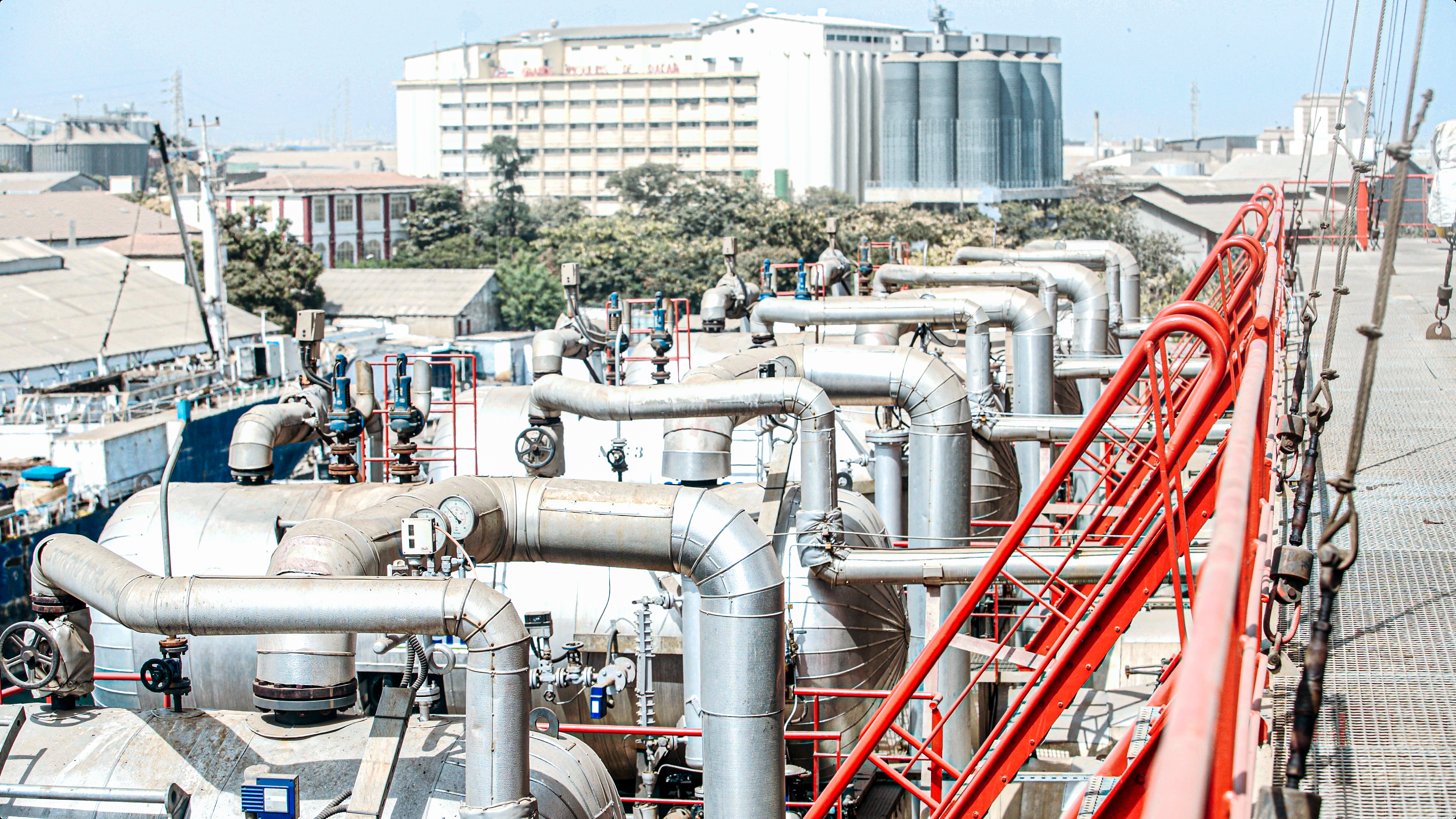
Future phases of Senegal’s projects currently appear cost competitive compared to many projects elsewhere. For example, Rystad Energy estimates that to be profitable the country’s future LNG projects need a long-term LNG price at the point of delivery in Asia of around USD 6-7 per mmBtu.20 However, as noted above, high operational emissions could change this, deterring investment in these projects and in other blocks offered in future licensing rounds.21 Less investment in the sector would mean lower government revenues and less gas for the domestic market. Lower investment could also tempt PETROSEN, Senegal’s national oil company, into making risky bets with public funds in projects that ultimately might not make any profit.22
Energy access
While the recently announced JETP should support a welcome increase in power generation from renewables, Senegal’s government is still likely to pursue a substantial expansion of gas-to-power generation to meet its energy goals. This plan requires a large amount of investment. However, potential investors in the infrastructure—for example, transport pipelines and power plants—will face pressure to reduce direct and indirect emissions in their portfolios. Public sector providers of funding are particularly likely to consider the government’s approach to emissions in the wider value chain.23 At a time when funding for gas-to-power infrastructure is already uncertain and competition for it is fierce, significant emissions from Senegal’s oil and gas production could therefore be a damaging blow to the country’s ambitions and its ability to achieve universal energy access.24 ,25
Access to external financing for non-oil and gas purposes
Emissions from oil and gas production may deter external financing for Senegal’s oil and gas projects throughout the value chain, but they may also reduce the country’s access to financing for other areas critical to sustainable development. Rigorous and transparent measures to tackle methane emissions, in particular, are becoming important for countries’ international credibility; for example, media outlets and watchdog organizations are naming and shaming “super emitters” and identifying “methane bombs.”26 In a potential sign of things to come, the IMF has faced a call to require rather than just encourage oil- and gas-producing countries to impose penalties on methane emitters as a condition for accessing loans from the RSF.27
Economic benefits of capturing gas emitted during extraction/production
Methane emissions from Senegal’s projects would also represent a wasted economic opportunity. The International Energy Agency estimates that the volume of methane that could be feasibly abated from oil and gas operations in sub-Saharan Africa is equivalent to around 14 percent of the region’s total gas production.28 This is gas that countries could export to generate additional government revenue or use domestically to increase energy access and industrial output. In Nigeria, for example, flared gas alone has exceeded gas supplied to the domestic market for much of the past two decades and cost the government around USD 1 billion in annual revenues (though the situation has improved recently).29 ,30
Local health and environment
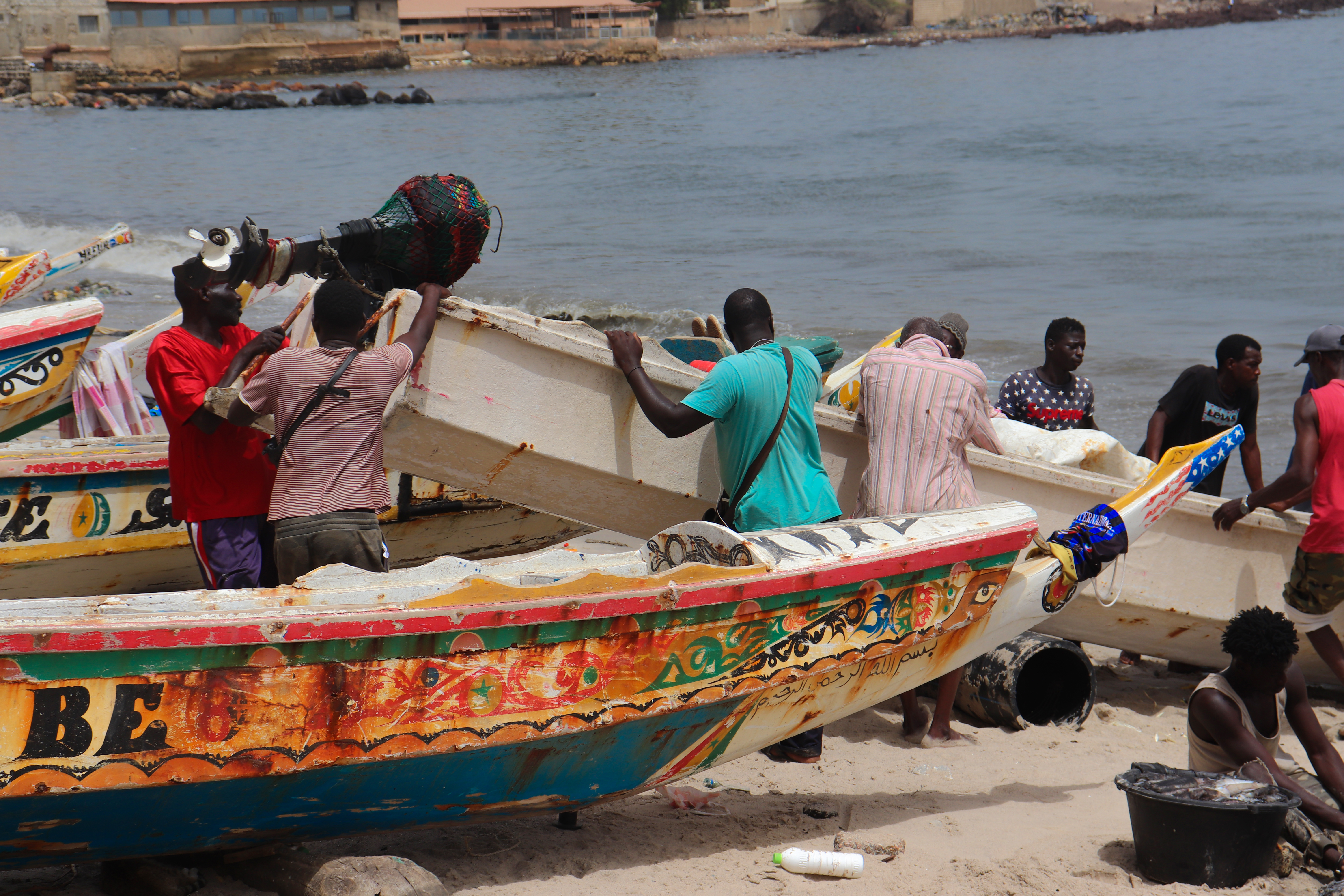
The severe effects of greenhouse gas emissions on people’s health and the environment are well known. The impact on the health and environment of communities living close to sites of oil and gas extraction is also increasingly evident.31 ,32 Gas flaring in Nigeria, for example, has caused respiratory diseases and fever, along with other health issues, in children.33 It has also led to acid rain and heatwaves that have destroyed farmland and caused the extinction of flora and fauna.34 Current understanding of the local impact of emissions from offshore production is limited, though available evidence suggests dangerous particles can travel much further than previously thought.35 ,36 The Senegalese government, and broader society, should pay particular attention to the impact on the fisheries sector, given its importance to the livelihoods of many Senegalese.37
Climate impacts
Senegal does not bear primary responsibility for the climate crisis, which has been driven by wealthier, high-emitting countries while Senegal and many other African countries have suffered energy poverty. Countries with urgent development needs, like Senegal, should have priority when it comes to using the remainder of the world’s carbon budget.38 At the same time, Senegal is more vulnerable to climate change impacts than the average country. By one measure Senegal is the 37th most vulnerable of 185 countries assessed.39 Every additional ton of greenhouse gas in the atmosphere will worsen the climate crisis, and as Senegal works to implement its global climate commitments—and seeks financing for further mitigation and adaptation—Senegalese entities responsible for petroleum, energy, public finance, environment and climate must coordinate closely on objectives and policies.
Transparency and accountability are critical for minimizing emissions
While the actions needed to reduce oil and gas methane emissions have been well-known and cost-effective for many years, progress in most countries has been slow.40 Many companies have failed to take action and governments have often either failed to regulate or to enforce regulations they have enacted. Minimizing emissions from Senegalese oil and gas operations requires that a wide range of local, national and international actors hold companies, investors and the government accountable for progress.
Senegal’s parliament, civil society and research institutions have a critical role in scrutinizing existing and proposed regulatory measures, and monitoring and reporting on compliance once production starts. The media will be crucial in amplifying issues to increase public demand for improvements.
More transparency is needed to enable this accountability. At a minimum, the government should ensure that the current regulatory framework is publicly accessible and understood. As noted above, the appendices to the 2019 petroleum code that address emissions minimization are not currently in the public domain. The government could also use ongoing reforms, such as creation of its low-carbon development strategy, to communicate its future plans for reducing emissions from oil and gas operations. Similarly, officials should increase transparency around new regulatory measures. For example, the government could make company methodologies for estimating emissions publicly available as part of a requirement for companies to share them with the government.
Disclosure of actual emissions once production starts will also be important. Very little is known currently about likely levels of operational emissions due to the infancy of Senegal’s sector. Senegal Extractive Industries Transparency Initiative (EITI) has an important role to play in this area.41 NRGI and others have demanded that extractive companies improve public reporting of emissions, including making it more responsive to the needs of producer country governments and citizens rather than largely focused on investor needs.42 The new EITI Standard encourages companies to disclose their emissions, “[i]n in alignment with existing leading disclosure standards.”43 The EITI also encourages multi-stakeholder groups to request companies to disclose disaggregated data.44
Equally urgent alongside greater transparency is improvement in the capacity of the various actors mentioned above to effectively use disclosed information. Training and the building of coalitions can bridge the current gap, but donor support to these processes will be essential.
Conclusion
Stakeholders in Senegal are already working hard to reduce the country’s overall greenhouse gas emissions. However, minimizing emissions from oil and gas production, particularly methane, is an important component that requires more attention—not least because Senegal, as a new producer, has an advantage over established producers in developing new tools and procedures to limit these emissions.45 Senegal can draw on their experience, but should also implement legal, institutional and governance frameworks that minimize emissions from the start.46 In doing so, Senegal can achieve two crucial outcomes for limited additional cost: a greater contribution from oil and gas to the country’s sustainable development and a greater impact on climate change mitigation.
Acknowledgements
The authors wish to thank Aaron Sayne, Amir Shafaie and Patrick Heller of the Natural Resource Governance Institute for reviewing this brief. They also wish to thank EnergyCC’s Kathryn McPhail and Etienne Romsom for their invaluable expertise and input.
Notes
-
1
William Davis, Andrew Bauer, and Papa Daouda Diene, “Managing Senegal’s Oil and Gas Revenues” (Natural Resource Governance Institute, 14 December 2021), www.resourcegovernance.org/publications/managing-senegals-oil-and-gas-revenues.
-
2
Papa Daouda Diene and Thomas Scurfield, “Senegal’s New JETP: Four Crucial Next Steps,” Natural Resource Governance Institute (blog), 22 June 2023, www.resourcegovernance.org/articles/senegals-new-jetp-four-crucial-next-steps.
-
3
African Natural Resources Management and Investment Centre, “Minimising Greenhouse Gas Emissions in the Petroleum Sector: The Opportunity for Emerging Producers” (African Development Bank, 2022), www.newproducersgroup.online/wp-content/uploads/2022/11/Minimising-Greenhouse-Gas-Emissions-in-the-Petroleum-Sector.pdf.
-
4
Chantal Beck et al., “The Future of Oil and Gas Is Now: How Companies Can Decarbonize,” McKinsey & Company, 7 January 2020, www.mckinsey.com/industries/oil-and-gas/our-insights/the-future-is-now-how-oil-and-gas-companies-can-decarbonize.
-
5
Carbon Limits AS, “Methane in Africa – A High-Level Assessment of Anthropogenic Methane Emissions in Africa with Case Studies on Potential Evolution and Abatement,” Text (African Development Bank, 5 November 2022), www.afdb.org/en/documents/methane-africa-high-level-assessment-anthropogenic-methane-emissions-africa-case-studies-potential-evolution-and-abatement.
-
6
“Homepage,” Global Methane Hub, 11 September 2023, www.globalmethanehub.org/.
-
7
IEA, “Global Methane Tracker 2023” (IEA, February 2023), www.iea.org/reports/global-methane-tracker-2023.
-
8
RMI, “Assessing Global Oil and Gas Emissions,” Oil Climate Index plus Gas, 2023, www.ociplus.rmi.org.
-
9
Based on available data from 2015 to 2022 on “Upstream Emissions Intensity (kgCO2eq/boe)” and “Upstream Methane Intensity (kgCH4/boe).”
-
10
There are three oil and gas projects in Senegal that are likely to start production in the immediate or near term: Grand Tortue Ahmeyim (GTA), Sangomar and Yakaar-Teranga. Sangomar has mainly oil reserves but contains some unassociated and associated gas (for an explanation see "Associated and Nonassociated Gas,” PetroWiki, accessed 11 September 2023, petrowiki.spe.org/Associated_and_nonassociated_gas)—the use of which is still being discussed by the government and companies, though reinjection is planned initially. GTA and Yaakar-Teranga are unassociated gas projects. The first phase of GTA will mainly produce liquefied natural gas (LNG) for export, as well as potentially supply some gas to the domestic market. The first phase of Yakaar Teranga is yet to reach a final investment decision (FID) but is expected to direct most if not all of its gas to the domestic market. (For an explanation of FID, see “FID,” Energy Insights by McKinsey, accessed 11 September 2023, www.mckinseyenergyinsights.com/resources/refinery-reference-desk/fid/). Until recently, this phase was expected to supply the domestic market only. But government statements suggest that some of its gas may now be exported as LNG – see Ed Reed, “BP Tipped to Reach next Senegal FID This Year,” Energy Voice, 27 January 2023, www.energyvoice.com/oilandgas/africa/lng-africa/478810/senegal-bp-lng-fid.
-
11
“Senegal – Develop a National SLCP Plan and National Methane Roadmap [SN-23-001],” Climate & Clean Air Coalition, accessed 11 September 2023, www.ccacoalition.org/content/senegal-develop-national-slcp-plan-and-national-methane-roadmap-sn-23-001.
-
12
“Homepage,” Climate & Clean Air Coalition, 14 September 2023, www.ccacoalition.org.
-
13
Ian W. H. Parry et al., “How to Cut Methane Emissions,” Staff Climate Notes 2022, no. 008 (31 October 2022), doi.org/10.5089/9798400224256.066.A001.
-
14
“IMF Reaches Staff-Level Agreement with Senegal on an Extended Fund Facility (EFF) and Extended Credit Facility (ECF), Combined with the Resilience and Sustainability Facility (RSF),” IMF, 11 May 2023, www.imf.org/en/News/Articles/2023/05/11/pr23146-senegal-imf-reaches-staff-level-agreement-eff-and-ecf-combined-rsf.
-
15
Katarina Hoije, “Senegal Pitches Its Gas as European Option to Russia Supply - Bloomberg,” Bloomberg, 13 August 2022, www.bloomberg.com/news/articles/2022-08-12/senegal-pitches-its-gas-as-european-alternative-to-russia-supply.
-
16
European Commission, “Communication from the Commission to the European Parliament, the Council, the European Economic and Social Committee and the Committee of the Regions on an EU Strategy to Reduce Methane Emissions,” European Commission, 14 October 2020, www.eur-lex.europa.eu/legal-content/EN/TXT/HTML/?uri=CELEX:52020DC0663.
-
17
Maurice Berns et al., “How Institutional Investors See the Future of Oil and Gas,” BCG, 4 January 2022, www.bcg.com/publications/2022/how-investors-see-future-of-oil-gas.
-
18
Clara Tan, “Asia’s Major LNG Buyers Launch Methane Reduction Initiative,” Energy Intelligence, 18 July 2023, www.energyintel.com/00000189-6853-de6e-a5ef-f8ffffd90000.
-
19
In 2022, Asia was the destination of over 50 percent of west Africa’s gas exports by value. “Merchandise Trade Matrix in Thousands United States Dollars, Annual, 2016-2022,” UNCTADStat, accessed 4 September 2023, www.unctadstat.unctad.org/wds/TableViewer/tableView.aspx.
-
20
Rystad assumes a hurdle rate in nominal terms of 10 percent and an inflation rate of 2.5 percent.
-
21
Reed, “BP Tipped to Reach next Senegal FID This Year.”
-
22
David Manley and Patrick R. P. Heller, “Risky Bet: National Oil Companies in the Energy Transition” (Natural Resource Governance Institute, February 2021), www.resourcegovernance.org/sites/default/files/documents/risky-bet-national-oil-companies-in-the-energy-transition.pdf.
-
23
“Guidance on Fossil Fuel Energy at the Multilateral Development Banks,” accessed 11 September 2023, www.home.treasury.gov/system/files/136/Fossil-Fuel-Energy-Guidance-for-the-Multilateral-Development-Banks.pdf.
-
24
IEA, “World Energy Investment 2023” (Paris: IEA), accessed 11 September 2023, www.iea.org/reports/world-energy-investment-2023.
-
25
Christine Juta, Julie Joly, and Langenbrunner Baird, “The Scramble for Africa’s Gas” (Global Energy Monitor, December 2022), www.globalenergymonitor.org/wp-content/uploads/2022/11/GEM-Scramble-for-Africas-Gas.pdf.
-
26
Damian Carrington, “Revealed: 1,000 Super-Emitting Methane Leaks Risk Triggering Climate Tipping Points,” The Guardian, 6 March 2023, www.theguardian.com/environment/2023/mar/06/revealed-1000-super-emitting-methane-leaks-risk-triggering-climate-tipping-points.
-
27
John Hicklin, “Launching the RST: Country Policies Must Adapt—and So Too Must IMF Conditionality,” Center For Global Development, 21 February 2023, www.cgdev.org/blog/launching-rst-country-policies-must-adapt-and-so-too-must-imf-conditionality.
-
28
IEA, “Africa Energy Outlook 2022” (Paris: IEA Publications, May 2023), www.iea.org/reports/africa-energy-outlook-2022.
- 29
-
30
Camillus Eboh, “Nigerian Minister Says Plan to Commercialise Gas Flaring at Advanced Stage,” Reuters, 14 September 2022, www.reuters.com/world/africa/nigerian-minister-says-plan-commercialise-gas-flaring-advanced-stage-2022-09-14.
-
31
Esme Stallard, “Iraqi Minister Admits Gas Flaring Cancer Link,” BBC News, 17 October 2022, www.bbc.com/news/science-environment-63284896.
-
32
Etienne Romsom and Kathryn McPhail, Capturing Economic and Social Value from Hydrocarbon Gas Flaring: Evaluation of the Issues, 5th ed., vol. 2021, WIDER Working Paper (UNU-WIDER, 2021), www.doi.org/10.35188/UNU-WIDER/2021/939-6.
-
33
Omoniyi Babatunde Alimi and John Gibson, The Impact of Gas Flaring on Child Health in Nigeria, Policy Research Working Papers (The World Bank, 2022), www.doi.org/10.1596/1813-9450-10153.
-
34
John Kanayochukwu Nduka, Vincent Nwalieji Okafor, and Isaac Omoche Odiba, “Impact of Oil and Gas Activities on Acidity of Rain and Surface Water of Niger Delta, Nigeria: An Environmental and Public Health Review,” Journal of Environmental Protection 7, no. 4 (8 March 2016): 566–81, www.doi.org/10.4236/jep.2016.74051.
-
35
Tristan Baurick, “Satellites Can Now Catch Small but ‘nefarious’ Methane Emissions from Offshore Oil Platforms,” Nola, 22 September 2022, www.nola.com/news/environment/satellites-can-now-catch-small-but-nefarious-methane-emissions-from-offshore-oil-platforms/article_c616ab5e-3aae-11ed-b….
-
36
Ellen Gray and Karl Hille, “NASA Scientists Scrutinize Arctic Gas Flaring Pollution,” NASA, 26 April 2016, www.nasa.gov/feature/goddard/2016/nasa-scientists-scrutinize-arctic-gas-flaring-pollution.
-
37
Nathan Andrews et al., “Oil, Fisheries and Coastal Communities: A Review of Impacts on the Environment, Livelihoods, Space and Governance,” Energy Research & Social Science 75 (1 May 2021): 102009, www.doi.org/10.1016/j.erss.2021.102009.
-
38
Antonio Hill, “Equity and Good Governance Are Essential for the Energy Transition,” Natural Resource Governance Institute (blog), 28 March 2022, resourcegovernance.org/articles/equity-and-good-governance-are-essential-energy-transition.
-
39
“Rankings,” Notre Dame Global Adaptation Initiative, accessed 6 September 2023, gain.nd.edu/our-work/country-index/rankings/.
-
40
Fatih Birol, “COP28 Is a Moment of Truth for the Oil and Gas Industry’s Efforts on Climate - Commentary,” IEA, 13 May 2023, www.iea.org/commentaries/cop28-is-a-moment-of-truth-for-the-oil-and-gas-industry-s-efforts-on-climate.
-
41
“Page d’acceuil,” ITIE Initiative pour la Transparence dans les Industries Extractives du Sénégal, accessed 6 September 2023, www.itie.sn.
-
42
Daniel Kaufmann and Robert Pitman, “Extractive Company Disclosure of Project-Level Greenhouse Gas Emissions Is Critical,” Natural Resource Governance Institute (blog), 1 May 2023, resourcegovernance.org/articles/extractive-company-disclosure-project-level-greenhouse-gas-emissions-critical.
-
43
“EITI Standard 2023,” EITI, 24 June 2023, eiti.org/collections/eiti-standard.
-
44
“EITI Standard 2023.”
-
45
African Natural Resources Management and Investment Centre, “Minimising Greenhouse Gas Emissions in the Petroleum Sector.”
-
46
African Natural Resources Management and Investment Centre.