
Rethinking Resilience in East Africa (COP31)
Uganda Pavilion, Blue Zone, COP31, Antalya
At COP31, the Centre for Energy, Finance and Development (CEFD) is hosting a panel on how East African countries can strengthen energy security while advancing green industrialization.
The discussion will examine the economic and fiscal trade-offs of large-scale investment in refining infrastructure, what those investments mean for energy security, and alternative ways to build energy resilience. Panelists will look at diversified fuel supply, regional trade and infrastructure, and how development finance can support industrial development on a low-carbon pathway.
The central question: how can African countries strengthen energy security while managing fiscal risks and advancing their development priorities?
NRGI’s Patrick Stephenson will speak on the panel.
Featuring NRGI’s

Patrick Stephenson
Ghana Country Manager
Delivering Iraq’s NDC: Advancing the Energy Transition, Reducing Gas Flaring and Tracking Results (COP31)
Iraq Pavilion, Blue Zone, COP31, Antalya
Iraq’s updated Nationally Determined Contribution, submitted to the UNFCCC in November 2025, commits the country to cut greenhouse gas emissions by up to 5 percent below business as usual by 2035, and by up to 22 percent with international support. Delivering on those targets depends heavily on the oil and gas sector, including ending routine gas flaring, which burns off gas that could otherwise supply Iraq’s power plants.
This session at the Iraq Pavilion looks at how Iraq can advance its energy transition, reduce gas flaring and track progress on its climate commitments.
Laury Haytayan, NRGI’s Middle East and North Africa director, will speak on the panel.
Featuring NRGI’s
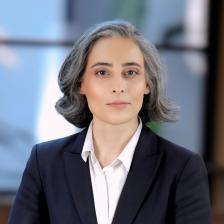
Laury Haytayan
Middle East and North Africa Director
The Energy Transition between Opportunities and Challenges: The TeraMed Initiative (COP31)
Arab League Pavilion, Blue Zone, COP31, Antalya
TeraMed is a civil society campaign calling on Mediterranean governments to reach 1 terawatt of installed renewable energy capacity by 2030, in line with the COP28 pledge to triple renewables worldwide. This session, hosted by the Arab Network for Environment and Development (RAED) at the Arab League Pavilion, looks at the opportunities and challenges the energy transition brings to the region.
Abir Yahyaoui, NRGI’s Middle East and North Africa senior program officer, will speak on the panel. NRGI has supported TeraMed since COP29 in Baku. Read more in TeraMed’s Campaign to Unlock the Mediterranean’s Renewable Energy Potential.
Featuring NRGI’s
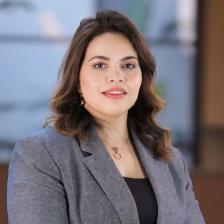
Abir Yahyaoui
Middle East and North Africa Senior Program Officer
High-Level Opening of Together4Transparency: The House Transparency Built (COP31)
Special Event Room 6, Blue Zone, COP31, Antalya
Transparency is the backbone of the Paris Agreement. Under the Enhanced Transparency Framework, countries report on their climate action and support, so the world can see whether commitments are being met. The #Together4Transparency initiative, launched by the UNFCCC at COP27, brings governments, UN agencies and non-state actors together to make that framework work.
Countries are at different stages, from those with years of comprehensive reporting to those just starting out. This high-level opening looks at what transparency has built along the way: stronger institutions, better data, closer coordination across government, and space for subnational governments, the private sector, academia and civil society to take part. It will also ask what it takes to keep that political ownership going and to make sure transparency information shapes NDCs, long-term strategies and investment decisions.
Laury Haytayan, NRGI’s Middle East and North Africa director, will speak on the panel about the role of non-state actors in opening up national transparency systems.
Speakers include:
- Xuehong Wang, Director, Transparency Division, UNFCCC secretariat
- Trigg Talley, Visiting Professor of the Practice, University of Maryland School of Public Policy
- Rachel Harris, Director, NDC and Transparency Capacity Building, Department of Climate Change, Energy, the Environment and Water, Australia
- Suzanne Lekoyiet, Task Manager, UNEP
- Laury Haytayan, Middle East and North Africa Director, NRGI
Moderated by Kaveh Guilanpour, C2ES.
Featuring NRGI’s
Laury Haytayan
Middle East and North Africa Director
Methane Governance in the Middle East and North Africa (COP31)
Arab League Pavilion, Blue Zone, COP31, Antalya
Cutting methane emissions from oil and gas is one of the quickest ways to slow warming, and national oil companies in the Middle East and North Africa have made commitments to do it. This session looks at how those commitments can be measured, monitored and delivered, drawing on NRGI’s research on the methane pledges of the region’s national oil companies.
Featuring NRGI’s
Laury Haytayan
Middle East and North Africa Director
Nigeria’s Oil and Gas Future in a Changing Global Energy System: Global Partnerships for Economic Resilience and Diversification (COP31)
Nigeria Pavilion, Blue Zone, COP31, Antalya
As global demand for oil and gas shifts, producer countries like Nigeria face hard choices about revenues, investment and jobs. This session explores how international partnerships can support Nigeria’s economic resilience and diversification beyond oil and gas.
Featuring NRGI’s

Tengi George-Ikoli
Nigeria Country Manager
Energy Transition Minerals: Pathways to Responsible Supply Chains (COP31)
UNIDO Pavilion, Blue Zone, COP31, Antalya
Demand for energy transition minerals could more than double by 2030 and quadruple by 2050. The challenge for COP31 is to make enough minerals available for the transition, and to help countries add value along the supply chain, without more deforestation, pollution or human rights abuses.
This multi-stakeholder panel, convened by UNIDO’s Global Alliance for Responsible and Green Minerals and its Energy and Climate Action Division, will look beyond individual mining projects to shared responsibility across the whole value chain, from exploration and extraction to processing, manufacturing and recycling. Speakers will discuss how governments, industry, investors, communities and international institutions can make sure the minerals needed for low-carbon energy deliver for both climate and development.
Speakers
- Sascha Raabe, Head, Global Alliance for Responsible and Green Minerals, UNIDO
- Vigya Sharma, Associate Professor, University of Queensland
- Radia Sedaoui, Chief of the Energy Section, UN ESCWA
- John Lindberg, Policy and Government Affairs Principal, ICMM
- Patrick Stephenson, Ghana Country Manager, NRGI
- Leon Riedel, Global Alliance for Responsible and Green Minerals, UNIDO (moderator)
Featuring NRGI’s
Patrick Stephenson
Ghana Country Manager
Equity in the Transition Away from Fossil Fuels: Perspectives from the Global South and North (COP31)
Side Event Room 2 – Dalyan, Blue Zone, COP31, Antalya
Countries are preparing for the second Global Stocktake against the backdrop of a global energy crisis. At COP28, Parties agreed to transition away from fossil fuels in energy systems in a just, orderly and equitable manner, but what that means in practice remains unresolved. Producer countries face falling revenues and the risk of stranded investments, importing countries are exposed to price shocks, and communities in oil-producing regions risk bearing a disproportionate share of the costs.
This side event brings together Parties and negotiating groups from the Global South and North to identify the risks and opportunities that countries and the international community must address to ensure an equitable transition away from fossil fuels. The discussion builds on the Santa Marta conference and the Brazilian COP30 Presidency’s work on transition roadmaps.
Speakers
- Pedro Brancante, Special Advisor to Brazil’s COP30 Presidency and Coordinator of the Roadmap for Transitioning Away from Fossil Fuels
- Antonio Hill, Advisor, Natural Resource Governance Institute
- Dr. George Manful, Advisor, African Group of Negotiators (AGN)
- Elisa Morgera, UN Special Rapporteur on Climate Change and Human Rights
- Kushla Munro, Deputy Secretary, Department of Climate Change, Energy, the Environment and Water, Australia
Featuring NRGI’s

Antonio Hill
Advisor
Electrification Priorities for the Middle East and North Africa (COP31)
Blue Zone, COP31, Antalya
The COP31 Presidency has set a goal to raise electricity’s share of global final energy demand from just over 20 percent today to 35 percent by 2035. For the Middle East and North Africa, electrification could cut fuel import bills, lower energy costs and reduce exposure to oil price shocks. Whether those benefits reach people depends on governance choices about affordability, access and how power systems are run.
This session brings together civil society voices from across the region to set out their priorities for electrification. Speakers will discuss what the 35x35 goal should mean for MENA countries, both importers and producers, and what governments and international partners need to do to deliver it fairly.
Featuring NRGI’s
Laury Haytayan
Middle East and North Africa Director
Abir Yahyaoui
Middle East and North Africa Senior Program Officer
Beyond Extraction: Why COP32 Must Redefine Africa's Role in the Global Energy Transition

As the world prepares for COP31 in Turkey, Nana Dr. Antwi-Boasiako Amoah, Chair of the African Group of Negotiators on Climate Change, looks ahead to COP32 in Ethiopia in 2027. He argues that COP32 offers Africa an opportunity to redefine its role in the global energy transition, using its critical minerals to build stronger economies, deepen regional cooperation and secure a fairer share of the value they create.
In 2027, COP will return to Sub-Saharan Africa for the first time in 15 years. When historians reflect on this moment, Africa should be remembered not just as the host of another climate conference, but as the continent that helped redefine action at the intersection of climate and development transformation.
If this lofty ambition is to be realized, it will depend on how the continent comes together to leverage and govern its critical transition minerals. Around the world, governments and other non-state actors, especially the private sector, are investing trillions of dollars in clean energy technologies and infrastructure. Demand for the minerals needed for clean energy technologies is expected to continue rising sharply over the coming decades.
Africa is well placed to benefit from this new minerals boom, as it is rich in many critical mineral reserves. To name just a few examples: the Democratic Republic of the Congo remains central to global cobalt production; Zambia and the DRC anchor one of the world's richest copper belts; Guinea is indispensable to global bauxite supply; and South Africa continues to play a leading role in platinum group metals.
It is clear that the success of the global energy transition will depend significantly on Africa and her resources. Yet, there remains a real risk that Africa could be left looted unless the transition is deliberately designed to create value for the continent. This paradox defines our era.
Twenty years ago, the global resource governance movement transformed the conversation from one centered on extraction of resources to one focused on inclusive development through transparency, accountability and citizen participation. Organizations such as the Natural Resource Governance Institute (NRGI), together with governments, civil society and international partners, helped place accountability, transparency and better governance at the heart of resource management.
Today's challenge is different. Africa must not only govern its minerals better. It must negotiate its future better.
For more than three decades, the African Group of Negotiators (AGN) has helped shape international climate negotiations by advancing African priorities on adaptation, climate finance and Loss and Damage. COP32 now offers the opportunity to extend that leadership to one of the defining issues of this century: the governance and diplomacy of critical minerals.
Across the world, major economies are redesigning industrial strategies around secure mineral supply chains. The European Union's Critical Raw Materials Act, the United States-led Forum on Resource Geostrategic Engagement, China's International Economic and Trade Cooperation Initiative on Green Mining and Minerals and similar initiatives elsewhere reflect a profound geopolitical shift. Minerals are no longer simply commodities; they have become strategic assets.
Africa's greatest strategic asset is therefore not simply its mineral endowment. It is its collective bargaining power.
For too long, success has been measured by how many tons of minerals leave African ports. That is the wrong measure. Success should be judged by whether mineral wealth creates decent jobs, reliable energy systems, stronger public institutions, competitive industries, technological capability and lasting prosperity for African citizens.
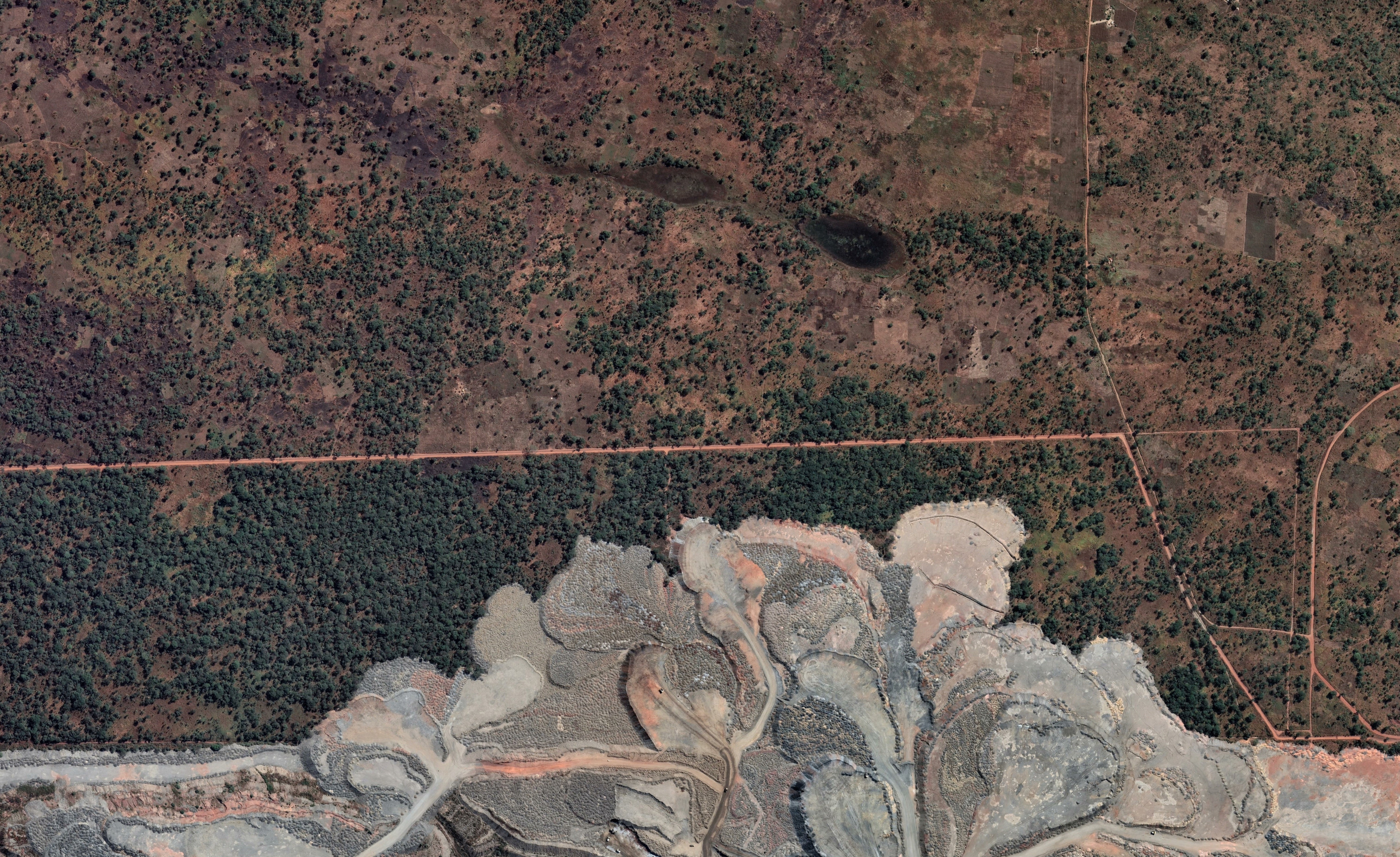
This requires a new generation of mineral diplomacy. Not diplomacy centered solely on concession agreements, but diplomacy that connects climate ambition with industrial policy, infrastructure investment, technology transfer, regional integration and economic resilience.
But better deals alone will not deliver transformation. Without transparent institutions, accountable governance and public trust, even the most ambitious mineral partnerships will fail to deliver on their promise.
History has shown that mineral booms can fuel corruption, environmental degradation, elite capture and community conflict when governance is weak. Conversely, countries with transparent licensing systems, contract disclosure, beneficial ownership transparency, sound fiscal management, environmental accountability and meaningful citizen participation are better positioned to attract responsible investment. This enables them to convert mineral wealth into long-term development.
Governance is the defining key in this regard. Strong governance strengthens investor confidence while ensuring that mineral wealth contributes to sustainable and inclusive development. So, good governance is not an obstacle to investment. It is one of its greatest competitive advantages. The challenge before Africa is not to choose between negotiating better partnerships and strengthening governance, but to recognize that the two are inseparable.
The meetings of the parties under the UNFCCC, usually referred to as COP, have often been criticized for being heavy on talk and light on implementation. We are determined that COP32 should be different. It presents an opportunity for Africa to champion an African Minerals and Just Transition Compact—a practical framework that aligns climate ambition with development ambition and builds on existing African Union frameworks, including Africa’s Green Minerals Strategy, to strengthen coherence and collective action. The Compact would establish a new partnership between producer and consumer countries rooted in good governance and based on shared prosperity rather than simple resource extraction.
We believe such a Compact should rest on four principles.
First, mineral partnerships should promote long-term economic transformation built on a clear, measurable ambition: by 2040, African countries should collectively double the share of value retained from their transition mineral resources. Estimates from the African Development Bank (AfDB) suggest that less than 20 percent of the total value of many mineral value chains is currently retained on the continent. Today, most African countries capture only a small fraction of the total value generated along mineral supply chains, often limited to royalties, taxes and low-value extraction activities, while the bulk of value accrues through processing, manufacturing and downstream industries located elsewhere. Doubling this share would thus require a more equitable capture of tax and fiscal revenues from mining, alongside harnessing increased value from processing and manufacturing. This in turn would depend on skills development, technology transfer, energy and infrastructure development and regional economic integration.
Second, Africa should focus on regional value chains instead of isolated national projects. By leveraging the African Continental Free Trade Area (AfCFTA), coordinated policies and strategic infrastructure, countries can collectively maximize the benefits of mineral development.
Third, climate and development finance must support mineral-producing economies in building productive capacity, not only in expanding extraction. Multilateral development banks (MDBs), climate funds and development partners should establish a dedicated facility, anchored in the MDB Joint Coordination Framework on Critical Minerals, with an initial capitalization of US$25 billion to provide concessional finance for geological data, renewable energy, transport corridors, industrial parks, research and innovation, governance reforms and workforce development. This figure reflects indicative estimates of the scale of investment required across priority areas, drawing on analyses by institutions such as the AfDB, IEA and World Bank on the infrastructure, industrial and governance investments needed to support mineral-based development.
Fourth, transparency, accountable institutions, contract disclosure, beneficial ownership, environmental stewardship and meaningful community participation must become defining features of responsible mineral partnerships.
To put this Compact into action, we will need to enter a new era of cooperation between producer and consumer countries. We believe there is momentum in this direction, and 2027 can be a turning point: leveraging the opportunities presented by African leadership of COP32 and UK leadership of the G20 to co-develop this new framework grounded in mutual accountability, local value creation and long-term economic transformation.
Remember, Africa does not seek to slow the global energy transition. On the contrary, our countries have contributed the least to climate change while experiencing some of its most severe impacts. Africa has every interest in seeing the transition succeed. But success cannot be measured only by the speed of global decarbonization. It must also be measured by whether the transition creates opportunity where the critical minerals originate. A fair and just transition is what Africa demands, and this Compact will help to deliver it.

Nana Dr. Antwi-Boasiako Amoah chairs the African Group of Negotiators (AGN) on Climate Change for 2026–2027, representing Africa's 54 countries in UN climate negotiations. He is Director of Adaptation, Climate Resilience and Risk Management at Ghana's Environmental Protection Authority and previously served as Lead Negotiator on National Adaptation Plans for the G77 and China. He also lectures part-time at the University of Ghana's Centre for Climate Change and Sustainability Studies. He contributed this piece as part of NRGI's 20th anniversary thought piece series on the future of resource governance.