
The Connective Fabric of Natural Resource Governance: Reflections from UNGA and Climate Week

Last week, a delegation from NRGI attended the UN General Assembly and Climate Week NYC. Below are our reflections from across more than 20 sessions, side events, our 20th anniversary convening and meetings, with partners from government, civil society, Indigenous Peoples, multilaterals, philanthropy and industry.
Natural resources rarely dominate the headlines at the UN General Assembly, yet they underpin almost every item on its agenda. Whether conversations centered on climate, economic development, trade or geopolitics, the governance of oil, gas and minerals ran through many of them.
That role, however, too often remains implicit. Elevating resource governance as a priority is essential if global efforts on climate, development and security are to deliver equitable outcomes for producer countries and their citizens, and a healthy, sustainable future for all of us.
Security and trade have reframed the journey, but not the destination
Energy security has displaced energy transition as the dominant lens for energy policy, with decisions increasingly driven by geopolitics and cost of living rather than decarbonization. While the end goal of sustainable energy and economic futures remains, this marks a structural shift in the narratives that shape policy and in how influence is exercised.
In the minerals sector, a trade lens now dominates, even during a “Climate Week”. Green industrialization was a central theme, welcomed by some and viewed with skepticism by others. At a UN-hosted Solutions Dialogue on the subject, producer countries, particularly those from Africa, stressed that high costs of capital and limited fiscal space must not constrain their economic and trade ambitions. African participants were clear that the gap is now implementation, not strategy: frameworks such as the African Mining Vision and the Africa Green Minerals Strategy already exist. Because no single country holds every mineral, energy source, skill and market, enabling countries to achieve more value requires regional integration. The African Continental Free Trade Area (AfCFTA) serving as an industrial platform rather than only a trade agreement. Success, many argued, should be measured by the jobs, skills and productive capabilities retained on the continent, not by processing capacity alone. In our remarks, NRGI emphasized the need for additional financing and technical support so that producer countries can design, implement and monitor value addition and diversification strategies that truly meet the needs of their people, and enforce high human rights, environmental and governance standards.
Green industrialization could serve as a bridge that brings mineral trade and climate policy closer together. We are looking forward to further progress at COP31 in November, as green industrialization is a key priority on the Action Agenda launched by Türkiye last week. Looking to next year, NRGI is also supporting a shared agenda on equitable mineral partnerships across the COP32 and UK-led G20 processes, where African countries have an opportunity to connect their climate positions with their leverage as producers of critical minerals.
"Critical for who?": equity and the governance gap
With “critical minerals” being used so often, the question "critical for who?" recurred throughout. Across discussions, there was a unifying call for a new and more equitable economic and political paradigm, but how this plays out in practice remains highly uncertain. There were multiple calls (including from NRGI) for critical minerals to underpin just, country-led transitions that serve producer countries' development aspirations, respect the free, prior and informed consent of Indigenous Peoples and frontline communities, and remedy legacy environmental harms. Several sessions went further, asking not just how much revenue extraction generates but whether it preserves national wealth across generations. Without this, producer countries risk exchanging finite mineral wealth for limited revenues while leaving depleted assets and environmental damage to future generations.
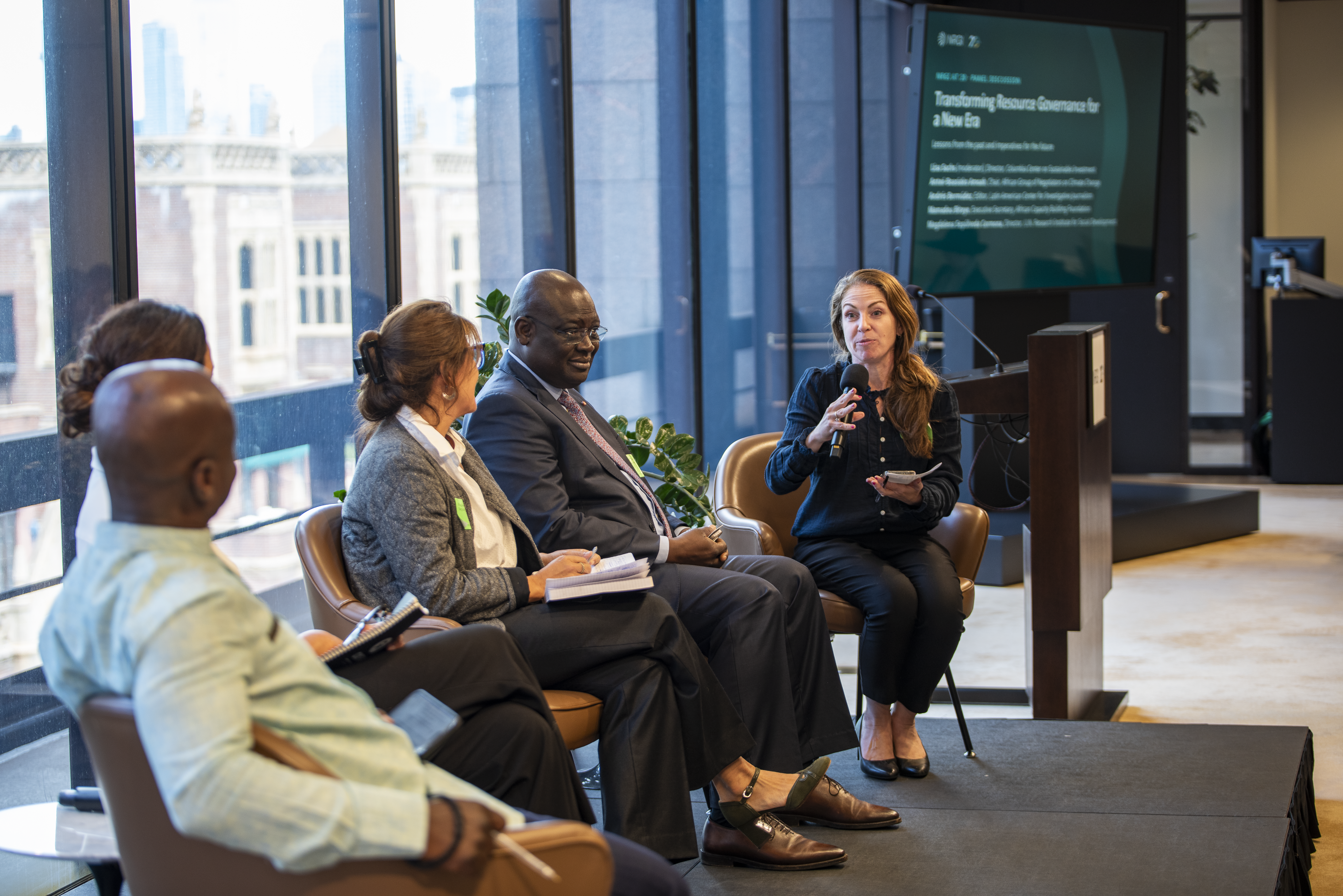
While critical minerals are the focus, the obstacles to fairer and more prosperous societies are structural and systemic – a theme that echoed throughout including in NRGI’s 20th anniversary event. Low- and middle-income countries remain underrepresented in setting new standards and paradigms, despite bearing their costs.
Encouragingly, the discussion has moved from what must change to how. Reformers shared approaches ranging from multi-stakeholder engagement and narrative storytelling to strategic litigation, the quantification of decommissioning liabilities and evidence on the financial materiality of community engagement. Each aims to ensure that community rights are respected and that polluters remediate the harm they cause. A recurring message was that affected communities need agency, not simply better consultation: access to information, the capacity to negotiate and the ability to speak for themselves with governments, companies, investors and financiers. These “unbankable” elements often determine whether supposedly bankable investments succeed.
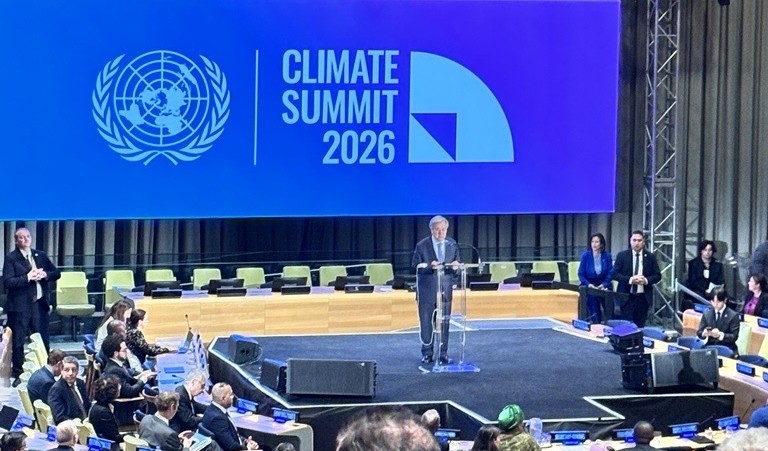
Concrete openings exist to keep making progress. At the UN Climate Summit, the Secretary-General announced a new country support mechanism for six mineral-rich developing countries to implement the recommendations of the UN Secretary-General's Panel on Critical Energy Transition Minerals. Having served on the panel, NRGI and our partners have pressed for this follow-through, including in this joint letter last July. We welcome the mechanism. Connecting with technical assistance partners outside the UN to deliver tailored, demand-led support will be critical to its success. (Learn more: See our video and press statement released during the week). The push for an International Panel on Inequality and next year’s planned SDG Summit offer further entry points to center producer countries in debates on the future economy. The ongoing review of the IFC Performance Standards is another, as these standards shape the practices of commercial banks, export-credit agencies and mining companies well beyond the IFC itself.
Artificial intelligence and the resources beneath it
Some described this as the "AI UNGA". Technology leaders addressed the Security Council, many world leaders mentioned AI in their speeches, and there were countless AI-focused side events. Yet beyond limited discussion focused on data centers, few conversations linked AI development to the minerals that build and power it. This is a gap that policymakers, companies and civil society alike must close.
A notable exception was a discussion convened by the government of the Democratic Republic of the Congo, entitled “AI and the New Geopolitics of Peace and Security”, in which NRGI participated. It followed a July Arria-formula meeting, held during the DRC's Security Council presidency, which called for a global normative framework reconciling peace, security, transparency and sustainable development. NRGI has provided technical input to that process, and this intersection is emerging as a key policy space.
The DRC's leadership is itself both noteworthy and an opportunity. It shows how low- and middle-income countries can shape emerging global norms on minerals, security and AI, rather than simply adopt rules set elsewhere.
A fragmented landscape demands trusted brokers
While emerging coalitions and new opportunities are being born of the current upheaval, fragmentation and polarization remain a challenge. Progress will depend on trusted brokers who can navigate contradictions to unite diverse groups, and on building new, action-focused coalitions.
For NRGI, we see this as a challenge and an opportunity. We will seek to leverage the trust, credibility and knowledge we have built over two decades, while holding a nuanced, independent position in a multi-polar world.
Why Minerals Still Matter for COP30: What’s at Stake if They’re Left Out
COP30 Media Briefing

As negotiations at COP30 entered their final stretch, NRGI and partners convened a media briefing on 21 November 2025 at COP30 in Belém, “Why Minerals Still Matter for COP30: What’s at Stake if They’re Left Out,” to respond to the removal of minerals from the latest Just Transition Work Programme (JTWP) draft text. This page shares the speakers and a full transcript of remarks by NRGI’s Antonio Hill, along with key quotes from the other panelists.
Speakers:
- Antonio Hill, advisor, Natural Resource Governance Institute (NRGI)
- Susana Muhamad, former Minister of Environment and Sustainable Development, Colombia
- Bryan Bixcul, SIRGE Coalition
- Kuda Manjonjo, Powershift Africa
Watch the full media briefing on the UNFCCC website.
Remarks by Antonio Hill, Natural Resource Governance Institute (NRGI)
One year ago, at COP29, United Nations Secretary-General António Guterres—together with the executive director of the International Energy Agency (IEA) and ministers or representatives from 15 countries—launched the report of the UN Panel on Critical Energy Transition Minerals.
That Panel was announced by the Secretary-General at COP28 in Dubai, and represented a rare space on the global stage where representatives from governments, North and South—notably including China and the United States, as well as other major mineral producers—came together with stakeholders from Indigenous Peoples’ organizations, civil society, and business and industry associations to discuss the challenges and opportunities associated with fast-growing demand for minerals essential to the global energy transition.
The Panel issued a set of principles and recommendations with fairness and sustainability at their core. Its clear message was that achieving fairness and sustainability requires change:
Change from the deep-rooted inequities that have long plagued the minerals sector and global supply chains.
Change from the destructive, exploitative practices that have left too many countries with neither wealth nor resources, and turned mining areas into sacrifice zones.
And a change from the pit-to-port model, where raw materials are simply shipped off to power economies and lifestyles in faraway lands.
The promise was—and still is—a new model for mining and minerals: one that not only safeguards people and planet, but also drives economic opportunity in the countries and communities that depend on it for their economies and livelihoods. Indeed, countries and entire regions, such as sub-Saharan Africa, are planning to develop inclusive, green industrialization strategies built on this new model.
So, what is the relevance to climate action, you may ask? And why insist that the UN climate negotiations take on yet another thorny issue when they are still falling so short on their own objectives?
The answer lies in the direct connection to the objectives of the Paris Agreement. Two years ago, the Conference of the Parties (COP) issued its own report card on progress toward Paris Agreement objectives—the Global Stocktake. That report card, for the first time in these negotiations, said that deep emissions cuts are required, and fast, as part of a global shift away from coal, oil, and gas in our energy systems.
COP28 stated that getting back on track to bring global heating back below 1.5 degrees Celsius and meet the Paris objectives requires a range of strategies, including a tripling of renewable energy capacity by 2030, a doubling of energy efficiency, and a transition away from fossil fuels. The IEA has estimated that achieving these targets will require a four- to twenty-fold increase in the volume of minerals needed to produce batteries, solar panels, wind turbines, and other infrastructure for the global energy transition.
To this day, no COP decision has ever even mentioned—let alone addressed—this connection to transition minerals or its implications. That silence must end. The world’s climate governance body cannot turn a blind eye to the risks—or potential benefits—associated with the extraction, processing, trade, and recycling of transition minerals.
Here at COP30, for the first time, we saw draft text tabled that highlights the equity and sustainability dimensions of minerals. It was supported by a broad range of countries, including:
The African Group of Negotiators (AGN) and Burkina Faso, Ethiopia, Somalia, South Africa, Tanzania and Uganda
The Least Developed Countries (LDCs), represented by Sudan
Colombia, Mexico, Panama, Peru and Uruguay
With the exception of China, we heard no opposition to minerals-related proposals in any open negotiating sessions.
Until yesterday, these proposals appeared in draft text under the Just Transition Work Programme (JTWP)—which is entirely appropriate, given that no transition away from fossil fuels is plausible except under the framework of a just transition mechanism, including the Belém Action Mechanism (BAM).
In the latest version of the JTWP text, released before dawn this morning, all references to minerals have disappeared.
We understand that the AGN and the LDCs are still pushing for a reference to be reinserted into the draft decision text, and we call on all Parties to support them.
We hear Indigenous Peoples, local communities, and low- and middle-income transition-mineral-producing countries loud and clear. They are saying they need new opportunities—more and better jobs and diversified economies. They are saying they will not abide another century of inequity, destruction, and exploitation. It is not justified or necessary for climate action, and it is certainly not close to what any of us—or what COP30—can describe in good faith as a just transition.
Quotes from other speakers
Below are selected remarks from the other panelists:
Bryan Bixcul, SIRGE Coalition
“It is deeply disappointing that after years of work from Indigenous defenders and activists, the language on minerals that should have been in the formal text was dropped. Right now, 54 percent of minerals like lithium, copper, cobalt, and nickel are being extracted from the lands of Indigenous Peoples. When you zoom into Latin America, that number is as high as 75 percent. This is having huge impacts — land dispossession, water contamination, soil contamination, rights violations — and often without Indigenous Peoples’ free, prior, and informed consent. It is unbelievable to us that after years of advocacy we are still fighting to keep those references in there. Why? Because we are being told it is too contentious or too political to be included in the text. ”
Kuda Manjonjo, Powershift Africa
"The mine collapsing in the DRC is a reminder of why it’s so important to include minerals in the text. More practically, we’re excited about some of the things being discussed — infrastructure, renewable energy — but you can’t speak about these without including minerals. This starts in the lands, in the mines that supply these things. We were happy when the African Group of Negotiators came forward and said, “This is what we stand for.” The global South is providing the solutions for the global North, and that must be recognized. It’s unfortunate that China is excluding this. We’re providing two solutions: just transition mechanisms, and clarity about what that just transition looks like. If we don’t include minerals in the text, we’ll come back four years later to discuss the same thing, and we don’t want that. We have an opportunity now to make sure no one is left behind."
Susana Muhamad, former Minister of Environment and Sustainable Development, Colombia
“This transition can go in two directions. One direction is a new wave of extractivism that betrays the two pillars needed to stabilize the climate: phasing out fossil fuels and restoring the ecological capacity of the planet, with people at the center. Without clarity, rules, and safeguards, we will only deepen the crisis. Many countries still see the global South as providers of minerals, not as partners in co-developing a just transition. Indigenous Peoples come here with their sweat, their tears, their blood. Is it too much to ask that the text reflect their rights? We shine a light on business, but not on humans. We see two visions: the global North calling for reliability of resources and the global South calling for fairness. We already have tools and expert work that show what a just transition looks like. Not referencing them is a missed opportunity, especially for the Amazon. Without addressing minerals, we risk another round of extractivism, exploitation, and human rights violations that benefit just the few.”
National Oil Companies Are Gaining Ground in Climate Talks. Can COP30 Turn Interest Into Action?

National oil companies (NOCs) have long been peripheral to climate debates. But that’s starting to change.
NOCs produce more than half of the world’s oil and gas output, yet they have remained largely absent from climate debates. Unlike international oil companies, they are state-owned actors that shape and are shaped by national policy. In the last COP cycles, however, their presence has grown.
At COP28, 34 NOCs signed the Oil & Gas Decarbonization Charter, pledging to cut operational emissions, end routine flaring and reduce methane intensity to 0.2 percent by 2030. The Charter, however, does not address emissions generated when the oil and gas they produce is burned, and many signatories continue approving new oil and gas projects, patterns inconsistent with the global stocktake’s call to transition away from fossil fuels.
Beyond COPs, climate interest in NOCs is growing. NRGI has received more invitations to speak at climate forums about NOCs and collaborate on the topic. Other organizations are also expanding work in this space, such as EDF on methane measurement and IISD on NOC transition pathways. Yet, despite this momentum, few governments are integrating NOCs into their climate policies.
Most national pledges overlook NOCs
Only ten countries mentioned their NOC in their NDC 2.0 (in any form, including just a passing reference): Azerbaijan, Cameroon, China, Colombia, Ecuador, Oman, Mexico, Qatar, the UAE and Venezuela. In the current wave of NDC 3.0 updates, only five countries have done so to date: Azerbaijan, Angola, Bangladesh, the UAE, and Venezuela.
As state-owned enterprises, NOCs embody the government’s direct influence—and responsibility—over an important source of emissions. For example, in Mexico the energy sector accounts for around 64 percent of national greenhouse gas emissions, and Pemex alone produces about 95 percent of the country’s hydrocarbons.
Countries that have not yet submitted their NDC 3.0 can still integrate them in this round; those that have can incorporate them into implementation frameworks so that climate commitments remain credible.
However, a mention is not a commitment to action. Below are core elements of robust NOC integration into NDCs. To date, only the first category appears in any NDCs.
- Set explicit carbon and methane reduction targets for the NOC.
- Colombia’s NDC 2.0 mentions that “Ecopetrol committed in 2019 to reduce its emissions by 20% by 2030 in line with the country target defined in 2015.”
- Qatar’s NDC 2.0 states that “Qatar Petroleum (QP) is committed to zero routine flaring by 2030, with a long-term goal to reduce flaring in onshore facilities to the absolute minimum.”
- Mexico’s NDC 2.0 notes that “Petróleos Mexicanos has set a methane gas utilization target of 98%, considering the production of existing and new fields.”
- The UAE’s NDC 3.0 mentions the NOC’s ambition “to achieve net zero by 2045” and “reduce carbon intensity by 25% by 2030,” and a target to “have methane intensity below 0.15% by 2025.”
- Express those targets in absolute terms, with defined baselines and reference years.
- Cover full value chain emissions—including Scope 3 emissions—associated with current, planned and projected operations, with clear milestones for national action on Scope 1 and 2.
- Disclose or estimate the NOC’s share of national emissions.
- Explicitly align NOC strategies and capital spending with national climate targets.
- Establish a framework for tracking NOC-specific emissions and progress.
- Acknowledge exposure to transition risks (economic, fiscal and market impacts from a long-term decline in oil and gas demand).
- Task the NOC with contributing to a just transition such as regional economic diversification, workforce reskilling and responsible infrastructure decommissioning.
- Involve NOC leadership and workers in the NDC drafting process.
Why stronger NOC targets could unlock climate finance
International lenders and climate finance institutions increasingly treat NDCs as investment plans. When NOCs are major emitters, they need NOC-specific targets and disclosures. Without this level of transparency, it is difficult to assess investment needs or align climate finance instruments.
Methane reduction is where climate finance can move fastest. Around 80 percent of oil and gas abatement options are cost-neutral or profitable. NOCs could lead the way. With targeted funding for leak detection, flaring reduction and monitoring, governments could secure rapid, measurable results.
For countries like Mexico or Nigeria, where regulations already exist but enforcement is weak, including these targets in NDCs could strengthen oversight and attract international support for implementation.
Climate planning around NOCs must also address just transition responsibilities
The UNFCCC has emphasized that this next round must include the social and economic plans that make emissions targets viable—and this just transition focus is set to increase at COP30. For countries with NOCs, such plans are impossible without them.
In many low- and middle-income countries, NOCs are major employers and fiscal pillars. NOCs also often safeguard national resources and ensure energy security. Their operations are tied to public services, regional development and politics, making them vital actors and potential obstacles to change. For example, Pemex has resisted methane regulation and enforcement efforts, shifted targets and limited independent oversight.
Global just transition agendas, including the UNFCCC’s Just Transition Work Programme, rarely mention NOCs. Recognizing their role is crucial to building just transition strategies that are socially inclusive and politically viable.
In Mexico, oil-dependent states of Campeche and Tabasco are already feeling the effects of declining production—from shrinking fiscal revenues to job losses. Mexico’s climate policy should incorporate explicit just transition measures linked to Pemex’s operations, focusing on regional economic diversification, workforce reskilling and responsible decommissioning of oil infrastructure.
How can COP30 advance the integration of NOCs in climate action?
Brazil—where Petrobras’s role continues to expose the tensions between climate ambition and fossil expansion—offers a key stage to keep NOCs in focus and advance their integration into national climate policies. This means embedding NOCs into national climate frameworks with measurable targets, transparent reporting and clear roles in just transition strategies.
If the right framing and direction are set, COP30 can help governments, investors and climate advocates to embed NOCs into the architecture of climate governance—ensuring that the actors most central to the fossil economy become equally central to its transformation.
Minerals and Climate Action: Will COP30 Finally Break the Silence?

As COP30 unfolds, the question is unavoidable: will governments finally recognize the role of minerals in achieving a just and sustainable energy transition?
As is widely known, meeting the Paris Agreement’s goals will require a massive surge in demand for transition minerals. The International Energy Agency projects a fourfold increase by 2040 and, for some materials, demand could rise thirtyfold. Yet, despite their central role in climate action, the UNFCCC has never formally acknowledged mineral governance as part of the solution. That silence must end in Belém.
COP30 offers a historic opportunity to confront one of the great paradoxes of the energy transition: the same minerals required for rapid decarbonization can also deepen inequality and environmental harm unless they are governed justly.
From risk to possibility
The global race for cobalt, nickel, lithium, bauxite and other transition minerals is reshaping the geopolitics of climate action. From our work with governments and civil society in producer countries, we know this surge represents both risk and possibility.
With strong governance, accountability and fair benefit-sharing, mineral demand can fuel clean energy infrastructure, jobs and green industrialization. Fairer trade rules would help countries move from being raw material exporters to participants in value-added industries. But in practice, hundreds of allegations of human rights abuses have been linked to large-scale mining for renewable energy supply chains. More than half of transition mineral deposits lie in or near Indigenous territories, where Free, Prior and Informed Consent is often ignored.
Without change, the transition risks repeating the injustices of the fossil fuel era marked by local harm, limited benefits and widening inequalities. It also puts our ability to meet our climate goals at risk.
Still, there are reasons for optimism. Across the Global South, governments and civil society are pushing for a new model that views minerals as a foundation for shared prosperity and climate justice.
Momentum is building
In recent months, efforts to reshape mineral governance have gathered remarkable pace.
The UN Secretary-General’s Panel on Critical Energy Transition Minerals outlined principles and recommendations to ensure equity, justice, and sustainability in extraction. UNCTAD, UNEP and UNIDO have already begun embedding these ideas in their programs and partnerships.
Regional and national action is accelerating too. The African Union’s Green Minerals Strategy provides a roadmap for equitable industrialization and electrification. Harnessing minerals for inclusive growth is one of South Africa’s priorities as G20 President. Countries such as Chile, South Africa, Tanzania, Zambia and are advancing national strategies to align mineral governance with climate goals.
At the upcoming UN Environment Assembly (UNEA-7) in Nairobi this December, countries will debate Colombia’s proposal for a global accountability framework to reduce the human and environmental toll of mining and processing.
On the private sector front, the USD 18 billion-backed investor initiative, Mining Commission 2030, where NRGI serves as a member, has just released its vision for consultation, aimed at unlocking responsible mining investment.
And within the UNFCCC itself, momentum is undeniable. At the Fourth Dialogue of the Just Transition Work Programme (JTWP) in Addis Ababa this September, governments from across the Global South, including Tanzania for the African Group and Colombia for AILAC (Independent Alliance of Latin America and the Caribbean), called for transition minerals to be explicitly recognized in the negotiations. They emphasized equitable benefit-sharing, local value addition and stronger social and environmental protections.
Blocs like the G77+China and the Least Developed Countries (LDCs) raised similar points. South Africa and Uganda urged fairer mineral value chains, while Colombia proposed protecting “no-go zones,” ecologically vital areas off-limits to mining and drilling.
The Response Measures Forum, one of the UNFCCC negotiation tracks, also dedicated a session to minerals in September.
And, the 2025 Africa Climate Summit saw heads of state, for the first time, acknowledge the need for just mineral supply chains. Zimbabwe has since echoed these calls, integrating mineral governance into its national COP30 agenda. Brazil, this year’s COP host, is reportedly exploring the issue as well.
The message is clear: minerals are moving to the center of the climate conversation.
What COP30 must deliver
Belém is the place to turn this awareness into action. Parties at COP30 should:
- Acknowledge the issue. For the first time, governments should formally recognize that effective mineral governance is essential to the Paris Agreement.
- Set the path. Endorse the principles of the UN Secretary-General’s Panel on Critical Energy Transition Minerals, a framework grounded in equity, justice and prosperity.
- Match ambition with means. Support implementation through initiatives such as the proposed Belém Action Mechanism (BAM) for a Global Just Transition, ensuring coordination and resources for mineral-producing countries.
- Drive national action. Call on governments to strengthen transparency, protect human and environmental rights, and pursue green industrialization strategies that deliver value addition and clean-energy access for all.
From Belém to beyond
This is not about adding new complexity to already difficult negotiations. It is about making climate action fair and a driver of equitable development.
Strong commitments at COP30 would empower countries to drive their own just transitions while creating space for new coalitions between producing nations, Indigenous Peoples and civil society. A breakthrough in Belém could reverberate beyond the COP, shaping discussions at the World Trade Organization, the G20, and multilateral development banks, where fairer mineral trade and governance reforms are urgently needed.
Breaking the silence at COP30 would mark a new chapter, one where the minerals powering our future also power justice, equity and prosperity.
Extractive Industries and the Just Transition: Why No-Go Zones Should Be Established to Uphold Justice for Indigenous Peoples and Ecological Integrity in the Global Transition (COP30)
UNFCCC Blue Zone, COP30

The global rush for transition minerals like lithium, nickel and copper risks repeating extractive patterns that have long dispossessed Indigenous Peoples and damaged ecosystems. Many of these resources are found on or near Indigenous territories, where rights violations and environmental degradation are already occurring.
This COP30 side event will explore why establishing No-Go Zones for extractive industries, in Indigenous Peoples’ lands, waters and key biodiversity areas, is critical to ensuring the energy transition upholds human rights and ecological integrity. Speakers will discuss legal and policy foundations for No-Go Zones and how they can be integrated into the Just Transition Work Programme and national transition strategies.
Speakers
Bryan Bixcul (Maya-Tz’utujil) – Global Coordinator, SIRGE Coalition
Fany Kuiro-COICA (Coordinating Body of Indigenous Organizations of the Amazon Basin)
Angela Kaxuyana – COIAB, Coordinator of Indigenous Organizations of the Brazilian Amazon and Indigenous representative to the Amazon Mechanism of Indigenous Peoples under the Amazon Cooperation Treaty Organization (ACTO).
Blanche Piponiot – Representative of GTI PIACI (International Working Group for the Protection of Indigenous Peoples in Isolation and Initial Contact).
Helena Gualinga – From Sarayaku (Kichwa community). Helena comes from a long line of strong women activists and continues her family’s legacy of defending nature and Indigenous rights in the Amazon. She is co-founder of Polluters Out and leads a global coalition of youth demanding the removal of fossil fuels from Indigenous lands, governments, and international policy spaces.
Auriga – Works with the MapBiomass network on geospatial advocacy. They collaborate with local NGOs and communities on the ground, particularly in Indonesia, while maintaining a global perspective.
Moderator: Camilo León, Ford Foundation.
Just Transition or Just Extraction? Safeguarding People and Planet in the Transition Minerals Rush (UNFCCC Side Event at COP30)
Room 5, COP30 Blue Zone

Transition minerals such as copper, lithium and cobalt are key to achieving the Paris Agreement aims. Still, their extraction and trade often undermine human rights and the environment, particularly in the Global South, where communities face the direct impacts of mining expansion.
This COP30 side event will explore priorities for ensuring that globalized minerals supply chains advance just energy transitions, those that deliver justice, restore ecosystems and benefit people and communities.
The discussion will feature two linked panels. The first will highlight regional experiences from Latin America, Africa and Asia on governance, safeguards and community participation in mining. The second will focus on COP30 priorities, including how negotiations under the Just Transition Work Programme can secure a rights-based, equitable approach to transition minerals.
This session will be livestreamed; a link will be shared soon.
Panel 1: Transition minerals in the Global South
Regional perspectives on how mineral-rich countries are addressing social and environmental safeguards, transparency and community participation in extraction.
Moderator: Nafi Quarshie (NRGI)
Speakers:
Ana María Mogollón (Transforma)
Krista Shennum (Climate Rights International)
Kudakwashe Manjonjo (Power Shift Africa)
Panel 2: Priorities for the COP30 negotiated outcome
How COP30 negotiations can ensure the minerals rush upholds human rights, environmental protection and equity, including through the Just Transition Work Programme.
Moderator: Felipe Arango (Transforma)
Speakers:
Elisa Morgera (OHCHR)
Melissa Marengo (NRGI)
Anabella Rosemberg (CAN – TBC)
Featuring NRGI's

Nafi Quarshie
Africa Director

Melissa Marengo
Portfolio Coordination Lead
Exiting the Blind Spot: A Global Call for Equity in Mineral Value Chains at COP30

This is the transcript of the press briefing “Exiting the Blind Spot: A Global Call for Equity in Mineral Value Chains at COP30,” held on 13 October 2025 to coincide with the start of the Pre-COP meetings in Brasília.
During the event, speakers from Africa, Asia, and global civil society networks presented a joint open letter signed by more than 200 organizations calling on governments to put transition minerals—and the communities affected by their extraction—at the center of climate negotiations.
The letter urges Parties to the UNFCCC to recognize human rights, environmental protection, and equity in mineral value chains as pillars of climate action, and proposes the establishment of the Belém Action Mechanism (BAM) within the UNFCCC to accelerate a holistic and just energy transition, particularly in mineral-producing countries.
Read the open letter
Watch the recording
Speakers included:
Ibrahima Aidara, Africa Deputy Director, Natural Resource Governance Institute (NRGI)
Angela Asuncion, Coordinator, Asia Pacific – Transition Mineral Accountability Working Group, Resource Justice Network (RJN)
Anabella Rosemberg, Senior Adviser on Just Transition, Climate Action Network (CAN) International
The following is a lightly edited transcript of the event, produced using automated transcription tools. While reviewed for clarity, it may contain minor inaccuracies.
Transcript
Gabriela Flores, NRGI:
Good morning, good afternoon, and good evening to everyone joining us from different parts of the world. My name is Gabriela Flores, and I'm with the Natural Resource Governance Institute. It's a pleasure to welcome you to today's press briefing, Exiting the Blind Spot, A Global Call for Equity in Mineral Value Chains at COP30. Thank you for taking the time to be here, especially as we head into a very, very busy week for climate diplomacy.
As the pre-COP meetings take place today and tomorrow in Brasília, which will gather ministers, negotiators, and observers to set the stage for COP30 in less than a month, 200 civil society organizations worldwide have released an open letter to all UNFCCC Parties urging governments to put transition minerals and affected communities at the heart of climate negotiations. A link to the letter should be available in the chat.
We're delighted to have with us three speakers who will share perspectives from across the regions and sectors on the issues raised in this letter, and what's going on at the pre-COP. First, we'll hear from Angela Asuncion, Coordinator for Asia-Pacific at the Transition Mineral Accountability Working Group, part of the Resource Justice Network (RJN), formerly known as Publish What You Pay. Angela will speak about the challenges linked to the exponential demand increase for transition minerals and the impact that this is having on communities across the Asia-Pacific region.
Next, we'll turn to Ibrahima Aidara, Africa Deputy Director here at NRGI. Ibrahima will highlight why multilateral action is essential, and what blind spots the COP negotiations must urgently address to ensure justice in mineral governance.
And thirdly, we'll hear from Anabella Rosemberg, who is the Senior Adviser on Just Transition at Climate Action Network (CAN) International. Anabella will talk to us about the Belém Action Mechanism (BAM), and explain how it can help embed justice and equity into the heart of the energy transition. And I should add that Anabella's joining us directly from Brasília, so a very early morning for her. Thank you very much for being with us. So, with that, let's get started. Angela, over to you.
Angela Asuncion:
Hi everyone, it's a great pleasure to be with you all today. Thank you so much to the organizers for bringing together this important press conference, and to all the media joining us today.
As mentioned, my name is Angela Asuncion, and I serve as the Coordinator of the Asia-Pacific Transition Mineral Accountability Working Group. We're made up of civil society leaders across over 10 countries, working to ensure that mining-affected communities at the heart of the energy transition are empowered, protected, and benefit from shared prosperity.
And so, to begin, as we know, minerals underpin the shift to renewables. Yet corruption, regulatory capture, and corporate impunity in the mining sector risks reproducing the same colonial extractivist models of injustice under the banner of climate action.
The role of mining within the energy transition raises three key areas of concern.
The first is that the rush to mine these minerals intensifies long-standing and unresolved issues within the mining industry, such as corruption, Indigenous and human rights violations, environmental devastation, water scarcity, and gender-based violence. Since 2010, there have been over 600 documented cases of human rights abuses related to transition minerals.
And the surge in mineral demand has also intensified dispossession and land grabs, as nearly 70% of transition minerals sit on Indigenous lands.
The second is that transition minerals are also increasingly greenwashed. Business-as-usual mining has been expressed by industry as a solution to climate change, when in reality, mining is responsible for 8–28% of global greenhouse gas emissions, and is known for widespread deforestation and destruction of critical climate-mitigating ecosystems and carbon sinks.
And a third key component is that geopolitical tensions are also on the rise as wealthy nations secure transition-mineral bilateral agreements with underdeveloped nations, which deepen inequalities and fuel ongoing exploitation of host communities.
So from extraction sites to end use, transition minerals expose layers of violence that extend far beyond climate solutions. While positioned as indispensable for renewable technology, mineral demand has also been absorbed into expanding defense technology. Militaries are responsible for 5.5% of global emissions, and rising defense expenditures under ongoing genocides and political rivalries risks diverting scarce mineral resources away from renewable energy.
And so at the national level, the role mining plays within exacerbating climate inequity is outlined in the Philippines in particular. The Philippines contributes 0.35% of global greenhouse gas emissions, yet is recognized as the number one most climate-vulnerable country in the world under the 2025 World Risk Report.
The Philippines is also the world's second largest producer of nickel, essential for electric vehicles and renewable technologies.
And for the past decade, the Philippines are among the deadliest places in the world to be a land defender and activist, with mining being the most dangerous sector.
Here, Indigenous people have lost around 20% of their land to mining projects in just 30 years, with areas identified as protected carbon-rich watersheds.
And to date, the mining sector contributes less than 1% to the nation's GDP, with mining provinces host to the highest poverty incidence and energy insecurity.
So we must ask ourselves, who will the energy transition benefit, and who holds the justice in the just energy transition?
As the APTMA, we strongly endorse this open letter and initiative. As frontline communities face the double burden of climate crisis and extractive violence, Belém must take advantage of this moment to make history as the first COP to address the material dimensions of the Paris Agreements. Parties must ensure that human rights, environmental protection, and equity are upheld at every stage of the transition-mineral supply chain, so that the path to decarbonization becomes a path to dignity, justice, and shared prosperity for all.
We've also prepared an op-ed—if it's published shortly, we'll share the link in the chat and with media lists. I'm open to answering any questions after. Thank you so much for listening.
Gabriela Flores, NRGI:
Thank you very much, Angela. Without further ado, let me move to you, Ibrahima.
Ibrahima Aidara:
Thank you very much, Gabriela, and thank you for bringing African voice in this critical debate. And as Angela reminded us, the risks associated with the exponential demand for minerals are already materializing.
But there are also, in theory, important economic opportunities for low- and middle-income countries. And these are still out of reach under the current context and conditions.
History shows us that previous mining booms enriched only elites, both globally and locally, while leaving communities behind, as Angela reminded us. This time must be different.
Mineral demand could be transformative for producing countries, particularly in Africa. The rising demand for transition minerals could help diversify economies, create linkages and meet urgent energy needs.
Let's not forget that over 600 million Africans still lack access to reliable and affordable energy.
A just energy transition requires a new model. We must move away from the pit-to-port model, where raw materials are exported and value is created elsewhere. If we don't, we risk repeating cycles of inequality and missing opportunities.
For that to happen, African governments need strategic clarity and structural barriers to be addressed. Producing countries must define clear objectives based on robust and rigorous cost-benefit analysis.
They also need access to capital, technology, and the necessary policy space to implement industrial strategies, which are still denied to many in Africa.
However, the good news is that momentum is building across the continent.
The African Union Green Minerals Strategy, launched this year, offers a roadmap for sustainable industrialization, access to energy and economic development.
Countries like South Africa, Tanzania and Zambia are developing national critical-mineral strategies aligned with climate and energy goals.
What does this all have to do with COP30? Already, at COP28, Parties committed to tripling renewable energy capacity and doubling energy efficiency by 2030.
Achieving these goals depends on how we govern the minerals that make this transition possible.
So, minerals are the backbone of renewable technology.
But importantly, the transition must be just, or it won't be sustainable.
And we have a strong call on Parties at COP30.
The first step is to recognize that strengthening the governance of transition-mineral value chains is a pillar of any climate action.
Already, several Parties are acknowledging this.
At the Second Africa Climate Week in Addis Ababa, we heard a strong call for equitable mineral governance from Colombia (on behalf of AILAC) and South Africa, as two examples.
The G77 and China have called for an equitable approach to global mineral demand in their submission to the second dialogue of the response measures forum.
The African Group of Negotiators is actively working to ensure African countries benefit from powering the energy transition. Countries like Zimbabwe are developing a COP position that includes energy, minerals, and transition pathways.
The next step is to adopt a roadmap.
The UN Secretary-General's Panel on Critical Energy Transition Minerals, which both NRGI and Climate Action Network served on, outlines a new paradigm rooted in justice and equity.
It involves producing countries, Indigenous people, and civil society, and represents a strong starting point for COP action. And we are calling for all Parties to endorse it.
Lastly, let's be clear: this is not about adding noise.
We are not asking COP to solve here and now everything—only to do its part and spear broader multilateral action. NRGI, Climate Action Network, and the Resource Justice Network have all been calling for inclusive action on transition minerals, centered on the voice of low- and middle-income countries and the communities most affected by mining operations.
The stakes are high, and we need principled leadership, and COP30 must break its silence on these critical issues and play a leading role in that space. Thank you, and I remain available for any clarification.
Gabriela Flores, NRGI:
Thank you so much, Ibrahima, for reminding us also of the positive steps that are being taken forward. With that, let me turn to you, Anabella.
Anabella Rosemberg:
Thank you, Gabriela, and yes—good evening, good afternoon, good morning for the ones in the Americas. It's only 6 in Brazil, so my apologies in advance for the most articulated press conference ever. Such an honor also being with Angela and Ibrahima, and their organizations, in what I think is a beautiful collaboration with more than 200 organizations and counting that are calling for the COP, as Ibrahima said, to take its responsibility and its share in moving forward with a governance of minerals that makes climate action progress in a way that is conducive to equity and justice.
So—most of the content has been given. Maybe a few more thoughts and elements to share with you all.
If, indeed, the conversation on transition minerals has been a bit in the corridors of the COP now for several years, it is only in the past year, I would say, that we've seen it come into the negotiation space, in particular thanks to the SG Panel. The fact that the panel on transition minerals was released at COP because of its importance and connection to delivering on the outcomes of the Global Stocktake, and the importance of tripling renewables and advancing energy efficiency.
But also because in the past couple of years, we have seen the development of what we call the Just Transition Work Programme, which is a space in which civil society has been putting a lot of effort so that we have at the COP a much stronger conversation about how we do ambitious climate action, and not only the fact that we need to do climate action. That how needs to anchor justice and equity, and that's what the just transition conversation allows us to bring. Not only how we transition away from fossil fuels, which is a critical part of climate action, but also how we transition in renewable energies, how we transition in a more electrified system with more batteries, but also how we transition food systems, how we do adaptation in a just way.
That work in the UNFCCC has been mainly based on dialogues for the past years, and of course dialogues are not enough.
So right now, civil society is gearing up to COP30, where one of our main demands under that Just Transition Work Programme is that we turn the dialogues—including the ones that have taken and discussed transition minerals—into a next level, which is a level of collective implementation.
And that is what we call the Belém Action Mechanism (BAM) for a Global Just Transition, that should allow us to do what Ibrahima was outlining: we need a space where coordination happens, where initiatives come together, where resources that right now are scattered and fragmented around the world can be much more accessible for the countries that want to do economic diversification, that want to protect their communities in the transition.
All of that becomes much more accessible and fast, and also—very important for the transition-mineral debate—where we also address some of the barriers to poorer countries, communities benefiting much more from these new pathways that are open to them.
The Belém Action Mechanism is the name, I would say, for an ambition—which is that the climate governance space, that of course keeps engaging on key objectives of climate action, starts putting much more commitment on doing that implementation—carrying on with climate ambition by centering people and communities and the needs of the countries that right now don't have alternative pathways at their disposal.
Right now, that proposal is on the table, it's being discussed very heavily, and maybe, if we have a little moment, I can tell you a bit more about what's the conversation right here in Brasília with the pre-COP.
Gabriela Flores, NRGI:
Thank you so very much for that. I wonder now—we've got about 10 minutes left—if there are any questions from some of the friends from the media who are joining us on this call.
There is one from Chloé Farand, Climate Home News. Go ahead, Chloé—hopefully the mic is open for you.
Chloé Farand:
Great, thanks. Hi, hopefully you can hear me okay. Thank you so much for doing this—really great presentations. I just wanted to go a little bit more into the Belém Action Mechanism. I think, Anabella, you said you could go a bit more into the detail. Can you explain how you see this working in practice? How do we move from dialogue to having this mechanism? Would this be a presidency initiative, with Parties signing up to it—like we've seen in past years—or, concretely, how do you see this being taken on in Belém? Thank you.
Anabella Rosemberg:
Thank you so much, Chloé. For us, one of the key elements of the Belém Action Mechanism is that it's not a voluntary initiative. It's something that happens within the negotiation process—so it's a multilateral approach. What we are proposing is that we have in Belém the launch of this mechanism that implies a coordination entity that will have representation, of course, from Parties, but also from communities and from workers—nothing about us without us—as well as initiatives and organizations that work on just transition and are outside the UNFCCC right now. We know that we should have better coordination of just transition within the climate space, but also there are so many things happening outside that today are disconnected from our climate ambition that we need to bring on board.
So—first, a coordination entity that would allow better steering and guiding, in particular related to the principles that must be applied when we're talking about just transition, but also a better conversation about the barriers for advancing it. That is going to be supported by a really strong network of practitioners and organizations around the world working on just transition—all those that today are focal points in their countries, trying to make that happen, and are disconnected and fighting a little bit on their own and against the odds for accessing funding, capacity, technology, and support.
And then—two new elements in that architecture. One is an Action and Support function that would allow any country or community that wants to engage on just transition to get a single port of entry for accessing what resources are available, and to help them go faster in accessing climate finance, for example, when connected to their just transition plans. And then what already exists, which is the knowledge-sharing space—with more practices being shared, more learnings, more production of good case studies—and that is something the UNFCCC is already starting to do.
I think the most ambitious part is to get this system oriented towards action, but not necessarily as a voluntary thing that only a few countries do—within the system. That, for us, is critical so that access to support is not only for a happy few or just happening at the COP, but within a permanent body that allows the “how we do the transition” to be a permanent feature of the UNFCCC conversation. And we have a brief that I can share with you; I'll put the link in the chat.
Gabriela Flores, NRGI:
Thanks so much, Anabella, and Chloé for that question. We have another question in the Q&A box from Hannah Fernandez from Eco-Business. She wants to know if Angela can expand on the transition minerals’ impact on Southeast Asia, and why it's critical that COP30 discusses this issue. Over to you, Angela.
Angela Asuncion:
Thank you so much, Hannah, for that great question. So, in the region—before we speak about Southeast Asia—the Asia-Pacific hosts some of the world's largest mineral reserves necessary to transition and decarbonize globally. The region produces 54.6% of nickel and remains host to one-third of the global mineral resources, including 60% of the world's reserves of rare earth metals.
And on top of this, when we talk about climate inequity—aligning with the increasing demand for mining for transition minerals—six of the ten countries most affected by climate-induced natural disasters are in the Asia-Pacific. As mining increases in demand to meet renewable energy targets, it will also increase deforestation and the destruction of critical climate-mitigating ecosystems and carbon sinks across the Asia-Pacific region.
Most of the world's transition minerals are found in corruption-prone jurisdictions, including large deposits of nickel and rare earths located in Asia-Pacific nations such as the Philippines and Indonesia. And, like we mentioned, transition-mineral-rich nations such as Indonesia and the Philippines are also recognized among the deadliest places in the world to be a land defender and activist, with mining being the most dangerous sector. With the increasing demand for mining, all of these issues will only become more intensified.
I also wanted to highlight the role that China plays as a key player we need to keep in mind. China holds 78% of the world's cell manufacturing capacity for electric vehicle batteries, hosts 75% of the world's lithium-ion battery megafactories, and produces most of the world's mineral-rich components for battery cells. Indonesia, in particular, is also a key player in the energy transition, producing the world's largest deposits of nickel, with a majority of Indonesian nickel mines, processing sites, and supply deals controlled by Chinese interests.
And so—when we talk about COP30, we also need to look forward to COP31, as we know there's strong potential for Australia to host COP31. The Asia-Pacific is a significant player not only in this year's climate negotiations but in next year's as well, given the pivotal role the region plays in driving international norms and standards for transition-mineral processing and battery technologies.
Gabriela Flores, NRGI:
Thank you. Thanks so much, Angela. We have another question from Jesse Chase-Lubitz from Devex, who's wondering about what work we're doing in multilaterals. Anabella, I'll hand that over to you.
Anabella Rosemberg:
Thank you, Gaby. We see the importance of bringing many international institutions that are funding so-called just transition initiatives. We are quite critical about what the MDBs are doing—and with the World Bank and IMF annual meetings starting this week, this is a particularly important question.
We think that multilateral development banks should be building much more strongly on the principles that will come out from COP on just transition. They have to organize their work with UNFCCC imperatives in mind, as well as stronger rights language that we have in this space to define just transition.
When it comes to BAM, getting clear about who will have a seat where will take a bit of time. For us, what's critical in Belém is that the principles, the functions, and the idea that—on top of the UNFCCC—we will have Parties, other international organizations, and civil society within different groupings (Indigenous peoples, trade unions, communities, women and gender, etc.)—all those actors having a seat at the table—is a critical one to call for.
And yes, we need to figure out—in the next month—what is going to be the level of commitment of these banks to join a multilateral initiative where they don't necessarily lead, but accept to support something that is much more justice- and equity-based when it comes to just transition. Many of these actors are working on just transition; what we are expecting now is that they converge in this broader space that is seeking to advance an equity and justice framework in moving ahead with climate action.
Gabriela Flores, NRGI:
Thanks very much, Anabella. There's now a question from Clarkni Chong-Hale from Context for Ibrahima—about how the Africa Green Minerals Strategy will feed into this move to develop better just transition policies on critical minerals. Over to you, Ibrahima.
Ibrahima Aidara:
Thank you, Gabriela, and thank you for the important question. In addition to the African strategy, we're seeing encouraging signs across the continent, as I mentioned. Building on the African Climate Summit, we've seen the Ethiopian Prime Minister clearly mention the transition and the role of minerals at the UN Climate Summit, and we’ve also seen African Heads of State explicitly recognizing the need for a just mineral supply chain in their declaration.
The African Group of Negotiators, building on this strategy and under the leadership of Tanzania, is developing a common position, which is very important—particularly to have a common position on the continent so we are not fragmented.
That will play a critical role in having a big, continental voice. I also mentioned Zimbabwe developing a position toward COP. All this should be put together and put on the table, and start building alliances with other Parties so they can have a strong coalition to push this reform forward. We believe this will be very helpful with allies like Brazil and other BASIC group Parties to support them in order to make this proposal happen at COP30. Thank you.
Gabriela Flores, NRGI:
Thank you very much for that, Ibrahima. I think there was a follow-up question from Chloé on the Belém Action Mechanism, which Anabella is kindly typing in. We are running out of time, but before I send you all on your way, I just wanted to ask the panel for maybe a very quick sense of what to expect on minerals as we head towards Belém. There are many countries in particular, or groups, pushing these agendas—we’ve heard. What should our friends in the media be on the lookout for when it comes to minerals now as we approach Belém? Shall I start with you, perhaps, Ibrahima?
Ibrahima Aidara:
I think what we should expect—and what we are going for—is for the Parties to endorse particularly the UN Secretary-General's Panel recommendations. We want to see minerals at the center of the agenda. This is the minimum expectation from us at COP related to mineral transitioning.
Gabriela Flores, NRGI:
Thanks, Ibrahima. What about an Asia-Pacific perspective, Angela?
Angela Asuncion:
Thanks so much, Gabriela. For us in the Asia-Pacific, we see that the issue of mining injustice will become a climate injustice issue as well, and it'll be at the forefront of climate discussions now—and, hopefully, moving forward with the climate negotiations. We need to understand that an intersectional and holistic approach to mining and transition-mineral demand needs to be taken, alongside the realities of frontline local and Indigenous communities that face the double burden of climate crisis and extractive violence. As we talk about addressing the material dimensions of the Paris Agreement, we need to talk about putting equity and human rights at the core of climate action and climate negotiations. I'm hoping that governments and Parties at COP30 will begin to address this.
Gabriela Flores, NRGI:
Thanks, Angela. And before we let you join the pre-COP meetings, Anabella, any final words from you?
Anabella Rosemberg:
Thank you, Gabriela. Yes—for us, what we are seeking is, of course, that all the principles agreed on just transition apply explicitly to transition minerals: human rights, Indigenous peoples’ rights, the right to free, prior and informed consent (FPIC), inclusion, economic diversification, and international cooperation. All those key parameters of a just transition need to be explicitly applied to transition minerals—and through the endorsement of the SG Panel, and through decisions that future work would cover transition minerals, that would be a way to do it. And of course, we want these principles to be taken to reality. For that, we need the BAM, the Belém Action Mechanism, because we need this process to do more than talks.
I think there is an expectation, at a time when multilateralism is in a very dire situation, to show that we are centering people and communities, and that governments want to have a different conversation about how we move with climate action—one that benefits everyone.
Gabriela Flores, NRGI:
Thank you so much, Anabella, and with that, I think I'm going to thank our three speakers—Angela, Ibrahima, Anabella—for their time and insights, and to all our friends from the media who have joined us. For any further queries, I put my contacts in the chat, and let's keep on pushing this very important agenda over the next few weeks and at COP30 itself. Thank you very much, everyone, and have a good rest of your week!
Anabella Rosemberg: Thank you so much, Gabriela.
Ibrahima Aidara: Thank you.
Angela Asuncion: Take good care, everyone. Thank you.
Exiting the Blind Spot: A Global Call for Equity in Mineral Value Chains at COP30
As world leaders gather in Brasilia for the Pre-COP meetings, more than 200 civil society organizations from around the world are issuing an open letter to Parties to the UNFCCC calling for governments to put transition minerals and the communities affected by their extraction at the heart of climate negotiations. They ask negotiators to recognize human rights, environmental protection and equity in mineral value chains as central pillars of climate action, outlining concrete steps to ensure the energy transition delivers justice, transparency and shared prosperity. The letter proposes the Belem Action Mechanism (BAM) as a new institutional arrangement within the UNFCCC to accelerate, consolidate and achieve a holistic Just Transition, including in mineral-producing countries.
Transition minerals remain a major blind spot in international climate negotiations. Civil society voices are warning that the clean energy transition risks reproducing the injustices of the past. Without strong safeguards, expanded mining could mean more pressure on land and water, more human rights violations, and deeper inequalities both within mineral-rich countries and between the Global North and South.
Read the full transcript of the 13 October press briefing.
Speakers
- Ibrahima Aidara, Africa Deputy Director, Natural Resource Governance Institute (NRGI)
- Angela Asuncion, Coordinator, Asia Pacific - Transition Mineral Accountability Working Group - Resource Justice Network, Resource Justice Network (RJN)
- Anabella Rosemberg, Senior Adviser on Just Transition, Climate Action Network (CAN) International
Key quotes from the press briefing (13 October 2025)
Anabella Rosemberg, Senior Adviser on Just Transition, Climate Action Network (CAN) International:
“At COP30, we have the possibility of moving from ten years of talk on just transition to ten years of implementation. We believe this is the right venue for discussing equity and justice in the context of increasing demand for transition minerals. This is about economic diversification, adding value in resource-rich countries, and building a pathway to prosperity that respects the rights of people, workers, and communities. The establishment of the Belem Action Mechanism at COP30 would be a concrete step toward cooperation and equity in how these resources are governed.”
Angela Asuncion, Coordinator, Asia Pacific - Transition Mineral Accountability Working Group - Resource Justice Network, Resource Justice Network (RJN):
"Transition mineral-rich nations such as the Philippines remain among the world's most climate-vulnerable and deadliest places for land defenders and activists, with the mining sector posing the gravest threats. The insatiable demand for mining under the guise of the energy transition only heightens the risk of violence for those courageously protecting their livelihoods and our future.
Parties at COP30 have an opportunity to make history as the first to confront the material dimensions of the Paris Agreement. Now is the moment for transformative action to ensure that human rights, environmental protection and equity are upheld at every stage of the mineral supply chain. The path to decarbonization must lead to dignity, justice and shared prosperity for all."
Ibrahima Aidara, Africa Deputy Director, Natural Resource Governance Institute (NRGI):
“Africa’s role in the global supply chain for transition minerals has largely been confined to raw material extraction, with limited value addition or local job creation. But for African producing countries, the rising demand for these minerals could help diversify economies and meet urgent energy needs.
We see everything in place for the Africa Group of Negotiators, under Tanzania's leadership, to adopt specific proposals strengthening the global governance of transition minerals ahead of COP30. They should table these proposals, starting today at the Pre-COP in Brasilia, and reach out to other Party groupings. We need leadership, the stakes are high.”
For media inquiries or interview requests, please contact:
Gabriela Flores, gflores@resourcegovernance.org, +447931924934 (WhatsApp, Signal, Telegram)
A global call for action on transition minerals
More than 200 organizations worldwide are urging COP30 leaders to ensure that the energy transition is just, transparent and inclusive.
D'Addis-Abeba à Belém: rendre justice et renforcer l'ambition de transition de l'Afrique

La déclaration des chefs d'État et de gouvernement africains lors du deuxième Sommet sur le climat (ACS2) à Addis-Abeba la semaine dernière était à la fois une démonstration forte de leadership et une omission frappante à peine deux mois avant la COP30 à Belém, au Brésil. En donnant la priorité à l'accès à l'énergie, à l'industrialisation verte et à la gouvernance minière, ils ont redessiné la carte de l'ambition climatique de l'Afrique autour d'une vision de prospérité économique et d'équité.
Cependant, si la déclaration mettait l'accent sur « l'intégration progressive » de l'emploi, de l'accès à l'énergie et du développement, elle omettait d'évoquer « l'élimination progressive » des combustibles fossiles, un appel au cœur de l'action climatique mondiale depuis la COP28 à Dubaï.
Ce qu'Addis-Abeba a réussi
La Déclaration d'Addis-Abeba reflète trois grands changements qui méritent l'attention:
La justice d'abord: Les dirigeants ont envoyé un signal fort et clair que la transition de l'Afrique doit être juste et équitable. La Déclaration a fait référence à la justice et à l'équité 61 fois, soit dix fois plus que la Déclaration de Nairobi, faisant de l'équité le cadre déterminant de l'ambition climatique de l'Afrique.
Le financement au cœur de l'action: les gouvernements africains ont placé la finance au cœur de leur programme climatique. Ils se sont félicités de la Feuille de route Bakou-Belém à 1,3 billion de dollars, mais ont signalé le déficit de financement du continent, avec des besoins stupéfiants de 3 000 milliards de dollars d'ici 2030, contre seulement 30 milliards de dollars mobilisés entre 2021 et 2022. Ils ont appelé à davantage de dons, à moins de dette, à des décaissements plus rapides, à une réforme du système financier international pour réduire le coût du capital, à un meilleur accès au financement et à une priorité accordée à l'adaptation et aux pertes et dommages.
Minerais mis en avant dans l’agenda climatique: Pour la première fois, les dirigeants africains ont consacré une section consacrée aux minerais de transition, totalement absente de la Déclaration de Nairobi. Ils ont chargé la Commission de l'Union africaine d'explorer la création d'une coalition de pays africains producteurs de minerais critiques pour coopérer stratégiquement sur le traitement local, en s'alignant sur la Stratégie africaine pour les minerais verts. En dehors de l’Union européenne, aucune autre région du monde n’a accordé autant d’attention et de considération de haut niveau aux priorités mondiales et régionales en matière d'action climatique.
Trois priorités sur la route de Belém
D'ici à la COP30, il reste plusieurs cases à cocher pour que les dirigeants africains et les partenaires internationaux puissent s'assurer que Belém produise les résultats de la vision ambitieuse d'Addis-Abeba. Les principales priorités sont les suivantes:
1. Briser le silence de la COP sur les minérais de transition
La demande de minérais de transition est en hausse, avec des risques d'aggravation des dommages sociaux, environnementaux, sanitaires et des droits de l'homme. Cependant, avec une gouvernance solide, les minérais peuvent générer de la valeur ajoutée et de la diversification pour les pays en développement.
Le Groupe africain des négociateurs (AGN), la voix de l'Afrique dans les négociations internationales sur le climat, jouera un rôle clé dans cet effort. Ils doivent veiller à ce que la COP30 sorte de son silence minéral en :
Reconnaissant le rôle et la pertinence des minérais de transition dans la mise en œuvre du bilan mondial de l'Accord de Paris
Approuvant les principes et recommandations du Groupe d'étude du Secrétaire général des Nations Unies sur les minérais de transition, appelant à une action multilatérale inclusive centrée sur la voix des pays producteurs à revenu faible et intermédiaire
Soutenant la création d'un mécanisme mondial pour une transition juste afin de favoriser la mise en œuvre et de concentrer le financement sur les priorités en matière de transition juste, y compris l'intégration du commerce équitable des minérais dans la planification et la mise en œuvre
Assurant la cohérence globale entre le processus climatique des Nations Unies et les autres forums des Nations Unies sur la gouvernance mondiale des minérais
Au-delà de cela, l'AGN devrait également présenter des propositions lors du Forum sur les mesures de riposte, afin que les résultats de la COP30 reconnaissent la gouvernance minière comme un élément clé des mesures de réponse qui apportent des avantages tangibles aux pays riches en ressources. Ils devraient en outre préparer des propositions opérationnelles, avec des feuilles de route claires, des jalons et des plans de surveillance pour soutenir l'appel de la Déclaration en faveur d'une coalition de pays africains producteurs de minérais en transition qui harmonise les règles, accélère la valeur ajoutée locale et assure des garanties sociales et environnementales.
2. Promouvoir le financement innovant de la transition
La Déclaration souligne à juste titre le besoin urgent de « mécanismes innovants de financement de la lutte contre le changement climatique », mais évite d'approuver des solutions spécifiques. Pendant une décennie, l'Afrique s'est appuyée sur le récit des « milliards à des billions », l'idée que de petits montants de financement public et concessionnel pourraient réduire les risques sur les marchés et débloquer des flux massifs de capitaux privés. Dans la pratique, chaque dollar d'argent public n'a mobilisé que 30 cents de capitaux privés, souvent à des taux d'intérêt élevés et sous des conditionnalités strictes. Cette expérience inefficace exige un pivot vers des finances publiques prévisibles et des instruments de subventions à grande échelle, et non vers des multiplicateurs illusoires.
Une alternative est déjà en train d'émerger. Lors de la 4e Conférence des Nations Unies sur le financement du développement qui s'est tenue à Séville en juillet 2025, le Bénin, le Kenya, la Sierra Leone et la Somalie ont fait partie d'une coalition de pays soutenant une taxe sur les voyages aériens premium afin de générer de nouveaux flux de financement public supplémentaires et prévisibles qu'ils pourraient canaliser vers les priorités de l'Afrique en matière de transition énergétique juste. Si elle est mise en œuvre à l'échelle mondiale, cette mesure pourrait générer plus de 80 milliards de dollars par an sous forme de subventions, soit plus de trois fois les 25 milliards de dollars par an que l'AIE considère comme nécessaires pour l'accès universel à l'énergie en Afrique.
Les dirigeants africains ont également appelé les pays développés à honorer leurs engagements financiers dans le cadre de l'Accord de Paris et à réformer l'architecture financière internationale. Des outils complémentaires tels que les échanges de dettes contre des climats, les prix planchers régionaux du carbone et les prêts concessionnels à des taux équitables devraient faire partie de l'ensemble. Le principe est clair : l'Afrique ne peut financer sa transition juste en s'enfonçant davantage dans la dette.
Ces dernières années, le Groupe de travail sur les taxes de solidarité mondiale a développé le niveau de transport aérien haut de gamme aux côtés d'autres sources de financement innovantes. Les dirigeants africains devraient utiliser la COP30 comme rampe de lancement pour obtenir l'approbation multilatérale de ces mesures et les relier au nouvel objectif quantifié collectif (NCQG).
3. Élaborer une position claire sur les combustibles fossiles avant la COP30
En évitant toute référence à l'élimination progressive des combustibles fossiles, la déclaration d'Addis-Abeba visait certainement à protéger la souveraineté énergétique de l'Afrique, à unifier ses positions internes et à renforcer la position de négociation du continent, étant donné que plusieurs pays misent encore fortement sur les ressources pétrolières et gazières.
Cependant, le silence sur les énergies fossiles ne protégera pas l'Afrique de la réalité que le train mondial a déjà quitté la gare ; la transition énergétique est bien engagée, et que les producteurs de pétrole africains sont confrontés à un ensemble croissant de risques de transition qu'ils doivent reconnaître, évaluer et agir pour éviter des pertes importantes de revenus, d'emplois et de sécurité énergétique.
Les dirigeants africains peuvent mieux protéger leurs citoyens en prenant l'initiative et en façonnant le cadre mondial pour une transition juste, ordonnée et équitable vers l'abandon des combustibles fossiles, en veillant à ce qu'elle dynamise leurs trajectoires de développement économique et humain au lieu de les compromettre.
D'ici à Bélém, les dirigeants africains doivent s'appuyer sur l'esprit de la Déclaration d'Addis-Abeba et élaborer leurs propres cadres de transition vers les combustibles fossiles qui intègrent les stratégies existantes pour l'industrialisation inclusive et verte, la diversification économique, la protection sociale, la formation professionnelle et la reconversion dans un paquet financier pour la COP30. Une telle position devrait s'appuyer sur l'accent mis par la Déclaration sur l'équité et la justice en conciliant l'« introduction progressive » du développement et l'« élimination progressive » des combustibles fossiles et en subordonnant les contributions pertinentes et déterminées au niveau national à l'appui international.
L'unité est la force de l'Afrique
Le deuxième Sommet africain sur le climat a défini une vision ambitieuse qui affirme le leadership africain. À Belém, cette vision doit passer de la parole aux actes. Pour que l'agenda de l'Afrique façonne les résultats de la COP30, les dirigeants africains doivent parler d'une seule voix et agir sur les trois priorités que le d'Addis-Abeba a mises sur la table.
L'unité entre l'Afrique anglophone, francophone et lusophone donnera au continent l'influence dont il a besoin pour transformer l'ambition en impacts mondiaux. Addis-Abeba a jeté des bases solides. La victoire viendra lorsque l'Afrique portera cette vision sur la scène mondiale et obtiendra des actions concréatives.
What COP30 Must Deliver for Africa’s Climate Future

We left Climate Week 2 in Addis Ababa with more than just memories; we carried urgent priorities for COP30. In the Just Transition Work Program (JTWP) dialogues, African voices shifted the global conversation, a perspective we echoed in our own interventions. Their clarity and urgency reminded everyone of a crucial truth: Africa’s leverage in transition minerals will not guarantee justice unless governance is purposeful and inclusive.
Africa’s minerals: opportunity and risk
The stakes could not be higher. The International Energy Agency projects global demand for transition minerals will quadruple by 2040, with some minerals surging thirtyfold. According to the Mo Ibrahim Foundation, Africa holds 30 percent of the world’s mineral reserves and, by 2050, production of critical minerals may need to increase by nearly 500 percent. This positions Africa not just as a supplier but as a potential driver of the green transition. Yet without strong governance, the continent risks repeating old patterns of dispossession. If global and national actors fail to act now, Africa could once again provide the resources for global growth while its own citizens are left behind.
NRGI’s analysis of transition minerals emphasizes the need for transparent licensing, fair contracts and maximum public value, not just revenues. Our submission to the UN High-Level Expert Advisory Group on Critical Energy Transition Minerals sets out clear standards for accountability and citizen inclusion.
Coupled with dramatic demand projections for graphite, cobalt, lithium and copper, all surging under net-zero scenarios, these principles strengthen both the moral and strategic case for governance reforms. Crucially, communities, especially those near mining operations, as well as women, youth and labor groups, must not be sidelined; just transition outcomes will only be legitimate if they are shaped through open and participatory processes.
Africa’s climate finance gap: financing justice, not debt
The climate finance gap Africa faces adds even greater urgency. A recent UN report warns that Africa will face a climate finance shortfall of about $2.5 trillion by 2030, as the continent requires $2.8 trillion to meet its climate goals. Current flows cover only a fraction of mitigation and adaptation needs, even as African governments divert scarce resources to respond to floods, droughts and heatwaves. With limited domestic resources, most financing must come from international support and private investment.
In Addis, the juxtaposition of these numbers against the dialogue was stark: the continent most imperiled by climate change is still grossly underfunded. We called for non-debt instruments, stressing that this is not the moment to saddle vulnerable countries with loans they cannot repay.
This financing gap is especially critical given Africa’s role as a supplier of transition minerals essential for the global energy shift. Without adequate investment, the continent risks remaining a raw material exporter rather than building the resilient, value-added industries envisioned in its climate and development goals. Donor countries, multilateral development banks and private investors must finance justice, not debt, and prioritize African-led strategies that turn mineral wealth into lasting development.
African leaders’ call to action
African leaders in Addis underscored just how significant these priorities are. In their submission to this JTWP Fourth Dialogue, the government of Tanzania, on behalf of the African Group of negotiators, described a “'window of opportunity' for mineral-rich countries to leverage their natural wealth to drive structural transformation and implement catch-up strategies.” The Addis Ababa Declaration on Climate Change and Call for Action, adopted at the African Climate Summit, called for strong implementation of the African Green Minerals Strategy and minerals management “guided by transparent governance, environmental stewardship, [and] national development priorities.” Their message to the global community is clear: Africa has set out its vision; COP30 must deliver the response.
What COP30 must deliver
COP30 must build on these foundations. As COP30 approaches, four interconnected priorities stand out, distilled from Addis Ababa and reinforced by data and NRGI’s evidence-based advocacy:
- Elevate governance of transition minerals as a global priority. COP30 outcomes should endorse binding standards for transparency, benefit-sharing and community oversight in mining and supply chains.
- Climate finance must scale and shift. Developing countries need $1.3 trillion annually, yet only 4–5 percent has been mobilized. Multilateral development banks pledged $137 billion in 2024, a record high. However, this still leaves a significant gap in an ocean-scale need. COP30 must commit to grant-based, non-debt climate finance, with strong adaptation components and mechanisms to reach under-funded countries equitably.
- Amplify participatory justice. COP30 documents must recognize that legitimacy stems from inclusion. Governments, funders and institutions must institutionalize community participation in licensing, investment planning and implementation.
- Government and policymakers must ensure climate strategies deliver development. They must harness, not sacrifice, Africa’s youth, energy and industrial potential in the energy transition. Financing and policies should prioritize industrial jobs and energy access, alongside emissions reduction.
Africa Climate Week confirmed what should be self-evident: the continent’s climate future, and the world’s, depends on coherent, just and well-financed action, rooted in good governance and citizen voice. COP30 is the moment where ambition, equity and agency meet—and where Africa’s central role in the just transition becomes unmistakable.