
Reflections on an Equitable Energy Transition from COP26

Reactions to emissions agreements reached at COP26 earlier this month were decidedly mixed. But one theme that emerged clearly from the dialogue surrounding the negotiations was the need for a just and equitable energy transition.
Developing countries that rely upon, or have been hoping to exploit, endowments of fossil fuels are in a unique predicament. They face the prospect of stranded assets and are caught between the global need to reduce fossil fuel consumption and their ambitions to economically develop, especially amid the turmoil wrought by the coronavirus pandemic. “In this challenging context, developing new producer countries are trying to figure out how to finance both their development and energy transition ambitions,” said NRGI’s Amir Shafaie as he moderated an event convened by NRGI, the Commonwealth Secretariat and the New Producers Group.
And in her intervention at Carbon Tracker’s “Energy Transition and the Far-Reaching Implications,” NRGI’s Nafi Chinery observed that “countries like Ghana need climate finance for their transition, but also a plan for how to spend transparently and based on stakeholder consultation and consensus.”
(This was one of three steps to a just and equitable energy transition outlined during COP by NRGI’s Suneeta Kaimal and Aaron Sayne, who also called for a focus on anticorruption in critical mineral supply chains.)

Chinery suggested that “the Ghanaian government needs a comprehensive outlook on energy transition that accounts for all risks and opportunities. Earlier this year the government proposed borrowing up to $1.6 billion to buy back offshore oil blocks, but this was based on a poor valuation and was extremely risky.”
Some saw previous COPs’ focus on the consumption of fossil fuels as lopsided. “We should have put fossil fuel supply on the table back in Rio, instead of focusing solely on emissions,” said Niclas Hallstrom of the What Next Forum. At the same event, Carbon Tracker’s Mike Coffin warned that “more than 400 million people live in countries with more than 20 percent of government revenue at risk due to oil investment. Oil-dependent countries must diversify their economies immediately. And other countries should not become petrostates; they must not double down.”
Engaging with oil-dependent states on their needs and with state-owned oil companies on their ambitions is critical at this juncture, as NRGI experts had highlighted in their contributions on state oil companies to October’s Production Gap Report. To further enable targeted advocacy, during COP NRGI and IISD released a joint briefing, “National Oil Companies and Climate Change: Insights for Advocates,” authored by several experts on state oil producers. Key points include:
- National oil companies are national. Engaging with them means engaging with the ambitions of their countries’ governments and citizens.
- Interests cloud perception of risks. National oil companies and their governments don't fully appreciate the economic risks associated with their investments.
- Economic development matters. National oil companies won’t change without public pressure and international support to diversify their countries’ economies.
- National oil companies differ. Climate and development advocates should tailor their strategies to distinct types of national oil companies, which present varying opportunities and challenges for reform.
- Renewable energy can be an opportunity or an obstacle. National oil company investment in renewables can boost the energy transition and give NOCs a stake in it, but can be counter-productive in some cases.
NOCs face especially high expectations and responsibilities in countries that have been planning to move into petroleum production and where “governments are wrestling with what the global imperative to shift away from fossil fuels means for them,” as Shafaie said at the new producers event.
The unique situation faced by these countries was illustrated by Agnes Moensi-Sokowikromo, COP delegate and chief financial officer of Suriname’s NOC Staatsolie. She observed: “Suriname’s recent oil discoveries are opportunities to stabilize the economy. We need these revenues now for social programs and the development of sustainable sectors to diversify the economy. On the other hand, Suriname is one of the few carbon-negative countries.”
Reducing fossil fuel consumption and production remains an essential area for climate action. In tackling this global problem, policymakers and activists must also keep in mind the challenges resource-rich developing countries face in the energy transition. NRGI and its partners Chatham House and the Commonwealth Secretariat continue to develop these themes through the New Producers Group, meeting on the key takeaways from COP and their implications for the policy and implementation challenges facing low-income, low-emissions new petroleum producers. This will remain a key priority for NRGI in 2022.
Hear more from Suneeta Kaimal on the energy transition in her podcast with Critical Resource.
Democratizing the Benefits of Natural Resources: Anticorruption and Public Accountability in the Extractive Sector and Energy Transition

Ahead of the Summit for Democracy, NRGI and several of its partner organizations came together to propose five commitments that governments could make to address the challenge of corruption in the extractive sector and energy transition.
Proposed country commitments for the 2021-2022 Summit for Democracy
Corruption in the oil, gas and mineral sector undermines the efforts of resource-rich countries to democratize, prosper and address the climate crisis. More foreign bribery cases originate in the extractive sector than any other industry; from Brazil to Iraq to Angola, the sector has spawned some of the world’s largest and most damaging corruption schemes; oil-producers in particular struggle to democratize. Huge portions of the illicit financial flows that spread around the world originate from this sector. The Pandora Papers leak, like others before it, further reveals how political insiders capture wealth from the oil, gas and mining sector and hide it overseas.
To fight this scourge, we propose five commitments that governments of resource-producing countries could make as part of their participation in the Summit for Democracy:
- Adopt and implement basic elements of extractive sector transparency.
- Prevent corruption in critical mineral supply chains.
- Tackle oil sector state capture and kleptocracy, as part of climate action.
- Address major nodes of corruption risk: state-owned enterprise procurement, commodity trading and the participation of political elites in the extractive industries.
- Support civil society, protect civic space and promote gender equality.
Most of the proposed commitments address the summit theme of “addressing and fighting corruption,” and item 3.5 relates to “defending against authoritarianism.” Many are commitments that countries could make in connection to their domestic oil, gas and mining industries, while others offer opportunities for leading economies to catalyze global progress. Advancing this agenda would help strengthen democracies all over the world by empowering citizens and preventing corrupt interests from capturing resource wealth. The commitments would also help diffuse potential threats to climate action and the energy transition. Below we provide further detail about the five commitments.
1. Adopt and implement basic elements of extractive sector transparency
These commitments represent basic standards all resource-producing countries should adopt, and many reflect the recommendations of the Open Government Partnership and the Extractive Industries Transparency Initiative (EITI). Diverse countries have already adopted these measures, proving they are feasible and helpful. However, major transparency gaps remain.
For resource-producing countries:
- 1.1. Join the EITI and ensure that civil society actors can fully, actively and effectively engage in the process.
- 1.2. Disclose all payments received from extractive sector companies and commodity traders on a projectby-project basis.
- 1.3. Publicly disclose unredacted versions of all extractive sector contracts and licenses, including annexes and amendments.
- 1.4. Require the public disclosure of beneficial ownership information for all companies that apply for or hold exploration or production licenses.
- 1.5. Enshrine in national mining and energy laws the standard of free, prior and informed consent (FPIC) for Indigenous peoples. Consent should be free from coercion, acquired prior to each project development phase, and informed through access to all relevant project information.
- 1.6. Publish annual reports on the assessment and collection activities of resource revenue collecting authorities, including taxpayer and contractor audit and compliance activities, in line with the IMF Fiscal Transparency Code.
For countries home to large extractive companies (e.g., U.S., Australia, Japan, South Africa, China, Brazil):
- 1.7. Enact robust extractive sector payment reporting requirements along the lines of those contained in the EU’s Accounting and Transparency Directives.
The above disclosures should meet international open data formats, be free to access and follow leading practices on gender-disaggregated data disclosure.
2. Prevent corruption in critical mineral supply chains
Meeting Paris climate goals will require a quadrupling by 2040 of the minerals currently used by clean energy technologies. For the countries that produce cobalt, lithium, copper and other critical minerals, especially those with weak institutions, this spike in demand could trigger surges in corruption and authoritarianism, like those associated with past oil booms. Yet currently, corruption receives scant attention from various critical mineral and green technology supply chain initiatives.
For governments of large consumer nations (e.g., G7 members):
- 2.1. Convene supply chain participants (governments, companies, civil society organizations) to identify and commit to the anticorruption standards that should be fully implemented across global supply chains. This would help advance recent announcements made by the U.S. and Canada and the EU.
- 2.2. Deliver technical assistance to governments of developing producer countries that prioritizes transparency, accountability and anticorruption; and support civil society and other oversight actors to work in this area.
For governments of countries that produce critical minerals (e.g., Argentina, Australia, Brazil, Canada, Chile, DRC, Peru, Philippines, U.S., Zambia):
- 2.3. Implement the transparency agenda noted in part 1.
- 2.4. Strengthen accountability and public oversight in the mining sector, including by supporting civil society and protecting civic space. (See part 5.)
- 2.5. Enact anticorruption reforms, such as those highlighted in part 4.
3. Tackle oil sector state capture and kleptocracy, as part of climate action
Efforts to combat corruption and climate change must intersect, especially given the oil and gas industry’s tendencies toward state capture and kleptocracy. In many oil-producing democracies, secrecy and the undue influence enjoyed by the fossil fuel industry can undermine public accountability, leading officials to greenlight new fossil fuel projects, lavish the industry with subsidies, allow national oil companies to spend on potential stranded assets, and neglect greener energy sources. But oil is not only found in democracies: half the world’s oil is produced by 13 authoritarian countries, including several kleptocracies. In these nations, foreign enablers working in the oil sector help kleptocrats to thrive.
For governments of fossil fuel-producing countries:
- 3.1. To facilitate public debate, disclose basic information about fossil fuel activities and adaptation plans to facilitate public debate, including project-level data on reserves, production, breakeven price assumptions, greenhouse gas emissions (scope 1, 2 and 3), government subsidies and national oil company spending.
- 3.2. Introduce these disclosures as part of the Net-Zero Producers Forum (initial members: U.S., Norway, Canada, Saudi Arabia, Qatar).
- 3.3. Strengthen integrity and scrutiny where government and the fossil fuel industry interact, including lobbying, campaign finance, asset development contracts, subsidy payments and national oil company affairs. Commitments should include government actions, such as OGP’s recommendations on political integrity, requirements for fossil fuel companies to disclose political contributions, plus resources for civil society.
For governments committing to counter kleptocracy:
- 3.4. Identify how anti-kleptocracy policies and sanctions can account for climate issues unique to the oil sector, including the risks kleptocracies could pose to supply-side climate action.
- 3.5. Advance more stringent standards for companies working in kleptocratic contexts, such as restrictions on partnering with political elites and integrity measures when engaging with state-owned enterprises.
4. Address major nodes of corruption risk: state-owned enterprise procurement, commodity trading and the participation of political elites in extractive industries
As recent asset seizure and foreign bribery cases, the Panama and Pandora Papers and other revelations make clear, much of the dirty money flowing around the world originated in the extractive sector. Three practices frequently feature in corruption schemes across countries. If the anticorruption efforts ignore such proven areas of risk, they leave doors wide open for more illicit funds to escape.
For governments of resource-producing countries:
- 4.1. Implement state-owned enterprise (SOE) procurement reform including: robust due diligence systems (such as the reforms Petrobras adopted following the “Car Wash” scandal); beneficial ownership transparency requirements for suppliers; and open contracting systems.
- 4.2. Require SOEs to: publish detailed commodity trading data including the beneficial owners of the trading companies they work with; reform their buyer selection processes including by using open tenders; and prohibit the use of agents in trading deals.
- 4.3. Adopt and actively enforce restrictions on public officials holding interests in the extractives sector; implement asset disclosure requirements; require beneficial ownership transparency and screening throughout the extractive supply chain.
- 4.4. Require proactive political lobbying disclosures for extractive companies or for corporate actors more broadly.
For governments of trading hubs such as Singapore, Switzerland, the U.K. and U.S.:
- 4.5. Strengthen currently scant regulation of commodity trading firms, including by requiring payment disclosures.
For leading economies and multilateral organizations:
- 4.6. Fund anticorruption activities initiatives targeting SOEs, commodity trading and extractive sector political capture, including by enforcement agencies and civil society.
5. Support civil society, protect civic space and promote gender equality
A free and active civil society and media are essential to the prevention of extractive sector corruption. In particular, women and gender non-binary people in civil society and at a community level play an important role in demanding accountability from decisionmakers and companies, but often face barriers due to gender inequality.
Governments should:
- 5.1. Invest in support to civil society actors and journalists to undertake anticorruption work, including investigations, oversight and policy advocacy, in the areas noted above, and use their diplomatic leverage to deter threats against them.
- 5.2. Develop, strengthen and implement legal frameworks to protect the rights of activists, journalists and independent media, and dismantle laws and policies that hinder free civil society and media.
- 5.3. Promote the participation of women and gender non-binary people in governance initiatives such as the EITI and in community consultation and consent processes; invest in understanding the gender-differentiated impacts of extractive corruption in affected communities, including sexual extortion; and ensure grievance mechanisms are accessible to women and gender non-binary people and sensitive to gendered forms of corruption.
The Natural Resource Governance Institute (NRGI), the ONE Campaign, Oxfam-America, Publish What You Pay (PWYP), PWYP-U.S. and the Transparency International Accountable Mining Programme welcome dialogue and discussion about these proposed summit commitments.
Climate Advocacy and the Politics of National Oil Companies

National oil companies (NOCs) are set to spend about USD 2 trillion on new oil and gas projects over the next decade. With such sizable investments expected, it is urgent to develop robust advocacy strategies to avoid dangerously pushing the world past 1.5°C.
It is also important to tailor such strategies to suit different contexts given that some countries are more exposed to international markets, some NOCs are more indebted than others, and not all NOCs are equally positioned to pivot into renewable energy. Yet, unlike international oil companies (IOCs), which experience pressure from shareholders and consumers, NOCs are more often subject to domestic political pressures.
Given these challenges, what factors drive NOC decision-making and what are their implications for climate action? In particular, what levers may lead to more ambitious climate action from NOCs? On 13 July, the final webinar in the “National Oil Companies and Climate Change” series, hosted by the International Institute for Sustainable Development (IISD) and the Natural Resource Governance Institute (NRGI), explored these questions in depth.
Alexandra Gillies of NRGI opened the discussion by framing the fundamental challenge: the climate emergency requires more concerted action by NOCs (and their governments), but stakeholders, campaigners and environmental advocates have not yet translated the incentives and tactics most commonly applied to international oil companies (IOCs). She noted that while incremental emission reduction steps may seem more feasible in the short run, these pale in comparison to the scale and urgency of the climate crisis.
Laurie van der Burg of Oil Change International shared lessons from her work campaigning for change within IOCs and the May 2021 Shell climate case win, which forced the company to reduce its CO2 emissions 45 percent from 2019 levels by 2030.
Chido Muzondo from IISD discussed how insights she gained from engaging with state-owned companies, such as highly coal-dependent power producer Eskom in South Africa, could apply to the NOC context. In particular, Chido explored which engagement strategies could lead to positive outcomes on the ground for workers, the utility company, and the climate.
Paasha Mahdavi from the University of California Santa Barbara analyzed the political economy of reform and key drivers for change in different NOC contexts. He mentioned that, in the complex relationship between governments and NOCs, influence tends to flow both ways, with both actors holding conflicting priorities at times.
In turn, Lourdes Melgar from the Baker Institute Center for Energy discussed how political leadership and government priorities, particularly in Mexico, play an important role in shaping NOC decisions.
Within and across countries, four main lessons emerged:
Interdisciplinary collaboration and tailored messaging are essential. Chido Muzondo highlighted how in South Africa, it has been crucial to engage in constructive dialogue with Eskom and build on the utility company’s initial progress on electricity sector reform and renewable energy investment. Acting as a subsidy watchdog and throwing a spotlight on public bailouts of the company has also been an effective way to gain public traction and pressure Eskom to improve financial performance. Laurie van der Burg agreed that climate advocates should collaborate across disciplines, using tactics including investigative journalism, climate protests and litigation to increase public pressure on oil majors. Not only does employing such a range of approaches increase the chances that some will succeed, they can also mutually reinforce each other—for example, shifting public opinion in the Netherlands helped create the conditions for a court to rule against Shell.
Four main levers can influence NOC behavior: political leadership, internal pressure, domestic public pressure and international pressure. As Paasha Mahdavi and Lourdes Melgar pointed out, political leadership by far exerts the most power upon most NOCs, which receive their mandate from their governments and must respond to national economic and environmental priorities. The other levers tend to be weaker influences on NOCs than IOCs, but they can still make a difference, even when government priorities are not fully aligned with climate goals. NOCs can both drive change internally and influence their governments, especially where they have a strategic interest in doing so. The Kuwait National Petroleum company, for example, invested in solar energy not primarily for climate reasons but to reduce the risk of energy imports and improve the recovery of oil from mature wells. Non-petroleum industry pressure can also influence NOC ambitions, as in Iran where domestic industries’ energy needs caused them to push back on the NOC’s plan to increase liquefied natural gas (LNG) exports; in South Africa, trade unions have vocally engaged Eskom around its strategic future. In terms of international pressure, NOCs that require international finance to satisfy long-term demand may be the easiest to influence.
Political motives and government signals can delay or accelerate the energy transition. In certain cases, officials or departments within the government might disagree on how to push the NOC to make more ambitious climate plans. Chido Muzondo mentioned that in South Africa, the president’s willingness to shift away from fossil fuels often conflicts with the views of the Department of Mineral Resources and Energy. In other contexts, a new political ideology may cast the NOC as crucial to the economy’s future. This has happened in Mexico, where the government has heavily invested in Pemex and future oil refining projects. In any case, neither governments nor NOC management teams are monolithic, and advocates should look for opportunities to play to their internal differences.
While incremental change may be necessary, it is important to focus NOC and government attention on rapid transition. A managed and equitable phase-out of oil and gas production is critical for the planet. But panelists emphasized that reaching this goal may require smaller steps along the way, such as first ending unconventional or deepwater production, and that the timing of reforms will vary in different contexts. That said, in oil-dependent countries with large NOCs—where phase-outs are the most contentious—decision-makers may be tempted to limit reform or to ignore the implications of a fast-transition scenario. Many of these governments believe an energy transition will happen, but unrealistically think their NOC will be the last one standing. Almost all will be wrong. And as Laurie van der Burg pointed out, change can come very fast as we’ve seen this past year, making previously implausible scenarios possible or likely. As such, analysts and advocates should focus government and NOC attention on the implications of (and the need for) rapid transition.
There are ample opportunities to influence NOCs on climate change—but those trying to use them will be most successful if they understand the dynamics at play and how to leverage them.
In order to further distill the lessons learned from the “National Oil Companies and Climate Change” webinar series, NRGI and IISD will publish a policy brief in the second half of 2021 which will synthesize key conclusions and make recommendations for governments in oil producing countries, NOC leaders, climate advocates, and the parties to international climate agreements.
Joachim Roth is a policy analyst with the International Institute for Sustainable Development's (IISD) energy team. Patrick Heller is an advisor at NRGI and a senior visiting fellow at the Center for Law, Energy & the Environment, University of California, Berkeley. Greg Muttitt is senior policy advisor for energy supply at IISD.
Five Steps Authorities in Ghana Can Take to Prepare for Energy Transition and Better Govern Oil, Gas and Mining

Ghana’s citizens and leaders have long hoped that their country’s natural resources will lead to prosperity. Yet the gold and oil beneath their feet and territorial waters have not wholly transformed the fortunes of everyday Ghanaians. But new research published yesterday shows that Ghana is learning from its past mistakes and improving the country’s extractive sector governance. Progress is gradual, however, and there remain significant gaps that require remedial action.
The 2021 Resource Governance Index (RGI) shows that oil sector governance in Ghana has moved into the “good” performance band. Governance of mining remains one level below, at “satisfactory.” Both ratings resulted from score increases of more than 10 points since the last assessment (in the 2017 edition of the index).

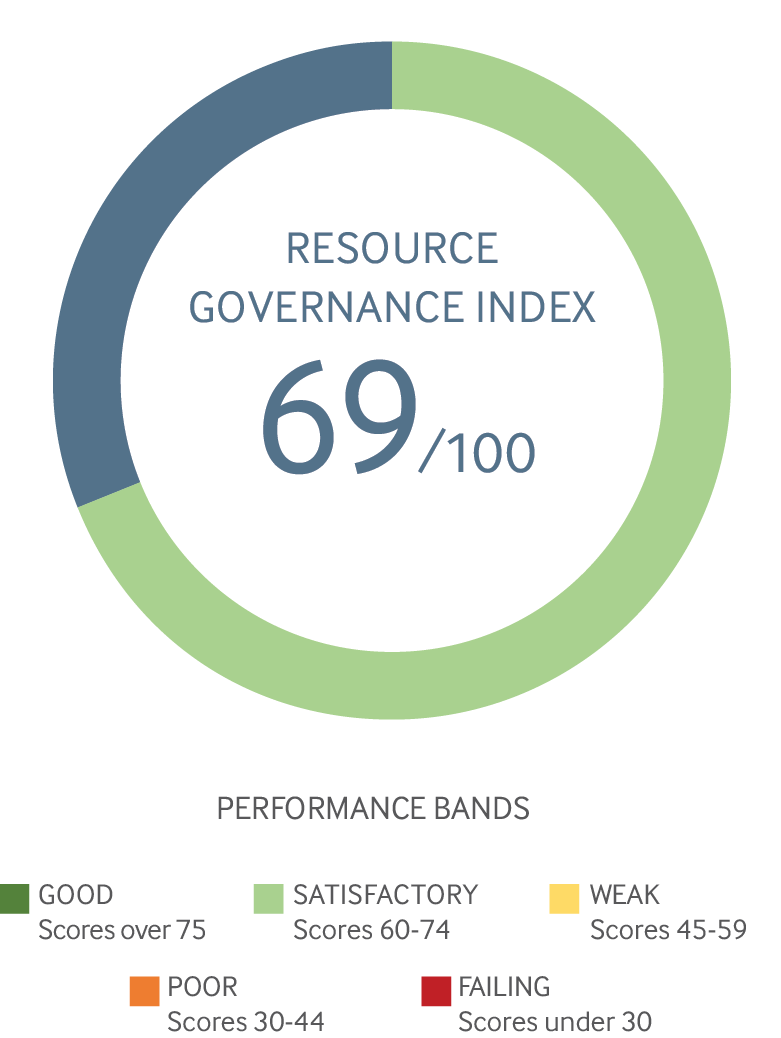
Despite these improvements significant gaps remain. So what can Ghanaian authorities and citizens do? What steps might be required to enhance extractive resource governance in Ghana? Below are some recommendations based both on the new RGI results and a recent national dialogue on extractive governance.
1. Take steps to design a long-term national development plan, to guide extractive resource governance among other sectors of the economy. This has the potential to deepen the contribution of the extractive sector to sustainable economic transformation in Ghana. Ghana lacks a clear strategic vision to drive the country’s overall development and guide government policy on extractive resource development as envisioned in the 1992 constitution. There is a clear mandate, under Article 87, for the National Development Planning Commission (NDPC), among other functions, to advise the president on development planning policy and strategy, and to study and make strategic analyses of macro-economic and structural reform options, including options for extractive sector governance. The importance of long-term national development planning to extractive governance is expressed in Section 21(2)(d) of the Petroleum Revenue Management Act (PRMA). This section makes it clear that any use of the Annual Budget Funding Amount (ABFA) should be guided by a medium-term expenditure framework, which must align with a long-term national development plan approved by parliament.

The aim of this PRMA requirement is to ensure that petroleum revenues contribute to broad and impactful economic development across the country. One of the NDPC’s key roles, therefore, as defined in both the 1992 constitution and the PRMA, is to develop a national development plan to guide the expenditure not only of petroleum revenues but of extractive revenues generally. The Public Interest and Accountability Committee (PIAC) has consistently underlined this, in terms of petroleum revenues, in its reports, including in the latest one. The current practice, which relies on medium-term strategic plans based on the manifestos of political party, limits the potential use of extractive revenues for inclusive growth and sustainable development.
2. Enact a minerals revenue management law akin to the PRMA to streamline the collection, allocation, use and management of all mineral revenues, including at the subnational level. Such a law should establish a sovereign wealth fund for mineral revenue and empower a public oversight body to monitor government accountability to the provisions of the law.
The RGI has never assessed sovereign wealth management in Ghana’s mining sector simply because there is no appreciable framework or fund to assess. Although the Minerals Development Fund (MDF) Act of 2016 and the amended Minerals Income Investment Fund (MIIF) Act of 2018 are modest attempts at managing mineral revenues, they, unlike the PRMA in the oil sector, did not create a mining sector sovereign wealth fund with clearly defined rules governing its management.
Additionally, there are accountability deficits inherent in these laws. Given that minerals are exhaustible resources and considering the positive impact mineral revenues could make if governed by an appropriate legal framework, the lack of a mining revenue management law akin to Ghana’s PRMA is a pressing resource governance issue.
3. Ensure that all resource-backed loan models set clear investment rules, transparent provisions, and accountable arrangements that are enforced by a legislative act, as this could improve parliamentary and public oversight on resource-backed loan for optimal benefits to citizens. Additionally, government should also make terms of resource-backed loans publicly available to promote more transparency, particularly on interest rates, fees, repayment schedules, restricting terms, and parties to the agreements.
4. Conduct energy transition risk assessments for GNPC and the broader extractive sector. Because the government lacks a blueprint for the ongoing energy transition away from fossil fuels, it’s hard to say how GNPC will fit into a future where oil becomes less sought-after. The government should develop a national blueprint on energy transition and take steps to assess the transition’s systematic financial risk on GNPC and use that as a basis to remodel GNPC’s strategic direction, human and financial capacity, and investment decisions. This assessment must take into consideration the advantages and disadvantages of entering new lines of businesses to diversify GNPC’s portfolio.
Crude oil price volatilities since 2013 coupled with the impact of the recent price fluctuations amid the COVID-19 pandemic and the consequential risks on broader extractive sector governance including GNPC related risks appear to have amplified energy transition concerns in Ghana.
Despite being highlighted in the 2017 RGI, GNPC’s expenditure on non-commercial activities remain a concern. PIAC in its 2020 annual report notes that GNPC spent a total amount of US$31,477,699.31 constituting 71.81 percent of the corporation’s administrative and other technical operations expenditure (Level B) receipts on sustainability & stakeholder relations and GNPC Foundation. GNPC has consistently categorized these expenditures as corporate social investments (CSI).
PIAC further notes that GNPC’s expenditure on CSI increased from GH₵41.49 million in 2018 to GH₵49.98 million in 2019, with the corporation’s guarantees (payment guarantees against default by the receiving state-owned enterprises (SOE)) for other SOEs cumulatively amounting to US$645,511,405.40 as of the end of 2019. In addition, as of the end of 2020, the corporation’s cumulative guarantees for other SOEs increased to US$694,824,551. Ultimately, expenditure pattern on CSI and SOE guarantees have consequences on the corporation’s progress toward achieving its core mandate as a commercial strategic vehicle for state participation in upstream exploration and production activities.
5. Revamp the operations of Prestea Sankofa Gold Limited and adopt best practice approaches in SOE governance going forward. An important issue that needs to be highlighted is the concerning state of the country’s mining sector SOE, Prestea Sankofa Gold Limited. The company’s operations have been suspended since 2016, affecting its 2017 RGI performance (41 out of 100 points) and meaning that it couldn’t be assessed as part of the 2021 RGI’s SOE subcomponent. On the other hand, its oil and gas sector peer and parent company, GNPC, achieved a good score in the 2017 RGI (75 out of 100 points) and improved its performance in the 2021 RGI, a reflection of sustained improvements in extractive SOE best practices. Given the significant role Pretsea Sankofa is expected to play in the gold mining sector, similar to GNPC’s in the oil and gas sector, the inability to assess the SOE subcomponent for Ghana’s mining sector in the 2021 RGI due to the stated lack of activities is disheartening. The government should therefore revive Prestea Sankofa’s operations, ensuring improved SOE governance inspired by GNPC, if not of higher standard.
Nasir Alfa Mohammed is an Accra-based policy advocacy officer with the Natural Resource Governance Institute (NRGI).
What Ghana’s 2021 Budget Reveals About Its Oil Fund Management

Ghana’s 2021 budget, titled Economic Revitalization through Completion, Consolidation and Continuity, was widely anticipated. Ghanaians hoped that the budget would include steps to address both the immense challenges brought on by the coronavirus pandemic and low revenues resulting from a downturn in crude oil prices. Revenue shortfall amounted to GH₵13.6 billion while expenditures rose by an estimated GH₵11.7 billion in 2020; this has led to more uncertainty about the future of Ghana’s recovery plans.
In addition, as in many other African economies, debt also threatens the projected economic recovery in Ghana, something the government has acknowledged in the 2021 budget.
Commodities are expected to play an important role in addressing Ghana’s debt challenges. Petroleum exports will likely decline in the medium term , from a peak of 71 million barrels in 2019 to about 59 million barrels in 2024, and so will revenues. Though crude oil prices have recovered from the depths of the second quarter of 2020, there is no guarantee that these will be sustained, thus limiting the role of petroleum revenues in addressing Ghana’s debt burden. Nonetheless, petroleum is still an important source of revenue and a likely part of the solution to Ghana’s public financial challenges.
Unresolved governance issues
Despite the 2021 budget’s attempt to address concerns around petroleum revenue spending in Ghana, it fails to address key governance questions around what will happen to unspent revenue and what constitutes public investment, among other issues.
Allocation for public investment
Public investment is generally understood to be spending on assets or infrastructure with long lifespans. But the lack of a clear explanation of Ghana’s public investment expenditures has over time led to various approaches by the Ministry of Finance on where to allocate the funds, leading to disagreements among different stakeholders. For example, between 2011 and 2016, 70 percent of oil revenue designated for budget support (the Annual Budget Funding Amount, or ABFA) was allocated to capital spending, which includes roads, agriculture, education and health infrastructure, against 30 percent allocated to recurrent expenditure, which typically covers payments for services and supplies. The Petroleum Revenue Management Act (PRMA) Section 21(4) states: "For any financial year, a minimum of seventy percent of the Annual Budget Funding Amount shall be used for public investment expenditures consistent with the long-term national development plan or with subsection (3)."
In 2017, the government prioritized spending of oil revenues on “physical infrastructure and service delivery in education,” in line with the PRMA. Civil society organizations raised concerns about whether this spending was consistent with the Ministry of Finance’s previous interpretation, which had restricted public investment expenditure to capital spending Between 2017 and 2019, recurrent expenditure on the Free Senior High School Program, which included the payment of fees and supplies, represented an average of 52 percent of ABFA. The Public Interest and Accountability Committee (PIAC) called on the government on numerous occasions to adhere to the Ministry of Finance’s previous interpretation of the PRMA but the government argued that investment in education qualifies as public investment expenditure and that is not entirely synonymous with capital expenditure, with an explanation included in the 2021 budget.
This changing interpretation of “public investment expenditure” has led to recurrent expenditures for which volatile petroleum revenues are ill-suited. Previous NRGI research has emphasized the challenges with spending volatile resource revenues on recurrent expenditure. There is broad consensus that public investment in key sectors can enhance growth. Ghana’s government should clarify the definition of public investment expenditure to refer to only non-recurrent expenditure in the PRMA Regulations (L.I. 2381) or in a PRMA amendment. This would also encourage consistent implementation of the rule by future ministers of finance.
Unspent petroleum revenues at the end of the year
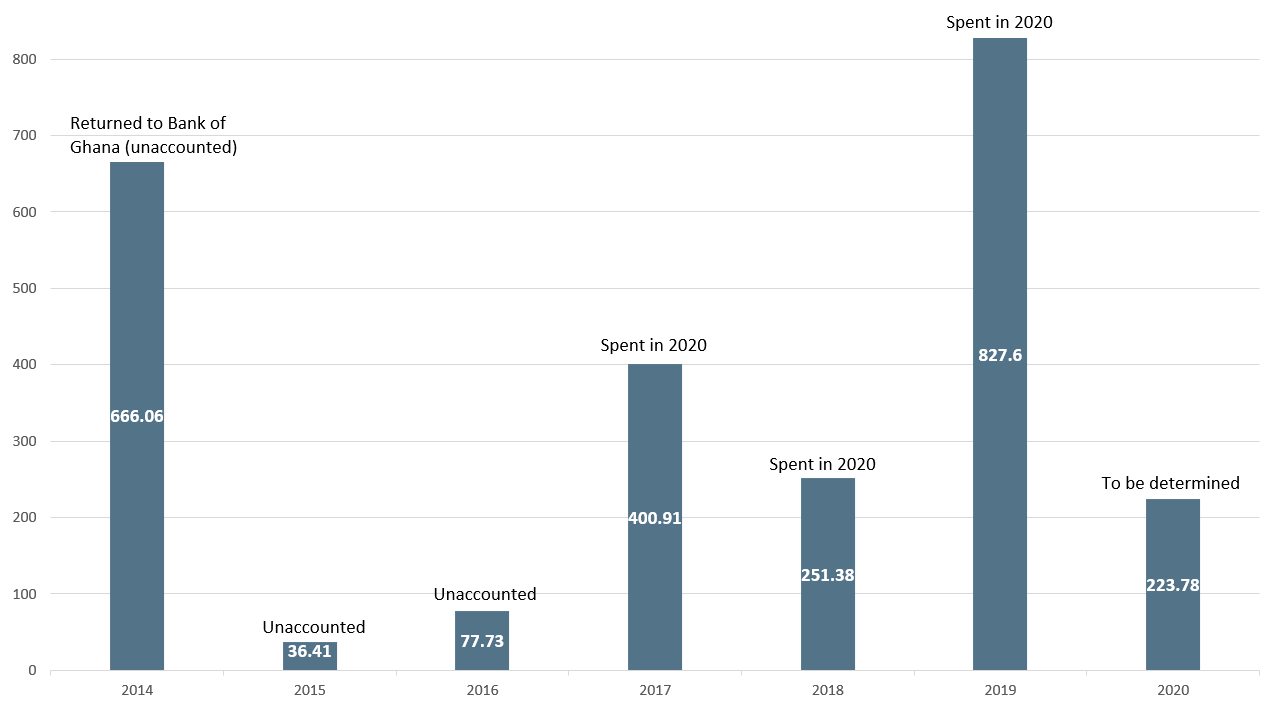
The use of unspent petroleum revenues at the end of the budget year is another unsolved issue. Successive governments have managed unspent ABFA differently since this first came up in 2014. That year a total of USD 222.93 million (GH₵666.06 million) of ABFA was unspent. The amount, according to the Ministry of Finance, was returned to the Bank of Ghana at the end of that year as the bank assessed the government’s financial position. However, in 2015, the Ministry of Finance did not disclose of how it applied a balance of GH₵36.41 million. The following year’s Ministry of Finance reconciliation report made no mention of the unused balance, as it should have. Similarly, the Ministry did not account for the unused balance of GH₵77.73 million at the end of 2016 in its report to the parliament.
Treatment of Unused ABFA, (2014-2020) (GH₵ millions)
Click to enlarge
Source: Ghana Ministry of Finance (Reconciliation Reports, 2014-2016; 2021 Budget Statement)

In 2020, the Ministry of Finance brought forward and spent unused ABFA from 2017-2019 (amounting to GH₵1.48 billion; see figure above) alongside allocations for 2020. Since 2018, the PIAC and other civil society actors have called upon Ghana’s government to provide details of the unspent revenues; these calls only elicited a public response in the heat of the campaign leading up to the December 2020 elections. According to the ministry, the combined 2017 and 2018 amount of GH₵652.29 million was transferred to the Road Fund while 2019’s GH₵827.60 million was used to meet the 2020 ABFA shortfall due to the pandemic. It is unclear which provisions, if any, in the PRMA support the transfer of unspent ABFA into the Road Fund or to meet ABFA shortfalls in subsequent years. Also unclear is which year’s appropriation (budget)—which provides the legal authorization to spend based on agreed activities—covered the spending of these unused revenues.
Additional challenges to the financial management of Ghana’s public sector include delays in the contracting process for projects, disbursement of funds and contract execution. Issues related to unspent ABFA will continue unless these challenges are resolved. Dialogue and consensus building among stakeholders on how to treat unspent funds in the future would avoid various conflicting interpretations arising between provisions in the Public Financial Management Act and the PRMA.
While the PRMA does not prescribe how unused ABFA at the end of the year should be treated, Section 21(1) provides that it must be part of the national budget and subject to same budgetary processes, bringing the ABFA under the public financial management rules in terms of management and accounting. And Section 26 of the Public Financial Management Act states clearly that such appropriations lapse by the end of the first month of the following year, meaning that the government needs a new appropriation from the parliament to use these funds.
Section 26 of the Public Financial Management Act, 2016

Inability to spend within the appropriation period, for whatever reason, creates public financial management complications in terms of unspent balances, re-budgeting and project execution. With petroleum funds, unspent funds make tracking and accounting for revenues within the framework of the PRMA provisions difficult.
Ghana’s government must urgently tackle the underlying issues of public financial management and delays in projects on which the money is spent. In addition, stakeholders (the Ministry of Finance and ministries that receive ABFA; oversight bodies like PIAC and Ghana EITI; and civil society actors) must engage in order to answer the following questions and possibly factor them into future amendments of the PRMA:
- What should happen to unused ABFA and where should these unused funds be saved?
- Should new appropriation in accordance with the Public Financial Management Act allow for a change in projects and programs earmarked in a previous appropriation?
- Does government ringfence ABFA funds, and if not, should they?
Discretionary capping of the Ghana Stabilization Fund
The Petroleum Revenue Management Regulations (L.I. 2381), passed in 2019, sought to address the situation where the minister of finance sets a discretionary cap on the Ghana Stabilization Fund by defining a formula for setting the cap. Regulation 8(1) states “In pursuance of Section 23 of the Act, the Minister shall, in recommending the maximum amount of accumulated resources in the Ghana Stabilisation Fund, ensure that the amount is not less than the average Annual Budget Funding Amount over a three year period.” While this provides guidance for setting a maximum balance on the fund, no minimum amount is specified; this could leave little money in the fund for its stated purpose of addressing revenue volatilities or debt. Though the 2021 budget did not propose a cap, the implementation of L.I. 2381 will mean that the Ghana Stabilization Fund would likely not grow beyond USD 400 million in the medium term (based on petroleum revenue projections in the 2021 budget). While a lower ceiling on the Ghana Stabilization Fund would make funds available for real-time debt servicing, it reduces the opportunity for government to rely on the fund to address shocks to the economy, fund future budgets and service future debt.
Ways forward
Resource revenues and good public financial management have the potential to help address Ghana’s financing and borrowing needs, and its economic recovery plans. To ensure this potential is realized:
- The government should adhere to the generally accepted interpretation of public investment as referring to non-recurrent spending, and clarify this in the Petroleum Revenue Management Regulations (L.I. 2381) to avoid using volatile revenue streams for recurrent expenditures.
- The Ministry of Finance should initiate consultations on an amendment of the PRM regulations that would provide clarity on how government should manage unspent revenues.
- The government should undertake a review of the capping mechanism of the stabilization fund.
Denis Gyeyir is an Accra-based Africa program officer with the Natural Resource Governance Institute (NRGI).
How National Oil Companies Can Play a Role in Renewable Energy and Diversification

The idea of NOCs investing in clean energy is attractive to both these companies and the governments that oversee them. For NOCs, reallocating part of their portfolio to renewable energy investments could be an opportunity to innovate and diversify their business at time when traditional oil and gas investments are increasingly risky. For the governments of oil-producing countries, the skills, influence and capital of NOCs could serve to promote the fledgling renewable energy sector and provide citizens with cleaner and more reliable energy.
Yet NOCs’ investments in renewables may not pay off everywhere. Many skills and practices developed in the oil and gas sector cannot be easily adapted to renewables. With some notable exceptions, many NOCs have historically struggled to invest in projects that deviate from the core profitability model that characterizes extraction.
In some countries NOCs are the institutions with the greatest capacity to deliver project. But can they become part of the solution to climate change? In a severe scenario, coordination challenges or conflicts of interest could mean that NOCs simultaneously fail to generate strong economic returns and stall broader national progress to develop clean energy markets.
Given these factors, when does it make sense for NOCs to shift toward renewable energy? What policy and governance mechanisms should officials put in place to ensure such a transition is a success? On 27 May, NRGI and IISD co-hosted the second in a series of webinars to explore these questions.
Angela Picciariello of ODI led the discussion and focused on the links between nationally defined sustainability goals and the strategic choices facing NOCs and governments.
Joe Amoako-Tuffour of the Economic Management Team of the Office of the Vice President of Ghana discussed how ideas on the future of the Ghana National Petroleum Corporation (GNPC) fit in with a broader set of policy challenges around building a thriving industry, generating reliable energy and maximizing the use of petroleum revenues in a new producer economy.
Devapriyo Das of the Danish company Ørsted (majority owned by the Danish government) shared lessons learned from the company’s transition away from fossil fuels to becoming a global leader in renewable energy.
Aaron Sayne of NRGI also contributed by posing a series of guiding questions for NOCs and governments to help structure these strategic decisions.
NOCs’ activities within the renewable energy market are still in the early stages, but several key themes have emerged that point to further areas of inquiry, within and across countries.
Intra-government coordination is crucial, and decisions about the evolution of an NOC’s mandate need to be linked to a coherent cross-government strategy. In Ghana, Amoako-Tuffour emphasized that decisions about what role GNPC can play in renewable energy generation or distribution do not depend on GNPC alone. There is a whole range of actors responsible for investment, regulation and revenue in the energy sector. Without careful coordination and strategic decision-making, actions by an NOC alone could fail or disrupt energy policy coherence. Picciariello posited that a clear definition of how the NOC fits into the energy space is critical.
There are different types of NOCs, and not all face the same challenges and opportunities. Sayne pointed out that a key question NOCs and government officials should ask when considering a shift toward renewables is, “What would this NOC bring to the table?” Some NOCs are cash-rich and may be able to drive investment in the sector. Others are small and nimble but could bring their management skills to an emerging industry. Some other NOCs, however, are so deeply entrenched in a status quo approach to oil and gas investment and in oil and gas's dominance of the economy that they may struggle to engage effectively with a new business model. As Amoako-Tuffour noted, the basic notion that an NOC might be interested in renewable energy investment does not necessarily mean that such a move is in the country’s best interest.
There are different types of renewables business models. Just as not all NOCs are the same, there are different ways of defining what it means for a company to “invest in renewables,” and these distinctions are important for national decision-making. One component of this is the type of renewable energy. Ørsted’s transformation has been driven by success in offshore wind, which involves technically-sophisticated projects with heavy upfront costs that require similar capabilities to offshore oil investments. Other types of renewable energy, such as solar farms, may have less obvious links to the core competencies of many NOCs. NOCs must also consider what form of investment makes most sense. Options range from passive minority participation in renewables projects to active partnerships with utilities or other partners to full transition into an integrated energy company.
Governance can either help draw investment, or drive it away. Das shared that Ørsted has been able to serve as a stable and reliable home for a growing number of investors interested in clean energy. He said, the company’s corporate governance instilled confidence that led to growth. In contrast, Sayne pointed out that other NOCs can arouse suspicion among investors, especially when the company’s activities are opaque or subject to heavy political interference in decision-making. If a company has a dominant role without appropriate corporate governance reforms, it could discourage investment in a country’s renewable sector.
Our discussion series aims to increase learning between experts in the extractives governance and climate change fields, who have too often worked in silos. NRGI and IISD will organize the third and final session in the webinar series in the coming weeks. Watch this space for more details.
National Oil Companies and Climate Change: Economic Challenges and Potential Responses

The event produced three key lessons:
- Political will is crucial; governments must drive the energy transition. This is valid for both producer country governments, which should direct their NOCs in line with national strategic and political priorities, and wealthy consumer country governments, which must provide climate finance to enable developing and emerging producer countries to overcome the serious challenges of transition.
- Tunnel vision is deadly. NOCs can’t continue on the costly assumption the oil market won’t change. Climate advocates must increasingly consider the developmental challenges of producer countries and the needs, and potential roles, of NOCs.
- Economic diversification is key. Oil- and gas-producing countries have struggled with diversification for decades. Solving this is even more urgent now as producer countries must start actively investing in the long-term future. New producers should avoid making investments from the beginning that lock the country into a high-carbon pathway.
No more business as usual
Making incremental reductions in emissions compared to a business-as-usual baseline is no longer enough to mitigate the effects of climate change. This is because of the rapid and fundamental transformation in the way we produce and consume energy. This change creates a challenge for companies whose core business is extraction of oil and gas, and especially for governments heavily dependent on revenues from NOCs.
These companies and governments should consider any new oil and gas investments in light of the significant uncertainty about future demand for their products and the economic returns they will generate, as well as their impact on climate change targets. Meanwhile, the status quo approach in many countries—whereby NOCs reinvest most of their oil revenues straight back into the sector—poses a growing risk to efforts to move away from fossil fuels.
Global oil production would have to decline by 4 percent every year from 2020 to 2030 to be consistent with a 1.5°C pathway, according to the Production Gap Report. Yet current government plans and projections indicate an average 2 percent annual increase. This raises the question: what is the role for NOCs in a world of climate change adaptation and declining oil?

Experts weigh in
Executives from two NOCs, Colombia’s Ecopetrol and Uganda’s UNOC, joined our online event to share their approaches to energy transition. Valérie Marcel of Chatham House, one of the world’s leading experts on NOCs, also contributed.
Juan Manuel Rojas shared Ecopetrol’s climate change strategy, based on four pillars. While still focused on oil and gas, Ecopetrol aims to diversify its business into other sources of energy. The company bid for 51 percent of ISA, the state electricity grid operator. While many NOCs aim to reduce their direct operational emissions—so-called scopes 1 and 2—Ecopetrol’s energy transition strategy also targets scope 3, the indirect emissions that occur in its products’ value chain. The company aims to reduce emissions across scopes 1, 2 and 3 by 50 percent by 2050.
Asked to what extent these changes are driven by investors (88.5 percent of the company is state-owned and the rest is held by private investors), Juan Manuel observed that often those investors are sceptical of the importance of energy transition. From a financial perspective, many investors prefer their holdings to focus on one business area: if they want more electricity or more renewables, they would make those choices themselves. This creates a key tension in NOCs’ diversification efforts.
Peter Muliisa of UNOC shared Uganda’s challenges as new petroleum producer and a country with pressing socio-economic development needs. Like other countries in Africa, Uganda is highly vulnerable to climate change, and many officials and citizens see oil revenue as a means to help the country cope. However, with the global energy transition underway, UNOC has expressed a desire to develop a clear strategy on what the company needs to do to avoid exacerbating the effects of climate change on Uganda. Peter shared that, as a first step, early discussions are under way on how to restructure UNOC as an energy company rather than an oil company, ensuring Ugandans increasingly gain access to clean energy.
However, the government’s green light for construction of the East Africa Crude Oil Pipeline, which will carry Uganda’s oil to the Tanzanian coast, raises the question of potentially stranded assets. Peter explained that Ugandan officials hope to export oil through the pipeline before energy demand significantly shifts to renewables, but that the energy transition may affect longer-term production in the country.
Valérie Marcel, drawing also on the experience of these two companies, observed that NOCs have two purposes: to deliver revenues to governments and to meet energy demand in their countries (including often non-commercially). While clean energy is generally profitable, it does not create economic rents in the way oil does, which raises challenges for the countries’ economic strategies and government revenues. The second part of NOCs’ mandate could point to a role for NOCs in supplying renewable energy domestically. However, while NOCs can focus on reducing their costs or operational emissions, transitioning to renewable energy requires clear direction from their governments and consistent development strategies and climate policies, especially given the political consequences of lost economic rents.
Finally, Valérie underlined that the transition will affect different types of NOCs variously: high-cost versus low-cost, exporting versus importing, gas-focused versus oil-focused. Will it be easier for NOCs in new producing countries to transition than for established producers? In some ways yes, she said, as they are not yet locked into an oil development pathway. However, these producers often lack the financial resources needed for such a transition.
Our discussion series aims to increase learning between experts in the extractives governance and climate change fields, who have too often worked in silos. The following event, on 27 May, explored whether NOCs should get directly involved in renewable energy investment and economic diversification.
For the audio recording, please listen on SoundCloud.
It’s Time to Talk: Sonatrach and the Energy Transition in Algeria

العربية »
This post is part of the "Resource Governance and the Energy Transition" series.
Last week Algerian football supporters attacked the headquarters of Algeria’s national oil company, Sonatrach. They were angry at the company, accusing it of not paying the salaries at Mouloudia d'Alger, the football club it owns. The attackers blamed this state of affairs for the average results of the club in the Algerian league.
If Algerians can be so angered by poor football performance, imagine their wrath when Sonatrach’s revenues decrease because of the global changes affecting the oil and gas sector. Such a downturn could mean that the company will be unable to continue to play a pivotal role in the economy of Algeria. We are entering an era of energy transition where resource-dependent countries, their state-owned companies and their populations need to prepare, get fit and build a strategy that will help them win the competition.
The coronavirus pandemic accelerated many trends that were already underway, including the energy transition away from fossil fuels toward renewables. The faster this transition, the more it threatens national oil companies and governments reliant on oil revenues—unless they prepare well.
Governments of Middle Eastern and North African (MENA) countries that rely on oil and gas for revenues cannot ignore the global march toward clean energy; they must react and secure a stable future for their citizens. To that end, we at NRGI have produced a new briefing, “National Oil Companies and Energy Transition in the Middle East and North Africa” (a companion piece to the report Risky Bet: National Oil Companies in the Energy Transition). Algeria’s Sonatrach is one of three MENA NOCs that we examine, along with Qatar Petroleum and Saudi Aramco. And it appears to be most vulnerable to the accelerating energy transition.
Algeria, the largest oil and gas producer in North Africa, is heavily dependent on hydrocarbons for exports and government revenues, with oil and gas accounting for 60 percent of government revenues. Sonatrach controls over 75 percent of the country’s hydrocarbon production; it is the cornerstone of the economy, which makes it crucial that Sonatrach management and government officials heed global shifts.
A new corporate strategy?
National oil companies with dwindling proven reserves and a heavy share of high-cost geological assets among their potential future portfolios face serious possibilities of “stranded investments,” and could struggle to maintain expected production volumes, revenues and transfers to state treasuries. NRGI analysis shows that national oil companies in the MENA region could invest more than $66 billion in oil and gas projects that would not break even if the world keeps to its climate commitments. Sonatrach’s portfolio is the most vulnerable in this regard, with $12 billion in project spending (more than 25 percent of the company’s budgeted capital expenditure) slated for projects with a break-even price between $40 and $70.
Alongside the prospect of investing in high-cost projects, Sonatrach must continue to supply the ever-growing domestic demand for natural gas, which is sold to citizens at subsidized prices, thereby reducing the share available for revenue-generating exports. These challenges reverberate through the company’s portfolio, limiting access to finance and partnerships that would aid its diversification.
Sonatrach’s current approach to mitigate this uncertainty largely revolves around a shift to liquefied natural gas (LNG). This includes investing in existing and new LNG projects to diversify its gas export portfolio. The success of this approach hinges on the availability of domestic reserves and technology to unlock gas at a competitive cost—and on whether the demand for gas holds up or yields to increasingly cheaper renewable energy. In addition, Sonatrach must demonstrate commercial abilities to become an LNG trader (not just a supplier), expand internationally to secure a flexible and diverse portfolio, and harness financial resources to take positions in the gas value chain. However, we know that Sonatrach had to halve its spending in 2020 due to the collapse in the oil price, at the time limiting its capacity to expand into growth markets such as chemicals and plastics.
State of the government-Sonatrach relationship
Alongside the Algerian government, Sonatrach, like many national oil companies, shoulders significant financial responsibility for the wellbeing of citizens. Reduction in oil and gas revenues increases this pressure. So beyond the company’s business and investment strategies, the government of Algeria must reexamine the fiscal relationship between Sonatrach and the state, as long-held expectations about available fiscal transfers (of taxes, dividends and other payments by the company to the government) may be unmet. The International Monetary Fund (IMF) estimates Algeria’s fiscal break-even price—the oil price necessary in order to meet expected spending while balancing the national budget—at $92 per barrel. That figure increases monthly, and more so amid the pandemic. Based on the new budget, Sonatrach seems likely to set the price of oil at $135 for the barrel to break even fiscally—a price which is unlikely to materialize anytime soon (or possibly ever). This contrasts with many oil companies and analysts assuming the oil price for the next few decades will average $60 a barrel. Even as the pandemic abates, low oil prices are likely to prevail and price spikes will be the exception. Therefore, the government end its dependency on Sonatrach and seek new sources of cash.

Let’s talk energy transition
Sonatrach lacks funds and low-cost reserves and therefore will be less resilient to declining prices than the regional giants Saudi Aramco or Qatar Petroleum. It is therefore imperative for Sonatrach to conduct rigorous risk analysis around capital allocation decisions. Ultimately, both the government and Sonatrach must re-examine the company’s conventional assumptions about public expenditures, and the government must clearly define and explain to citizens the institution’s role in the country’s energy transition.
As profit margins shrink across the industry there is less margin for error, and so efficiency and integrity are more important than ever. Sonatrach should redouble its investments in transparency and corporate governance reform.
Already, Sonatrach has recently taken steps to improve its governance and transparency. In the 2017 edition of the Resource Governance Index (RGI), which assessed performance using 2015-2016 data, Sonatrach scored 47 out of 100 possible points, ranking 31st out of 52 assessed state-owned enterprises, a performance considered “weak” by the RGI. In a 2020 interim RGI assessment, Sonatrach scored 65 points out of a possible 100, which indicates an increase of 18 points and a transition from the weak to satisfactory performance band. That is a positive evolution that should continue.
Finally, the Algerian government and Sonatrach should create an inclusive space for the public to engage with government officials and company staff on the impact of energy transition on the country’s oil and gas sector. Together all stakeholders should debate solutions to the challenge presented by the shift to clean energy—citizen-oriented solutions.
Video: National Oil Companies and the Energy Transition

NRGI has published a new report, Risky Bet: National Oil Companies and the Energy Transition, contrasting the investment plans of national oil companies (NOCs) with global commitments to climate action.
The report finds that NOCs are set to invest $400 billion in costly oil and gas projects that will only break even if we fail to take the action necessary to keep global warming within 2°C.
Watch the video to learn more.
Read the report.