
Better Management of Nigerian Oil Sales
The challenge
Sales of crude oil by the Nigerian National Petroleum Corporation (NNPC) are Nigeria’s biggest income stream. The roughly 1 million barrels sold per day account for over half of public revenues. Yet each year, billions of dollars from these transactions never reach the country’s treasury, due to suboptimal sales contracts, profits lost to well-connected middlemen and questionable withholdings by NNPC. In 2014, Nigeria’s then-central bank governor Lamido Sanusi made global headlines when he told parliamentarians that USD 20 billion in oil sales earnings had gone “missing” in just 19 months. He was sacked shortly thereafter. An ensuing audit left many questions unanswered. After an upset in the presidential election the next year, a new government with a strong anticorruption stance promised reform.
NRGI's role
Seizing the moment, in August 2015 NRGI published Inside NNPC Oil Sales, the first in-depth, independent analysis of how NNPC sells oil. The 163-page report closely described the worst governance problems and made recommendations to the Nigerian government for increasing returns to the nation. The report findings were the culmination of four years of work. During that time, we reviewed voluminous records, conducted dozens of interviews, analyzed sales contracts and sent over 100 pages of questions to industry players, NNPC included. Some of the deals we pored over— especially NNPC’s complex, opaque oil-for-refined product “swap” arrangements—had never before been publicly scrutinized. Leading up to publication, we deepened our knowledge and sought change by working with many different stakeholders. Beyond researching and writing the report, NRGI personnel trained anticorruption police and journalists on oil sale governance and corruption risks, briefed officials and industry personnel from over a dozen countries, advised the Nigerian chapter of the Extractive Industries Transparency Initiative (EITI) on its oil sales reporting, supported a Nigerian government task force that probed oil revenue losses and helped Sanusi draft his “missing billions” submission to parliament.
Impact
NNPC canceled all of the costliest oil sales contracts we criticized, including the swaps, three weeks after Inside NNPC Oil Sales came out, acknowledging that the contracts were skewed in favor of the companies that held them. The replacement deals’ key terms tracked with our recommendations. These moves would save Nigeria a billion dollars annually, officials claimed; our estimates indicated this was conservative. Echoing other recommendations in the report, NNPC went on to slash the number of middlemen companies with which it dealt; cut scandal-prone bilateral sales to smaller African countries; sign more sales contracts with refiners; boost the transparency of the contracting process; and release its first financial reporting data for oil sales in a decade. (Civil society groups in Nigeria have since analyzed NNPC’s monthly disclosures in detail.) Upon request, we also advised NNPC directly on transparency and redesigning the swaps.
In the wake of these reforms, multiple jurisdictions began investigating some officials and companies involved in past deals for corruption. Several have already been charged in court. It is impossible to know the degree to which NRGI’s activities directly influenced these decisions, but the responses did mirror the recommendations closely and officials at the highest levels of government actively reviewed the NRGI report before making the decisions.
NRGI’s work on Nigerian oil sales—like the official reform process itself—is ongoing. We continue to track progress and dialogue with key stakeholders as NNPC makes more changes to its sales system. In early 2016, after we published a follow-up showing that the corporation was still retaining large amounts of oil sale earnings, its biggest withholdings shrank by nearly 50 percent over nine months. The piece drew attention from the public, the media and the highest levels of NNPC government, reinvigorating attention to these important financial flows. Two further blogs tracked the pros and cons of new oil sale contracting processes. We work with the NNPC to further improve its reporting through a global EITI process targeting oil sale transparency that NRGI helped initiate. In the coming year we intend to put out a review of NNPC’s latest swap deals and expand our research and advocacy to its fuel sale contracts, another area of where the treasury—and ultimately, Nigerian citizens—are chronically short-changed. The work in Nigeria has directly informed our campaign to push the governments of the U.K. and Switzerland to regulate greater reporting by the trading companies headquartered in their countries, an effort that made significant headway in 2016.
Selling the Citizens' Oil
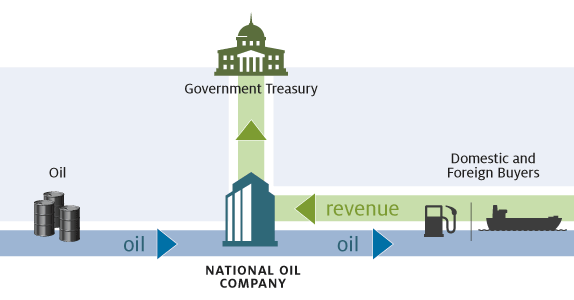
The sale of crude oil by national oil companies (NOCs) generates a large share of government revenue in oil-producing countries. NOC export sales bring in more than two-thirds of total government income in countries such as Angola, Azerbaijan, Congo-Brazzaville, Iraq, Saudi Arabia and Yemen. Even in Mexico and Norway—both oil countries with diversified economies—export sales equal around 15 percent of the national budget. At this scale, inefficient operations, manipulations of process or the unauthorized retention of funds by an NOC can reduce the resources available for public goods and services.
Revenue Watch researched how 11 countries sell the portion of oil produced that belongs to the government. The results are detailed in four policy briefs that recommend transparency, identify good sale practices and explain how oil sales and global oil prices work.
Many NOCs excel at their sale functions. However, as high oil prices further raise the stakes, presenting the opportunity for windfalls that could stimulate development in producing countries, now is the time to institute checks and balances that ensure transparency and good practices. Especially for developing countries with weak institutions, transparency and governance reforms can help ensure that NOC oil sales advance the long-term public interest.
This research was published simultaneously with the English edition of Commodities: Switzerland’s Most Dangerous Business, by the Berne Declaration. To learn more about the book and download a copy, go to www.evb.ch/en/commodities.
- The Case for Transparency in National Oil Company Crude Sales
Recommends full disclosure of oil sale transactions by NOCs and the companies that buy the oil, including the mandatory inclusion of these transactions in the Extractive Industries Transparency Initiative (EITI). - The Governance of Oil Sales: Early Lessons on Good Practice
Identifies four crucial practices common to successful NOC oil sale systems, and how they enable the nation to capture best value for their crude while limiting opportunities for corruption. - How Governments Sell their Oil
Provides a primer on how the various stages of NOC oil sales work. - When the Price Is Right
Explains how global oil prices and the prices of specific grades of crude are identified and why they change over time.
The Petroleum Industry Bill and the Future of NNPC
The 2012 Executive Draft of the Petroleum Industry Bill (2012 PIB) proposes to restructure the Nigerian National Petroleum Corporation (NNPC). This is potentially welcome, yet This report is based on comparative analysis of 12 national oil companies (NOCs) and NNPC’s current situation, this brief concludes that the 2012 PIB is unlikely to significantly advance the four goals of commercialization; sustainable finance; limited political interference in technical decisions and transparency and public accountability.
Natural Resource Charter (2nd ed.)
The Natural Resource Charter is a set of principles to guide governments' and societies' use of natural resources so these economic opportunities result in maximum and sustained returns for a country's citizens. It outlines tools and policy options designed to avoid the mismanagement of diminishing natural riches, and ensure their ongoing benefits.
The charter is organized around 12 core precepts offering guidance on key decisions governments face, beginning with whether to extract resources and ending with how generated revenue can produce maximum good for citizens.
First launched in 2010 at the annual meetings of the International Monetary Fund and the World Bank, the charter was written by an independent group of practitioners and academics, under the governance of an oversight board composed of distinguished international figures with first-hand experience of the challenges faced by resource-rich countries. It relaunched at the 2014 Natural Resource Charter Conference in Oxford, England.
See More:
 Natural Resource Charter - Arabic (2mb)
 Natural Resource Charter - Bahasa Indonesia (305kb)
 Natural Resource Charter - French (310kb)
 Natural Resource Charter - Mongolian (630kb)
 Natural Resource Charter - Russian (431kb)
 Natural Resource Charter - Spanish (301kb)
The charter's framework and body of experts form an integral part of the Natural Resource Governance Institute.
Read more about the framework and its applications around the world.
The Future is Now: NRGI’s 2023 Priorities

Our work at the Natural Resource Governance Institute contributes to fair, prosperous and sustainable societies by advancing citizen and government efforts in resource-rich countries to:
- Drive systemic change to avoid harms from mining and equitably benefit from the responsible scale up of transition minerals necessary to avert global climate catastrophe.
- Build inclusive economies that end dependence on fossil fuels and advance a just energy transition for citizens.
- Manage revenues from natural resources accountably in response to citizen priorities.
Through dramatic upheavals—from global pandemic, through historic market volatility, to the kleptocracy that enables Russian aggression, and the explosion in demand for transition minerals—we have helped our partners navigate uncertainty with timely, relevant and rigorous support.
In 2023, we will draw lessons from our work since the launch of our strategy in 2020, including a review our progress on diversity, equity and inclusion. We will deepen our support to the energy transition, and adopt more impact-oriented, politically astute approaches. And reflecting our evolved priorities and identity, we will launch a new website and updated branding.
Having undertaken major strategic and organizational transformations, NRGI’s future is now.
Ensuring transition mineral good governance
In 2023, mindful of the historic opportunities for people to benefit from the rising demand in minerals critical to green technologies, and the potential for corruption and harm that often accompanies such booms, we are ramping up our programming on transition mineral governance. We are launching new work in Chile, focused on enhancing good governance and inclusive management of lithium. We are deepening our engagement in the Democratic Republic of the Congo to build an inclusive vision for the management of cobalt in the public interest and more accountable relationships between governments, companies and communities. We are supporting effective policies on taxation, licensing and value addition, and will engage civil society and policy makers at regional forums like the African Mining Indaba and Alternative Mining Indaba and across several regional institutions in Africa and Latin America. And we will work with partners to implement strategies to prevent supply chain corruption.
Supporting just and sustainable societies
In view of elections both recent (Colombia) and upcoming (Nigeria), we will ensure that our policy analysis informs public debate on how to reduce dependence on fossil fuels in producing countries. The strategies and governance of national oil companies will be a major focus, including in Ghana and Mexico. As countries like Nigeria and Senegal assess the role of gas in their ambitions to improve populations’ energy access we will help citizens and policy makers understand the pros and cons of these gas-to-power approaches, including how they relate to the development of renewable energy. We will invest heavily in building people-centered energy transition dialogues in Colombia, DRC, Ghana, Nigeria and Tunisia, convening inclusive conversations to help partners envision a low-carbon future that meets the needs of all citizens.
Internationally, we will build on last year’s partnerships and advocacy to amplify the voice and influence of low- and middle-income resource-producing countries in debates about transition finance and the pace and shape of the decline in production and use of fossil fuels. With an eye on the COP28 climate conference in the United Arab Emirates, we will work with civil society actors and policy makers across the Middle East and North Africa to understand specific regional challenges and advocate for international support to advance the energy transition.
We will further research just energy transition partnerships and support international dialogue around how they might accelerate transition in gas-producing countries. NRGI and its partners will also further advocate for stronger international governance standards to foster accountability in the energy transition, including via the much-needed evolution of the global Extractive Industries Transparency Initiative standard.
Building on lessons from 2022, as a globally connected, locally rooted organization, we will continue to prompt inclusive, evidence-based debate and decision making in resource-rich countries and amplify those priorities on the global stage. In 2023, working in partnership with reformers around the world, we aim to ensure that the future we seek begins now.
Top photo by Estivillml/Envato
National Oil Company Database Update: How Did NOCs Respond to the 2020 Price Decline?

On 18 May, NRGI published the latest update of the National Oil Company Database, a free website that provides standardized and contextualized data on 71 national oil companies (NOCs), covering production, revenues and spending. NRGI updates the database semiannually—in May and December—using information published in official company or government reports.
With data now extending through 2020 for most companies and through 2021 data for nine others, NRGI has examined how NOCs responded to the sharp decline in oil prices in 2020 in this infographic. Since the lows in 2020, prices have climbed throughout 2021, reaching record highs this year. However, the way NOCs responded in 2020 may indicate how companies will—or won’t—change course in the face of the longer-term market decline anticipated as the energy transition unfolds.
As expected, financial transfers from NOCs to governments declined in 2020, reaching a new low for the decade covered by the database (2011-2021). However, this is not to say that contributions were not significant: transfers from NOCs accounted for well over 50 percent of the $600 billion governments collected from upstream oil and gas extraction in 2020. In terms of spending, NOCs appear to be increasingly reactive to market conditions, as our analysis shows a clear reduction in NOC capital expenditures in 2020. During the previous price decline in 2015, NOC investment growth stalled but didn’t drop (on average).

The energy transition could result in hundreds of billions of dollars of NOC investments in new projects becoming stranded, so it is particularly concerning that many companies remain opaque. For 2020, total revenue information is absent for around half of NOCs, as some do not report at all and others report with significant delays. Also notable absences in this update are Russia’s state-owned enterprises, Rosneft and Gazprom. Their annual reporting would typically be out by this point in the year, and while some news outlets have reported profit data, we have not been able to access any official reports for 2021.
In this round of data collection, we found a few large NOCs (Petrobras, Ecopetrol and Equinor) disclosing capital guidance on planned investments for decarbonization initiatives. This information is crucial to analyzing the energy transition pathways of national oil companies and we will continue researching decarbonization spending to include historical data as an indicator in future editions.
NRGI is using the National Oil Company Database extensively in its research and work on national oil companies and the energy transition. The purpose of the database is to advance public knowledge, and my NRGI colleagues and I find it encouraging to see the database being utilized as a resource in the production of vital research on the future of fossil fuel production such as the Production Gap Report, the EBRD’s Transition Report, and the Environmental Defense Fund’s Transferred Emissions report.
We designed the database with the researcher and data analyst in mind. The website provides several options for downloading data, a repository of original sources, and R code for analysis. Anyone utilizing the National Oil Company Database should contact us at nocdata@resourcegovernance.org with any questions or suggestions.
The next update of the National Oil Company Database is scheduled for December 2022.
Podcast: Fossil Fuels and Climate Change, Featuring NRGI’s Patrick Heller

Examining the regional differences in the way state-owned companies are responding to climate change and looking to adapt their business models, Patrick points to national oil companies (NOCs) in the Gulf region and North Africa, such as Sonatrach, Saudi Aramco and Qatar Petroleum, which are taking more concrete steps toward investing in clean energy and diversifying their portfolios than companies, for example, in sub-Saharan Africa or Latin America. "The main reason we see this in the Gulf countries is that these SOEs have more money to experiment with. Some of them see this as an opportunity to move to spaces that may enable them to continue to thrive as the world shifts to cleaner energy," explains Patrick.
The potential economic costs to countries dependent on oil and gas are striking. In their report "Risky Bet: National Oil Companies in the Energy Transition," David Manley and Patrick Heller found that out of the public money NOCs will spend over the next decade, more than $400 billion will not break even if the world meets or comes close to meeting the Paris Agreement.
"If producing countries continue to think that the revenues that have been pumped out for the last several decades will be the same that they will see in the coming decades, they are in for a rude awakening. They need to get serious about economic diversification now and figure out what the alternative drivers of these economies are," stresses Patrick.
While it is both morally and in self-interest for countries to support climate adaptation and transition in low-income oil- and gas-producing countries, past unfulfilled commitments and unpredictable policy debates in wealthier countries pose a risk to developing countries. It is thus critical that the voices of developing and low-income countries are at the center of global climate debates and decision-making processes, emphasizes Patrick. He adds, "Because of the leadership vacuum we sometimes see in wealthier countries, developing countries are at risk of becoming victims of climate change, both in terms of their economies and direct environmental impacts. They need to take serious steps to invest in their future."
Looking at the public's role in these debates and the extent to which citizens contribute to carbon emissions, Patrick highlights the importance of a civic action: "As individual citizens of the world, we all have a responsibility to engage in clean practices to the maximum degree that we can to reduce our individual carbon footprint. But beyond the choices we make individually, what we do with our votes, the pressure we put on those around us for systemic change - that's what all citizens can have a responsibility to do."
Fossil fuel transition
Plans for a future beyond fossil fuels must address energy poverty and support sustainable development.
How Ghana Can Map Its Energy Transition Journey

At the COP26 climate conference last year, governments reaffirmed their commitment to the goal of limiting global warming to 1.5°C. Achieving this will require a colossal and unprecedented shift away from fossil fuels to renewable energy sources like wind and solar—as well as provision of clean, affordable and reliable energy for the nearly one billion people currently living without it.
The wealthiest countries that have polluted the most should hold the primary responsibility for tackling climate change, both in cutting their emissions first and fastest, and in providing climate finance and support to countries like Ghana. Ghana’s President Nana Akufo-Addo emphasized this responsibility during COP26 when he called for a fair and equitable solution that “recognizes the historical imbalances between the high emitters and low emitters.”
To date, however, wealthy countries have under-promised and underdelivered. They have yet to reduce emissions to the extent necessary to avoid warming beyond 2°C, let alone 1.5°C. And, as President Akufo-Addo also mentioned, they have failed to honor their 2010 promise of USD100 billion per year to support developing countries’ responses to climate change. Tragically, the consequences will be felt by all for decades to come.
Ghana’s agency in the energy transition
Despite this compound injustice and these broken promises, Ghana’s future ultimately depends on its own leadership and effective planning. Ghana is still a resource-dependent country, with more than a quarter of its export earnings coming from oil and gas alone. Over the past decade, the oil sector has contributed around $6.5 billion of direct revenue to Ghana’s budget. Without a plan to respond to the global energy transition, a significant decline in oil revenues could plunge Ghana into a deep crisis.
Globally, oil and gas projects currently in the pipeline worth an estimated $400 billion run the risk of not breaking even. Against the backdrop of the global energy transition, GNPC’s ambitions of becoming an operator are risky.
At a minimum, the government should avoid making bad decisions—those that threaten the country's economic and fiscal outlook. But Ghana’s record does not inspire confidence. In the last decade, the government has allocated $2 billion to the Ghana National Petroleum Corporation (GNPC). These investments have financed equity stakes in exploration, development and general operations in oil-producing fields. NRGI’s Risky Bet report shows that, globally, oil and gas projects currently in the pipeline worth an estimated $400 billion run the risk of not breaking even. Against the backdrop of the global energy transition, GNPC’s ambitions of becoming an operator are risky.
In July 2021, Ghana’s Ministry of Energy and GNPC declared their intention to sink an additional $1.65 billion of public money into shares of Aker Energy's oil project—yet another “risky bet” given the increasing pace of the global energy transition, which would result in poor returns on such a large-scale investment. Furthermore, such a decision would divert precious capital that the government could invest in more socially beneficial programs such as education or cheaper and more diverse energy sources that could power development in Ghana. Thankfully, after severe criticism from civil society organizations, the public and industry oversight bodies in Ghana, the government paused its investment plans in the Aker shares.
No doubt, Ghana’s economic and fiscal outlook is uncertain. The 2018/19 oil licensing round remains unconcluded and oil production is projected to decline. International companies are redirecting their investments, and projects have been delayed. State oil revenues peaked in 2018, at 10 percent of total government revenue, and dropped to seven percent in 2020 due to the coronavirus pandemic. The ongoing war between Russia and Ukraine and the related global energy crisis now present huge uncertainties for the oil sector, including the prospect of a global recession.
The good news is that Ghana now has a golden opportunity to develop a comprehensive and context-specific plan for navigating the global energy transition. In response to COP26 and Ghanaian CSOs’ demands for a national energy transition policy, the government launched the National Energy Transition Committee (NETC) in December 2021. The committee is tasked with developing a national policy document on steps the country can take to successfully navigate global energy transition. The NETC is also tasked with conducting a nationwide consultation on Ghana’s energy transition. At the first regional forum organized by the Ministry of Energy on behalf of the NETC, Vice President Dr. Mahamudu Bawumia said the NETC’s nationwide consultations are key to success: “We need to develop plans and implement options that people can relate to.” He also stressed the importance of equal opportunities for all citizens to enjoy the benefits of the energy transition and ensure social justice in the process.
Essential elements for Ghana’s approach
The establishment of the NETC is an important and valuable first step. The following recommendations, if adopted, would put the committee on track to deliver a successful energy transition plan:
- Include all voices. Ghana’s plan should be inclusive and leave no citizen behind. The plan should address how government will support local economies with relevant training, technology and finances to take advantage of the new opportunities in the transition.
- Enlist experts. The NETC should engage sector experts working on the energy transition to help ensure that the plan is informed by data and technical analysis.
- Promote open dialogue. Open and honest engagement between all relevant stakeholders will help build consensus and ownership around a transition pathway that is widely considered by citizens as viable and necessary. A shared understanding of the risks and opportunities of the energy transition is critical to agree on a shared strategy.
- Plan in harmony and coordination with existing policies. The energy transition plan should harmonize existing policy objectives and remedy the systemic inefficiencies in existing policy implementation.
- Improve governance of climate finance. The Ministry of Finance should spell out the role of international climate finance in energy transition planning and interrelate the energy transition plan with Ghana’s (conditional) nationally determined contributions under the Paris Agreement. Across the board, this requires building the state’s capacity to receive and deploy international climate finance.
- Take a critical and dynamic approach to energy options. The transition plans must address Ghana’s growing energy needs. Decisions about energy sources and related services should be based on analyzing different solutions over the long term, mindful of the likelihood that many factors (such as the competitiveness of renewables and gas) may change quickly over the coming decade. Accordingly, the NETC should review the role of fossil gas over the course of the transition—not assume from the outset that gas will be a constant.
- Assess implications for existing institutions. Ghana’s energy transition plan should consider the role of existing institutions such as GNPC in light of the long-term, macro pathway, rather than starting with assumptions about their purpose and role. Making the right investment decisions will require transparency and robust risk assessment.
The energy transition brings risks for national oil companies and governments reliant on oil revenues.
Uganda’s Oil: Seven Recommendations After the Final Investment Decision

On Tuesday 1 February 2022, the project’s joint venture partners, TotalEnergies, China National Offshore Oil Corporation (CNOOC) and Uganda National Oil Company (UNOC), announced that a final investment decision (FID) for Uganda’s Lake Albert development project was reached, a major step in the country’s oil sector. The project covers two upstream blocks and the development of an export oil pipeline, the East African Crude Oil Pipeline (EACOP), which will transport most of the oil through Tanzania to then be shipped overseas. The deal will see investments of about US$10 billion in the development of crude oil production in East Africa, with first oil expected in 2025.
With the FID now announced, Uganda’s government has a few pending critical issues it will need to take into consideration if oil resources are to benefit current and future generations of citizens.
Getting the oil project financed
While FID has been announced, financing is yet to be secured for the development of EACOP, whose estimated cost has jumped from $3.5 billion to $5 billion due to increased costs as a result of production and transport disruptions caused by the COVID-19 pandemic, as well as an estimated additional $4 billion needed for the refinery and refined products pipeline.
For this reason, the joint venture partners in the Lake Albert project and the pipeline have turned to financing institutions. However, most institutions, including the International Finance Corporation (IFC), are hesitant to invest in the project due to the risks associated with the energy transition, as well as environmental and social concerns. The Ugandan government may instead have to turn to non-concessionary loans to finance their share in the joint venture, which could turn out to be expensive in the long run and may affect the returns from the project.
Uganda’s 15 percent equity in the upstream will be financed by the production share, but the Ugandan government needs to secure resources for the 15 percent shares in EACOP as well as the planned 40 percent equity in the refinery. Uganda’s government has fortunately already considered the size of the stake in the refinery it will take and is also already weighing options for allocating some of the shares to East Africa Community (EAC) partners and other institutional investors.
Taking into account investments in renewable energy
At the same time, a Memorandum of Understanding (MoU) was signed between TotalEnergies E&P and the Ministry of Energy and Mineral Development of Uganda for the development of large-scale renewable energy projects, confirmation of the reality of the energy transition, which may affect future oil prices. If the government invests substantial resources in the oil sector, lower returns caused by the risks associated with the energy transition may prevent these investments from delivering a viable return in the long term. The consequence is that some of the investments are likely to become stranded. If the resources are borrowed, it will be difficult for Uganda to repay these loans and this may result in default.
Ensuring long-term benefits from the oil sector
To reach the FID, the Ugandan government had to grant generous exemptions to the international oil companies and to key contractors involved in the project under the EACOP Act (2021). The government also facilitated the sale of Tullow Oil’s stake in Uganda’s oil sector. These compromises will have implications for the optimal design of the revenue management framework and may affect the amount of revenue that would accrue to the government from oil operations.
In addition, the government granted UNOC legal and beneficial ownership of the resources from crude oil operations to enable the company to meet the government’s financial obligations for the oil sector. While this is not inherently a challenge, an NRGI study on national oil companies (NOCs) underlined the importance of accountability mechanisms to ensure that resources under the control of NOCs are managed effectively.
The risks linked to the energy transition may impact how much revenue the project will make as prices are expected to fall over the lifetime of the project.
While oil prices can be volatile, with the FID reached and a break-even price of around $49, the project is now very likely to go ahead. However, the risks linked to the energy transition may impact how much revenue the project will make as prices are expected to fall over the lifetime of the project. If the world meets the Paris Agreement, the Climate Policy Initiative estimated that the Lake Albert project may produce only 81 percent of its reserves, resulting in lower revenues and an early end to production.
Uganda is also due to receive royalties from oil operations. NRGI estimates that royalties of 12.5 percent on average will amount to about $10.5 billion, based on crude oil price of $60 per barrel, with designated oil-producing local governments expected to receive about $630 million over the 25-year lifetime of the project, based on the same crude oil prices of $60 per barrel.
However, the government is yet to designate the local governments that will benefit from royalties. This may likely affect their preparedness to finalize development strategies and benefit from accrued oil revenues.
In order to translate the aspirations of the country into concrete revenues and long-term benefits for the country and its people from oil production, NRGI makes the following seven policy recommendations:
- Strengthen transparency and reporting provisions in the Public Finance Management Act (2015) to ensure that UNOC is managed in a transparent and efficient manner.
- In addition to the fiscal rules set out in the Charter of Fiscal Responsibility (CFR), develop a longer-term strategy to manage oil revenues, particularly in light of the long-term shift away from fossil fuels.
- Undertake periodic reviews of tax exemptions and incentives that may reduce government revenues from taxation of the oil and gas sector.
- Support the capacity of the private sector to engage in the oil sector to enhance backward linkages.
- Publish the list of local governments that will benefit from royalties and support the finalization of development strategies to ensure that local governments benefit from revenues accrued to them from oil production.
- Review the level of stake equity and consider using less risky support to the refinery, such as sovereign guarantees.
- Manage public and political expectations as the oil project may take longer than expected for substantive oil money to flow into government coffers and before local community benefits can be realized.
NRGI in 2022: Facing the Future

In 2022, NRGI will intensify its support to an equitable, sustainable and beneficial energy transition. We will push the global climate action dialogue to recognize the unique challenges faced by resource-rich developing countries, where we will grow a transition focus in our programs both longstanding and new.
To enable these strategic and programmatic pivots we must ensure that the organization is also fit for purpose. We will strengthen NRGI by further investing in strategic communications, and internal and external capacity development, and reinvigorating our approaches to grant-making and partnerships. Deepening diversity, equity and inclusion will be at the heart of our policies, practices and programming.
Focusing on an equitable and beneficial energy transition
NRGI will work to ensure that demand for critical minerals generates sustainable benefits for citizens in producing countries. We will advocate for increased focus on corruption and governance in global supply-chain and national reform efforts. We will identify the leading corruption risks facing the critical minerals sector, and prioritize associated anticorruption measures, leveraging our work on beneficial ownership screening, use of intermediaries and procurement guidelines. We will support dialogue and generate analysis with partners within producer countries to improve governance of cobalt, lithium, and other critical minerals. We will further develop and apply our expertise on economic linkages, value chain development, licensing, fiscal regimes and state-owned enterprise governance as they apply to the rapidly changing markets for these minerals, adapting cross-cutting research to live national policy debates.
We will ensure that policy makers in fossil fuel-producing developing countries take decisions that reflect citizens’ long-term development needs and advance energy transition plans. Responding to demand, we will strengthen the movement for accountability amid the energy transition. As we did in the early years of the extractive industries governance movement, in 2022 NRGI will build a suite of capacity development tools to enhance the knowledge and strategic foundations of civil society actors and government officials contending with new realities of the climate crisis and economic impacts of the pandemic.
We will build on our field-leading work on the risks that national oil company (NOC) investments pose to their countries’ economic sustainability and their impact on global climate objectives. At the global level, we will work with climate and resource governance advocacy organizations to shape climate risk, environmental, social and Ggvernance factors (ESG), sustainability and transparency standards. In some countries, such as Ghana and Uganda, our support to analysis and advocacy by national actors to reduce NOC risk-taking will inform current policy decisions in 2022. In other countries, including Mexico and Tanzania, we will work with partners to begin to build constituencies for NOC reform over the longer term, conducting analysis to frame public debates around priorities and place the importance of NOC reform more centrally on domestic political agendas.
And we will leverage our analytical framework to help civil society and governments interrogate plans, policies, and investment choices around forward linkages from natural gas. In 2022, we will further hone the framework, and use it to spark dialogue around gas-to-power policies and ambitions in Senegal, Ghana, Peru and Nigeria, and around Lebanon’s domestic energy future.
We will also contribute to emerging areas of debate, building on past commentary and events, to advocate for a more equitable transition and to explore whether and how NRGI can support renewables governance.
Revamping our country programs
With NRGI’s prioritization of energy transition and Indonesia’s regional importance, we will re-engage in the country in 2022. Using the Resource Governance Index methodology, we will assess Indonesia’s extractive industries to prioritize issues for further research and engagement, including working with partners exploring just transition in the coal industry.
We are re-establishing our presence in Nigeria, shifting focus to the country’s economic future beyond oil. We are establishing new partnerships and have re-engaged with key partners from early incarnations of the program. We are focusing on select instruments of reform: national oil and gas policies, the Gas Master Plan, and the Petroleum Industry Act. We aim to build awareness and momentum by working with allies to ensure that support and planning for a post-oil economy is on the 2023 national election agenda.
NRGI has offered analysis and Resource Governance Index assessments, assisting state-owned companies in the improvement of their transparency and accountability practices, and supporting civil society organizations and oversight actors to monitor the sector.
Following the launch of our Senegal country program last year, we are supporting ongoing reforms of the country’s institutional and regulatory frameworks for the extractive sector, ranging from an overhaul of its participation in the EITI process, design of a new petroleum code and local content law, revision of its mining code, and the finalization of an oil and gas revenue management law. NRGI has offered analysis and Resource Governance Index assessments, assisting state-owned companies in the improvement of their transparency and accountability practices, and supporting civil society organizations and oversight actors to monitor the sector.
We will continue adapting and evolving our work in other NRGI countries of engagement, including Colombia, DRC, Mexico, Mongolia, Guinea, Peru, Tanzania, Tunisia, and Uganda.
Expanding our frontiers
Responding to demands and evolutions in the field requires continual learning and evolution of our work.
In 2022, we will build on our recently concluded work in partnership with the World Resources Institute on gender and extractives. We will explore how NRGI can actively address the gender imbalances in the natural resource sector, aligning with NRGI’s commitment to diversity, equity and inclusion.
We are seeing growing demand on subnational resource revenue sharing, policy makers and civil society counterparts to support improvements in the design and monitoring of subnational revenue sharing systems. We will determine whether to deepen our engagement and renew our expertise in this area.
We will also explore the future of our work with investors and how we leverage corporate power to advance resource governance aims.
After two whirlwind couple years of adaptation, transition, and uncertainty, we now find ourselves grounded and ready to face the future. Though strategic evolutions remain, we have newfound clarity on our contribution to the energy transition and how to seize political openings. We are at the ready to help people in resource-rich countries to face the future.
Top photo by Axel Fassio/CIFOR for Flickr
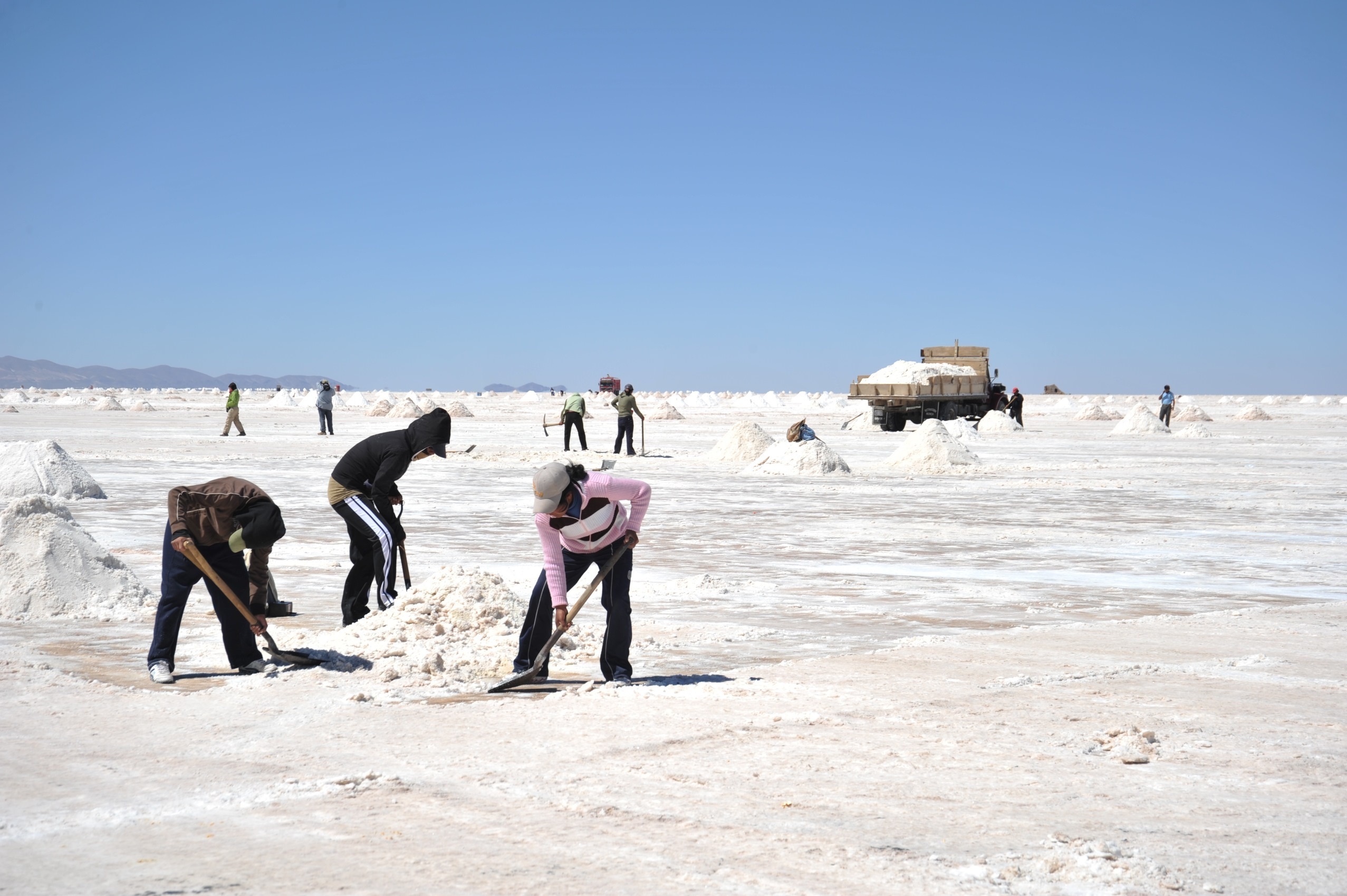
Middle photo by Free Wind 2014 for Shutterstock
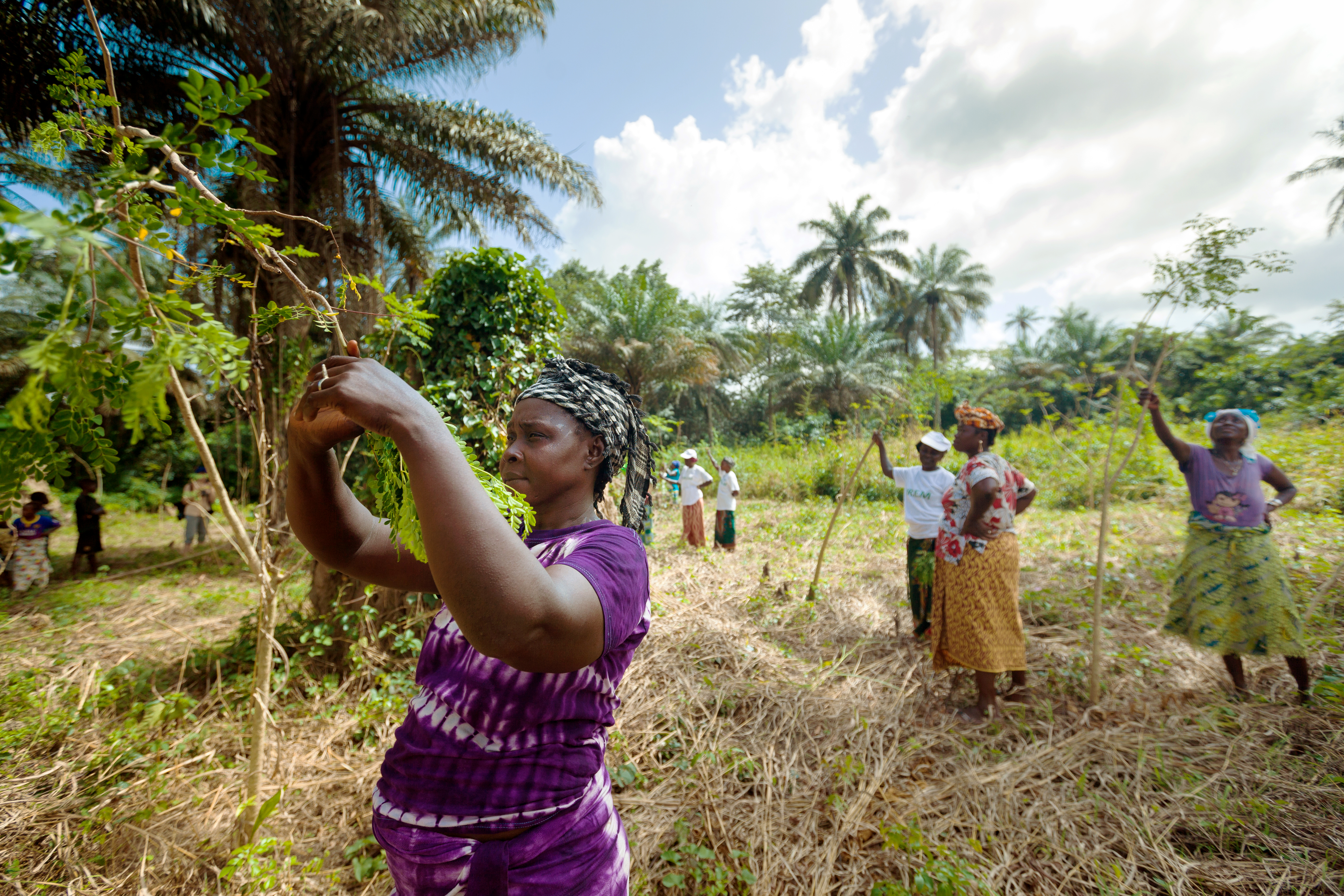
Bottom photo by Joe Saade/UN Women for Flickr
NRGI envisions a world where natural resources enable fair, prosperous and sustainable societies, instead of undermining them.