
The Role of NNPC in Nigeria’s Energy Transition (COP31)
Nigeria Pavilion, COP31, Antalya, Türkiye
The Nigerian National Petroleum Company Limited (NNPC) has a central role in Nigeria’s energy sector and economic future. As global energy markets change, the company faces important choices about its investments, commercial priorities and contribution to Nigeria’s energy transition.
Building on discussions held in Abuja in October, this COP31 session will examine how NNPC can respond to a changing global energy system while supporting Nigeria’s wider energy and development goals. It will consider opportunities for diversification, the role of national oil companies in the transition and the governance and investment decisions needed to support economically viable pathways.
NRGI Nigeria Country Manager Tengi George-Ikoli will participate in the discussion, bringing perspectives from NRGI’s research and engagement on national oil company transformation and Nigeria’s energy transition.
Featuring NRGI's

Tengi George-Ikoli
Nigeria Country Manager
Measure to Manage MENA National Oil Companies’ Methane Emissions Reduction Commitments
Key messages
- As methane emissions gain greater global attention and financing becomes increasingly tied to climate performance, the participation of Middle East and North Africa (MENA) national oil companies (NOCs) in global frameworks and initiatives is expected to grow. However, this will likely be at a different pace due to differing capacity and objectives of each NOC in the region.
- NOCs integrated into global financial markets are more likely to participate in multiple international climate initiatives and adopt ambitious. In contrast, isolated NOCs are slower to act unless driven by government mandates or policy priorities.
- NOCs’ methane abatement strategies can differ significantly than those of international oil companies (IOCs) due to differences in their ownership structures, regulatory environments, operational priorities and access to capital and technology.
- Most MENA NOCs operate largely within domestic regulatory frameworks which may be less stringent on methane emissions, especially in developing countries. Often, these NOCs prioritize economic growth and energy security over environmental or climate concerns.
- The lack of consistent and reliable methane emissions data from some NOCs presents a significant barrier to effective abatement. Without accurate baseline measurements, it is difficult to identify priority sources, track progress and evaluate the effectiveness of mitigation efforts. Such data gaps can undermine transparency, making it challenging for stakeholders—including regulators, investors and international partners—to assess performance or offer targeted support.
Executive summary
Methane is a potent greenhouse gas (GHG) and the second-largest contributor to global warming after carbon dioxide, and more harmful in the short term. The global oil and gas industry accounts for nearly one quarter of global methane emissions. National oil companies (NOCs) produce about half of the world’s oil and gas, with one third coming from the Middle East and North Africa (MENA). They play a pivotal role in addressing global methane emissions.
While many climate advocates call for an end to fossil fuel production, producing countries and their NOCs continue to argue that they can maintain production while reducing emissions, mainly through investments in mitigation technologies.
As part of its strategy in the MENA region, the Natural Resource Governance Institute (NRGI) works with governments, oversight actors and NOCs on policies and practices related to a just energy transition. In this context, NRGI commissioned this study to assess the role of seven NOCs in MENA—Abu Dhabi National Oil Company (ADNOC), Saudi Aramco, Petroleum Development Oman (PDO), Iraqi state oil companies, Bahrain Petroleum Company (Bapco), QatarEnergy and Sonatrach—in methane emissions and reduction strategies.
The key findings of this report are:
- There are variations in commitments and capacity: NOCs in the region display varying levels of commitment to methane reduction. These differences are less a function of financial capacity than the result of influences from transparency commitments; technical and human capabilities; and political and economic constraints.
- ADNOC and Saudi Aramco are leaders in measurement and reporting: ADNOC and Saudi Aramco are the most advanced NOCs in the region at monitoring, reporting and reducing methane emissions. Both have access to significant resources and have committed large funds to decarbonization. In 2022, Saudi Aramco launched a USD 1.5 billion sustainability fund, while ADNOC allocated $15 billion to decarbonization projects by 2030, aligned with its net-zero 2050 target.
- Algeria and Iraq are lagging performers: In contrast, NOCs in Algeria and Iraq have shown limited willingness to commit to costly methane reduction initiatives, given their central role in national economies and dependence on oil revenues.
- Access to international debt and equity markets is a key driver of NOCs’ climate commitments. Companies like Saudi Aramco, ADNOC and QatarEnergy, which are heavily integrated into global capital markets, are more responsive to investor pressure and have signed up to international initiatives such as the Oil and Gas Methane Partnership (OGMP 2.0). Conversely, NOCs with little or no exposure, such as Algeria’s Sonatrach, face weaker external incentives to adopt ambitious methane strategies.
- There are emerging shifts: Some NOCs, particularly in Iraq, are beginning to seek external financing for modernization, exposing them to greater international scrutiny and creating opportunities to attract green finance for methane reduction.
Life After Oil in Campeche: Youth Must Lead Alternative Paths

In some oil-dependent regions, the decline of hydrocarbons is not being managed strategically. It is being handled reactively, as production falls. Campeche exemplifies this reality, and the resulting uncertainty hits its youngest population especially hard.
Against this backdrop, the Nationally Determined Contributions (NDCs), the state-owned oil company Petróleos Mexicanos (Pemex) and local universities have a fundamental role to play: they must not only address the personal, professional and territorial development needs of young people, but also guarantee their participation in the decisions that directly affect them.
The challenge facing Campeche's young people
Campeche ranks among the three states with the highest dependence on public revenue from carbon-intensive activities, according to the 2025 Subnational Sustainable Finance Index. At the same time, its oil decline is tangible: in 2025, production stood at 801,080 barrels per day, less than half the volume recorded in 2013.
The State Development Plan itself documents a 47% drop in real Gross Domestic Product (GDP) between 2004 and 2022, linked to the decline in oil activity. It also warns that the prolonged recession has had negative effects on employment, tax revenue and investment.
Diversifying the state's economy is therefore a pressing priority.
The pressure on entering the labor market is not a future problem; it is already here. In 2020, the largest age groups in Campeche were concentrated between the ages of 5 and 14. Six years later, part of that demographic is nearing or has already reached working age.
The challenge is not only to create alternatives before the youngest reach the labor market. Planning has to start now, so that those beginning their careers have real opportunities.
Involving young women and men directly is what counters their dissatisfaction. According to the State Development Plan, young people report a 47% satisfaction rate with their surroundings, which underscores the need for actions that build their interests into local decision-making.
In the end, economic alternatives that drive equitable development can emerge only if the effort reaches broad sectors of the population. Young people have to be part of the work that will shape the future of the place they live.
Youth participation as an antidote to political disenchantment
The fact that 48.5% of young people do not feel represented by those holding popularly elected offices in Campeche points to a disconnect between the priorities of a significant portion of this demographic and the political projects being implemented.
That gap raises a key question: How could greater youth involvement in state development planning make sure their visions are better represented?
The willingness to be active participants already exists. Nearly 80% of the children and youth in Campeche who responded to the latest Consulta Infantil y Juvenil (Child and Youth Consultation) believe that exercising their right to participate is important for solving collective problems.
Asking what they want for their community, and how they want to take part, is one of the first steps toward building economic diversification scenarios that distribute benefits equitably and open the way to new realities.
That is why bringing their experiences, hopes and concerns to decision-making spaces is both valuable and necessary.
At NRGI, we support the participation of youth living in oil-producing regions in the Conferences of Youth on Climate Change, spaces organized at the national, regional, and international levels where proposals are generated to influence climate policy in the country, the continent and the world.
The result: for the first time, the National Youth Position includes proposals for just energy transition processes that take the case of these regions into account.
A call to include young people
Various instruments at the international, national and local levels can open space for young people to take part in energy transition planning and shape it.
At the international level, the NDC offers a significant window of opportunity.
Although these are national implementation plans, international climate negotiations include mechanisms that allow for transparent monitoring of their progress within the framework of the commitment to global goals.
These transparency exercises offer an international route for tracking the measures countries adopt, especially measures that both require youth participation and stand to gain from it.
Mexico, in its most recent update, incorporated a cross-cutting component on intergenerational justice and a just transition toward a sustainable economy. Among the measures included are the promotion of intergenerational dialogue spaces and taking future generations into account in present-day decisions.
Both can support the energy transition, particularly in decisions about new investment projects in oil-producing states.
Likewise, the NDC includes the development of a National Labor Transition Plan, which contains a strategy to generate decent green jobs in key sectors. That strategy has to reach young people in the Gulf states directly, so they can access the job-placement support necessary to develop professionally in their own state, beyond the oil industry.
At the national level, then, key energy sector players such as the Ministry of Energy and Pemex need to be at the table.
In general terms, and without specifying sectors, the NDC proposes to promote training and workforce retraining and redeployment in the most polluting industries.
In line with this measure, Pemex can also play a significant role by incorporating proactive labor transition planning through retraining programs that prepare its workers for emerging sectors, deliberately including women and young people. Furthermore, Pemex's opening toward new business lines related to the energy transition could be a way to incorporate young local talent from these states. To do this, the company could act as an ally in building training and industry-linkage programs, always designed and implemented with youth participation.
At the subnational level, local universities play a strategic role. On the one hand, they are the primary training ground for the talent available in these states. Their degree programs must adapt to respond to major local challenges, such as the oil decline.
The Technological University of Campeche is already doing this, recognizing the need to update its degree programs to align them with the new demands of the region. On the other hand, universities can play a key role in identifying new areas of economic development that align with local capacities and needs, generating evidence on key issues and facilitating coordination among stakeholders for decision-making.
In both roles, they can become spaces where young people organize and collectively influence the direction of the energy transition, beyond just job opportunities.
NRGI recognizes that there is not one energy transition but many, and that each region experiences them differently depending on its economic, political and social realities. In oil regions like Campeche, the oil decline is already a reality that demands a rethinking of resource governance at the subnational level.
As part of our 20th anniversary, under the motto "Transforming Governance for a New Era," we are committed to ensuring that youth and the range of actors in these states—subnational governments, universities, and more—participate in decisions about their future. No transition will be just if it is decided without them.
New Challenges, Enduring Lessons: The Future of NOCs in Sub-Saharan Africa


Nicolas Lippolis is Founder and Executive Director of the Centre for Energy, Finance and Development (CEFD) and contributed this piece as part of NRGI's 20th anniversary thought piece series on the future of resource governance.
The accelerating global energy transition has placed national oil companies (NOCs) under growing scrutiny. NRGI, among other civil society organizations, has extensively documented NOCs’ exposure to transition risks, including potentially stranded assets, long-term demand contraction, and tightening access to external finance. At the same time, it is increasingly acknowledged that NOCs can also play a constructive role in the energy transition by leveraging their capabilities to support decarbonization and broader economic transformation.
To unlock their potential to deliver both economic transformation and just energy transitions, African NOCs require tailored, nuanced analysis. Unlike in many other regions, NOCs in Sub-Saharan Africa function primarily as sector regulators rather than integrated operators. Their historical mandate has been to maximize state revenues and ensure domestic energy supply, including through the development of mid- and downstream sectors—but not necessarily to lead technological innovation efforts. This difference is essential for understanding how these companies have responded to the sector’s transformations and what paths lie open before them.
Today, African NOCs find themselves at the intersection of several powerful trends. Governments across the continent continue to face urgent development priorities, including expanding energy access, supporting industrialization, and generating fiscal revenues. These pressures help explain why many governments continue to view hydrocarbons as part of their development pathway, even as the global energy transition accelerates and questions are raised regarding the long-term viability of hydrocarbon-based development strategies.
At the same time, many international oil companies (IOCs) have been retreating from African upstream assets due to declining basin attractiveness, portfolio reassessments, and, in some cases, challenging operating environments. This changing landscape makes the strategic choices facing African NOCs more consequential than ever.
Financing choices in reaction to a changing global energy landscape
Recent IOC divestments from mature hydrocarbon assets in Sub-Saharan Africa have produced two broadly distinct classes of response, depending on the size and institutional maturity of producer countries.
In smaller producers, NOCs have been mobilized to take over oil blocks vacated by IOCs. The risks here are considerable and, in some cases, already materializing. A notable case is that of the Gabon Oil Company’s (GOC) US$1 billion acquisition of six oil blocks from Assala Energy. The deal was financed through an oil-backed loan from commodity trader Gunvor that granted the trader unusual latitude over pricing and cost calculations, and has added further financial stress to a state already allocating over half its expenditures to debt service.
In a smaller but structurally similar arrangement, in the Republic of Congo, the SNPC (National Petroleum Company of Congo) has reportedly contracted a US$200–300 million loan from Geneva-based trader Mercuria to acquire Eni’s rights over the M’Boundi oil field. The transaction has attracted criticism—observers argue that SNPC is assuming control of a mature and potentially declining asset despite lacking the technical and financial capabilities needed, meaning the acquisition could prove more burdensome than profitable.
An even more brazen transaction was avoided in Ghana in July 2021, when a coalition of civil society organizations successfully opposed the Ghana National Petroleum Corporation’s proposed US$1.65 billion acquisition of Aker Energy’s offshore assets after uncovering a Bank of America appraisal valuing the oil field at just US$300 million. The asset was eventually reverted to Ghana at no cost, further underscoring the potential harm of the proposed deal.
Senegal, a new producer, has so far not replicated this approach, despite some signs of increased NOC ambition. Following the exit of BP and Kosmos Energy from the Yakaar-Teranga gas field, Petrosen has expressed interest in taking over the project. However, the financial commitments and technical requirements involved appear to exceed the Senegalese state’s current capabilities, particularly considering its worsening sovereign debt crisis. Its delicate financial situation has, however, not held it back from announcing ambitions to engage in onshore exploration or to build a new refinery. Supporters of a greater role for Petrosen argue that increased national participation could help secure domestic gas supplies, support gas-to-power ambitions, and capture a larger share of future project revenues.
Responses in mature oil economies: Nigeria and Angola
Responses differ in Sub-Saharan Africa’s two largest producers, which possess the region’s most mature oil sectors. While some companies are pursuing corporatization and commercial restructuring, others remain primarily regulatory entities with limited operational responsibilities and very different reform priorities.
In response to declining production and subdued IOC investment, the Angolan and Nigerian governments introduced legislative reforms—in 2019 and 2021, respectively—that established more arm’s-length relationships between NOCs and oil sector policymaking. This was a deliberate effort to reduce the conflation of regulatory and commercial functions that had historically characterized both Sonangol and NNPC (formerly “Nigerian National Petroleum Corporation”). Besides improving the credibility of oil sector reforms, the “corporatization” of the two NOCs is intended as a first step toward eventual access to domestic stock markets and international private capital.
The results have been uneven. In Nigeria, the NNPC was restructured into a limited liability company (“Nigerian National Petroleum Company Limited”) in 2022, though it remains entirely government-owned, with no set date for the proposed stock market listing. NNPC’s corporatization has nonetheless been accompanied by improvements in corporate disclosures and the creation of a new Sustainability Department, which, together with a strengthened NNPC New Energy Limited (NNEL) subsidiary, is leading efforts to respond to the decarbonization of the global economy.
In Nigeria, natural gas sits at the center of energy transition policy. Accordingly, NNPC has recently published a Gas Master Plan intended to support the government’s Decade of Gas agenda through gas commercialization, infrastructure development, power generation, gas-based industrialization, liquefied petroleum gas (LPG) expansion, and the elimination of routine gas flaring. However, upstream hydrocarbon production has been disappointing, leading to a wholesale change in the company’s leadership and board in 2025.
The corporatization of Angola’s Sonangol, largely considered the region’s most competent NOC, has also faced some hiccups. Sonangol’s role in Angola’s oil economy was significantly downsized following the creation of a new regulatory agency in 2019 and the divestment of most of its assets in non-core areas of activity, allowing the company to focus on obtaining better value from core commercial operations. Yet while Sonangol’s profitability has improved, the promised domestic listing of 30 percent of its shares has been repeatedly postponed, with the latest date set for 2027. The listing process has been complicated by the challenges of advancing corporate governance reforms, rationalizing an oversized workforce, and reconciling commercial objectives with Sonangol’s continued involvement in strategic public investment projects such as refineries and oil storage terminals. Together, these activities underscore the company’s enduring role as a central instrument of state policy (Heller, 2011).
Sonangol’s strategic role is also reflected in its growing involvement in the new “green economy.” The company has built two solar power plants, in partnership with Azule Energy (a BP–Eni joint venture) and TotalEnergies, respectively. It has also acquired licenses to explore for critical minerals, reflecting Angola’s growing ambitions for the sector. These initiatives reflect a broader trend among some African NOCs to explore opportunities beyond traditional oil and gas activities, although the commercial viability and strategic coherence of such diversification efforts remain uncertain.
The Way Forward for African NOCs
Variations in the recent trajectories of African NOCs suggest that the way forward is not uniform, but is best conceived as a gradient that tracks the institutional development of each company. Any assessment of African NOCs should recognize that the continent faces a dual challenge: managing transition-related risks and opportunities while simultaneously addressing persistent energy poverty and infrastructure deficits. Effective reform strategies will therefore need to balance long-term climate considerations with near-term development and energy security objectives.
As shown by questionable investments in Gabon, Ghana, and Congo, the classic transparency agenda promoted by NRGI remains essential for less institutionally consolidated NOCs, where companies must increase the transparency of their oil sales, improve oversight of their activities, and strengthen corporate governance.
Tackling the NOC-commodity trader nexus could also go a long way toward preventing some of the most harmful transactions. Reform programs could address areas such as procurement, contract management, and revenue administration. In particular, it is important to strengthen regulatory and legal frameworks related to the selection of buyers, terms of sale negotiations, and contract awards for the sale of host states’ equity oil and the oil allocated to them in production sharing agreements. Rather than aspiring to wide-ranging governance reform, such targeted interventions would directly tackle sources of fiscal and illicit financial flow risk.
The challenges look quite different in the larger oil economies such as Angola and Nigeria, where IOC divestments have been relatively limited in the former or mostly taken over by domestic private operators in the latter. For both Sonangol and NNPC, the main challenge is to deliver on the mandates set by oil sector reforms and advance in their corporatization. This will entail introducing rigorous reporting standards, enhancing transparency and disclosure requirements, strengthening corporate governance mechanisms, and securing greater operational autonomy from political authorities, while reducing the influence of patronage structures that have historically shaped both companies. Here, African NOCs can draw valuable lessons from other NOCs that have undergone partial stock market listings, including Brazil’s Petrobras, Colombia’s Ecopetrol, and Norway’s Equinor.
At the same time, Sonangol and NNPC face the unique challenge of advancing their corporatization while still playing limited roles as operators and, in the case of Angola, facing projected declines in oil and gas production. Moreover, they are reforming at a time of heightened awareness of the risks posed by climate change and the global energy transition, which threaten their core business while also creating new opportunities for diversification.
In conclusion, there is no “one-size-fits-all” path to harness the full potential of African NOCs. Further nuanced research is essential, and could deepen comparative analysis across African producers, identifying lessons from both successful and unsuccessful reform experiences and examining how different institutional models affect transparency, financial performance, and resilience to energy transition risks.
Beyond research, the continued engagement between policymakers and civil society groups at national, regional, and global levels will be critical for progress. With its 20-year track record of combining robust analysis with trusted engagement, NRGI will no doubt remain an important source of comparative knowledge and a model for other civil society organizations seeking to promote the management of natural resources in the service of shared and sustainable prosperity.
Santa Marta: Real Progress, and a Gap That Cannot Be Ignored

This week, the Governments of Colombia and the Netherlands hosted the first global conference dedicated to transitioning away from fossil fuels, which ended with real progress—but also at least one critical absence. The Santa Marta conference put the many perspectives of Global South producer countries, subnational communities and the human stakes of energy transitions more clearly on the agenda. But, in a significant omission, national oil companies (NOCs) were neither present nor discussed at the level required given their significance to the transition away from oil and gas.
NOCs already produce more than half the world’s oil and gas (with that share expected to rise), and that they represent the economic backbone of many producer countries; failing to include them and/or the barriers and solutions to their transformation undermines the prospect for roadmaps to deliver a fair, orderly, and equitable transition.
An NRGI delegation was in attendance, and we will be sharing further analysis in the weeks ahead. Today, we are sharing some of our top-line reactions:
For the first time, Global South producer realities were centered
"Santa Marta opened up an important conversation about what is at stake for Global South producer countries—energy independence, less instability, more inclusive and equitable development—and brought in voices that are often missing, like subnational governments," said Ana Carolina González, NRGI's Senior Director for Programs and Latin America Director.
For the first time, a major international forum placed the realities affecting communities in Global South producer countries at the center of the transition debate: fiscal dependence on oil and gas revenues, the instability that comes with price volatility, and what it will take to ensure the shift away from fossil fuels works for the people most affected by it. Importantly, subnational governments had a seat at the table. In many oil-producing regions, the transition is not a future concern—it is already arriving. In the oil producing regions of Campeche in Mexico or Putumayo in Colombia production has declined significantly. Where royalties account for 70–80% of local budgets, like in Niger Delta, a drop in production can mean schools with fewer teachers, roads that go unrepaired and workers facing an uncertain future. These are the communities that contributed least to the climate crisis. They should not be the ones absorbing its costs.
With conflict in the Middle East fueling oil price spikes and energy security fears, the current crisis made the case for an orderly transition stronger. As González put it: "For producer governments, high prices may create pressure to double down on fossil fuel investment. But volatility is not stability and short-term gains are not long-term strategy. The window to plan an orderly transition is open—the question is whether governments use it."
National oil companies: a missing piece
The co-host takeaways noted that participants "stressed the importance of clear policy signals and long-term planning, including clearer strategies for State-Owned Enterprises." At the final press conference, Colombia's Minister of Mines and Energy Irene Vélez Torres acknowledged that NOCs "should be part of the roadmap, because this is where the production takes place. So we hope that the countries can think about how their own companies should be included and should have targets of transition."
These are welcome signals. But recognizing that NOCs need clearer strategies is not the same as bringing them in as essential partners, and the gap between limited acknowledgement and meaningful inclusion is where credible transition planning can break down.
"NOCs are not peripheral players," says González. "They produce more than half of the world's oil and gas and that share projected to rise to 62% by 2050. NOCs are the economic backbone of many producer countries. The next step must bring them in as essential partners in any credible transition roadmap."
In many producer countries, NOCs underpin national budgets, jobs, public services and local economic stability. In Colombia, Ecopetrol alone contributed the equivalent of around 11% of the national budget in 2023, more than the country allocated to the education sector. Pemex directly employs over 128,000 people, with oil dominating the economy of states like Campeche, where it accounts for the vast majority of local economic activity.
Around $400 billion in planned NOC investment between 2023 and 2032 may not break even if demand falls in line with climate commitments. In some countries, more than 80% of planned investments are at risk. Leaving NOCs outside transition planning does not protect them or the economies that depend on them—it simply means the risks accumulate without a strategy for managing them. NRGI's recent report, NOC Transformation: Strategic Choices for an Uncertain Energy Future, offers a practical framework for how governments and NOCs can navigate this moment together.
What comes next
The co-host's takeaway note from Santa Marta does recognize that “clearer strategies for State-Owned-Enterprises" (which include NOCs) are important for long-term transition planning. The conclusions of Santa Marta will now feed into COP31, with Brazil’s COP30 presidency committed to building on the outcomes from Santa Marta in the roadmap it will deliver to this year’s annual UN climate conference (COP31) in Turkey. The Brazilian COP30 Presidency’s roadmap report cannot leave national oil companies on the sidelines. And, we need to ensure that spaces that meaningfully centre the needs of communities most exposed to the transition become the rule, not a welcome exception. The road ahead is long, but the direction is clearer—and Santa Marta moved it forward.
Beyond Oil and Gas: Regional Perspectives on a Transition Under Pressure

As more than 50 countries gather in Santa Marta for the first conference dedicated to transitioning away from fossil fuels, NRGI's regional directors share how governments are navigating competing pressures, and what this means for economies and communities
The energy transition is happening. It is also, depending on your perspective, too slow, too fast, too expensive, or something else entirely. As the governments of Colombia and The Netherlands convene the first-ever conference dedicated to transitioning away from fossil fuels in Santa Marta, that ambition is running up against a charged reality: oil price spike, land grabs, geopolitical jockeying for resources and mounting debt in many producer countries.

NRGI’s work is grounded in the recognition that how the transition unfolds—and how quickly—will determine whether it contributes to fair, inclusive and more prosperous societies, while acknowledging that communities that have contributed least to the climate crisis too often stand to lose the most. There is not one transition. There are transitions—shaped by very different starting points, economic realities and development priorities. Those gathering in Santa Marta must consider these diverse perspectives, including from communities, countries and regions that are not always fully represented in these debates.
Three of our regional directors reflect on how the transition is unfolding in practice, drawing on two decades of work on resource governance.
How are governments approaching the transition in the current context?
Santa Marta's organizers argue that current conflicts reinforce rather than sideline the case for transition. For governments navigating oil price uncertainty, rising energy demand and immediate security pressures, however, the picture is more complicated.
Africa—Nafi Quarshie, Africa Director

Latin America—Ana Carolina González Espinosa, Latin America Director and Senior Director for Programs

MENA—Laury Haytayan, MENA Director


Pathways for Transformation: What Today’s Energy Uncertainty Means for National Oil Companies

As global energy debates become increasingly polarized, governments are pulling in different directions. Some are advancing plans to transition away from fossil fuels—including Brazil’s COP30 roadmaps process and the upcoming Santa Marta conference organized by Colombia and The Netherlands—while others are doubling down on oil and gas for fiscal stability and energy security. National Oil Companies (NOCs)—which produce more than half of the world’s oil and gas—lie at the heart of these debates and of the choices countries now face.
But beyond political narratives, the energy system is already shifting. For instance, in 2025 twice as much capital flowed to renewables and related technologies compared to oil, coal and natural gas.
And while the conflict in the Middle East has pushed oil prices above $100 a barrel, boosting short-term revenues for some NOCs, future demand remains uncertain, even if it is expected to peak around 2030.
For NOCs, this is a defining moment. Charting a path forward that balances fiscal risk and opportunity, and unlocks inclusive development at this moment of extreme uncertainty is vital—for governments, NOC executives and citizens in oil and gas producing countries.
Our new report, National Oil Company Transformation: Strategic Choices for an Uncertain Energy Future, explores how governments can define transformation pathways that align NOC strategy with national development priorities in an increasingly volatile energy system, building on two decades of experience and country examples.
The future of oil and gas is increasingly the future of NOCs
NOCs produced about 54 percent of global oil and 50 percent of gas in 2025, with their combined share projected to rise to around 62 percent by 2050.
This dominance reflects structural advantages: large, low-cost reserves and sustained investment capacity. In 2025, NOCs spent more than US$240 billion in capital expenditure—more than oil majors (US$73 billion) and independent producers (US$109 billion) combined. As private firms scale back or divest, NOCs are increasingly taking on a larger share of global assets.
This growing role creates opportunity but also risk. What once looked like market leverage—greater control over supply and investment—now increases public exposure in a context of energy uncertainty.
Business as usual is no longer a neutral strategy
NRGI has previously warned that long-lived, capital-intensive oil and gas investments by NOCs risk becoming unprofitable under faster transition scenarios. This risk is already visible. Projects approved under more optimistic demand expectations can generate much lower returns if market conditions turn out weaker.
Recent modelling illustrates the scale of this exposure. As the figure below shows, even under relatively moderate transition assumptions, some NOCs could see projected company value—based on expected future cash flows—decline by more than 50 percent.
This reflects a core challenge: while NOCs cannot control how demand evolves, their investment decisions determine how exposed they are. Unlike oil majors, which face shareholder and legal pressures that can constrain capital allocation, NOCs often operate under political and fiscal pressures to sustain production, revenues and employment, even as uncertainty grows.
For governments that rely on NOCs for development, this makes business-as-usual far from neutral. Asset devaluation at NOCs carries real public costs—weakening balance sheets and shrinking fiscal space for healthcare, education and economic diversification.
When planning for decline is delayed, these risks become harder to manage. The burden often falls on subnational regions and communities through job losses, reduced revenues and limited alternatives.
In this context, short-term gains from high oil prices can mask longer-term vulnerabilities. Uncertainty will shape the sector. The real issue is how prepared countries are to respond.
Why NOC transformation matters now
Vast oil and gas reserves do not translate into development on their own. In some cases, governments have used NOCs to drive more industrial activity and capture more value domestically. In others, weak governance had led to inefficiencies, political capture and fiscal risk.
Today, the stakes are higher. The energy transition is narrowing the window to use hydrocarbon wealth for long-term economic transformation. Delaying decisions about a NOC’s future role risks channeling short-term profits into activities that fail to deliver lasting benefits for citizens before market conditions tighten. At the same time, the opportunity to use these revenues to support diversification and low-carbon transformation pathways may not remain open indefinitely.
NOCs are not a single type of actor. They differ widely in mandates, resource bases, capabilities, governance and exposure to transition risks—and in how they recognize and respond to these challenges.
The question is no longer whether NOCs should transform, but how. What matters is identifying pathways that are fiscally credible, aligned with national development goals, politically feasible, and part of a fair and orderly energy transition. Our new report sets out a practical framework to help governments navigate these choices.
For countries advancing national transition roadmaps, including under the COP30 Brazilian Presidency, NOC reform offers a concrete way to connect climate ambition with fiscal and development strategy. But even for those continuing to invest in fossil fuels, clarifying the future role of the NOC is equally essential to managing long-term risk.
From insight to action
These are decisions countries are already facing—and often without a clear strategy. NRGI’s National Oil Company Transformation: Strategic Choices for an Uncertain Energy Future report provides detailed analysis, country examples and a five-step framework to support policymakers and NOC representatives to navigate these decisions.
Join our webinar on April 21 and hear directly from policymakers and national oil company representatives.
National Oil Company Transformation: Strategic Choices for an Uncertain Energy Future

National oil companies (NOCs) are among the most important actors in the global energy system. They already produce the majority of the world's oil and gas—54 percent of global oil and 50 percent of gas in 2025—and their combined share is projected to rise to around 62 percent by 2050. Significant amounts of public money flow to NOCs1 —in 2025, NOC capital expenditure (US$240 billion) was more than three times that of the oil majors (US$73 billion)2 , and well over a trillion dollars of new investment is expected before 2033.
Beyond these metrics lies another important truth—in many countries, NOCs are deeply entwined in national identity and are often anchor employers for entire communities and regions. They help fund public services, shape national budgets, and support jobs and local economies. In some cases, their decisions affect everything from energy access to infrastructure investments.
Against today’s backdrop of geopolitical turbulence, volatile oil prices and the energy transition, governments face difficult decisions: how to balance near-term revenues with long-term risks, and how to align NOC strategies with broader development goals. (See here for a more detailed exploration of the strategic context facing NOCs). The right choices could see NOCs become engines for inclusive, prosperous societies and critical players in a just energy transition. Conversely, strategic missteps could see NOCs become drivers of waste, corruption, inequality and environmental harm.
Today, NRGI is publishing National Oil Company Transformation: Strategic Choices for an Uncertain Energy Future—a new report that lays out a clear, five-step framework that governments, NOC leaders, civil society and other stakeholders can use to seize new opportunities, minimize risks and define credible transformation pathways. The report is published as NRGI marks its 20th anniversary under the theme “Transforming resource governance for a new era”. We are committed to using the anniversary as a milestone to take stock of what has been learned and to put that knowledge to work on the challenges that will define the coming decades. Few are more consequential than the question of how NOCs navigate the current uncertain environment and the energy transition.
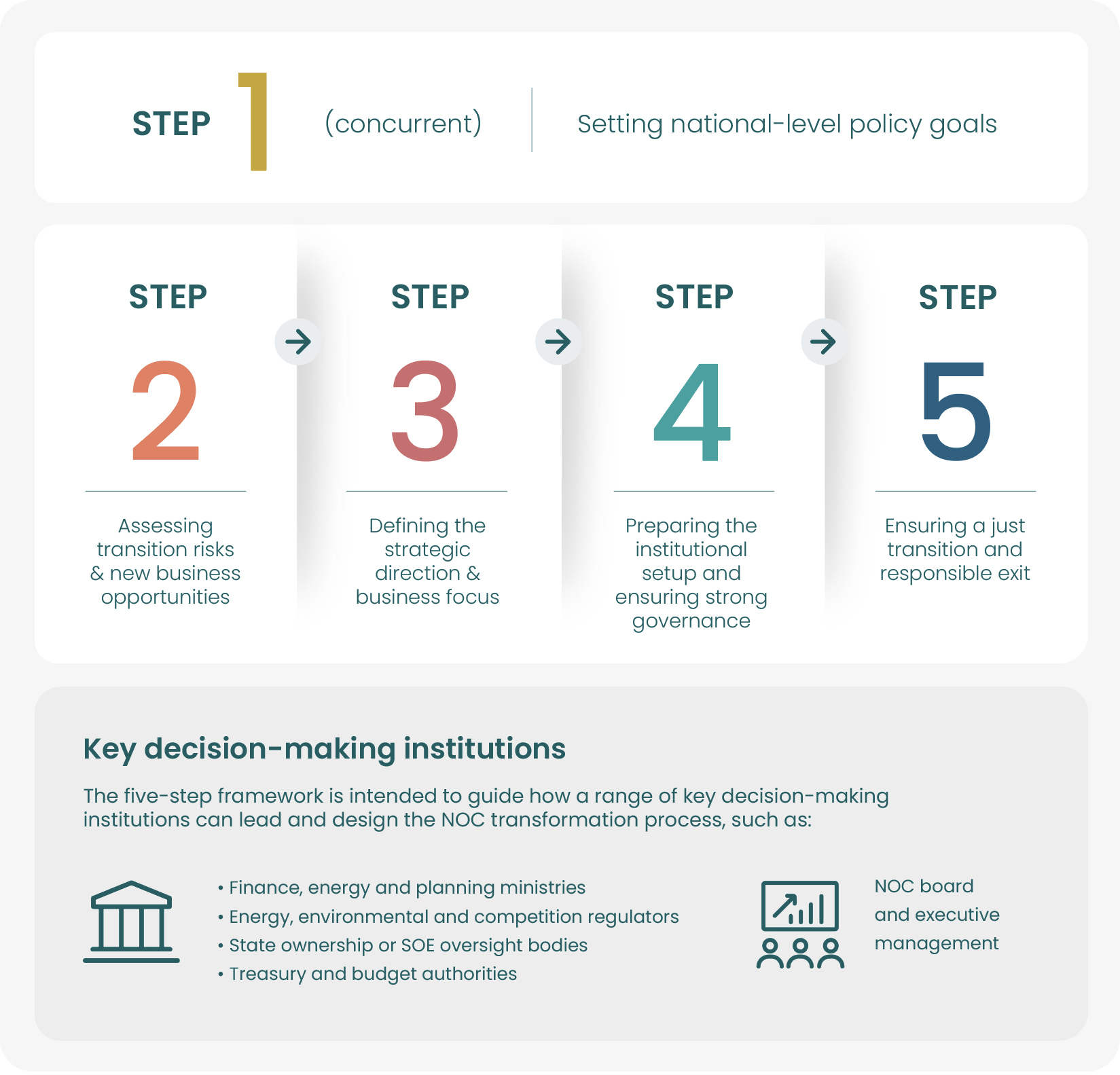
To meet the needs of policymakers, National Oil Company Transformation: Strategic Choices for an Uncertain Energy Future includes country examples and guiding questions to aid the strategic process. The report also pays particular attention to two areas that are often underexplored: assessing transition risk and new business opportunities, and ensuring a just transition and responsible exit.
On transition risk, the report shares striking analysis from NRGI’s earlier Riskier Bets report. NOCs face sharply different levels of exposure—from Uganda's UNOC and Cameroon's SNH, where more than 80 percent of planned investments may not break even under plausible transition scenarios, to lower-risk NOCs with more resilient, lower-cost portfolios. The report also challenges the assumption that a pivot to gas automatically reduces risk, examining how price volatility, contract structures and rapidly falling renewables costs complicate that picture.
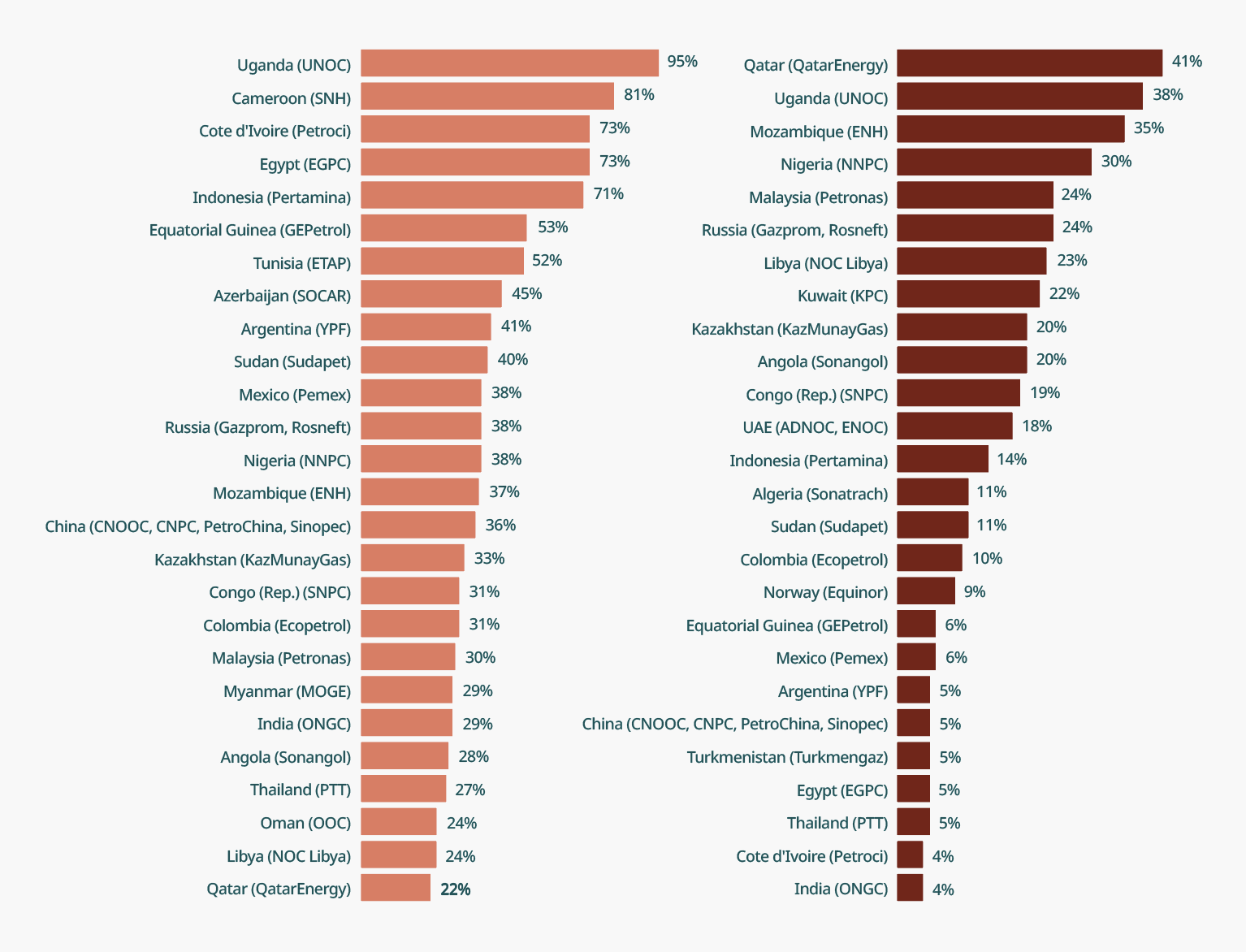
break even under APS (left) and as a percentage of annual government expenditure (right)1
On just transition, the report is equally substantive. NOCs are not only commercial entities—in many producing regions they are anchor employers and service providers, and their transformation carries real consequences for workers and communities. The report draws on emerging practice from NOCs including Petronas, Petrobras and PetroSA to set out concrete strategies for workforce transition, subnational economic diversification and community engagement.
The report is clear that there can be no "one-size-fits-all" model. Policymakers must make difficult trade-offs with the well-being of all of a country’s citizens in mind, and the framework is designed as an entry point for structured dialogue rather than a prescriptive blueprint.
The report is equally clear that business-as-usual is not a neutral option. Amid structural shifts in energy markets, inaction will expose countries to rising fiscal, social and political risks. NRGI’s Riskier Bets analysis showed that under a scenario in which governments meet their existing climate pledges and global oil demand falls accordingly, around 25 percent of planned 2023–2032 upstream investments across NOCs may fail to break even—with significant consequences for governments and their citizens. Governments and NOCs must act now, proactively reviewing and refining their strategies in response to energy transition pressures and opportunities. We hope that this report is both a spur to action and a practical tool for change.
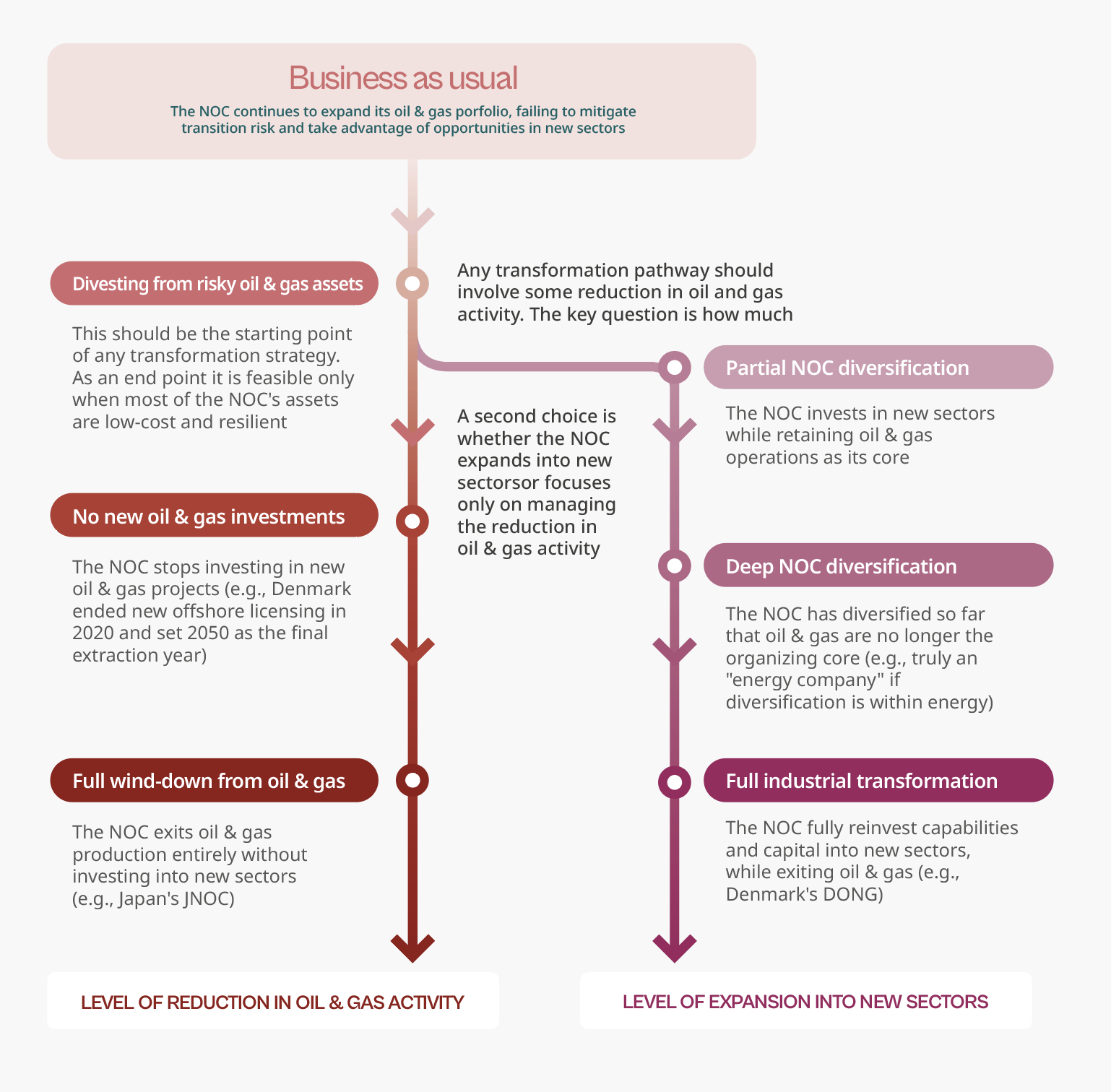
Download the report today, and register for a webinar on 21 April during which we will unpack the report in more detail, and hear directly from policymakers and NOC executives on how they are meeting this moment.
If you want to connect with NRGI to learn more about our work on NOCs, you can reach out to Andrea Furnaro
From Transparency to Transformation: NRGI’s NOC Work Past, Present and Future

Over the past two decades, national oil companies (NOCs) have moved from the margins of governance debates to the center of discussions to fix how countries manage resource wealth and navigate the energy transition.
NOCs produce more than half of the world’s oil and gas, and in many producing countries their decisions have major implications for public finances, energy policy and long-term development outcomes. That role is only growing in importance in an increasingly uncertain energy future. How NOCs can adapt to that uncertain future remains unresolved, and shocks such as today’s soaring and volatile prices serve as a potent reminder of the need to look ahead and plan for the future.
NRGI’s work on NOCs has evolved alongside these shifts, supporting more informed and inclusive decision-making about natural resources and the energy transition. As we mark our 20th anniversary in 2026, we are building on this experience with new insights on the future of NOCs.
Our new report National Oil Company Transformation: Strategic Choices for an Uncertain Energy Future is part of that effort. As we prepare to launch this work, we are also taking a moment to reflect on how our thinking around NOCs has evolved through four key phases, and what this means for the choices that countries face now and hence for the future of NRGI’s NOC work.
1. Building the foundations: from transparency to governance and country-driven change (2006-2017)
NRGI’s early work focused on extractive revenue transparency, helping citizens better understand how extractive revenues flowed into public coffers. NOCs were not initially central to this agenda, but concerns about country-level corruption risks and NOC opacity gradually brought them to the fore, particularly around their role in financial flows.
Sustained work on NOC oil sales transparency followed and led to tangible impacts. In Nigeria, work by NRGI and partners NEITI led to NNPC canceling criticized contracts. NRGI also produced guidance on state-owned enterprise (SOE) disclosures, supporting global norm strengthening and supporting efforts by organizations such as México Evalúa to assess NOC transparency.
Over time, we expanded beyond transparency to other core NOC governance questions, asking not just what is disclosed, but how institutions are run. This included delving into NOC reforms such as limiting political interference while ensuring sufficient oversight.
In the early 2010s, we also began engaging more deeply on NOCs in emerging “oil hotspots” such as Ghana, including partnering with Chatham House and the Commonwealth Secretariat to establish the New Petroleum Producers Group. Key to our approach was tailoring methods to different settings, balancing cross-country learning with the reality that not all countries are Norway.
Across these early engagements—from UNOC in Uganda to Pertamina in Indonesia—we started to combine cross-cutting NOC research with country-level engagement, and saw this as useful in achieving impact, including in difficult contexts such as Myanmar.
- Effective NOC governance is critical and multi-faceted. NOC transparency is necessary but not sufficient. It must be paired with other governance improvements, including stronger institutions and oversight.
- Real change is largely country driven. Global tools are most impactful when shaped by and applied through country programming, drawing on deep country knowledge and partnerships.
2. Leveraging a data-driven approach for impact (2017-2020)
The second phase focused on data to drive reform, inform decisions, shape incentives and encourage better performance of NOCs.
The Resource Governance Index (RGI) benchmarked more than 50 NOCs and showed widespread governance gaps. This data-driven approach helped lead to tangible changes.
In Qatar, engagement with Qatar Petroleum resulted in the company publishing annual and sustainability plans on its website for the first time. In Mexico, NRGI inputs to the National Hydrocarbons Commission (CNH), whose purview included regulation of Pemex, led to CNH pushing Pemex to improve transparency.
A major milestone in this phase was the launch of NRGI’s National Oil Company Database, the world’s largest open dataset on NOCs. It provides quantitative insights on fiscal transfer patterns and debt-sustainability risks, helping governments, private-sector analysts, journalists and international financial institutions better understand the profound public finance implications of NOC decisions.
NRGI also used this data-driven approach to support country-level analysis of opportunities and risks surrounding NOC oil sales, including in Ghana, and resource-backed loans, including in Nigeria.
Across these efforts, NRGI used data as a lever: to clarify fiscal stakes, justify accountability asks, and strengthen the connection between evidence and reform.
3. NOCs and the challenges of the energy transition (2021-2025)
In this third phase, the energy transition became central to our NOC work, which in turn helped shape broader understanding of the role NOCs play in shaping the global energy transition. In addition to controlling more than half of global oil and gas production, NOCs control around 40 percent of total sector investment and close to 60 percent of reserves.
NOCs play a critical role in how producing countries respond to declining long-term demand for fossil fuels. Their investment strategies can either reinforce continued dependence on oil extraction or support a more diversified energy future.
A major NRGI focus during this phase was on the “risky bets” of NOCs in a context of weakening global hydrocarbon demand. Importantly, NRGI framed these risks primarily as a public investment and fiscal management challenge. We highlighted the impact of NOC investment choices on national cash flows, debt sustainability and long-term fiscal space. This framing proved influential in Ghana where supported partners including the Alliance of Civil Society Organizations (CSOs) Working on Extractives, Anti-corruption and Good Governance to help prevent a risky prospective investment by GNPC.
Recognizing the value of peer benchmarking among NOCs, we assessed how 21 NOCs acknowledge, assess and mitigate transition risks. We complemented this comparative approach with analysis anchored in country challenges, linking transition to fiscal and institutional questions such as Pemex’s debt challenges in Mexico and Ecopetrol’s relationship with Colombia’s government.
During this phase our NOC work also expanded into climate-related areas, including the crucial role of NOCs in methane emissions in Mexico, Nigeria and the MENA region. We contributed to methane abatement finance guidance targeted at NOCs and worked to improve incorporation of NOCs in national climate commitments, including in Mexico. We also worked with partners such as IISD on more effective climate community engagement with NOCs, including at various COPs.
Across countries such as Colombia, Ghana, Mexico, Nigeria, Senegal and Uganda, our work responded to a growing demand among various stakeholders to deepen informed national debate on how NOCs navigate the energy transition.
4. The next phase: NOC transformation
NRGI’s NOC work is now entering an exciting next phase.
With the launch of our new report, we move beyond assessing risk to examining how governments, NOC leaders and other stakeholders can define credible NOC transformation pathways that manage transition risks while making the most of emerging opportunities.
The report sets out a framework to help countries:
- Define national-level policy goals,
- Assess capacities and constraints, including the NOC’s ability to pursue new business opportunities,
- Align mandates, governance structures and financial resources with the chosen transformation pathway, and
- pursue a just transition, given the important role NOCs play in shaping outcomes for workers and communities in oil producing regions.
This framework also reflects a key lesson from our in-country experience: there is no single model. What is feasible, and at what pace, will differ across countries and NOCs. Transformation pathways must reflect fiscal realities, political dynamics and institutional capacity.
Looking ahead
NRGI’s NOC work will continue to evolve to meet new challenges.
We will contribute to discussions on transition roadmaps, where the role of NOCs will be decisive, and to accountability on methane commitments, where NOCs lag significantly behind.
Our NOC transformation work will expand to better include energy security, the financing of transformation and links to national “green industrial policy” plans. We aim to update the NOC Database to integrate transition indicators, strengthening cross-country benchmarking and national advocacy.
This also means engaging more with narratives shaping NOC policies and strengthening strategic communications to better support national debate on NOC transformations.
As highlighted during the launch of NRGI’s 20th anniversary earlier this month, the lessons of the past provide a foundation to “confront the challenges that persist, and the new ones that emerge.” This is particularly true for NOCs. As NOCs take on a larger role in an uncertain energy future, the stakes are rising. The challenge is no longer just improving NOC governance, but defining the role of these companies in addressing the most pressing resource governance challenges—from navigating energy transition risks and opportunities to advancing both development and decarbonization.
NRGI looks forward to continuing this dynamic NOC work with partners to respond to these challenges.
Impact stories
For more on the real-world impacts of NRGI’s NOC work over the years, read the following impact stories:
A Just Energy Transition in Six Oil- Producing Regions: Bringing Local Priorities to Global Climate Action
Colombia, Ghana, Mexico, Nigeria, Peru and Tunisia

Key messages
- Global oil demand is expected to peak by 2030, and all countries—including low- and middle-income producers—will need to transition away from fossil fuels, with richer countries going first. For oil-dependent economies, the imminent peak in demand poses major risks of loss of revenue and jobs, and unintended socioenvironmental impacts, which might be more heavily felt at the subnational level, widening preexisting social and environmental injustices rooted in the fossil economy. Significantly, these risks are already materializing in many oil-producing regions in the global South.
- Yet many national and subnational plans in these countries still overlook how to manage the transition beyond oil, leaving countries unprepared.
- A people-powered, just transition in oil-producing regions could provide the means to address these major equity and justice gaps, while also opening opportunities for people and the planet. It could protect local economies and the rights of those most affected by the decline in oil production: workers in both formal and informal sectors, women, youth, Indigenous Peoples, people with disabilities and the environment.
- A people-powered, just transition in oil-producing regions would allow climate action to be rooted in the demands and needs of local stakeholders, boosting local and national coalitions in support of international agreements, and to influence them.
- National and subnational governments should define comprehensive plans to build fiscal resilience and reduce oil dependency, while ensuring local economies diversify. The visions and priorities of citizens and communities, especially in oil-producing regions, should be included in those plans through participatory processes and multistakeholder dialogue. The international community must provide the technical and financial support needed to help build resilient economic and energy systems beyond oil. Diversification of oil-dependent regions should be part of the just transition agenda.
- National governments, companies and private investors should establish and enforce requirements for a responsible exit in oil-producing countries and regions, involving the active engagement and participation of local authorities and communities. This includes policies and practices around decommissioning, asset transfers, rehabilitation, funds for decommissioning and transition, and socioenvironmental liabilities. Affected communities should be included and compensated, and nature should be protected. A responsible exit should be part of the just transition agenda.
- A just transition in oil-producing regions requires that national and subnational governments, and the international community, provide support to formal and informal workers, women, youth and other often-marginalized groups, to ensure they have the skills and the technical and financial resources to thrive in the process of transitioning away from oil. This means ensuring not only that they benefit from transition policies, but that they have the resources and spaces to be agents for change.
In the current urgent need to address climate change, shifting to clean energy and more sustainable economies is central to the required effort. The energy sector is currently responsible for approximately three quarters of greenhouse gas emissions. In this context, international instruments such as the 2015 Paris Agreement commit countries to “making finance flows consistent with a pathway towards low greenhouse gas emissions and climate-resilient development.”

Most commitments and climate negotiations have focused on emission reductions. However, this started to change with the adoption of the Glasgow Climate Pact at the 2021 United Nations Climate Change Conference (COP26). Countries committed to transition towards low-emission energy systems, “including by rapidly scaling up the deployment of clean power generation and energy efficiency measures, including accelerating efforts towards the phasedown of unabated coal power and phase-out of inefficient fossil fuel subsidies, while providing targeted support to the poorest and most vulnerable in line with national circumstances and recognizing the need for support towards a just transition.”
A people-powered, just transition in oil-producing regions could protect local economies and the rights of those most affected by the decline in oil production.
This was further reinforced at the 2023 United Nations Climate Change Conference (COP28), when governments committed to “transition away from fossil fuels in a just, orderly and equitable manner.” Although further policy commitments have since been difficult to advance, market shifts demonstrate that the transition in fossil fuel demand is already in motion. Technological progress has pushed private investments in the clean energy sector up by 42 percent.
Whether the transition becomes an opportunity for shared prosperity or a source of new inequalities depends on how it is governed.
Yet in several oil-producing countries and regions, these global shifts and their implications are still not widely understood or integrated into policy discussions, and international dialogue and actions do not recognize the needs of local stakeholders in these regions. This also relates to the fact that the increased investment in the renewable energies sector remains unequally distributed—for example, with only 2 percent landing in Africa, due to policy volatility, ineffective financing mechanisms and high capital cost. Yet Latin American countries—especially Brazil, Colombia and Costa Rica—have seen a 25 percent increase in clean energy investments in 2025.

This inconsistency has allowed many oil- and gas-producing countries to remain under the radar in transition debates. The unique challenges and specific needs associated with moving away from oil and gas have not received adequate support. Gaps in research have contributed to a lack of understanding and information about the risks and opportunities for oil-producing regions. More recent research has started to recognize the need for finance to support just transitions in the oil and gas sector, and to move beyond coal. The latest Just Transition Report from the United Nations Framework Convention on Climate Change (UNFCCC) suggests that policy-makers need to address future changes in oil and gas demand. However, processes are not as mature as for coal, and tend to focus on labor and energy access without considering other challenges in producing regions.

This policy brief outlines the critical importance of a just energy transition for oil-producing countries, and identifies risks for local actors, as well as gaps in subnational, national and global policies. It explains how a transition from oil to renewable energy sources can be an opportunity for people and the planet, and provides actionable recommendations to achieve a balanced and equitable approach.
The recommendations of this brief were informed by a mix of desktop research and an in-person meeting in Cartagena, Colombia, in July 2025, with delegates from oil-producing regions in the global South, as well as a meeting during NY Climate Week in September 2025. The brief profiles six oil-producing countries in the global South—Colombia, Ghana, Mexico, Nigeria, Peru and Tunisia—to identify general trends in the transition process, as well as context-specific factors.